Spas · Telecalling
Return every booking call while the therapist is with a client.
Telecalling for a spa is the phone work of returning enquiry calls, confirming bookings and reaching customers whose package has gone quiet, with each outcome recorded. GullySales sets up the calling around your existing enquiries, using scripts you approve, and hands booked or qualified conversations to your front desk.
Scope, fee, reporting and term are agreed in writing after we have read your brief and spoken to you.
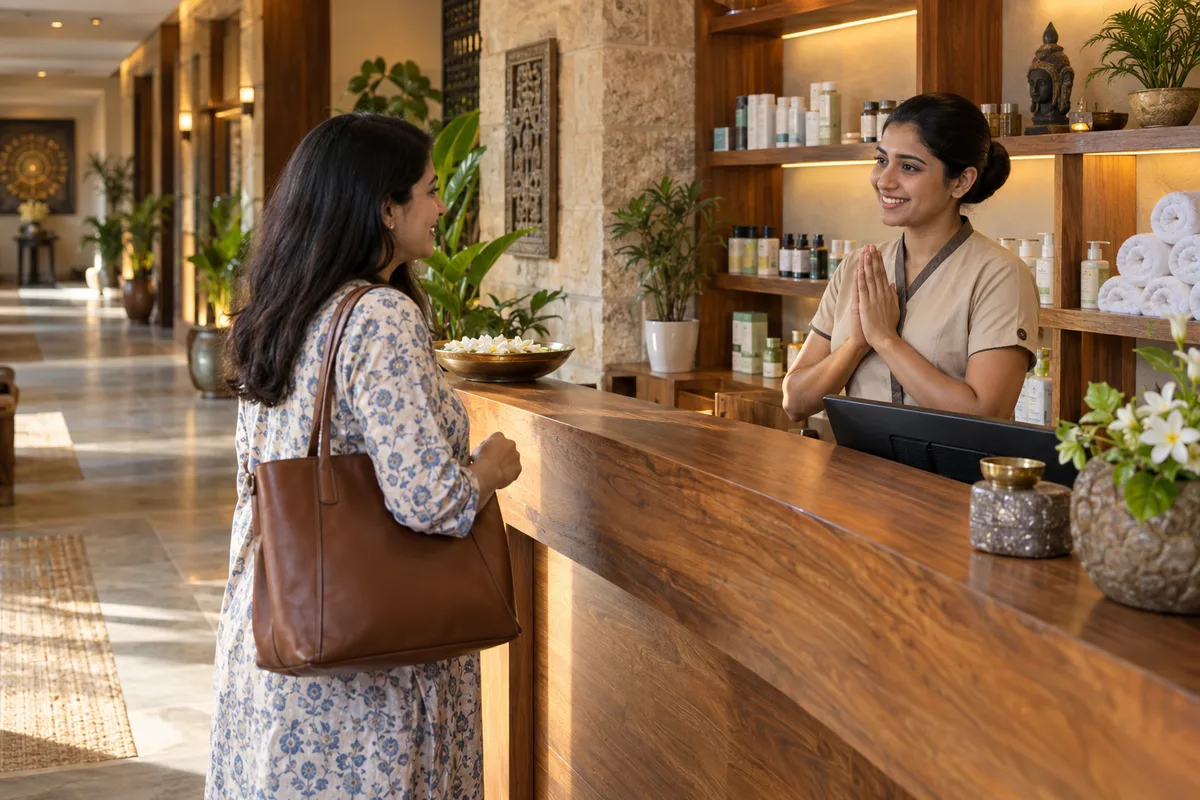
What telecalling means
Telecalling is the managed phone work of answering enquiries, making follow-up calls, and re-engaging past enquirers, with each outcome recorded. GullySales runs calling around your existing enquiry sources, using approved scripts and agreed follow-up schedules, then hands qualified conversations to your sales team and measures what happens after the call.
Last updated 14 Nov 2026.
For spas
Where it usually goes wrong, and what we would do.
“The phone rings while every receptionist is busy”
A small spa has one person at the desk, and that person is also checking in a customer, taking payment and fetching towels. A call that arrives during a treatment goes unanswered, and a missed call from a nearby customer who found the spa on Maps is a booking that did not happen. The work sets up a callback queue and an owner for it, so a missed call is returned and the result is written down.
“A callback has to be warm, short and private”
A customer who rings a spa wants to hear a calm voice, and a callback that sounds like a sales call loses them in the first sentence. The caller has to know the treatments, the slots and the privacy arrangements, and has to ask a few simple questions without sounding like a form. The script for this work is written for a wellness setting and is checked by your owner before any call is made.
“Corporate and package calls need a different voice”
Calling an HR manager about employee wellness sessions is a business conversation, and calling a regular customer about a package that ended is a personal one. Using the same opening for both wastes the call. The work separates the call types, writes an opening for each and decides who in the spa takes over when the HR manager asks for a quotation or when a customer wants to talk to their regular therapist.
“Lists of numbers without permission are a risk”
A spa that has collected numbers from walk-ins, offer coupons, gift vouchers and online forms does not always know which customers agreed to be called. Calling a list with no record, or calling numbers on a do-not-disturb register, harms the spa's name and may break rules. The work checks the list first, holds back unclear numbers and puts questions about calling restrictions to your own adviser.
What we do
What we deliver for spas.
The work available for this need. We agree the deliverables and responsibilities for your engagement in writing.
Enquiry source and callback map
A record of where enquiries reach the spa: Maps calls, missed calls, WhatsApp requests, listing sites and corporate leads. Each source has a named owner for the callback. You check it against what actually arrives, and we correct it before calls begin.
Result: Every enquiry source has a person who returns the call.
Eligible number record
A checked list of the numbers the spa may call, with the source of each and the permission information you hold, and a separate list of numbers held back. Unclear cases are passed to your adviser. Bought or scraped lists are not called.
Result: Each number called has a recorded source and a reason it may be called.
Approved scripts and answer sheet
Openings, questions and answers for booking callbacks, package follow-up and corporate calls, based on your treatment menu and your rules. It states what the caller may offer, what goes to a therapist and what goes to the manager, and it contains no claims about health.
Result: A caller has an approved answer to each common question.
Calling schedule and outcome codes
An agreed set of call times that respects quiet hours and the spa's own busy periods, with a way to retry an unanswered call and a set of outcome codes: booked, call back at a time, not interested, wrong number and asked to stop. Your owner approves the schedule.
Result: Every call attempt ends in a recorded outcome.
Handover record to the front desk
A note for each booked or interested customer with the treatment asked about, the slot, therapist preference and any promise made. The front desk or manager confirms the booking and returns the outcome to the same record.
Result: The receptionist who confirms a booking has the call's details in front of them.
Call results against the baseline
A report keeping calls attempted, customers reached, bookings made and bookings completed in separate lines, compared with the starting position recorded before calling began. It shows where calls led to visits and where they only led to conversations.
Result: The owner can see how many calls produced a visit, not just a conversation.
How the result is measured
- Time from enquiry receipt to first call, compared with the baseline
- Call attempts completed against the agreed schedule
- Enquiries reached, separated from unanswered attempts
Recorded as a baseline before work starts, so every later report has an honest comparison.
Who it is for
This is written for these spas.
- Day spas
- Ayurveda and wellness centres
- Salon-spa combo outlets
- Medi-spas and skin clinics with spa services
- Massage-only therapy centres
- Resort and hotel spas
- Corporate and mobile wellness services
Before you decide
Agree the work. Know how to judge it.
Telecalling for spas: use these checks to prepare, choose the scope, and review what changes.
Bring the right evidence
Define the organisations or buyers you can serve and the reasons they would consider a conversation. Bring examples of accepted and rejected prospects so the selection rule is visible.
Make the scope clear
Agree the research sources, contact approach, qualification rules, and handover. Clarify which meetings count as accepted and what happens to replies that are not ready to buy.
Check the work in use
Review why a prospect was selected and what was learned from the response. Count held, relevant conversations separately from contacts found, messages sent, or meetings booked.
Know when to change course
If the same objection appears repeatedly, adjust the offer or buyer group before increasing outreach. Respect a request to stop contact and keep the exclusion in the record.
These are discussion points, not a fixed package. GullySales confirms the deliverables, responsibilities, fee, and term in writing after reading your brief and speaking with you.
Before we start
What to have ready before the work starts.
The records, access and decisions this work needs from spas. Anything missing is noted in the written scope, with who will supply it.
- Your missed call and enquiry log
- The spa's phone log, enquiry sheet and any WhatsApp requests show where callbacks are needed. Even a rough record helps. Without it, the baseline is a guess, and the first calls go to the wrong people or repeat calls the front desk has already made.
- Permission and source of each number
- Note whether each number came from a walk-in form, a voucher, an online booking or an enquiry. Calls to someone who asked a question differ from calls to an old list. Numbers with no source are held back, and your own adviser answers questions about calling restrictions.
- Therapist availability and slot rules
- The caller can only offer slots the spa can honour. Share how the appointment book is read, which therapists take which treatments and what the spa does about double booking. If this is left vague, callers promise a slot that the front desk then has to cancel.
- A person who accepts the handover
- Name the front desk lead or manager who receives booked and interested customers and returns the outcome. If nobody owns that step, a customer who was told to expect confirmation waits, and the call that took effort to make is wasted before the visit.
- Decisions on offers and quiet hours
- Decide what the caller may offer, such as a weekday slot or a package conversation, and what hours are suitable for calling your customers. A caller without limits invents them, and a call at the wrong hour loses a regular customer that the spa had built over a long time.
How it works
How the telecalling work runs
The work itself, in order. How an engagement starts, from your brief to a written scope, is set out on our method page.
- 1
Agreeing what the calls cover
After your brief and a conversation, we agree the sources of enquiries to be called, such as missed calls, listing enquiries and old customers, and what stays with your front desk. The written scope sets the calling window and who owns each queue. Calls to a customer's regular therapist about a personal matter stay with your team.
- 2
Recording the starting position
Before any call, we note how long enquiries currently wait for a reply, how many missed calls went unreturned and how many enquiries became bookings. You provide the booking record and call log. These figures are the baseline, so the results can be read against them and not against a memory of how things used to be.
- 3
Checking the list for permission
We go through the numbers you give us, mark the source of each and what permission information exists, and compare them with the do-not-disturb register where that applies. Numbers with no source or with a restriction are held back. Questions about calling rules go to your own adviser, and we name no rule ourselves.
- 4
Writing and approving the scripts
We write call openings and answers for each call type from your menu, therapist specialities and booking rules. Your owner approves every line that commits the spa, including slots, offers and cancellations. Questions about health or pregnancy are routed to a therapist and not answered by the caller.
- 5
A first set of calls and review
The calls begin with a small group of eligible enquiries. We listen to a sample with your manager, check that each outcome was recorded correctly and revise any opening that sounded like a sales call. The first group is deliberately small, so faults are found before the whole queue is called.
- 6
Reading outcomes against the baseline
When enough calls have been completed, we read the outcome record against the starting position: enquiries returned, customers reached, bookings made and visits completed. Your owner decides which call types continue, which change and which return to the front desk. No result is promised in advance.
Where this fits
Three pieces of sales work, in this order.
This work sits inside sales process design, at stage 1, prospecting and lead generation. The audit comes before it, and sales management keeps it running.
Step 1
Sales audit
Find where deals are being lost and what to fix first.
Start here if you cannot say where orders are lost.
Step 2 · you are here
Sales process design
One written way to sell, from first enquiry to repeat order.
Start here if every salesperson sells differently.
Step 3
Sales management
A target, a review routine and someone who owns the number.
Start here if the team has targets and no routine.
FAQ
Questions owners ask before they call.
Not here? More answers, or ask on WhatsApp.
Will you answer our incoming calls?
Can callers answer questions about treatments?
Do you call old customers who have not visited recently?
What about the do-not-disturb register?
Who takes over when a customer wants to book?
How will we know whether the calls were worth it?
How much does it cost?
How long is the contract?
How soon will we see results?
Who will actually do the work?
From the blog
Further reading for spas.
 6 min read · 19 Aug 2026How to sell spa membership packages that customers renewBuild spa membership packages around how often customers already visit, with a saving they can see. Offer them after a session; follow up before renewal.
 7 min read · 3 Jun 2025How to reactivate dormant customersDefine dormant against your own purchase interval, then call your highest-value lapsed customers to ask why they stopped before offering any discount.
More for spas
Related work to consider.
Closest to this: leads and follow-up
Also for spas
Or start from the overview: sales and marketing for spas.
Your next practical step
Tell us what you are trying to grow, and we will read it before we call.
Eight short steps, mostly taps. Skip anything you would rather answer on the call.