Notes for owners · Digital marketing
Facebook marketing for a dental clinic, honestly
Facebook marketing for a dental clinic reaches people who were not looking for a dentist, within a few kilometres of the chair. It does not bring the toothache patient, and the dental council limits what you may say.
The GullySales team · Updated 28 Sept 2026 · 6 min read
Rules for this trade differ by state and professional body, and they change. Check the current position with your own council or adviser before you act on anything here.

On this page
Facebook marketing for a dental clinic does one thing well. It puts a treatment a person has been postponing, aligners, an implant, a child's braces, in front of people within a few kilometres of your chair who were not looking for a dentist. It does not bring the patient with a toothache; that patient is on Google Maps. It does not replace reviews, and it does not work if nobody calls back. And because advertising by dentists is regulated, the list of things you may say is shorter than the list Meta will happily run.
What Facebook does for a clinic
Three things, and none of them is "awareness".
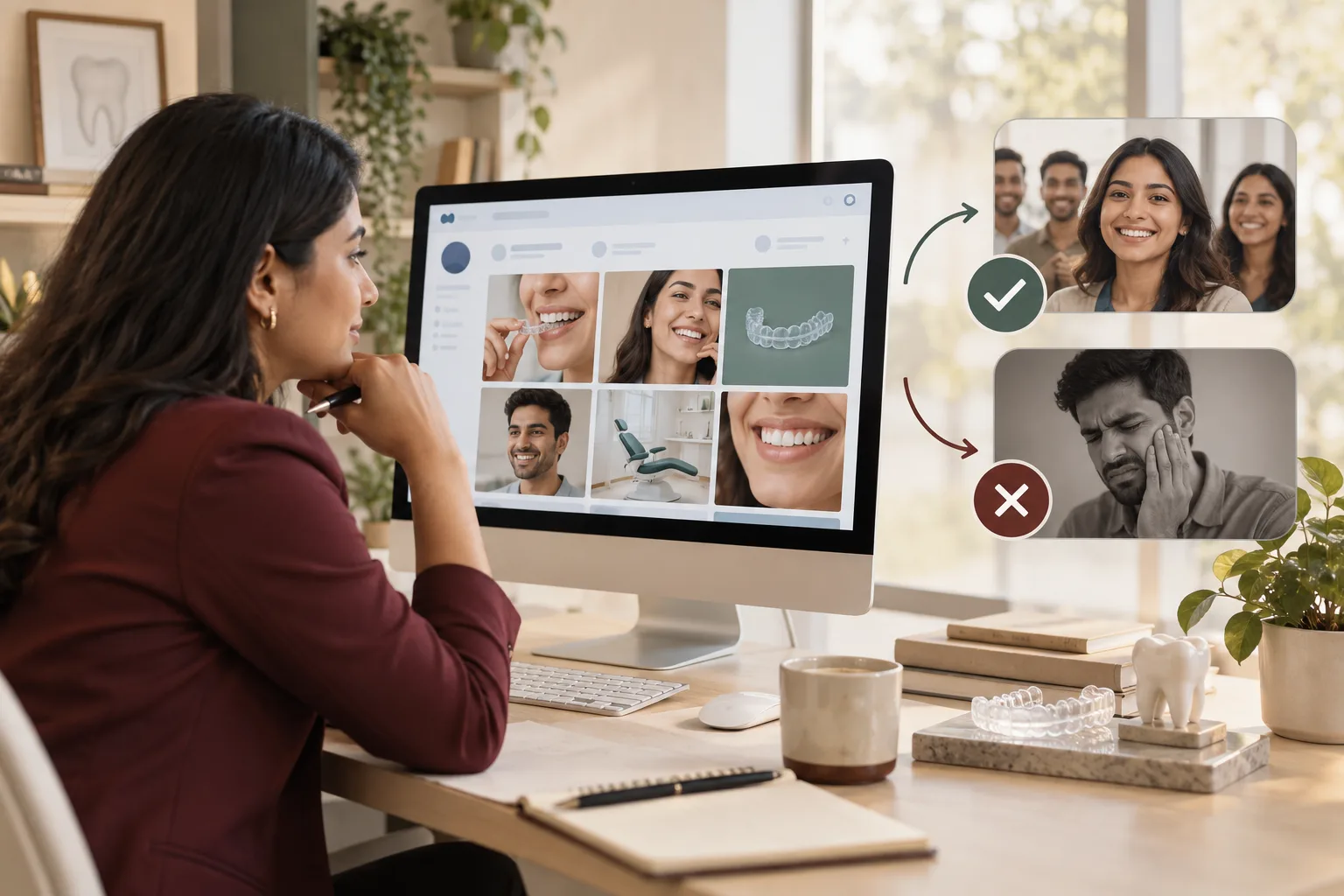
It reaches the postponed decision. A parent in your area has noticed crowding at every school photograph. A woman has smiled with her mouth closed for years. A man has chewed on one side since a molar was pulled. They are not searching. They are scrolling, and a dentist explaining the thing in under a minute stops the thumb.
It reaches by radius. Meta lets you show a post only to people within a set distance of the clinic, which is what a clinic needs. A patient will not cross the city for a filling, and will think twice about it for braces.
It is the second check. Before booking from Maps, a good share of patients open the clinic's Facebook or Instagram page to see whether it is alive. A page with the chair, the team and a post from this week reassures. A page last updated eighteen months ago with a stock photograph of perfect teeth does the opposite.
What Facebook does not do
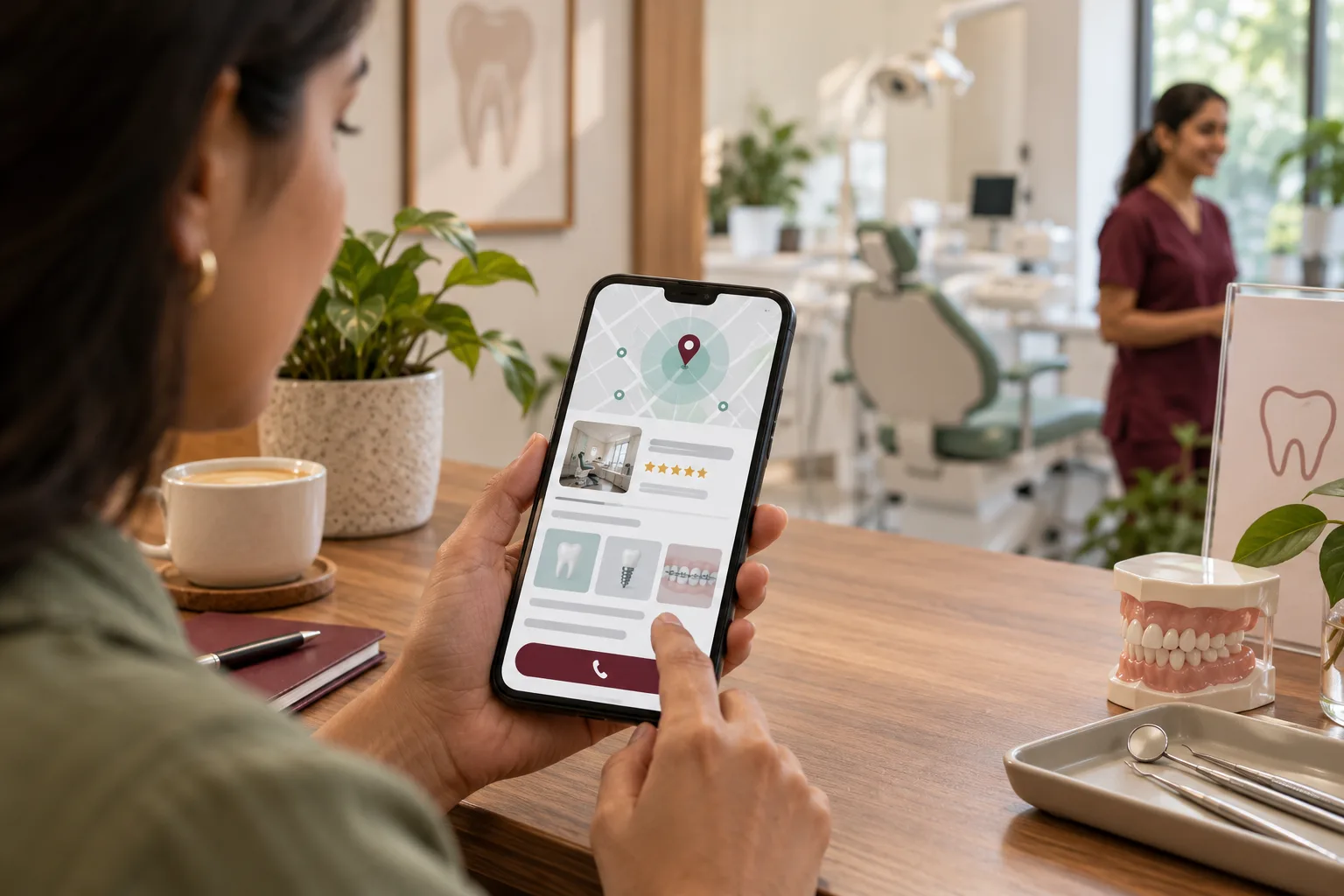
It does not bring the emergency. The cracked tooth at nine at night goes to whichever clinic Maps shows open, with reviews, and whoever answers the phone. No Facebook spend changes that. A clinic that puts its budget into Meta while its profile shows the wrong hours has spent in the wrong place.
It does not produce patients on its own. A Meta enquiry is a person who tapped a form mid-scroll. If the clinic calls the next afternoon, that person has forgotten. Clinics that call inside the hour describe Facebook as a good channel. Clinics that call the next day describe the leads as poor. Same channel.
It does not bring the patient you want if you advertise the wrong thing. "Teeth cleaning at ₹499" fills the form with people who want cleaning at ₹499. The chair time it fills is your least valuable, and the patient it brings compares you on price with the next clinic's offer.
The rules come before the creative
Dentists in India practise under a professional council, and its code restricts advertising. In general terms, the areas it has been understood to cover are soliciting patients, testimonials, claims of superiority, before-and-after material, and offers or discounts. What exactly is allowed, how it is enforced, and how it applies to a clinic's own social media page differs between state councils and has changed over time. We are not your council. Before you build a campaign, read the current code and ask your state dental council or the association you belong to what it takes a view on.
Meta has its own rules for health advertising as well, and they do not match the council's. A post can be approved by Meta and still be a problem with your council, which is why the compliance check comes first.
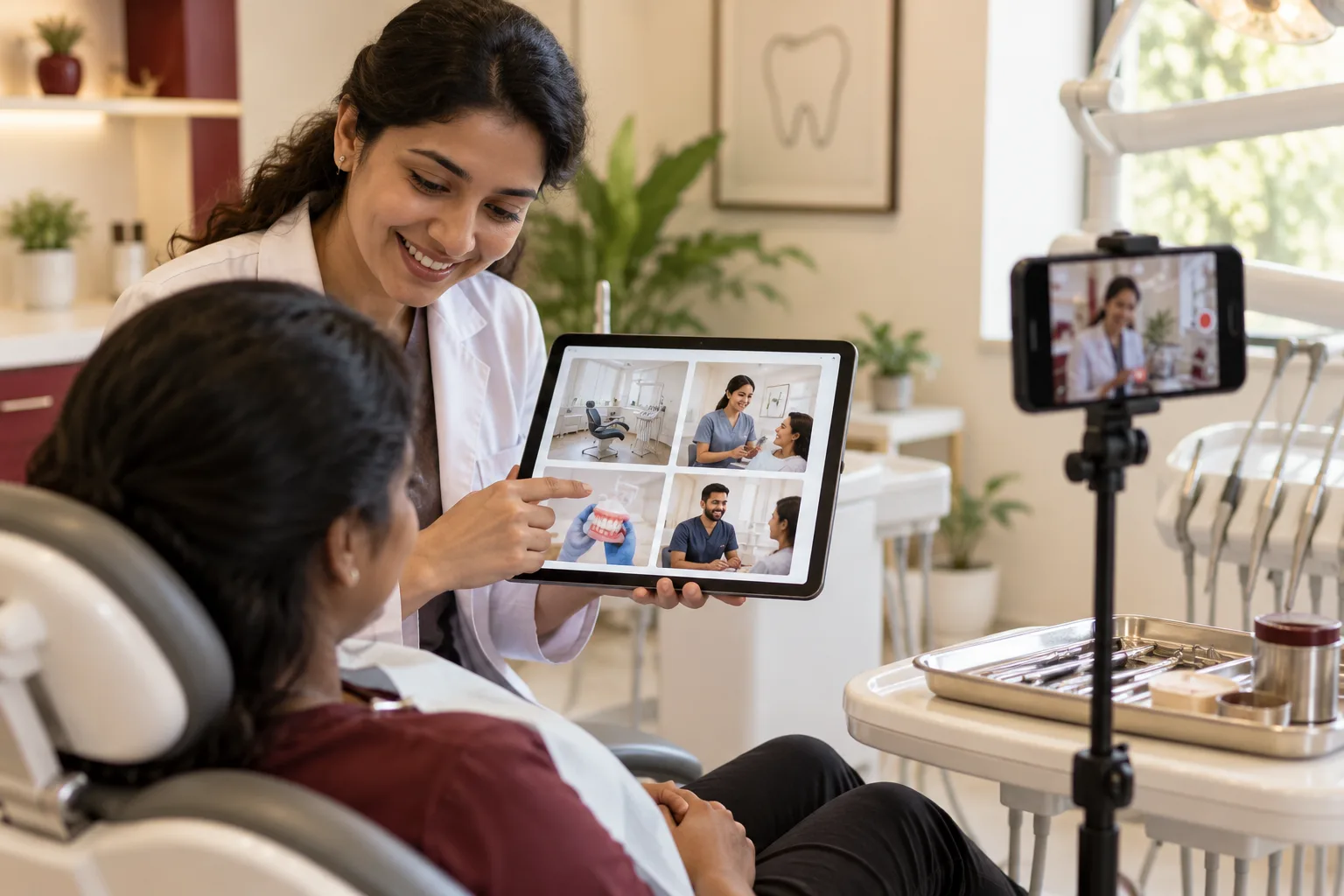
What passes in most readings is plain information. What the treatment is, how many visits it takes, what the dentist's qualification is, the hours, the address, the number. Said in the dentist's own voice, it is also the content patients want.
What to post, and what to put money behind
| Post | Who it is for | Boost it? | Where the rules bite |
|---|---|---|---|
| The dentist answering one question in under a minute | The postponed decision | Yes, inside your radius | Keep to how the treatment works, with no promise of an outcome |
| The sterilisation routine, shown | Every new patient checking you | No, pin it to the page | None, as long as it is your clinic |
| What a child's first visit involves | Parents within five kilometres | Yes, parent audiences | No gifts or offers for children |
| The consultation explained, with what happens in it | Aligner and implant enquiries | Yes, retarget page visitors | Fee statements and consent: ask your council |
| A patient's story | Everyone | No | Testimonials are what councils have objected to most, so ask before posting any |
| A price or a discount | Nobody you want | No | Check your council before publishing fees or offers at all |
Look down the third column. Only a few posts deserve money, and each of them is the dentist explaining something in plain words.
For example, a clinic in Malleshwaram
Take a two-chair clinic in Malleshwaram, Bengaluru, with a paediatric dentist two afternoons a week. The details are illustrative. The clinic has been boosting every post for ₹500 and running a "free check-up" offer that brings families who never return.
It stops both. It records the paediatric dentist explaining, in under a minute, what happens at a first visit and the age a child should first be seen. It shows that one video to parents within four kilometres, for example at ₹8,000 a month, an illustrative figure and not a quote, having first checked with its council that the wording is acceptable. The front desk calls every form fill inside the hour, and a WhatsApp message follows with the dentist's name and the clinic's location pin. The spend is smaller than before. The chair time it fills is worth more.
The four mistakes
Boosting every post, so the budget is spread across content nobody asked for. Running an offer that attracts the price shopper and may breach the code. Stock teeth instead of your own rooms and people. And leaving the form fills until the next day, then concluding that Facebook does not work for dentists.
What to do next
Start with the rules, not the creative. Get the current code from your council, mark the three things on your page that would not pass, and take them down. Then open your Google Business Profile and fix the hours before you spend a rupee on Meta, because the toothache patient is there. Only then pick one postponed treatment and put a small radius budget behind the dentist explaining it. If you want us to map where your enquiries come from and where they are lost between the form and the chair, tell us what you need.
Industries