Notes for owners · Digital marketing
LinkedIn outreach to US decision makers: what to write and how often
Message wording, a three-touch sequence and a stopping rule for reaching US managers on LinkedIn from India, with a worked case of what a copied bulk message costs you.
The GullySales team · Updated 17 Oct 2026 · 5 min read

On this page
Write three or four lines that name a business problem the person has, send them to a small, researched list, and stop after the third touch. US managers get a lot of bulk messages, and many learn to ignore the name that sent one.
What does a US decision maker see in the first four seconds?
Your name, your photograph, a headline and the first line of the message. Nothing else gets read until those pass. So fix the profile before the message. Use a clear photograph and a headline that says what you do and for whom ("Precision sheet-metal parts for US industrial OEMs"). Make sure recent posts are not all festival greetings. Our note on a LinkedIn profile that a buyer reads in thirty seconds covers that.
Then the first line. "Greetings of the day" and "I hope this message finds you well" give the reader no reason to go on. Open with something about them or their company: a product they launched, a job they posted, a problem their industry has.
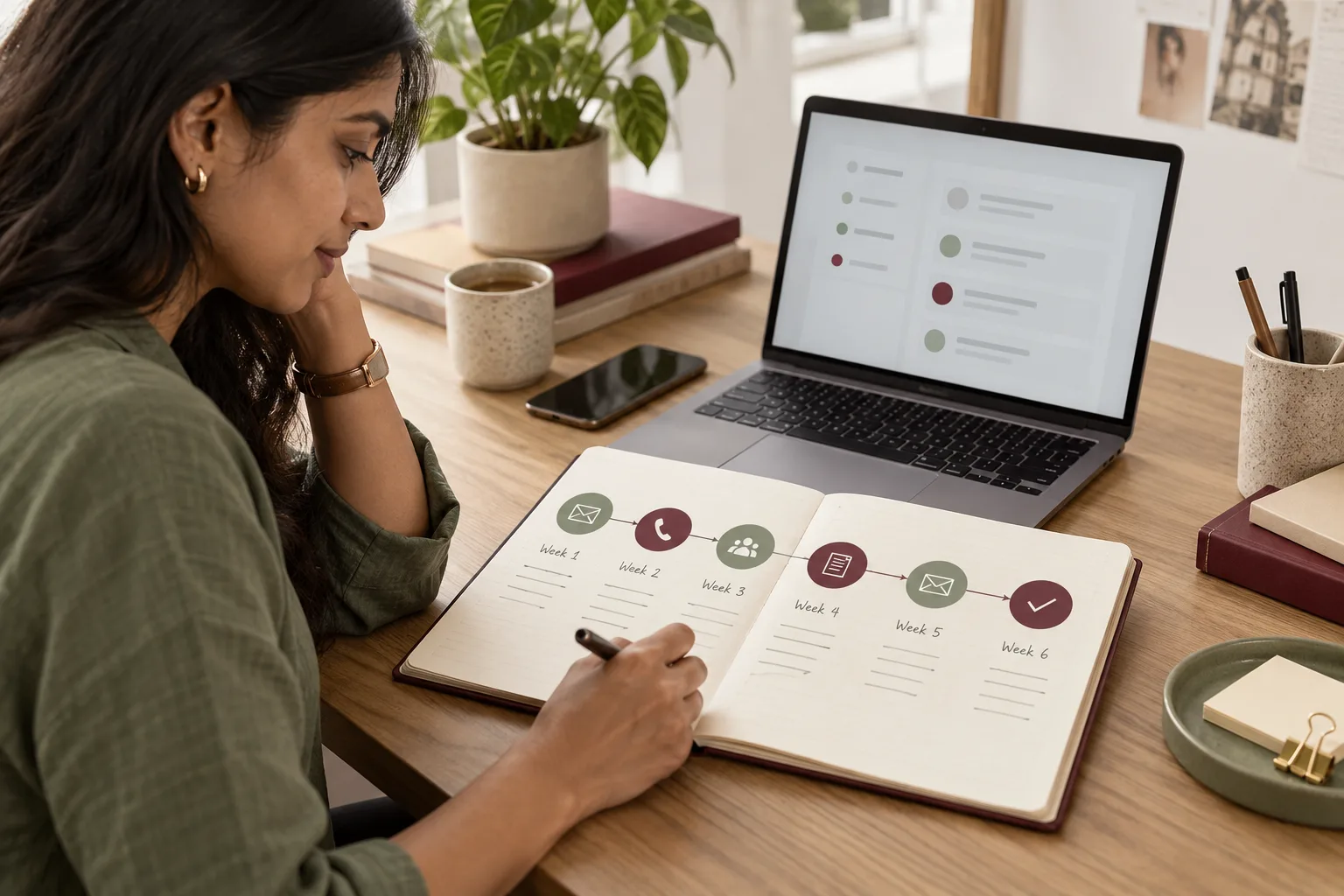
Three messages and what each one is for
Write these by hand for each person. They are shapes, not scripts to paste.
Touch 1: the connection note (under 300 characters). "Hi Dana, I saw your team is hiring a second quality engineer. We make fixtures and gauges for contract manufacturers like yours. No pitch, just keen to connect."
Touch 2: the first message, after they accept. "Thanks for connecting, Dana. Contract manufacturers we talk to say inspection fixtures are the slow part of a new part launch. If that is true for you, I can send a two-page note on how we document a fixture before it ships. Want it?"
Touch 3: the follow-up, if no reply after a week or so. "Dana, one more from me. Here is the note on its own, no reply needed. If it is not useful now, I will leave you in peace."
The first earns the acceptance, the second names a problem and offers something small, and the third hands over the note with permission to ignore it. After that, stop for a quarter at least. Messaging someone five times does not make them a customer, and it can get you blocked or reported.
How often is too often?
Use a simple rule: three touches over about three weeks, then a pause of a quarter. Between touches, do something that is not a message: like a post of theirs, comment on it with a point of your own, or share an article they would use.
If you are tempted to send more than three touches, you do not have a messaging problem. You have a list problem. The person is probably not a buyer. Rebuild the list before you write more. Outbound sales prospecting is that work if you want help.
What do you do when someone replies?
Move the conversation off the message thread fast, but on their terms. Answer their question first. Two or three lines will do. Then offer a 20-minute call with two time slots written in their zone, as our note on US time-zone overlap describes. If they say "not now", ask when to write again and put the date in your diary. A polite no with a date is a better result than a lukewarm yes, because you know where you stand.
An invented example: a Vadodara control-panel maker
This maker is made up, and so are the numbers. A Vadodara maker of electrical control panels sends 150 identical connection requests a week to "US plant managers", each with the same note about "the best quality at competitive prices". Acceptance is low, and the few who accept get a long catalogue attachment as the first message. Two recipients reply, both asking if the maker has a US office. It does not, and the thread ends.
The maker starts again with fewer people. It picks 25 US contract manufacturers of packaged equipment, finds the controls or project engineer at each, and reads their company pages. The note to each names a specific machine type that company builds. The message after acceptance asks whether panel lead time is a pain on their projects, and offers a one-page note on how the maker documents its wiring drawings. When a buyer asks about standards, the maker says it will confirm with the buyer's engineers what applies, and claims no certification it does not hold.
Say 9 of the 25 accept, 3 reply and one agrees to a call. That call ends politely, because the plant already buys panels from a supplier in Ohio and wants nothing for a year. It is a small result with a real conversation behind it, against none before. The first attempt cost something too: the maker's profile now carries a trail of ignored requests, and the copied notes used up goodwill with the people who would have been right for the second round.
This approach works for companies with a specific offer and a small buyer universe. If you sell a low-priced commodity to anyone, LinkedIn outreach is the wrong tool, and a catalogue on a B2B portal is the better route.
Who should send the messages?
The person whose name is on the profile, or someone they have briefed and who writes in their voice. A message from a named founder is more likely to be read than one from a company page, though you can test that on your own list. Hired help needs rules: draft in your voice, and send only what you have read. If you would rather hand the first approach to someone else, LinkedIn outreach and social selling is the nearest of our services.
Send ten, then read the replies
Pick ten named people at ten US companies, write each message by hand, and track who accepted, who replied and what they said. Change the second message after you have read the answers. The United States hub is the place to start if you are still choosing which channels to use there. To have a list and a script built for your trade, tell us what you need.