Auto repair shops · Customer retention
The odometer decides when to call, not the calendar.
Retention for a garage is getting the same vehicle back for its next service instead of losing it to whoever is closest that Sunday. The interval is set by kilometres as much as by months, and a taxi is not on the same schedule as a weekend car. GullySales builds the due list from your own service records.
Scope, fee, reporting and term are agreed in writing after we have read your brief and spoken to you.

What customer retention means
Customer retention is keeping an existing customer buying again rather than losing them to a competitor after the first purchase, usually cheaper than winning a new customer. GullySales sets a routine of check-ins and renewal reminders aimed at customers before they show signs of leaving.
Last updated 5 Oct 2026.
For auto repair shops
Where it usually goes wrong, and what we would do.
“A taxi and a weekend car are not on the same list”
One covers ten thousand kilometres in three months and the other takes two years. Send both a reminder on the same date and you get one of them wrong.
“A stamp card is the wrong scheme for a garage”
A customer who comes twice a year never fills the card. What brings the customer back is an estimate that held and a message that arrives before they start wondering where to go.
“Season is the second calendar”
AC gas before the summer, wipers and underbody before the monsoon, a battery for the car that sat through it. Nobody books that work unless somebody reminds them.
What we do
What we deliver for auto repair shops.
Every deliverable, what it covers for you, and the result it is there to produce. Nothing here is an extra.
A due list built from kilometres and months
Every vehicle scored on the reading at its last service and the time since, so a high-use car is called sooner than one that barely moves.
Result: The reminder reaches the driver while the service is still due.
The reminder message itself
What to send, what to leave out, and the slot offered inside it, so the reply is a yes rather than another question.
Result: A reminder turns into a booked Sunday slot.
Pre-season check drives
An AC message before the summer and a wiper and underbody message before the monsoon, aimed at the customers whose vehicles are near due anyway.
Result: Two predictable booking spikes instead of a quiet fortnight.
Estimate discipline at the counter
A written estimate handed over before work starts and a call before anything is added, since a bill that surprises a driver is the commonest reason a driver does not return.
Result: The customer comes back because the price was what you said.
Fleet accounts run as agreements, not reminders
A standing service schedule for a business running several vehicles, with one named contact instead of a message to each driver.
Result: A fleet books a batch rather than drifting away vehicle by vehicle.
A lapsed-vehicle list
Cars that have missed two service windows, pulled out on their own and given a different message from the one an active customer gets.
Result: You can see who has already left instead of assuming they are still coming.
How the result is measured
- Retention rate
- Repeat purchase rate
- Customers won back
Recorded as a baseline before work starts, so every later report has an honest comparison.
Work it out from your records
Your job cards already show which vehicles came back and which went elsewhere.
- Vehicles seen more than once
- Use the registration number on the job card as the key, not the customer name. Cars change drivers and families share vehicles. Count registrations that appear again, against all those seen in the same period.
- Kilometres and days between visits
- For each repeat vehicle subtract the last odometer reading from this one and note the days between. A taxi and a weekend car will show very different gaps, so keep their lists apart.
- Vehicles past their next service
- Take the last reading and date, add the service interval for that make and model, and list every vehicle now past it. That list is the day's calling work.
- Vehicles seen once and not again
- List registrations that appeared a single time and split them by job: puncture, AC gas, full service, accident repair. The one-time walk-in and the lost regular need different calls.
- Estimates refused or only part approved
- Mark each estimate as approved in full, approved in part or declined. A declined estimate often means the car was serviced elsewhere next, so note the reason the customer gave.
- Fleet vehicles by account
- For each fleet customer compare the vehicles sent this season with the same season last year. A falling count means another garage has started taking part of the fleet.
Who it is for
This is written for these auto repair shops.
- Multi-brand service garages
- Authorised brand service centres
- Denting and painting specialists
- Two-wheeler service centres
- Fleet and commercial vehicle service providers
- Insurance-claim repair specialists
Not for
It is not the right fit if.
- Odometer readings and registration numbers are not recorded, so a reminder based on distance would have no starting point.
- The garage has no one to take the call when a driver replies to a reminder, so a reminder would produce a second missed call.
How it works
How the customer retention work runs
The work itself, in order. How an engagement starts, from your brief to a written scope, is set out on our method page.
- 1
Read the records
Your sales and billing records are read for repeat purchase, the normal gap between orders and the customers who have gone quiet. The record-keeping gaps found here are listed.
- 2
Ask why they stopped
A small set of lapsed and current customers is called with your team's consent, and asked plainly what changed. The reasons are sorted into price, service, competitor and circumstance.
- 3
Build the strategy
The written plan sets priority groups, touchpoints, offers, owners, consent rules and a target.
- 4
Align existing tactics
Each retention activity you already run is mapped against the plan, then kept, changed or dropped.
- 5
Start with one group
The plan goes live for the most valuable at-risk group first, with a held-back comparison group, before it widens.
- 6
Review against the baseline
Retention is compared with the baseline recorded before work began. How often you are reported to is agreed in writing.
Where this fits
Three pieces of sales work, in this order.
This work sits inside sales process design, at stage 7, after the sale. The audit comes before it, and sales management keeps it running.
Step 1
Sales audit
Find where deals are being lost and what to fix first.
Start here if you cannot say where orders are lost.
Step 2 · you are here
Sales process design
One written way to sell, from first enquiry to repeat order.
Start here if every salesperson sells differently.
Step 3
Sales management
A target, a review routine and someone who owns the number.
Start here if the team has targets and no routine.
FAQ
Questions owners ask before they call.
Not here? More answers, or ask on WhatsApp.
Is a loyalty card worth running at a garage?
What if we do not record odometer readings?
A customer's car is past due and the owner has not replied to two messages. Do we keep calling?
A mechanic left and is now ringing our customers from a garage of their own. What can we do?
How much does it cost?
How long is the contract?
How soon will we see results?
Who will actually do the work?
What do you need from us?
What if we are not happy with the work?
From the blog
Further reading for auto repair shops.
 5 min read · 11 Oct 2026Using due dates to bring vehicle owners back: service, insurance and pollution checksHow a workshop or dealer can record each vehicle's next service, insurance and pollution-check dates, then call owners with a real reason instead of a generic offer.
 6 min read · 6 Oct 2026How buyers choose a showroom, workshop or parts counterCar, bike, repair and parts buyers send one enquiry to several sellers and pick the first clear answer. This post lists what each buyer checks, and where a dealer or workshop quietly loses them.
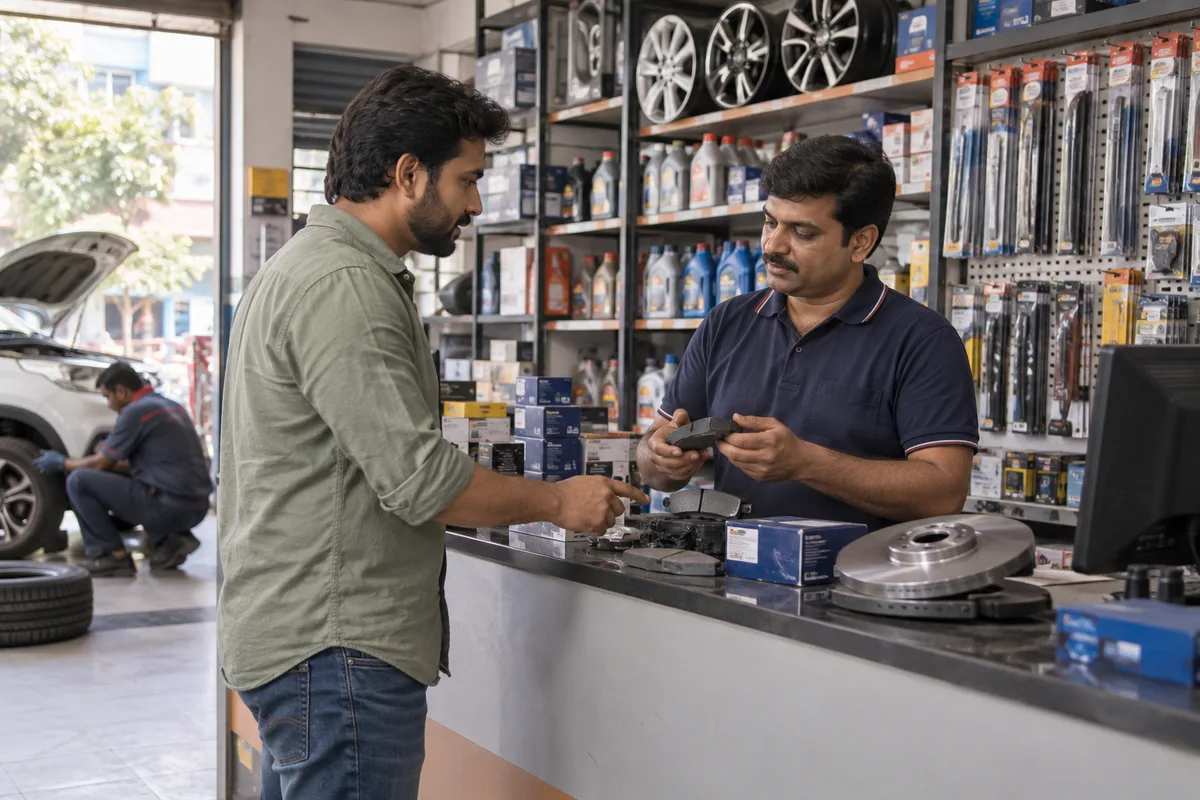 6 min read · 1 Oct 2026Serving the workshop trade and the walk-in buyer at the same parts counterHow an auto parts shop can run two lanes at one counter: an account lane for garages that buy on speed and credit, and a retail lane for walk-in owners who buy on price and advice.
More for auto repair shops
Everything else we would do for you.
Closest to this: customers after the sale
Also for auto repair shops
Or start from the overview: sales and marketing for auto repair shops.
Your next practical step
Tell us what you are trying to grow, and we will read it before we call.
Eight short steps, mostly taps. Skip anything you would rather answer on the call.