Auto repair shops · Marketing strategy
Spend on the drivers already in your book before spending on the ones who are not.
Marketing strategy for a garage is the split of money between winning a driver from the few kilometres around you, bringing back the cars you have already serviced, and the insurance and fleet work that is won by a relationship instead. GullySales decides that split from your own job cards.
Scope, fee, reporting and term are agreed in writing after we have read your brief and spoken to you.

What marketing strategy means
Marketing strategy is the plan for which channels to use, in what order and with what budget. This way, marketing spend is aimed at a goal instead of tried one channel at a time. GullySales sets this plan after the first conversation, based on where your buyers actually search and decide.
Last updated 5 Oct 2026.
For auto repair shops
Where it usually goes wrong, and what we would do.
“Your catchment is not the same for an oil change and an engine job”
Nobody drives eleven kilometres for a periodic service. A driver will cross the city for denting and painting they trust, so spending over one radius for both wastes half the money.
“The service interval is your marketing calendar”
Every car you have touched comes due again at a known reading or a known month. A garage with a job card book is sitting on the cheapest marketing it will ever have and sends nothing.
“Insurance and fleet work is won in an office”
A surveyor, a dealer's service advisor or a company's admin head decides where a claim or twenty vehicles go. No advertisement reaches them and no number of reviews replaces somebody turning up.
What we do
What we deliver for auto repair shops.
Every deliverable, what it covers for you, and the result it is there to produce. Nothing here is an extra.
Your real catchment measured off the job cards
Where last year's customers actually came from, plotted by the job they came for, so the radius for a service reminder and the radius for denting work are set apart.
Result: You stop advertising an oil change to a driver who will never come.
The budget split between the returning driver and the new one
How much goes on reminders and follow-ups for cars already in the book, and how much on being found by somebody who has never heard of the garage.
Result: The cheaper half of the business stops being the ignored half.
A service-due calendar built from the book
Every vehicle listed against the month or the reading when it is next due, so the year's outreach comes out of your records instead of out of a campaign idea.
Result: The reminders write themselves out of the job cards.
An insurance and fleet approach with names on it
The surveyors, dealer service advisors and company admin heads who decide where vehicles go, listed with who from your side is going to sit in front of them.
Result: The work no advertisement reaches finally has somebody working on it.
One job picked to advertise properly
The work with a bill and a travel distance worth paying for, usually denting and painting or an engine issue, given the advertising money instead of spreading it thin.
Result: The spend goes where a driver actually compares garages.
Spend read against jobs, not calls
Advertising money and reminder effort set against jobs booked, cars that came back and the average bill, against the baseline recorded before work started.
Result: You can see which half of the budget brought cars into the bay.
How the result is measured
- Enquiries against target
- Cost per enquiry
- Channel contribution to revenue
Recorded as a baseline before work starts, so every later report has an honest comparison.
What to decide first
What a garage owner decides before paying for any promotion, from the job cards in the drawer.
- The work to be known for first
- Job cards show what you do most and what pays best per bay hour. Pick one line, such as general service, AC, brakes and suspension or denting, and be known for it before you list everything.
- The makes you claim
- Count the makes on recent job cards. A multi-brand garage that is busiest with a few makes should name those, rather than saying it handles every car and bike equally well.
- Walk-in owners or fleets
- Fleet vehicles fill bays on slow days but may pay later. Individual owners pay at handover. Decide how many bays a fleet may hold, so one account does not crowd out the driver who walks in.
- The slow days to fill
- Look at job card dates and find the days and hours when bays stand empty. Aim your effort there and leave the rush day alone, since it fills without help.
- What a good enquiry is
- A driver in your area with a named model and either a fault or a service due. A call asking only the price of a part is not one. Decide the first questions whoever answers the phone will ask.
- The offer you stop making
- Find the discount or free check-up that brings in drivers who never return, using the job cards of the last customers it brought. Drop it and write down why.
Who it is for
This is written for these auto repair shops.
- Multi-brand service garages
- Authorised brand service centres
- Denting and painting specialists
- Two-wheeler service centres
- Fleet and commercial vehicle service providers
- Insurance-claim repair specialists
Not for
It is not the right fit if.
- The garage has not looked at its job cards to see who already returns, so a plan would be built on a guess about customers.
- The owner cannot spare anyone to answer enquiries, so a strategy that draws more of them would add pressure rather than jobs.
How it works
How the marketing strategy work runs
The work itself, in order. How an engagement starts, from your brief to a written scope, is set out on our method page.
- 1
Understand business goals
We start with what the business needs this year in orders, revenue and growth, not marketing terms.
- 2
Audit current activity
We review every current marketing activity, account and record, and what each has actually produced. Where there is no source record for enquiries, we set one up first.
- 3
Strategise the plan
Objectives, buyers, messages, channels and budget are chosen from the goals and what we found, and then written down with a reason beside each choice. A channel that does not serve a stated objective is left out.
- 4
Implement the roadmap
The plan becomes an execution roadmap, run by GullySales, your own team, or both.
- 5
Measure against milestones
Results are reported against the baseline recorded before work starts, and each milestone is checked against the plan. How often you are reported to is agreed in writing.
- 6
Optimise
Spend and activity move toward what produced orders, and the plan is revised in writing when the market or the business goal changes.
Where this fits
Three pieces of sales work, in this order.
This work sits inside sales process design, at stage 0, foundation. The audit comes before it, and sales management keeps it running.
Step 1
Sales audit
Find where deals are being lost and what to fix first.
Start here if you cannot say where orders are lost.
Step 2 · you are here
Sales process design
One written way to sell, from first enquiry to repeat order.
Start here if every salesperson sells differently.
Step 3
Sales management
A target, a review routine and someone who owns the number.
Start here if the team has targets and no routine.
FAQ
Questions owners ask before they call.
Not here? More answers, or ask on WhatsApp.
How do we split the money between new customers and old ones?
Is denting and painting worth advertising on its own?
Should I put the same budget on a car garage and a bike service side?
My garage is already busy most days. What should I decide now?
How long is the contract?
How soon will we see results?
Who will actually do the work?
What do you need from us?
What if we are not happy with the work?
From the blog
Further reading for auto repair shops.
 5 min read · 11 Oct 2026Using due dates to bring vehicle owners back: service, insurance and pollution checksHow a workshop or dealer can record each vehicle's next service, insurance and pollution-check dates, then call owners with a real reason instead of a generic offer.
 6 min read · 6 Oct 2026How buyers choose a showroom, workshop or parts counterCar, bike, repair and parts buyers send one enquiry to several sellers and pick the first clear answer. This post lists what each buyer checks, and where a dealer or workshop quietly loses them.
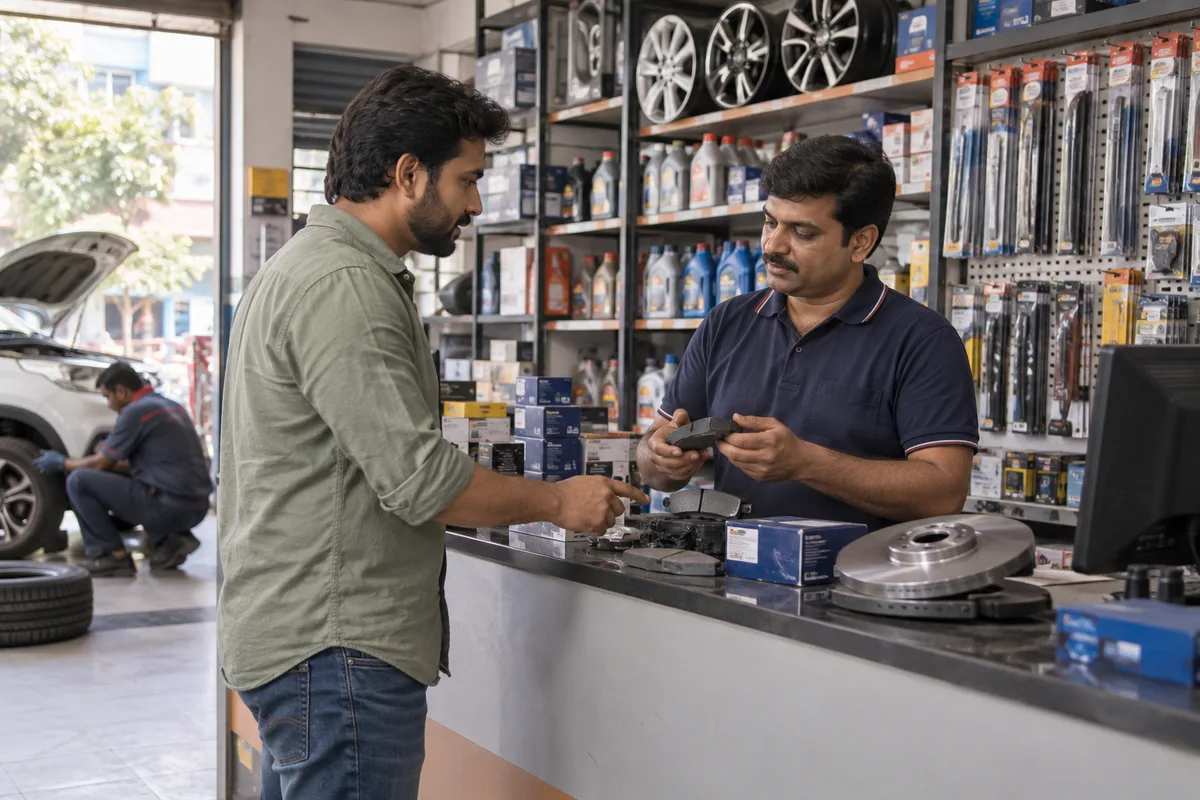 6 min read · 1 Oct 2026Serving the workshop trade and the walk-in buyer at the same parts counterHow an auto parts shop can run two lanes at one counter: an account lane for garages that buy on speed and credit, and a retail lane for walk-in owners who buy on price and advice.
More for auto repair shops
Everything else we would do for you.
Closest to this: strategy and research
Also for auto repair shops
Or start from the overview: sales and marketing for auto repair shops.
Your next practical step
Tell us what you are trying to grow, and we will read it before we call.
Eight short steps, mostly taps. Skip anything you would rather answer on the call.