Auto repair shops · Sales process
Turn a walk-in enquiry into a booked, trusted job.
A sales process for an auto repair shop is the fixed steps between an enquiry and a booked job. It covers how the problem is diagnosed, how the quote is explained, and how a follow-up happens if the customer does not decide immediately. GullySales writes this with your team and shows you where enquiries currently drop off.
Scope, fee, reporting and term are agreed in writing after we have read your brief and spoken to you.
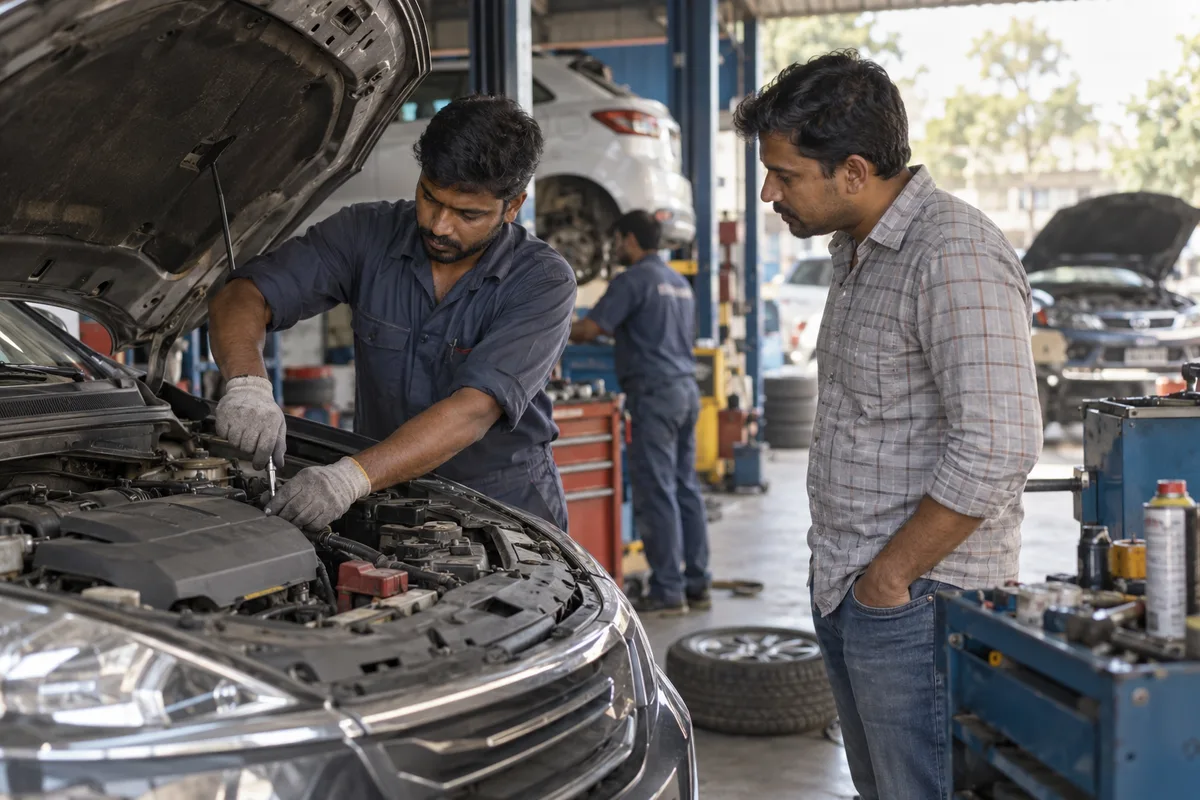
What sales process means
A sales process is the fixed sequence of steps, such as enquiry, site visit, quote and order, that every deal is expected to pass through in the same order. GullySales writes this sequence down for your business and checks that every salesperson actually follows it.
Last updated 5 Oct 2026.
For auto repair shops
Where it usually goes wrong, and what we would do.
“The quote needs an explanation, not just a number”
A customer who understands what a quoted price covers is far less likely to walk away to compare, since the uncertainty itself is often the real objection.
“A same-day decision needs a same-day follow-up if it does not happen”
A customer who says they will think about it and leaves needs a call within a day, since waiting longer usually means they have already booked elsewhere.
“Handover is part of the sales process, not just the end of the job”
Explaining what was done and what to watch for at handover builds the trust that brings the customer back for their next service.
What we do
What we deliver for auto repair shops.
Every deliverable, what it covers for you, and the result it is there to produce. Nothing here is an extra.
Quote explanation script
A short script for explaining what a quoted price actually covers, used consistently by whoever quotes a job.
Result: Fewer customers walk away simply because a quote felt unclear.
Same-day follow-up rule
A fixed rule to call back within a day any customer who said they would think about a quote.
Result: A customer considering the job hears from you before they book elsewhere.
Handover explanation checklist
A short checklist for explaining what was done and what to watch for when a customer collects their vehicle.
Result: A customer leaves trusting the work enough to come back next time.
Drop-off point tracking
A record showing where in the process customers most often stop responding, from quote to booking.
Result: You know exactly which step of the process needs fixing.
Written checklist for mechanics and counter staff
A short, clear document covering diagnosis, quote explanation and follow-up, trained directly with your team.
Result: The whole team runs the same process, not just one person.
How the result is measured
- Deals following the process
- Time spent at each step
- Drop-off rate by step
Recorded as a baseline before work starts, so every later report has an honest comparison.
Steps of a sale
Take a car from the first phone call to the key handover in the same order every time.
- Booking call or walk-in
- Ask the make, model, fuel type and odometer reading, and what the driver hears or sees. Write the registration number and the complaint on the job card before the car moves into a bay.
- Inspection with the customer
- Show the worn brake pads, the leaking hose or the dent before quoting. Note on the job card which parts the customer saw for themselves, since a part they have seen is rarely argued over later.
- Estimate with parts and labour split
- Write genuine and aftermarket part prices on separate lines, with labour per job. Record the option the customer chose and get a yes on WhatsApp before any work starts.
- Insurance claim intake
- For a claim job, collect the policy copy, RC, driving licence and claim number, and book the surveyor's visit. Record the surveyor's name and the approval status on the job card.
- Extra work found mid-job
- When a mechanic finds more work, stop and send the customer a photo and a price. Record the time they approved it, so the final bill matches what was agreed.
- Delivery and next-service date
- At handover, show the replaced parts in a box and go through the bill. Write the next service due, by date or odometer reading, on the bill and in your reminder list.
Who it is for
This is written for these auto repair shops.
- Multi-brand service garages
- Authorised brand service centres
- Denting and painting specialists
- Two-wheeler service centres
- Fleet and commercial vehicle service providers
- Insurance-claim repair specialists
Not for
It is not the right fit if.
- The garage quotes a different figure depending on who answers, so a fixed process would be broken on the first call.
- Nobody writes down what a driver approved, so a step for key handover would have no record to check against the bill.
How it works
How the sales process work runs
The work itself, in order. How an engagement starts, from your brief to a written scope, is set out on our method page.
- 1
Study current deal flow
We trace how deals actually move today, comparing across reps and outcomes.
- 2
Define the stages
Clear stages and criteria are designed to match how deals genuinely progress and close.
- 3
Configure the CRM
The process is built into your CRM so it is enforced structurally, not just documented.
- 4
Train the team
Reps are trained on the new process and why each stage exists.
- 5
Review adoption
We check after rollout whether the process is being followed and adjust where it is not.
Where this fits
Three pieces of sales work, in this order.
This work sits inside sales process design, at stage 1, prospecting and lead generation. The audit comes before it, and sales management keeps it running.
Step 1
Sales audit
Find where deals are being lost and what to fix first.
Start here if you cannot say where orders are lost.
Step 2 · you are here
Sales process design
One written way to sell, from first enquiry to repeat order.
Start here if every salesperson sells differently.
Step 3
Sales management
A target, a review routine and someone who owns the number.
Start here if the team has targets and no routine.
FAQ
Questions owners ask before they call.
Not here? More answers, or ask on WhatsApp.
Can our mechanics run a sales process, not just a salesperson?
Do we need a CRM for this?
A customer wants the cheapest price for a clutch job. Do we match the garage down the road?
Who should give the estimate, the mechanic or the service adviser?
How long is the contract?
How soon will we see results?
Who will actually do the work?
What do you need from us?
What if we are not happy with the work?
From the blog
Further reading for auto repair shops.
 5 min read · 11 Oct 2026Using due dates to bring vehicle owners back: service, insurance and pollution checksHow a workshop or dealer can record each vehicle's next service, insurance and pollution-check dates, then call owners with a real reason instead of a generic offer.
 6 min read · 6 Oct 2026How buyers choose a showroom, workshop or parts counterCar, bike, repair and parts buyers send one enquiry to several sellers and pick the first clear answer. This post lists what each buyer checks, and where a dealer or workshop quietly loses them.
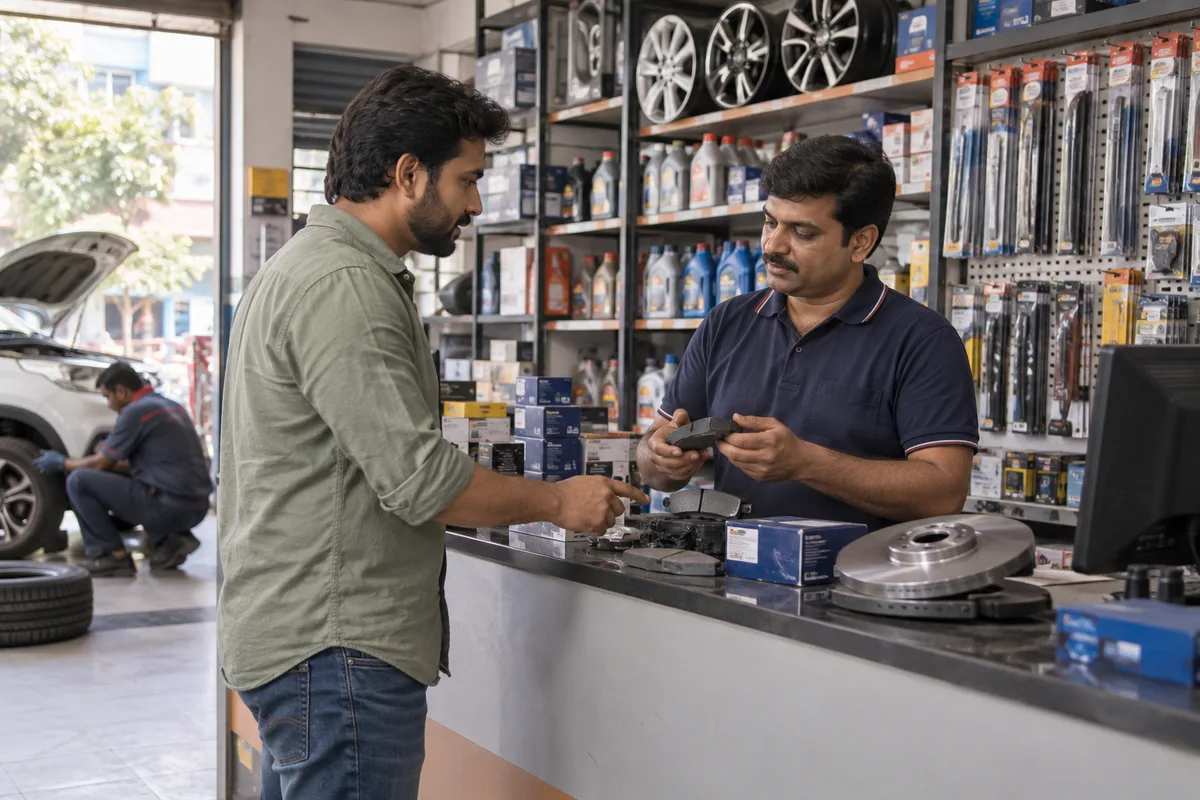 6 min read · 1 Oct 2026Serving the workshop trade and the walk-in buyer at the same parts counterHow an auto parts shop can run two lanes at one counter: an account lane for garages that buy on speed and credit, and a retail lane for walk-in owners who buy on price and advice.
More for auto repair shops
Everything else we would do for you.
Closest to this: sales craft
Also for auto repair shops
Or start from the overview: sales and marketing for auto repair shops.
Your next practical step
Tell us what you are trying to grow, and we will read it before we call.
Eight short steps, mostly taps. Skip anything you would rather answer on the call.