Auto repair shops · Sales training
Train the counter staff to explain a quote without sounding defensive.
Sales training for an auto repair shop means preparing counter staff and service advisors to explain a diagnosis and a quote clearly. It also covers handling a price objection honestly and following up on a job that was not booked immediately. GullySales runs this training around the real conversations your team has every day.
Scope, fee, reporting and term are agreed in writing after we have read your brief and spoken to you.

What sales training means
Sales training teaches a sales team a skill it does not yet have, such as handling a specific objection or running a proper site visit, usually through a structured session. GullySales runs these sessions around real objections and calls from your business rather than generic sales theory.
Last updated 5 Oct 2026.
For auto repair shops
Where it usually goes wrong, and what we would do.
“Explaining a diagnosis builds more trust than a lower price”
A customer who understands why a part needs replacing, in plain language, is more likely to approve the work than one simply given a number and a part name.
“Price objections need a calm, specific answer”
A trained response comparing genuine and after-market parts, or explaining labour involved, handles a price objection better than a discount offered too quickly.
“Follow-up on an unbooked quote is a trainable habit”
A team trained to call back the next day on a quote that was not booked recovers jobs that would otherwise be lost to silence.
What we do
What we deliver for auto repair shops.
Every deliverable, what it covers for you, and the result it is there to produce. Nothing here is an extra.
Diagnosis explanation training
Training for counter staff and mechanics on explaining a diagnosis in plain language before quoting a price.
Result: Customers approve work because they understand it, not because they trust blindly.
Price objection response practice
Practised responses comparing genuine and after-market parts or explaining labour, for handling a price objection calmly.
Result: Staff hold a fair price with a clear answer instead of discounting fast.
Follow-up call training for unbooked quotes
Training on calling back the next day for a quote that was not booked immediately.
Result: Jobs that would have gone quiet get recovered instead.
Session plan with periodic refreshers
An initial training session followed by short, scheduled refreshers instead of a single one-time course.
Result: The training actually sticks instead of fading over time.
Role coverage across service advisors and senior mechanics
Training extended to whoever quotes jobs and talks to customers directly, not only the counter staff.
Result: Every customer gets the same clear, confident explanation, whoever they speak to.
How the result is measured
- Skill assessment scores
- Objection handling improvement
- Conversion rate after training
Recorded as a baseline before work starts, so every later report has an honest comparison.
Situations to practise
Six counter conversations an auto repair shop should practise, and what good looks like.
- The customer says another garage quoted less
- Ask what the other quote included: parts brand, labour, washing, warranty. Compare line by line. Practise doing this without running the other garage down.
- Explaining a diagnosis at the counter
- Show the worn part or a photo of it. Say what you found, why it matters, and what can wait till the next service. Practise these three sentences with a real job card.
- The estimate goes up after the vehicle is opened
- Call before the extra work starts. Give the part, the reason and the new total, then wait for a yes. Practise the call with the first estimate in front of you.
- A phone caller only wants a price
- Ask make, model, year, kilometres and the complaint before quoting. Give a range for a service and say what is extra. Invite them to bring the vehicle for a proper look.
- An insurance-claim customer does not know the steps
- Explain the order in plain words: intimation, survey, estimate approval, repair, delivery. Tell them which documents to bring. Practise it as one short explanation.
- An estimate was given and never booked
- Call about the specific job, mention any safety item such as brakes or tyres, and ask if they want a slot. Practise with last week's unbooked estimates.
Who it is for
This is written for these auto repair shops.
- Multi-brand service garages
- Authorised brand service centres
- Denting and painting specialists
- Two-wheeler service centres
- Fleet and commercial vehicle service providers
- Insurance-claim repair specialists
Not for
It is not the right fit if.
- The garage has one counter person who is also the mechanic, so a training session would take them off the job with no one to replace them.
- The garage has not written down how it prices common jobs, so staff would be trained to explain a quote that no one agrees on.
How it works
How the sales training work runs
The work itself, in order. How an engagement starts, from your brief to a written scope, is set out on our method page.
- 1
Assess current skill levels
We listen to a sample of calls, read CRM records and talk to managers and reps. Each person is placed against the skills map, so we know who needs what.
- 2
Build the curriculum
Content is written around your product, customers and sales cycle. We agree the order of modules with you before any session runs.
- 3
Schedule and deliver
Sessions run on a calendar agreed with you, short enough that reps are not pulled off the phones for a whole day. Each ends with practice.
- 4
Check on the job
Knowledge checks show what was learned. A manager then checks a real call against the skills map, because passing a quiz does not show a rep can sell.
- 5
Review and refresh
The curriculum is revisited when a product, price or competitor changes, and the manager is shown how to keep running short practice sessions after we step back.
Where this fits
Three pieces of sales work, in this order.
This work sits inside sales management. A target, a review routine and someone who owns the number.
Step 1
Sales audit
Find where deals are being lost and what to fix first.
Start here if you cannot say where orders are lost.
Step 2
Sales process design
One written way to sell, from first enquiry to repeat order.
Start here if every salesperson sells differently.
Step 3 · you are here
Sales management
A target, a review routine and someone who owns the number.
Start here if the team has targets and no routine.
FAQ
Questions owners ask before they call.
Not here? More answers, or ask on WhatsApp.
Who needs this training?
How long does training like this take?
Can our senior mechanics join the role-play, or only the counter staff?
How do we check the training changed anything?
How much does it cost?
How long is the contract?
Who will actually do the work?
What do you need from us?
What if we are not happy with the work?
From the blog
Further reading for auto repair shops.
 5 min read · 11 Oct 2026Using due dates to bring vehicle owners back: service, insurance and pollution checksHow a workshop or dealer can record each vehicle's next service, insurance and pollution-check dates, then call owners with a real reason instead of a generic offer.
 6 min read · 6 Oct 2026How buyers choose a showroom, workshop or parts counterCar, bike, repair and parts buyers send one enquiry to several sellers and pick the first clear answer. This post lists what each buyer checks, and where a dealer or workshop quietly loses them.
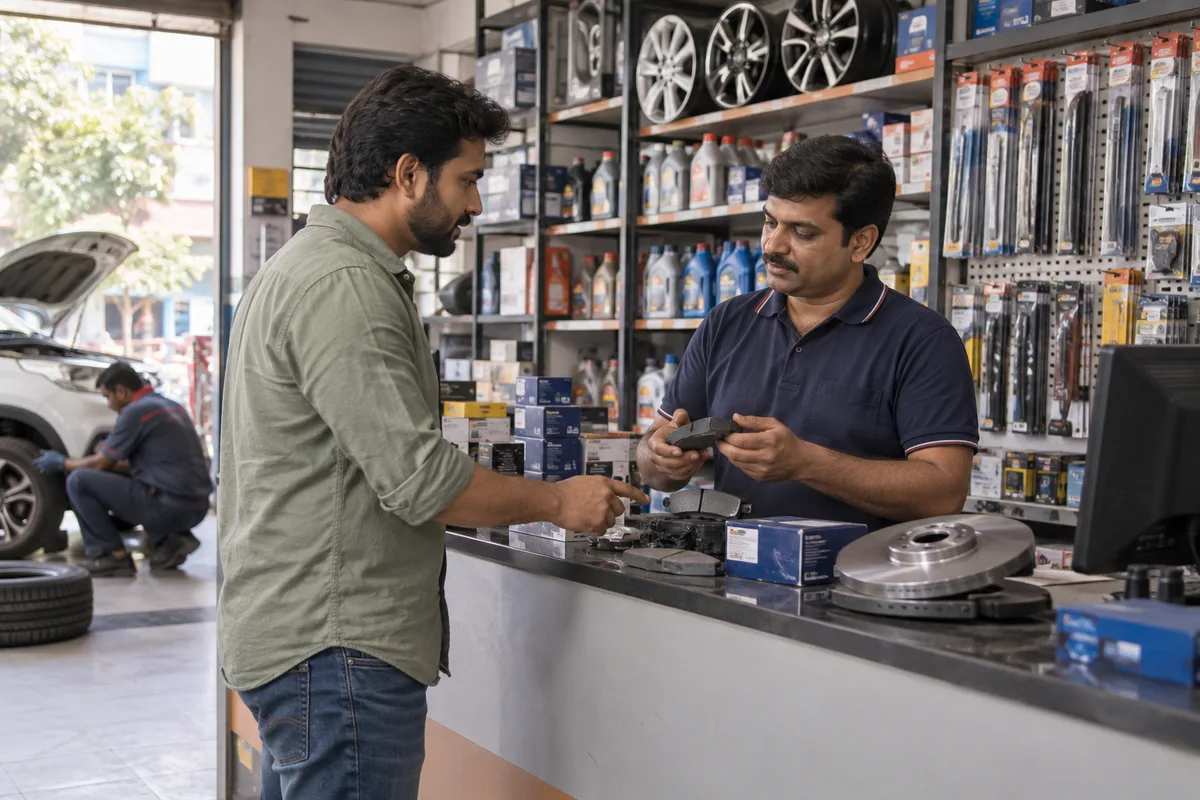 6 min read · 1 Oct 2026Serving the workshop trade and the walk-in buyer at the same parts counterHow an auto parts shop can run two lanes at one counter: an account lane for garages that buy on speed and credit, and a retail lane for walk-in owners who buy on price and advice.
More for auto repair shops
Everything else we would do for you.
Closest to this: sales craft
Also for auto repair shops
Or start from the overview: sales and marketing for auto repair shops.
Your next practical step
Tell us what you are trying to grow, and we will read it before we call.
Eight short steps, mostly taps. Skip anything you would rather answer on the call.