Battery dealers · Content marketing
Explain batteries so plainly that the reader rings you to fit one.
Content marketing for a battery dealer is writing and filming the answers that vehicle owners, garages and households look for before they buy. GullySales works on choosing the questions, producing the guides and linking each to a way to ask the shop.
Scope, fee, reporting and term are agreed in writing after we have read your brief and spoken to you.
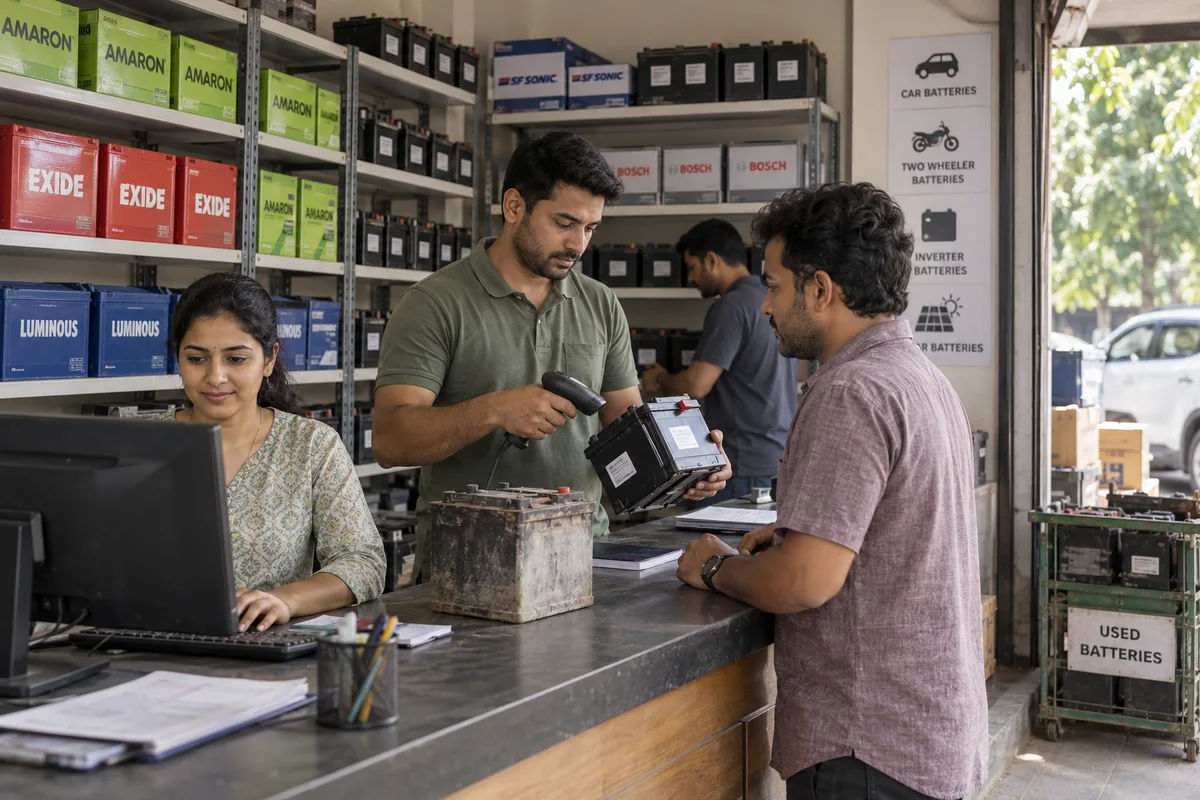
What content marketing means
Content marketing is writing articles, guides and pages that answer the questions buyers search before they are ready to enquire. This makes your business visible and trusted before the first call. GullySales plans this content from the first conversation onward, choosing topics that match real search demand rather than guesses.
Last updated 14 Nov 2026.
For battery dealers
Where it usually goes wrong, and what we would do.
“Buyers do not know what to ask”
An owner knows the car will not start, not whether the battery or the alternator is at fault. A guide that explains the signs earns trust before any price is quoted.
“Exchange and warranty terms need explaining”
Buyers compare a figure after exchange with a figure without it and think one shop dearer. A page that sets out how exchange and the warranty card work removes the confusion.
“Inverter buyers need arithmetic in plain words”
A household wants to know how many hours of backup its fans and lights get. A worked example in appliances, not technical units, is the content that brings the enquiry.
“Content written once serves for years”
A guide on how long a battery lasts or how to read a warranty card stays useful. A shop that writes ten such pages has a standing source of enquiries.
What we do
What we deliver for battery dealers.
The work available for this need. We agree the deliverables and responsibilities for your engagement in writing.
Question list from the counter
Questions callers and garages ask, collected from the call log and the counter, sorted by vehicle type and urgency.
Result: Each guide starts from a question people actually ask.
Starter guides for owners
Pages on signs of a failing battery, how exchange works and what a warranty card covers, written in plain words.
Result: An owner can read the answer before calling.
Inverter and backup guide
A worked example from appliances to battery capacity, with a form to send in the load.
Result: The shop receives the load, not a bare price query.
Short videos and carousels
The same guides cut into short videos and picture posts for social pages and WhatsApp status.
Result: One guide appears in several places.
Garage handout
A one-page sheet for mechanics with fitting notes, models stocked and how to reach the shop.
Result: A mechanic has something to hand to a customer.
Content index and refresh note
A list of every guide, its purpose and the date it was last checked, with updates when models or terms change.
Result: Out-of-date guides are flagged rather than left to mislead.
How the result is measured
- Pages published
- Organic traffic
- Enquiries from content pages
Recorded as a baseline before work starts, so every later report has an honest comparison.
Posts and pieces to plan
Guides worth writing from the questions the counter hears again and again.
- Is it the battery or the alternator
- A plain guide on signs, checked by your fitter. Ends by saying when to bring the car in and what the test shows.
- How exchange and warranty work in this shop
- A page that sets out exchange value and the warranty card in words. Removes the confusion that makes one shop look dearer than another.
- How many hours will an inverter run my fans
- A worked example from appliances to backup, in plain terms. Needs a fitter's review and no promise on the battery's life.
- What to hand a garage mechanic
- A one-page handout for workshops with brands, price card and delivery. A leave-behind for the garage list.
- Care of an idle vehicle's battery
- A short note for owners who park a car for long stretches. Says what to check and when to ask a shop.
Who it is for
This is written for these battery dealers.
- Car and two-wheeler battery dealers
- Truck and bus battery dealers
- Inverter and home UPS battery dealers
- Authorised brand battery outlets
- Battery shops offering doorstep fitting
- Solar battery and storage dealers
- Electric vehicle battery service points
- Wholesale battery suppliers who sell to garages
Before you decide
When this may not be the right fit.
- Your fitter cannot review a draft, so a guide would state battery facts nobody at the shop has checked.
- You do not yet have a stated exchange or warranty process to explain.
- You want a long blog for its own sake, and a handful of clear guides would serve better.
Before you decide
Agree the work. Know how to judge it.
Content marketing for battery dealers: use these checks to prepare, choose the scope, and review what changes.
Bring the right evidence
Bring questions from sales calls and examples of objections that delay a decision. Choose a subject expert who can check the substance, and identify evidence that can be published.
Make the scope clear
Agree the reader, buying question, format, and distribution route for each piece. Set the approval process and distinguish new research from rewriting material you already have.
Check the work in use
Ask a colleague to use the draft in a real buyer conversation. It should answer the question, support its claims, and make the next step clear without requiring a sales pitch to explain it.
Know when to change course
If the same unanswered question appears in several articles, improve the strongest page before commissioning another. More words are not a substitute for missing evidence.
These are discussion points, not a fixed package. GullySales confirms the deliverables, responsibilities, fee, and term in writing after reading your brief and speaking with you.
Before we start
What to have ready before the work starts.
The records, access and decisions this work needs from battery dealers. Anything missing is noted in the written scope, with who will supply it.
- A notebook of counter questions
- Counter staff should write down buyer questions in any notebook, using the buyer's own words. If this is missing, we guess the topics from search data, and the guides answer what the internet asks rather than what your buyers actually ask you across the counter. A page torn from a diary is fine, provided dates are kept.
- Time with your senior technician
- The person who tests and fits batteries must be available for a conversation, in the shop if possible. Without them, the facts in the guides come from manufacturer pages, and a claim that your own technician would dispute may be published under the shop's name by mistake. A short visit of a morning is enough if the technician can speak freely.
- The warranty card and exchange rule
- We need a photograph of the warranty card you hand over and the written exchange rule. Plain language is fine. If these are missing, the guide on terms cannot be written, and the explanation buyers want first is left out of the content, which leaves the confusion in place. If the card has changed over the years, bring the old versions too.
- Manufacturer material you are free to use
- Share any brochures or sheets from the brands you stock, together with permission to quote from them. When permission is not clear, we write from your technician's account and leave the manufacturer's wording out, which makes the guides slower to produce and a little plainer to read. A list of the brands you stock saves a request later.
- Someone to approve each draft
- Name a person who reads each guide for accuracy and says yes or no. A guide that nobody checks carries a risk of a wrong statement about battery life, so unapproved drafts wait, and the whole plan slips behind that person's reply instead of moving forward on schedule. A second approver for the days when the first is away avoids a stalled plan.
How it works
How the content marketing work runs
The work itself, in order. How an engagement starts, from your brief to a written scope, is set out on our method page.
- 1
Collect the questions asked at the counter
Over a spell that you choose, the counter staff write down every question a buyer asks, from the price after exchange to whether an old battery can be saved. We read the list with you and group it by buyer. This becomes the question list, which decides what we write and in what order we write it.
- 2
Pick the first guides with you
From the question list, you choose the few that cost you the longest time on the phone. We agree one guide for car and two-wheeler owners, one for inverter buyers and one for garages. Each has a named reader, so that nothing is written for everyone and therefore for nobody in particular. The reader and the question are written at the top of each brief.
- 3
Interview your senior technician for the facts
We sit with the person who fits batteries and record their answers about the signs of a failing battery, the effect of heat and how a test is done. The guides are written from these answers, not from a manufacturer's brochure, and the technician checks each claim before the draft moves on. The technician's wording is kept where it is clear.
- 4
Draft the inverter arithmetic in plain words
We turn the backup question into a worked example that a household can follow, using appliances they know and the hours they want to run them. You or the technician check every figure in the example. A figure that cannot be defended is removed before the guide is released to the public. The worked example is checked once more against a real invoice.
- 5
Publish and cut each guide into smaller pieces
Once approved, the guides go on the website, and each one is cut into a short video, a carousel and a message that the counter can forward to a buyer. You decide which pieces go to garages and which go to owners. Every piece ends with a clear way to ask the shop. The garage version is printed as a one-page handout for the counter.
- 6
Check which guides were read and which brought calls
We compare the guide visits and the calls that mention a guide against the figures recorded before the work began. Counter staff note when a caller says they read something. You decide which guides to refresh, which to merge and which question deserves a new guide next. Guides with no visits are looked at first, since the title or placement may be at fault.
Where this fits
Three pieces of sales work, in this order.
This work sits inside sales process design, at stage 0, foundation. The audit comes before it, and sales management keeps it running.
Step 1
Sales audit
Find where deals are being lost and what to fix first.
Start here if you cannot say where orders are lost.
Step 2 · you are here
Sales process design
One written way to sell, from first enquiry to repeat order.
Start here if every salesperson sells differently.
Step 3
Sales management
A target, a review routine and someone who owns the number.
Start here if the team has targets and no routine.
FAQ
Questions owners ask before they call.
Not here? More answers, or ask on WhatsApp.
How much should a battery shop write?
Can we use the manufacturer's material?
How do we tell if a guide is working?
Can a guide state how long a battery will last?
Will you write about batteries we do not stock?
How do we avoid copying the manufacturer's pages?
How long is the contract?
Who will actually do the work?
What do you need from us?
What if we are not happy with the work?
More for battery dealers
Related work to consider.
Closest to this: content and social
Also for battery dealers
Or start from the overview: sales and marketing for battery dealers.
Your next practical step
Tell us what you are trying to grow, and we will read it before we call.
Eight short steps, mostly taps. Skip anything you would rather answer on the call.