Battery dealers · Social media
Post what a battery buyer needs to see, not what every shop posts.
Social media marketing for a battery dealer means showing the shop at work, explaining batteries in plain words and staying present for the owners and garages who will need one. GullySales works on what to post, where, and how a post turns into a call.
Scope, fee, reporting and term are agreed in writing after we have read your brief and spoken to you.
What social media means
Social media is the ongoing posting your business does on platforms such as Instagram, Facebook and LinkedIn to stay visible to customers and prospects between purchases. GullySales plans a posting calendar, writes captions and designs the images so the page looks active and answers what a visitor would ask.
Last updated 14 Nov 2026.
For battery dealers
Where it usually goes wrong, and what we would do.
“A battery is a distress purchase, not a scroll purchase”
Nobody buys a battery because of a post. The post builds recognition, so that on the morning the car fails, the owner already knows your shop's name and what it does.
“Photographs of actual fitting beat stock images”
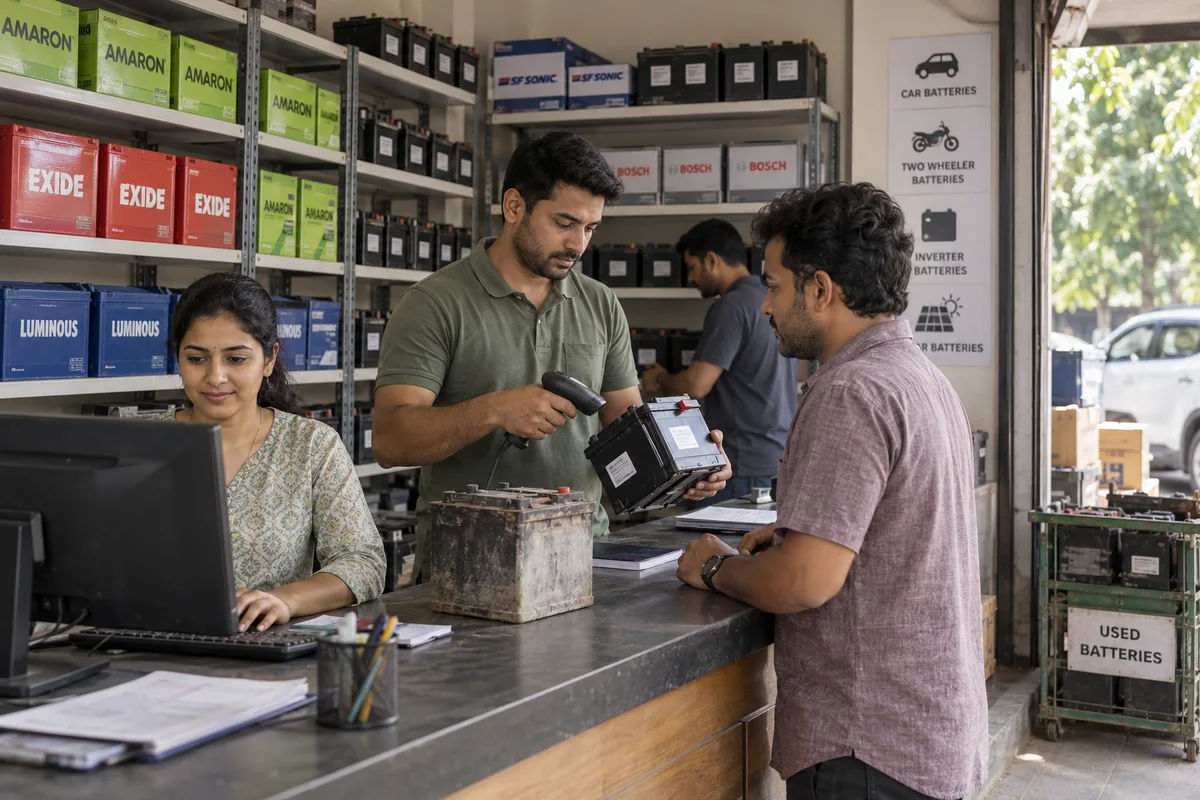
A mechanic checking voltage and a customer's old battery on the counter show the work. Generic brand pictures are the same on every shop's page and tell the viewer nothing about yours.
“Garages and fleet managers watch different places”
A mechanic follows trade groups and videos; a fleet manager reads professional networks. One post for all of them reaches none, so each audience gets its own.
“Seasonal tips match real worry”
Starting trouble in the cold, a battery drained by a parked car, inverter care before outages. These are the questions people already have, and a short answer shows you know the work.
What we do
What we deliver for battery dealers.
The work available for this need. We agree the deliverables and responsibilities for your engagement in writing.
Page set-up for a battery shop
Profile, bio, address, contact button and pinned post, written so a visitor knows what you sell and where within a moment.
Result: A new visitor can find the phone number and the area served.
Content plan around real questions
A list of post ideas drawn from the questions callers ask at the counter, grouped by vehicle owner, garage and household.
Result: Each post answers a question the shop has actually been asked.
Short videos of fitting and testing
Brief clips showing a voltage check, an exchange and an inverter installation, filmed on a phone with the owner's permission.
Result: The shop's work is visible without an explanation.
Garage-facing posts
Price cards, stock news and supply arrangements shared in places mechanics look.
Result: Mechanics have a post to forward to a customer.
Reply and comment handling
A routine for answering comments and messages with the saved price reply and moving the buyer to WhatsApp or a call.
Result: A comment about price receives a clear reply.
Post results sheet
Reach, messages and calls traced to each post type beside the starting figures.
Result: You can see which posts led to an enquiry.
How the result is measured
- Posts published
- Engagement rate
- Enquiries from social profiles
Recorded as a baseline before work starts, so every later report has an honest comparison.
Posts and pieces to plan
Posts that make the shop the one remembered on the morning a battery fails.
- A battery tested with a meter on the counter
- A short clip with a voiceover on what the reading shows. Needs a real battery and no promise on how long it will last.
- An old battery beside the new one on exchange
- A photograph showing the exchange in action, with the model and the brand. Says what exchange means in your shop.
- Cold-morning starting trouble
- A seasonal post on what to check before calling a shop. Ends with the opening hours and the number.
- A depot visit to a bus fleet
- A post aimed at fleet managers on a business network. Needs the fleet's agreement and no vehicle numbers in frame.
- Inverter care before the outage season
- A short guide with a photograph of water-level checks done in your shop, if the unit needs it, and a booking route.
Who it is for
This is written for these battery dealers.
- Car and two-wheeler battery dealers
- Truck and bus battery dealers
- Inverter and home UPS battery dealers
- Authorised brand battery outlets
- Battery shops offering doorstep fitting
- Solar battery and storage dealers
- Electric vehicle battery service points
- Wholesale battery suppliers who sell to garages
Before you decide
When this may not be the right fit.
- You have no one to reply to comments and messages, and a post would draw price questions that go unanswered.
- You hope a post will sell a battery that day, and the buyer who needs one searches the map and rings.
- Your shop has no photographs of its own work, and stock images say the same on every shop's page.
Before you decide
Agree the work. Know how to judge it.
Social media marketing for battery dealers: use these checks to prepare, choose the scope, and review what changes.
Bring the right evidence
Review the posts that produced useful conversations, not only the ones with the most views. Gather buyer questions and decide which team member can contribute credible material.
Make the scope clear
Choose the audience and channel before setting a posting volume. Agree who supplies material, approves posts, and handles messages, including complaints or questions the agency cannot answer.
Check the work in use
Follow a post through to the profile, website, and response. A useful report explains the quality of conversations and enquiries, alongside reach and engagement.
Know when to change course
If publishing takes time away from unanswered buyer messages, fix the response routine first. Do not expand to another channel without a clear reason for being there.
These are discussion points, not a fixed package. GullySales confirms the deliverables, responsibilities, fee, and term in writing after reading your brief and speaking with you.
Before we start
What to have ready before the work starts.
The records, access and decisions this work needs from battery dealers. Anything missing is noted in the written scope, with who will supply it.
- Logins to every existing page
- Collect the usernames and recovery details for each page or group the shop has ever opened. Even old ones count. If a login is lost, we cannot merge or close that page, and the shop appears under two different names to a buyer who searches for it, which splits the following. A phone number linked to each page is also needed for recovery.
- Permission to photograph the fitting bay
- You must agree when and where we may photograph work, and confirm that customers are not shown or that their vehicles are cropped. Without agreement, the content plan has to rely on stock-style pictures, which are the weakest kind of post for a battery shop and buyers scroll past without a pause. A short written note from you is enough.
- A technician who will appear on camera
- One person from the fitting bay needs to be willing to explain a battery test in their own words. If nobody agrees, the short videos are limited to hands and equipment, and the explanations appear only as text, which carries less trust with a worried buyer. A second person can be named as a back-up for busy days.
- Your list of garages and fleets to reach
- Give us the mechanics, workshop owners and fleet managers you want the trade posts to speak to, and where they are online. Without it, posts reach only the general public, and the garage-facing part of the plan has no audience to be written for or measured against. Phone numbers are not needed, only names and the places they post in.
- A decision on who may reply publicly
- Name the person allowed to answer comments in the shop's name and the topics they must pass to you. If nobody is named, replies wait for you, and a complaint sits visible on the page for days where the next buyer can read it and form a view of the shop. A short list of topics that are never discussed in public helps us write replies the owner is comfortable with.
How it works
How the social media work runs
The work itself, in order. How an engagement starts, from your brief to a written scope, is set out on our method page.
- 1
Look at the pages the shop already has
We open every page, group and number the shop already uses on social platforms, including any that a staff member started years ago and forgot. You tell us which ones you control. We close duplicates and decide on one main page, so that every later post has a single home that buyers can find.
- 2
Photograph one real fitting from start to finish
We stand beside the technician through a battery change and take photographs of the test, the old battery coming out and the new one going in. You approve what may be shown, and we leave out number plates and faces. These become the first photographs and the first short videos for the page.
- 3
Sort the counter questions into post ideas
We ask the person at the counter for the questions drivers repeat, such as why a battery died early or what exchange means. Each becomes a post idea written in plain words. You say which ideas you are happy to answer in public and which are best handled by a phone call. Questions about price alone are kept for private replies.
- 4
Split the plan between buyers and garages
Vehicle owners get explanations and fitting photographs, while mechanics and fleet managers get posts about stock and supply. We assign each kind of post to the platform where that person actually looks. You approve the split before the first draft is written, so that nothing is posted to the wrong audience. Mechanics are asked which platform they open.
- 5
Set how comments and messages are answered
We write sample replies for price questions, breakdown requests and complaints, and name who answers each kind. A comment that asks for a price is moved to a private message. You decide what the shop will say in public and what it will not, and the replies follow that line. We also mark a hand-over to the owner for any threat or abuse.
- 6
Read the post sheet against calls received
The post results sheet lists each post with the calls and messages that followed it, as the counter noted them. We read it against the count of calls recorded before the posting began. You decide which kinds of post continue, which are changed and which are replaced by something new. Posts that drew no reply are kept in the sheet too.
Where this fits
Three pieces of sales work, in this order.
This work sits inside sales process design, at stage 0, foundation. The audit comes before it, and sales management keeps it running.
Step 1
Sales audit
Find where deals are being lost and what to fix first.
Start here if you cannot say where orders are lost.
Step 2 · you are here
Sales process design
One written way to sell, from first enquiry to repeat order.
Start here if every salesperson sells differently.
Step 3
Sales management
A target, a review routine and someone who owns the number.
Start here if the team has targets and no routine.
FAQ
Questions owners ask before they call.
Not here? More answers, or ask on WhatsApp.
Which platform should a battery shop use first?
Should we show customer vehicles or number plates?
Do posts need to be funny or viral?
Can we show a customer's vehicle while changing the battery?
Do we have to post about every battery we sell?
Who owns the page and its followers?
How much does it cost?
How long is the contract?
How soon will we see results?
Who will actually do the work?
More for battery dealers
Related work to consider.
Closest to this: content and social
Also for battery dealers
Or start from the overview: sales and marketing for battery dealers.
Your next practical step
Tell us what you are trying to grow, and we will read it before we call.
Eight short steps, mostly taps. Skip anything you would rather answer on the call.