Battery dealers · Lead generation
Turn a dead battery, a garage chat and an inverter question into enquiries you can count.
Lead generation for a battery dealer is the work of making sure a vehicle owner, a mechanic, a fleet manager or a household can reach the counter at the moment a battery fails or an inverter is needed. GullySales works on the sources that send those enquiries and on a record of which source sent which buyer.
Scope, fee, reporting and term are agreed in writing after we have read your brief and spoken to you.
What lead generation means
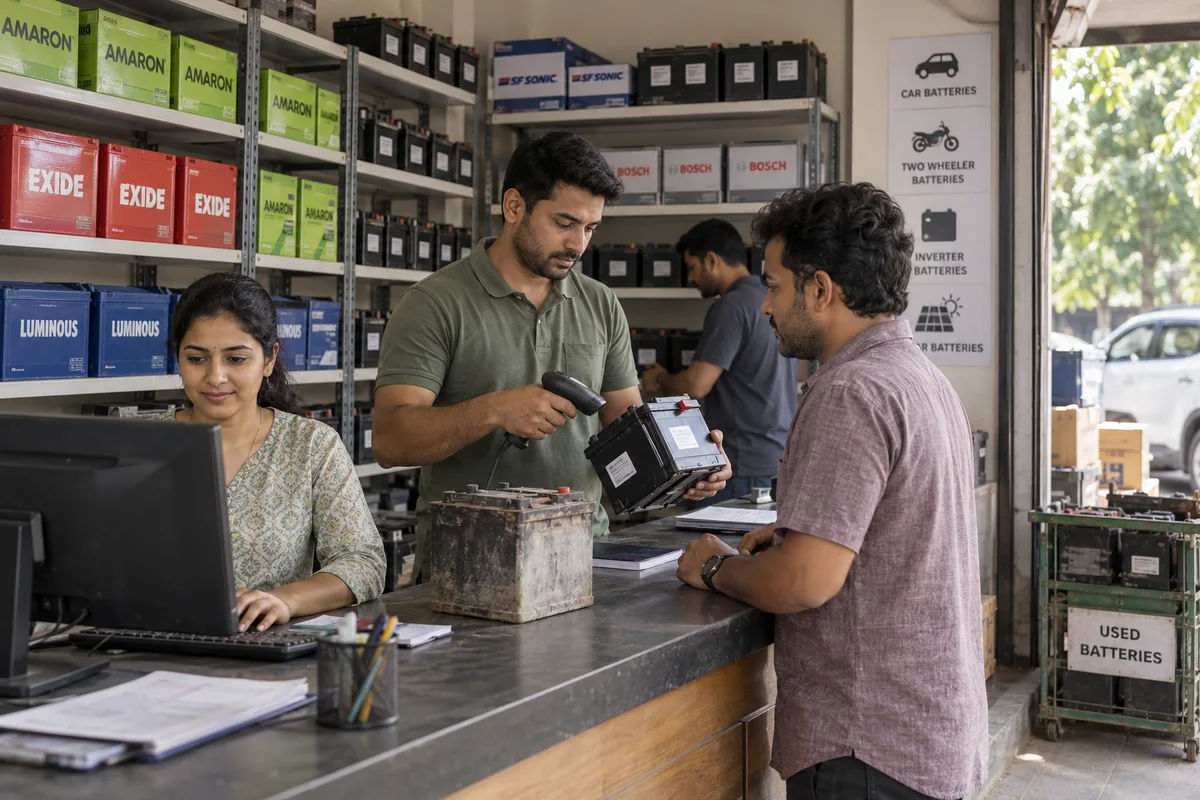
Lead generation is the combined work of every channel that brings in a new enquiry, whether from search, adverts, referrals or a stall at an exhibition. GullySales runs these channels together and reports the number of enquiries each one produced, not the activity behind it.
Plan the next part of the work
Last updated 21 Nov 2026.
For battery dealers
Where it usually goes wrong, and what we would do.
“The breakdown buyer has no time to compare”
A driver stuck with a car that will not start rings the first shop that shows a number and answers. The lead exists for a few minutes only, so the dealer who picks up and quotes a price after exchange takes the sale.
“Garages hold a lead you never see”
A mechanic with a bonnet open decides which brand the owner buys and who supplies it. That enquiry never reaches a search engine, so a dealer with no garage list loses sales that were never visible as leads.
“Inverter enquiries start as a vague question”
A household asks whether a battery will run the fans through an evening outage. Without a few questions about the load, the shop gives a price for the wrong capacity and the buyer goes elsewhere for advice.
“Past buyers are a source you already own”
Every battery fitted is a customer who will need another replacement. A shop that wrote down nothing at the counter has to buy that lead again from a search advertisement.
What we do
What we deliver for battery dealers.
The work available for this need. We agree the deliverables and responsibilities for your engagement in writing.
Source list for every enquiry
A short form at the counter and in the call log that records whether the buyer came from Maps, a garage, a fleet, a past sale or a walk-in.
Result: Open the log and read how many enquiries each source sent.
Breakdown reply routine
A saved reply for model, price after exchange and arrival that every person on the counter and the phone uses.
Result: A caller hears the same price and the same arrival answer from anyone who picks up.
Garage and mechanic list
The workshops near you, who supplies them now, and a record of which garage sent which buyer.
Result: Each garage referral appears against the garage's name.
Inverter load form
Questions on fans, lights, television and outage hours, built as a form and as a WhatsApp message.
Result: The household's load arrives before the first call.
Fleet visit sheet
A page for each depot with vehicle numbers, battery sizes and fitted dates, ready for the replacement conversation.
Result: Vehicles due a battery are listed by number.
Lead follow-up board
Every enquiry marked as quoted, fitted, lost or waiting, with the reason for a loss written beside it.
Result: A lost enquiry shows why it was lost.
How the result is measured
- Relevant enquiries by source
- Duplicate and unsuitable enquiries
- Time to the first response
- Accepted enquiries reaching an agreed next step
Recorded as a baseline before work starts, so every later report has an honest comparison.
What to capture
What the counter should write down when a battery enquiry arrives, whoever sends it.
- Vehicle model and the battery now fitted
- Asked first on a breakdown call. It lets you quote a price after exchange for the right unit, and starts the fitted register if the buyer comes.
- Location of the stranded car
- A pin or landmark from the driver. Needed to say whether someone can come, so record it before the price call ends.
- Garage that decided the brand
- Write the workshop and the mechanic on the bill. Mechanics choose the brand while the owner waits, so this shows which garages send sales.
- Appliances and outage hours for an inverter
- Fans, lights and the evening cut. Without the load, the shop prices the wrong capacity and the household goes elsewhere for advice.
- Fleet vehicle count and depot
- Trucks or buses and where they park. Record the person who approves spending, since a fleet buys on records and visits.
- Old battery's purchase date, if known
- Written from the warranty card or the owner's memory. It dates the next replacement and starts the due list.
Who it is for
This is written for these battery dealers.
- Car and two-wheeler battery dealers
- Truck and bus battery dealers
- Inverter and home UPS battery dealers
- Authorised brand battery outlets
- Battery shops offering doorstep fitting
- Solar battery and storage dealers
- Electric vehicle battery service points
- Wholesale battery suppliers who sell to garages
Before you decide
When this may not be the right fit.
- No one can answer the phone and name a price after exchange, so breakdown leads would last only the minutes before the driver rings a rival.
- You cannot send anyone to a stranded vehicle and offer no doorstep fitting, so a breakdown lead would only be disappointed.
- You do not note the vehicle on the bill, and more leads would join a pile you cannot read.
Before you decide
Agree the work. Know how to judge it.
Lead generation for battery dealers: use these checks to prepare, choose the scope, and review what changes.
Bring the right evidence
Define the organisations or buyers you can serve and the reasons they would consider a conversation. Bring examples of accepted and rejected prospects so the selection rule is visible.
Make the scope clear
Agree the research sources, contact approach, qualification rules, and handover. Clarify which meetings count as accepted and what happens to replies that are not ready to buy.
Check the work in use
Review why a prospect was selected and what was learned from the response. Count held, relevant conversations separately from contacts found, messages sent, or meetings booked.
Know when to change course
If the same objection appears repeatedly, adjust the offer or buyer group before increasing outreach. Respect a request to stop contact and keep the exclusion in the record.
These are discussion points, not a fixed package. GullySales confirms the deliverables, responsibilities, fee, and term in writing after reading your brief and speaking with you.
Before we start
What to have ready before the work starts.
The records, access and decisions this work needs from battery dealers. Anything missing is noted in the written scope, with who will supply it.
- The billing book for recent sales
- We need a recent stretch of bills, on paper or in a sheet, with the vehicle, the battery and the payment visible. Messy handwriting is acceptable. Without it the first source list is built on memory alone, and the later comparison has no starting figure to be read against. Several loose sheets or a photographed page are accepted.
- Names of ten regular garages
- Give us the mechanics and workshops that buy from you or recommend you, with the brand each one prefers to fit. A scrap of paper is enough. If the list is missing, the garage route is planned from guesses, and we begin instead with a street-by-street visit to see who is there.
- A person who answers the counter phone
- Someone who takes breakdown calls must be present for the counter sitting and for the trial enquiries. They need not be senior. If nobody is named, the reply routine stays on paper and nobody learns it, which leaves the stranded driver's first impression of the shop exactly as it is today.
- Today's brand and exchange rates
- We need the brands you stock and what you offer against an old battery, as you quote them now. Rough notes are fine. When these are absent, the inverter load form and the breakdown replies carry no price guidance, and every enquiry has to wait for the owner to answer it.
- Access to the Business Profile and form inbox
- Provide owner access to the Maps listing and to wherever website forms arrive. Without it we cannot see which enquiries came from search, and the trial enquiry step has to be run by phone alone, so the source list stays incomplete for that channel and the comparison later is weaker. Sharing the login by invitation is safest.
How it works
How the lead generation work runs
The work itself, in order. How an engagement starts, from your brief to a written scope, is set out on our method page.
- 1
Read the last month of bills and calls
We start with your billing book and the call log on the counter phone, and ask whoever answers where each recent buyer came from. You tell us which sales were breakdowns, which were garage supplies and which were inverters. From that we draw the first source list, with the gaps marked plainly for you to fill.
- 2
Sit at the counter through a busy spell
One of us stands beside whoever answers the phone and listens to how a stranded driver is greeted, what is asked first and how a price is given. You decide whether the vehicle model and the location are asked before the price is quoted. The sheet we leave behind is the breakdown reply routine in rough form.
- 3
Meet the garages that already send buyers
We take the mechanics and workshop owners you name and visit them with you, noting which brand each one fits, who pays on the spot and who wants credit. You say which garages deserve a better arrangement than the rest. We then build the garage and mechanic list from what they tell us across their own counters.
- 4
Draft the inverter load form with your adviser
A household asking about an inverter battery cannot say what capacity it needs, so the form asks which appliances run during a power cut and for how long they must keep running. Your senior counter person checks every question against how you actually advise a buyer. Once corrected, the form is ready to be sent by message.
- 5
Test each source with a trial enquiry
We send one enquiry through the Business Profile, one through a garage and one through the website form, each posing as a buyer with a failed battery. You or the counter staff reply as normal, and we watch where each enquiry lands, who sees it and whether it is written on the lead follow-up board.
- 6
Compare the board with the billing book
After the sources have run for a period you choose, we set the lead follow-up board beside the billing book and count calls, visits and fittings by source, against the figures noted in the first step. You decide which source deserves more of your attention and which one is dropped from the routine.
Where this fits
Three pieces of sales work, in this order.
This work sits inside sales process design, at stage 1, prospecting and lead generation. The audit comes before it, and sales management keeps it running.
Step 1
Sales audit
Find where deals are being lost and what to fix first.
Start here if you cannot say where orders are lost.
Step 2 · you are here
Sales process design
One written way to sell, from first enquiry to repeat order.
Start here if every salesperson sells differently.
Step 3
Sales management
A target, a review routine and someone who owns the number.
Start here if the team has targets and no routine.
FAQ
Questions owners ask before they call.
Not here? More answers, or ask on WhatsApp.
Which lead source should a battery shop start with?
Do we need paid advertising to get leads?
How do we know a lead was genuine?
What if the stranded driver asks for a price and then goes quiet?
Who handles the leads once they start coming in?
How long is the contract?
How soon will we see results?
Who will actually do the work?
What do you need from us?
What if we are not happy with the work?
More for battery dealers
Related work to consider.
Closest to this: leads and follow-up
Also for battery dealers
Or start from the overview: sales and marketing for battery dealers.
Your next practical step
Tell us what you are trying to grow, and we will read it before we call.
Eight short steps, mostly taps. Skip anything you would rather answer on the call.