Battery dealers · Search engine optimisation
Match the words a driver types when the car stops with pages that answer them.
SEO for a battery dealer means having pages that answer the searches of people with a failed car, two-wheeler or inverter battery, from the model they drive to the backup they need. GullySales works on those pages, the terms behind them and the way the shop is shown in results.
Scope, fee, reporting and term are agreed in writing after we have read your brief and spoken to you.
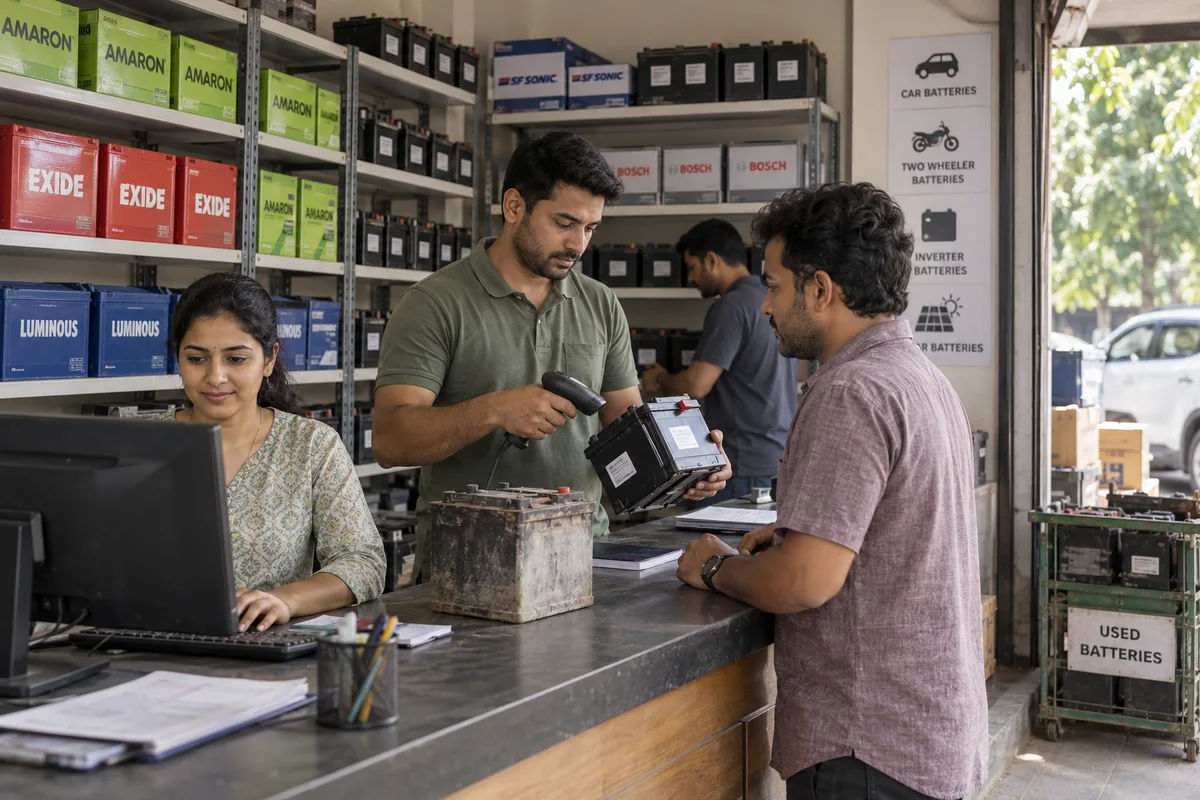
What search engine optimisation means
Search engine optimisation (SEO) is the work of getting your website to appear when a buyer searches Google for what you sell. GullySales builds pages around real search terms, fixes technical issues that block ranking, and tracks which searches actually bring enquiries.
Last updated 14 Nov 2026.
For battery dealers
Where it usually goes wrong, and what we would do.
“Searches name the vehicle, not the brand”
A buyer types the car model with the word battery, not a manufacturer's code. A site that lists only brand names has no page for the search that actually brings a sale.
“The price question is asked before the call”
Callers want to know the figure after exchange. A page that states a price range by model, with what is included, wins the search that a bare product list loses.
“Inverter searches are about hours, not amp-hours”
A household asks how long a battery will run its fans. A page that works from appliances to backup time matches the search; a page of capacity ratings does not.
“Seasons change what people look for”
Cold mornings and wet months bring starting trouble, and summer outages bring inverter searches. A site that has no page ready misses the week when the question is loudest.
What we do
What we deliver for battery dealers.
The work available for this need. We agree the deliverables and responsibilities for your engagement in writing.
Model-by-model battery pages
One page for each common vehicle in your area, listing the battery sizes that fit, brands stocked and the exchange terms.
Result: A search for a car model leads to a page that names a fitting battery.
Inverter backup guide
A plain page that moves from appliances to the battery needed, with a form to send the shop the household's load.
Result: The guide is the page that brings inverter enquiries.
Search term map
A sheet matching each page to the words buyers use for it, so two pages do not compete for the same search.
Result: Every page has one search it is written for.
Page titles and descriptions
Titles and snippets rewritten around the vehicle, the need and the city, in ordinary words.
Result: Results for your pages read as an answer to the search.
Crawl and speed check
A check that pages open on a phone with a weak signal, load their text first and can be read by search engines.
Result: The model pages open and read cleanly on a mobile connection.
Search report from your own data
Impressions, clicks and calls from the site's search data set against the figures noted at the start.
Result: Growth in searches for each model is visible against the baseline.
How the result is measured
- Ranking positions
- Organic traffic
- Enquiries from organic search
Recorded as a baseline before work starts, so every later report has an honest comparison.
Searches your buyers type
What a driver or household types when a battery fails, and the page that answers it.
- Swift battery price after exchange
- A model page giving a price range with exchange, what the figure includes and whether fitting is free. State the date the range was last checked.
- car battery not starting what to do
- A plain page on the signs of a dead battery against an alternator fault, and when to call a shop. Reaches the driver before any shop is chosen.
- inverter battery for 2 fans and lights
- A page that works from appliances to backup hours, with a short form for the household's load. Matches the way the question is asked.
- two wheeler battery near me
- A bike page by model with the brands you stock and the opening hours, linked to the map listing.
- battery warranty card how it works
- A page on how your brands' cards are read, what the shop records and what happens in a claim. Say the maker's terms decide.
- truck battery supplier for fleet
- A commercial page naming the vehicle types you supply, with a route to ask for a depot visit.
Who it is for
This is written for these battery dealers.
- Car and two-wheeler battery dealers
- Truck and bus battery dealers
- Inverter and home UPS battery dealers
- Authorised brand battery outlets
- Battery shops offering doorstep fitting
- Solar battery and storage dealers
- Electric vehicle battery service points
- Wholesale battery suppliers who sell to garages
Before you decide
When this may not be the right fit.
- You cannot state a price range or an exchange term, so pages would draw callers who then meet a shop with no answer.
- Your stock and prices move faster than anyone can keep a page current.
- You expect search to bring breakdown buyers instantly, when those buyers choose from the map and the phone, and pages serve the planning buyer.
Before you decide
Agree the work. Know how to judge it.
SEO for battery dealers: use these checks to prepare, choose the scope, and review what changes.
Bring the right evidence
Bring the pages for the products or services you want to sell, the search queries available in your reports, and examples of enquiries from search. Separate branded searches from buyers discovering you for the first time.
Make the scope clear
Agree which pages and technical fixes come first, who can publish changes, and who supplies subject knowledge. Link search work to a relevant enquiry route on each priority page.
Check the work in use
Follow the trail from a relevant query to its landing page and then to an enquiry. Review whether those enquiries fit your offer, alongside indexing and search visibility.
Know when to change course
A ranking movement alone is not a buying signal. If traffic grows but relevant enquiries do not, revisit page intent and the offer before producing more pages.
These are discussion points, not a fixed package. GullySales confirms the deliverables, responsibilities, fee, and term in writing after reading your brief and speaking with you.
Before we start
What to have ready before the work starts.
The records, access and decisions this work needs from battery dealers. Anything missing is noted in the written scope, with who will supply it.
- Your stocked battery list with sizes
- We need the brands and capacities you actually stock, as a sheet or a photograph of the shelf list. Rough is acceptable. Without it, model pages would promise batteries you do not hold, so we would publish only the models you confirm and leave the remainder aside until the list arrives. A photograph of the stock room shelves with the labels visible is enough, and any model whose battery you only order on request is marked as such, so the page can say so.
- The top vehicle models from billing
- A list of the twenty or so models you replace for, drawn from the billing book. If it is missing, we start from regional vehicle sales and run a longer check with your counter staff, which delays the pages for the models that truly matter to your shop and risks pages nobody searches for. Even a rough count from memory helps us decide the order.
- Access to the website and its analytics
- We need an admin login to the site and a view of its visitor data, or the name of whoever holds them. If neither is available, we cannot read the crawl and speed results, and the search report has to rely on call counts that the counter notes by hand, which are less precise. A view-only invitation is enough for the visitor figures.
- Your exchange and warranty terms in writing
- Searchers ask about the price after exchange and about warranty before they call, so the pages must state your terms exactly. A photograph of the warranty card and the exchange rule is enough. If the terms are missing, the page stays silent on them, which sends the buyer to a competitor who states them. Terms that change by brand are listed brand by brand.
How it works
How the search engine optimisation work runs
The work itself, in order. How an engagement starts, from your brief to a written scope, is set out on our method page.
- 1
Collect the vehicle models you fit
We ask for the car, two-wheeler and truck models whose batteries you replace, drawn from your bills and from what the counter remembers, and we sort them by how many times each appears. You decide which models deserve their own page first. This list becomes the base of the search term map, with every model tied to a battery you stock.
- 2
Check what the shop shows in results today
Using your shop name, a few model searches and the name of the city, we look at what appears for you, what appears for rival shops and what your listing shows. We note the page titles, whether prices appear and whether an existing page loads on a phone. You receive a short record of the starting position to compare against later.
- 3
Confirm each fitment with your senior technician
Fitment details such as terminal side, container size and capacity are checked by the person who fits batteries every working day. We never guess which battery suits which model. Every line on a model page is confirmed by that person, and anything uncertain is left off the page and marked for you to decide later. Anything left out is listed for you.
- 4
Write the model pages and the backup guide
We draft each battery page around the question a driver types, with the model, the options you stock and a plain way to reach the counter. The inverter backup guide is written in hours of running, not technical units. You read the drafts, correct what is wrong and approve the wording before anything goes live on the site.
- 5
Publish, then read the search report against the baseline
Pages go live once you approve them, with titles and descriptions set and the site checked for speed on a phone. Later we read the search report from your own data and set it against the starting position recorded in the second step, counting calls and visits that came from search. You decide which models are added next.
Where this fits
Three pieces of sales work, in this order.
This work sits inside sales process design, at stage 1, prospecting and lead generation. The audit comes before it, and sales management keeps it running.
Step 1
Sales audit
Find where deals are being lost and what to fix first.
Start here if you cannot say where orders are lost.
Step 2 · you are here
Sales process design
One written way to sell, from first enquiry to repeat order.
Start here if every salesperson sells differently.
Step 3
Sales management
A target, a review routine and someone who owns the number.
Start here if the team has targets and no routine.
FAQ
Questions owners ask before they call.
Not here? More answers, or ask on WhatsApp.
Is SEO worth it for a single battery shop?
Should we list every battery we stock?
Can we promise rankings to the owner?
Should the site explain old battery disposal?
Who decides which vehicle models get a page first?
Will the website replace the Maps listing?
How much does it cost?
How long is the contract?
How soon will we see results?
Who will actually do the work?
More for battery dealers
Related work to consider.
Closest to this: search and visibility
Also for battery dealers
Or start from the overview: sales and marketing for battery dealers.
Your next practical step
Tell us what you are trying to grow, and we will read it before we call.
Eight short steps, mostly taps. Skip anything you would rather answer on the call.