Car dealers · Newspaper advertising
Buy the edition your territory covers, not the one your co-dealer shares.
Newspaper advertising for a dealership buys space in one edition on one morning, to carry an offer with a closing date. The brand supplies the artwork, so what you decide is the edition, the date, the size and the number printed on it. GullySales plans those and logs the ad's calls like portal leads.
Scope, fee, reporting and term are agreed in writing after we have read your brief and spoken to you.

What newspaper advertising means
Newspaper advertising is space in a named edition of a paper on a named day, priced by the column centimetre. GullySales picks the edition and language your buyers actually read, meets the release deadline, and gives the reader somewhere to go.
Last updated 5 Oct 2026.
For car dealers
Where it usually goes wrong, and what we would do.
“The edition is the line between you and your co-dealer”
A full city insertion sends test drives to the other showroom carrying the same brand board. Book the editions covering the pin codes your own delivery van serves.
“The artwork is not yours to write”
The manufacturer sets the layout, the model shot and the wording of the scheme, and the dealer footer is the part you control. Spend the argument on the edition and the date.
“The morning before an auspicious delivery date”
Bookings bunch around Dhanteras, Ugadi and the days a family treats as right for taking delivery. The insertion belongs in the week they are choosing, with stock and delivery slots already held.
“The printed number must not ring the workshop”
A service line picking up a new car enquiry on a Saturday loses it twice over. Print a number that reaches the sales desk and is logged the way a portal lead is.
What we do
What we deliver for car dealers.
Every deliverable, what it covers for you, and the result it is there to produce. Nothing here is an extra.
Edition map against your territory
The editions covering the localities your team actually delivers to, set against where the next dealership of your brand begins.
Result: You stop paying to send buyers across the city.
Dates worked back from the scheme
Insertion dates fixed against the validity of the offer and the delivery window, with the publication's material deadline sitting behind each one.
Result: The ad runs while the offer can still be honoured.
Size and section chosen for the page
Display space on the city page compared with classified display in the automobile column, both priced per column centimetre, before anything is booked.
Result: The spend buys the page your buyer opens.
Brand artwork completed with your footer
The manufacturer's approved layout finished with the showroom address, the campaign number and the offer terms, released in the format the paper accepts.
Result: Nothing is rejected by the brand or by the publication.
A campaign number logged like a portal lead
One line ringing the sales desk and nowhere else, with every call entered in the same lead book as the manufacturer's portal enquiries.
Result: Print leads get chased the way portal leads are.
Printed page checked and counted
The page as it ran matched against the booked date, size and section, with the calls on that number read against what the insertion cost.
Result: You can compare a morning in print with a month on a portal.
How the result is measured
- Insertions published as booked
- Enquiries traced to the print route
- Cost per traced enquiry
Recorded as a baseline before work starts, so every later report has an honest comparison.
How space is bought, and checked
What to settle with the paper's executive before the brand's artwork is released.
- Zone edition against your territory
- Ask which zone editions cover your delivery pin codes and compare them with the territory letter from the brand. A full city run also reaches the dealer of your make across town.
- Column centimetres and the footer block
- Confirm the size the brand's template is built for, then check that the dealer footer holds the address, the sales number and the offer terms at the size it will print.
- Automobile page or news page
- Ask which morning the paper runs its automobile pages and whether the position can be written on the order. Other dealers book the same launch weekend, so ask early.
- Brand support for the space
- Some brands share the cost of dealer advertising when the artwork and the proof of publication meet their rules. Ask the area office what they want to see before you book, not after the page has run.
- Number that reaches the sales desk
- Print a line that rings the sales desk, never the workshop. Enter each call in the same lead sheet as the manufacturer's portal enquiries, tagged with the insertion date.
- Proof of the footer
- Ask for the proof of the dealer footer before release and read the address, number and closing date aloud. A wrong footer on a brand layout is yours to put right, not the brand's.
Who it is for
This is written for these car dealers.
- Authorised new car dealerships for mass-market brands
- Premium and luxury car dealerships
- Electric vehicle dealers and experience centres
- Multi-brand pre-owned car dealers
- Manufacturer-certified used car outlets
- Commercial vehicle and taxi fleet dealers
- Dealer groups with several showrooms and workshops
- Rural and semi-urban dealer outlets
How it works
From your first message to the first report.
No open-ended retainer. Every step gives you something in writing.
First
Your brief
You tell us what you need in a few short steps: your business, what you want, where enquiries come from and how they are handled.
After the brief
A conversation and a written scope
We read it, then talk with whoever handles your enquiries. If you want our help, the scope, the fee and the reporting come in writing, and nothing starts before you have read them.
Before work starts
Baseline recorded
The numbers this work is meant to move, such as enquiries, quotations, orders, visits or renewals, written down so every later report has an honest comparison.
After the baseline
The first fix goes live
The fix we agreed to start with is put in place and measured against the baseline, whether that is a reply, a follow-up, a page, a listing or the handover between marketing and sales.
As agreed
Report against the baseline
What moved, what did not, and what changes next, in plain words. How often you get it is set in writing before work starts.
At renewal
Renew on the numbers
The term ends and you decide whether to continue from the results. The length is agreed in writing before anything starts.
How the newspaper advertising work runs
- 1
Fix the date first
A launch, an admission window, an opening weekend or a notice. Everything else is planned backwards from that morning.
- 2
Choose edition, language and day
We match the edition to your catchment and the day to the section your buyer opens.
- 3
Decide size, position and the route back
Display or classified display, how many column centimetres, which page we request, and what the reader is told to call or scan.
- 4
Release the artwork early
The file goes to the publication ahead of its deadline, in the format it takes, with the position request on the order.
- 5
Verify what printed
We read the printed page against the booking and raise it if the ad ran small, late or in the wrong section.
- 6
Count what came back
Calls, scans and form fills on the traced route, reported against what that insertion cost.
Why us
Why owners pick GullySales over an agency.
Marketing and sales, as one job
Most agencies stop at the enquiry. We also fix what happens after it: the reply, the follow-up, the quote and the CRM.
The person on the first call does the work
No account managers in between. You are never handed to someone you have not met.
A baseline before anything starts
Your numbers are written down on day one, so every later report compares against something honest.
The fee in writing, split three ways
Our time, your media spend and production on separate lines. You always see what goes to us.
No guarantees we cannot keep
The term is agreed in writing and never a default twelve months. We never promise a ranking or a lead count, because nobody controls those.
One office, and we say so
Nagarbhavi, Bengaluru. We work across India by call and WhatsApp and travel when a session needs to be in person.
#257, 3rd floor, Sri Nanjundeshwara Complex, Nagarbhavi 8th Block, Outer Ring Road. How we work.
Your brief
Tell us what you need, and we will read it before we call.
Eight short steps about your business, what you want and who decides. Most questions are a tap, and you can skip any you would rather answer on the call.
FAQ
Questions owners ask before they call.
Not here? More answers, or ask on WhatsApp.
Does a newspaper ad still bring walk-ins to the showroom?
The brand gives us the ad. What is left to plan?
Can we add our own discount to the brand's advertisement?
What is a front-page jacket, and should a single showroom buy one?
How much does it cost?
How long is the contract?
How soon will we see results?
Who will actually do the work?
What do you need from us?
What if we are not happy with the work?
From the blog
Further reading for car dealers.
 8 min read · 21 Sept 2026How to advertise to Gen XThe forty-five to sixty year old Indian buyer researches online and then rings you. Age is the one thing you can actually buy on a platform, and on its own it tells you almost nothing.
 6 min read · 11 Jun 2026How to advertise during the festive seasonThe festive season is bought in the monsoon. Book early, know why the rates rise, and match what you sell to the day people actually buy it.
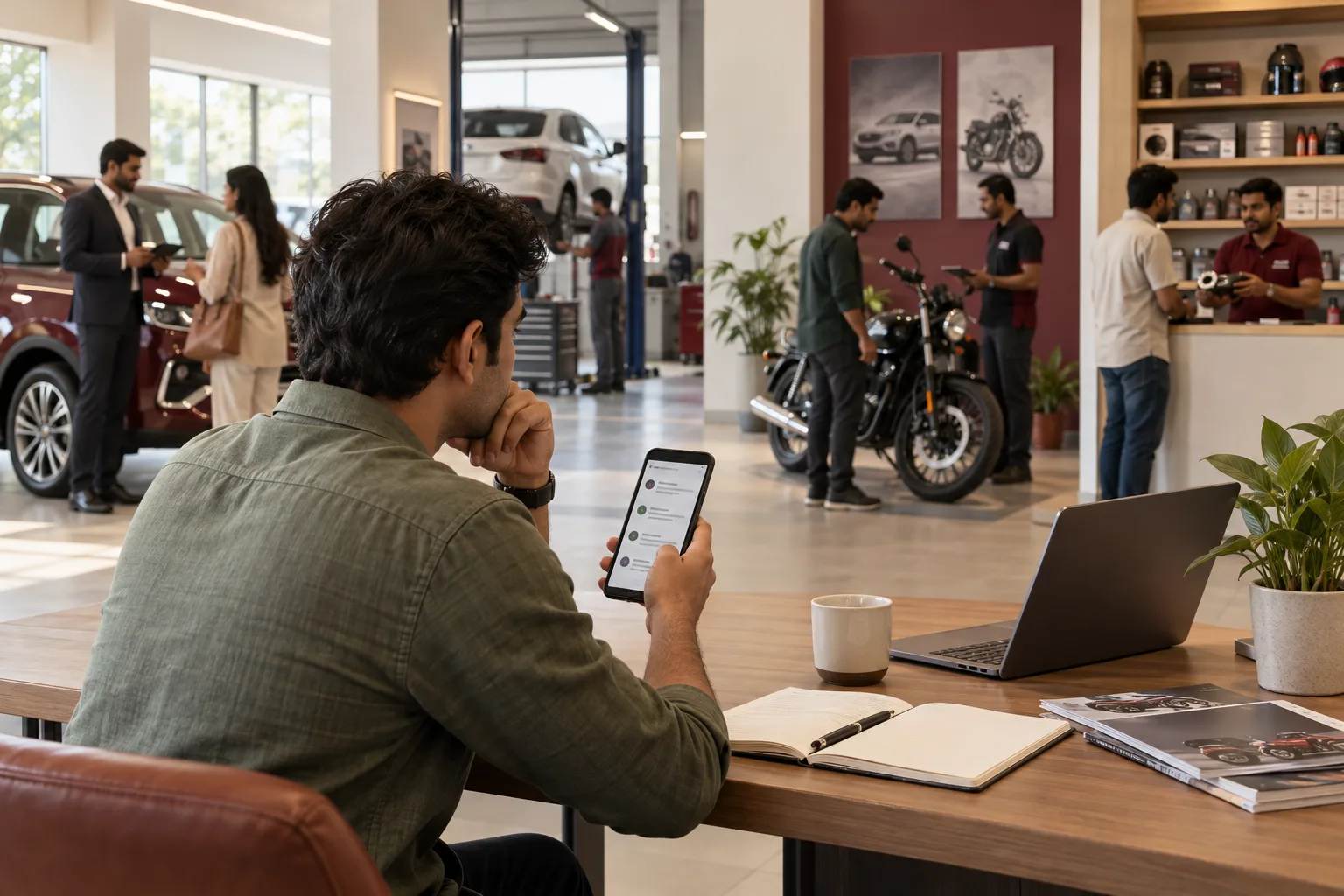 6 min read · 6 Oct 2026How buyers choose a showroom, workshop or parts counterCar, bike, repair and parts buyers send one enquiry to several sellers and pick the first clear answer. This post lists what each buyer checks, and where a dealer or workshop quietly loses them.
More for car dealers
Everything else we would do for you.
Closest to this: paid and media
Also for car dealers
Or start from the overview: sales and marketing for car dealers.
Your next practical step
Tell us what you are trying to grow, and we will read it before we call.
Eight short steps, mostly taps. Skip anything you would rather answer on the call.