Electric scooter dealers · Content marketing
Write the answers a worried first-time electric buyer is looking for.
Content marketing for an electric scooter dealer is the writing and recording of useful answers on charging, range, battery life, service and running cost. GullySales plans and drafts these pieces with your technician and sales team, so what is published matches what you actually tell buyers at the desk.
Scope, fee, reporting and term are agreed in writing after we have read your brief and spoken to you.
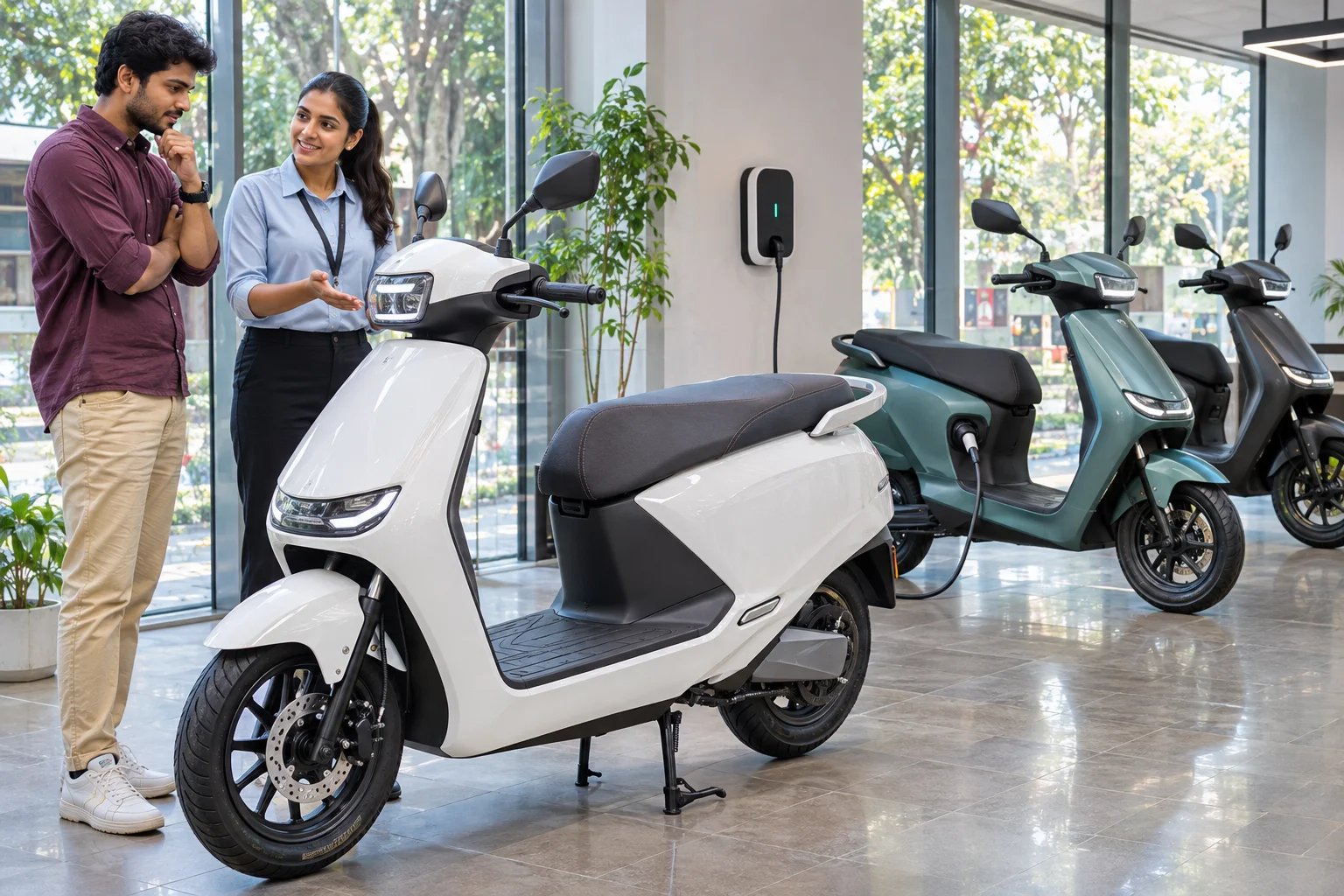
What content marketing means
Content marketing is writing articles, guides and pages that answer the questions buyers search before they are ready to enquire. This makes your business visible and trusted before the first call. GullySales plans this content from the first conversation onward, choosing topics that match real search demand rather than guesses.
Also for electric scooter dealers
- Social media marketing for electric scooter dealers
- Lead generation for electric scooter dealers
- SEO for electric scooter dealers
- Local SEO for electric scooter dealers
- Buyer personas for electric scooter dealers
- CRM for electric scooter dealers
- Follow-up systems for electric scooter dealers
- WhatsApp marketing for electric scooter dealers
Sales and marketing for electric scooter dealers, the overview.
Last updated 14 Nov 2026.
For electric scooter dealers
Where it usually goes wrong, and what we would do.
“The technician knows what buyers fear”
The person who repairs scooters hears every worry first. An article or short video built from the technician's own answers is more credible than one written from a brochure.
“Running-cost content works only with the buyer's own numbers”
A claim that electric is cheaper means little. A worksheet where the buyer enters their own distance and local power cost gives a figure they trust because they supplied it.
“Battery content must be plain and careful”
Buyers worry about battery life and replacement. An honest explanation of what the warranty covers, with the brand's wording cited, calms them. Exaggeration brings complaints later.
“Different readers need different pieces”
A student, a delivery rider and a family buying for a retired parent ask different things. One long generic article answers none of them well; short pieces for each group do.
What we do
What we deliver for electric scooter dealers.
The work available for this need. We agree the deliverables and responsibilities for your engagement in writing.
A question bank from your own desk
A list of the questions your team hears, grouped by charging, range, battery, service, finance and low-speed rules.
Result: The team has one agreed list of questions to answer in writing.
Technician-led explainers
Short pieces written or filmed with your technician on home charging, routine servicing and what to do if the scooter stops.
Result: Buyers see a named person explaining the work.
A running-cost worksheet
A simple sheet where a buyer enters distance and petrol spend and sees a comparison using their own figures.
Result: No average or invented saving appears anywhere on it.
Owner stories with consent
Short accounts from owners about their route and their experience, written only with their agreement.
Result: Each story has a recorded permission.
A content calendar built around the buying year
Pieces timed to college admissions, festival buying and new-job seasons in your region.
Result: The owner can see what is due for each buying moment.
How the result is measured
- Pages published
- Organic traffic
- Enquiries from content pages
Recorded as a baseline before work starts, so every later report has an honest comparison.
Posts and pieces to plan
Pieces that answer what a worried first-time buyer types at night.
- What a service visit covers
- A page from the technician on what is checked on an electric scooter and what the owner should bring.
- Charging at home safely
- A guide in plain language on the plug, the extension and the habit, written with the workshop head.
- Running cost worksheet
- A sheet where the rider enters their own distance and tariff, so no figure is claimed by the dealer.
- Battery care in hot weather
- A careful note on what the owner can do, with the brand's own guidance named as the final word.
- Owner story with consent
- A rider's account of three months with the scooter, in their words, with no claims on savings.
Who it is for
This is written for these electric scooter dealers.
- Authorised single-brand electric scooter showrooms
- Electric-only dealers carrying two or three brands
- Petrol two-wheeler dealers adding an electric range
- Dealers selling low-speed electric scooters
- Dealers who supply scooters to delivery fleets and small businesses
- Small-town dealers appointed by newer electric scooter brands
- Dealers who also run battery swapping or charging points
Before you decide
When this may not be the right fit.
- The technician cannot spare time to check a battery guide, and an unchecked piece on batteries would do harm.
- You hold no owner stories and no consent to use any, and invented ones are never an option.
- Subsidy rules in your state are unsettled, and a piece about them would be wrong soon after it is written.
Before you decide
Agree the work. Know how to judge it.
Content marketing for electric scooter dealers: use these checks to prepare, choose the scope, and review what changes.
Bring the right evidence
Bring questions from sales calls and examples of objections that delay a decision. Choose a subject expert who can check the substance, and identify evidence that can be published.
Make the scope clear
Agree the reader, buying question, format, and distribution route for each piece. Set the approval process and distinguish new research from rewriting material you already have.
Check the work in use
Ask a colleague to use the draft in a real buyer conversation. It should answer the question, support its claims, and make the next step clear without requiring a sales pitch to explain it.
Know when to change course
If the same unanswered question appears in several articles, improve the strongest page before commissioning another. More words are not a substitute for missing evidence.
These are discussion points, not a fixed package. GullySales confirms the deliverables, responsibilities, fee, and term in writing after reading your brief and speaking with you.
Before we start
What to have ready before the work starts.
The records, access and decisions this work needs from electric scooter dealers. Anything missing is noted in the written scope, with who will supply it.
- Time with the service technician
- The technician holds the answers that buyers fear, and the pieces rest on their words. We need an unhurried sitting away from the bay and permission to record. If the technician cannot be spared, content falls back on the brand's brochure and reads like everyone else's.
- The brand's current battery and warranty terms
- Battery content must match what the brand actually promises and excludes. Bring the latest warranty booklet or dealer circular. We quote nothing beyond it. When the document is missing, we write pieces that explain how to ask rather than what is covered, which is less useful to a worried buyer.
- Your town's electricity and parking practice
- Running-cost and charging pieces depend on local facts: whether buyers charge at home, in a shared building or at a point near work. Give us what your desk hears. We do not use another city's habits. Without this, the worksheet asks the wrong questions.
- A few owners willing to be quoted
- Owner stories need real owners who agree to share how they ride and charge, and to be named or kept anonymous as they choose. Even two or three suffice. Without them the content has only the dealer's voice, which buyers trust less than another owner's.
- An approver for each published piece
- Someone with standing must read each piece for accuracy before it goes out, the owner or the service head. Tell us who and how they prefer to review. If approval has no name attached, pieces wait and the calendar stalls.
How it works
How the content marketing work runs
The work itself, in order. How an engagement starts, from your brief to a written scope, is set out on our method page.
- 1
Collect the questions from the desk and workshop
We sit with the salesperson and the service technician and ask them to list the questions buyers and owners really put to them, in the words used. We also read the comments on the brand's videos for fear and confusion. You mark which questions you hear again and again. The result is a question bank from your own premises, ranked by how frequently the desk meets each.
- 2
Decide which reader each piece is for
A student's parent, a delivery rider, a retired commuter and a small shop owner need different pieces. We assign each question to the reader who asks it, and you confirm the assignment. A piece that tries to answer all of them is split. This keeps each article or film to one reader and one decision.
- 3
Record the technician explaining a battery
We ask the technician to explain charging, battery care and what a battery check involves, speaking as to an owner at the counter. Their words become the draft, and we shape the order. You or the technician read the draft against the brand's current manual and warranty terms before it moves on. Any line you cannot confirm is taken out.
- 4
Build the running-cost worksheet with real inputs
We draft a worksheet where the buyer fills in their own distance ridden, charging point and current fuel spend, and the sheet shows the difference in their own figures. You supply the electricity cost conventions common in your town. We publish no sample figure as if it were typical, and no saving is promised.
- 5
Publish and attach each piece to a next step
Each article or film is published after you approve it, with a clear next step at the end: a ride booking, a call to the workshop or a WhatsApp message. We place the piece where buyers will meet it, such as the site, your profile and the WhatsApp replies your desk sends.
- 6
Read what the pieces did against the desk's log
Before the work started we noted which questions your desk answered again and again and how many enquiries mentioned content. We now check which pieces were opened, which the desk sent to buyers and which enquiries named them. You see which questions are answered for good and which still arrive. Together we decide what to write next and what to retire.
Where this fits
Three pieces of sales work, in this order.
This work sits inside sales process design, at stage 0, foundation. The audit comes before it, and sales management keeps it running.
Step 1
Sales audit
Find where deals are being lost and what to fix first.
Start here if you cannot say where orders are lost.
Step 2 · you are here
Sales process design
One written way to sell, from first enquiry to repeat order.
Start here if every salesperson sells differently.
Step 3
Sales management
A target, a review routine and someone who owns the number.
Start here if the team has targets and no routine.
FAQ
Questions owners ask before they call.
Not here? More answers, or ask on WhatsApp.
Who writes the content?
Do we need a blog?
Can content mention subsidies?
Can an article say how many kilometres the scooter will run?
Can content mention a subsidy or incentive?
How do we avoid repeating what the brand already publishes?
How much does it cost?
How long is the contract?
How soon will we see results?
Who will actually do the work?
More for electric scooter dealers
Related work to consider.
Closest to this: content and social
Also for electric scooter dealers
Or start from the overview: sales and marketing for electric scooter dealers.
Your next practical step
Tell us what you are trying to grow, and we will read it before we call.
Eight short steps, mostly taps. Skip anything you would rather answer on the call.