Electric scooter dealers · Lead generation
Bring in buyers who have already asked about charging and service.
Lead generation for an electric scooter dealer means collecting enquiries from commuters, students, riders and families who are close to a purchase, from the brand app, search, WhatsApp and walk-ins alike. GullySales works on the pages, forms and enquiry log that gather those buyers in one place with the question they asked written down.
Scope, fee, reporting and term are agreed in writing after we have read your brief and spoken to you.
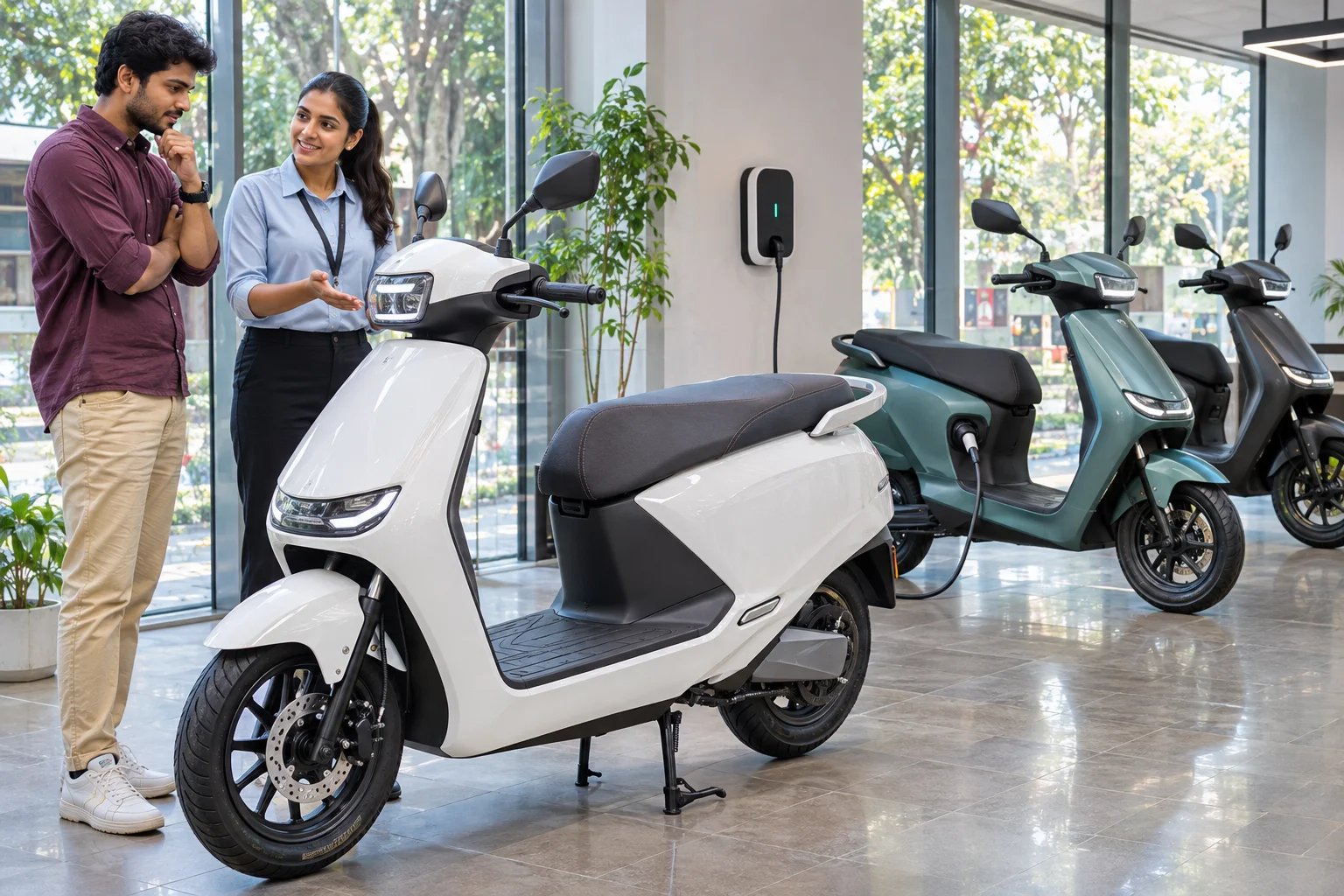
What lead generation means
Lead generation is the combined work of every channel that brings in a new enquiry, whether from search, adverts, referrals or a stall at an exhibition. GullySales runs these channels together and reports the number of enquiries each one produced, not the activity behind it.
Also for electric scooter dealers
- CRM for electric scooter dealers
- Follow-up systems for electric scooter dealers
- SEO for electric scooter dealers
- Local SEO for electric scooter dealers
- Social media marketing for electric scooter dealers
- Content marketing for electric scooter dealers
- Buyer personas for electric scooter dealers
- WhatsApp marketing for electric scooter dealers
Sales and marketing for electric scooter dealers, the overview.
Plan the next part of the work
Last updated 21 Nov 2026.
For electric scooter dealers
Where it usually goes wrong, and what we would do.
“A brand-app token is a lead the dealer has not met”
The buyer paid a token on the manufacturer's app and may never have spoken to anyone at the showroom. If nobody here picks that booking up, the first real conversation happens at delivery, when expectations are already set.
“Fleet and delivery enquiries look different from retail ones”
A hub manager asks about several scooters, spares and what happens when one is in the workshop. Entered as a single retail enquiry, that conversation is answered with a single-scooter price and the order goes elsewhere.
“The first question tells you where the buyer is”
A buyer asking about the charger at home is comparing running cost. One asking about the nearest workshop is worried about breakdowns. Noting the opening question lets the next call start from the worry, not from the brochure.
“Low-speed model buyers need their own route”
Families buying a low-speed scooter for a student or a retired parent ask about registration and licences before price. Sending them through the same form as a highway-capable model wastes both sides' time.
What we do
What we deliver for electric scooter dealers.
The work available for this need. We agree the deliverables and responsibilities for your engagement in writing.
An enquiry form built around the buyer's question
A short form asking the name, the phone number, the model of interest and a pick-list of the main worry: charging, range, service, finance or low-speed rules.
Result: Every enquiry arrives with the reason for asking attached.
A single log for every source
One sheet or CRM view where app bookings, calls, WhatsApp messages, walk-ins and fleet requests are entered with their source.
Result: The owner can see which source brought a booking and which brought only questions.
A pick-up rule for brand-app bookings
A written step saying who calls each app booking, what is confirmed and how the buyer is invited for a ride.
Result: No token-paying buyer reaches delivery without a prior conversation here.
A separate fleet and rider enquiry page
A page for businesses and delivery riders with a quote request for several scooters and a named contact.
Result: Multi-scooter requests land in their own list, apart from retail enquiries.
Pages for the main buyer types
Short pages for commuters, students, riders and low-speed buyers, each opening with the question that group asks first.
Result: A visitor reaches an answer written for their situation.
How the result is measured
- Relevant enquiries by source
- Duplicate and unsuitable enquiries
- Time to the first response
- Accepted enquiries reaching an agreed next step
Recorded as a baseline before work starts, so every later report has an honest comparison.
What to capture or send
Note the question that brought the buyer, since it decides the first reply.
- First question asked
- Range, battery, service, price or charging. Filled by whoever answers, and it tells the dealer what to put in the first reply.
- Where the scooter will charge
- Own plug point, shared building or none. Decides whether the buyer is ready or needs help before booking.
- Daily distance and who rides
- Student, commuter, older family member or delivery rider. Lets the ride route and the model suggested fit the rider.
- Brand-app booking reference
- Entered the day it arrives. Gives the dealer the first call and stops the buyer from hearing nothing.
- Fleet or single scooter
- Number needed and the business name. Moves a delivery or shop enquiry into its own list with a named contact.
Who it is for
This is written for these electric scooter dealers.
- Authorised single-brand electric scooter showrooms
- Electric-only dealers carrying two or three brands
- Petrol two-wheeler dealers adding an electric range
- Dealers selling low-speed electric scooters
- Dealers who supply scooters to delivery fleets and small businesses
- Small-town dealers appointed by newer electric scooter brands
- Dealers who also run battery swapping or charging points
Before you decide
When this may not be the right fit.
- You have no demonstrator to ride, so every enquiry would end with a showroom visit that cannot show the scooter.
- Nobody at the showroom can explain the service arrangements, and a buyer who asks would be sent away unsure.
- You stock only low-speed models at present and have not worked out what to say to buyers who ask about licences and registration.
Before you decide
Agree the work. Know how to judge it.
Lead generation for electric scooter dealers: use these checks to prepare, choose the scope, and review what changes.
Bring the right evidence
Define the organisations or buyers you can serve and the reasons they would consider a conversation. Bring examples of accepted and rejected prospects so the selection rule is visible.
Make the scope clear
Agree the research sources, contact approach, qualification rules, and handover. Clarify which meetings count as accepted and what happens to replies that are not ready to buy.
Check the work in use
Review why a prospect was selected and what was learned from the response. Count held, relevant conversations separately from contacts found, messages sent, or meetings booked.
Know when to change course
If the same objection appears repeatedly, adjust the offer or buyer group before increasing outreach. Respect a request to stop contact and keep the exclusion in the record.
These are discussion points, not a fixed package. GullySales confirms the deliverables, responsibilities, fee, and term in writing after reading your brief and speaking with you.
Before we start
What to have ready before the work starts.
The records, access and decisions this work needs from electric scooter dealers. Anything missing is noted in the written scope, with who will supply it.
- The desk notebook or enquiry sheet
- We need the last stretch of written enquiries, in whatever form the desk keeps them, even a spiral notebook photographed page by page. It shows the real questions buyers ask and how many reach a ride. If nothing is written down, we start with a blank log and the baseline is thinner, so early comparisons carry less weight.
- Admin access to the brand app dashboard
- The brand app sends tokens and bookings to the dealer, and we need to see how they arrive and what detail they carry. A login held by the manager, or a screen share, is enough. Without it we cannot write the pick-up rule, so app bookings stay a separate pile that your team may or may not open.
- A named person for fleet enquiries
- Delivery riders and small businesses buy several scooters and compare charging and downtime, so one person must own those conversations. Tell us who that is and when they are free to take calls. If nobody is named, the fleet page still goes live but enquiries from it wait with the general desk, which treats them like retail walk-ins.
- Models you stock or order
- Enquiry replies need to say plainly which scooters are on the floor, which come on order and which you do not sell. A one-page list with low-speed and high-speed models marked separately is enough. When this is missing, buyers are promised models the showroom cannot supply, and the first conversation turns into an apology.
How it works
How the lead generation work runs
The work itself, in order. How an engagement starts, from your brief to a written scope, is set out on our method page.
- 1
Sit with the desk and the brand app
We begin at the sales desk with the person who answers the phone, and we open the brand app dashboard beside the walk-in register. You show us where each enquiry lands today and who picks it up. We note which sources arrive with a question and which arrive as a bare name and number. By the end of the visit we hold a plain list of every place a scooter buyer can reach you, and which of them nobody currently owns.
- 2
Pick the questions buyers ask first
From your WhatsApp chats, the app tokens and the desk notebook we collect the first questions buyers really type: range on my route, where is service, can my parent ride it, what about a low-speed model. You decide which five or six questions the new enquiry form should lead with. We write each as a choice the buyer can tap, so the answer reaches your salesperson before the first call is made.
- 3
Build one log and the fleet page
We set up a single enquiry log that takes every source, with a column for the question asked and the model of interest. We also draft the separate page for delivery riders and small businesses, which asks about number of scooters and the distance ridden on a working shift rather than colour. You check that the log fits how your team already writes things down, and we change the columns until it does.
- 4
Place test enquiries through every door
We send test enquiries through the form, a WhatsApp message, a brand-app booking and a walk-in entry, and watch each one reach the log. A salesperson on your team picks up each test and replies as they would to a real buyer. We note any enquiry that waited, arrived without its question, or reached the wrong person, and fix the route before a real buyer meets the fault.
- 5
Read the log against the starting count
Before the work began we recorded how many enquiries your desk logged, from which sources, and how many turned into test rides and bookings. We now sit with you and read the log against that record, source by source. You see which pages and routes brought buyers who asked about a specific model, and which brought only curiosity. You decide which routes get more attention next, and which are dropped.
Where this fits
Three pieces of sales work, in this order.
This work sits inside sales process design, at stage 1, prospecting and lead generation. The audit comes before it, and sales management keeps it running.
Step 1
Sales audit
Find where deals are being lost and what to fix first.
Start here if you cannot say where orders are lost.
Step 2 · you are here
Sales process design
One written way to sell, from first enquiry to repeat order.
Start here if every salesperson sells differently.
Step 3
Sales management
A target, a review routine and someone who owns the number.
Start here if the team has targets and no routine.
FAQ
Questions owners ask before they call.
Not here? More answers, or ask on WhatsApp.
Should we run paid ads to get leads?
What do we do with enquiries for models we do not stock?
How do we tell good leads from curious ones?
Should we collect leads at college or office tie-ups?
Who answers the enquiries once the form is live?
Will the new log replace the brand's own dealer portal?
How much does it cost?
How long is the contract?
How soon will we see results?
Who will actually do the work?
More for electric scooter dealers
Related work to consider.
Closest to this: leads and follow-up
Also for electric scooter dealers
Or start from the overview: sales and marketing for electric scooter dealers.
Your next practical step
Tell us what you are trying to grow, and we will read it before we call.
Eight short steps, mostly taps. Skip anything you would rather answer on the call.