Electric scooter dealers · CRM
Keep every enquiry, ride and booking in one place the whole team can read.
A CRM for an electric scooter dealer is the single record of each buyer, their enquiry, the model, the ride, the finance step and the delivery. GullySales sets up a simple CRM view that matches how your showroom actually works, and trains the team to fill it in as they talk.
Scope, fee, reporting and term are agreed in writing after we have read your brief and spoken to you.
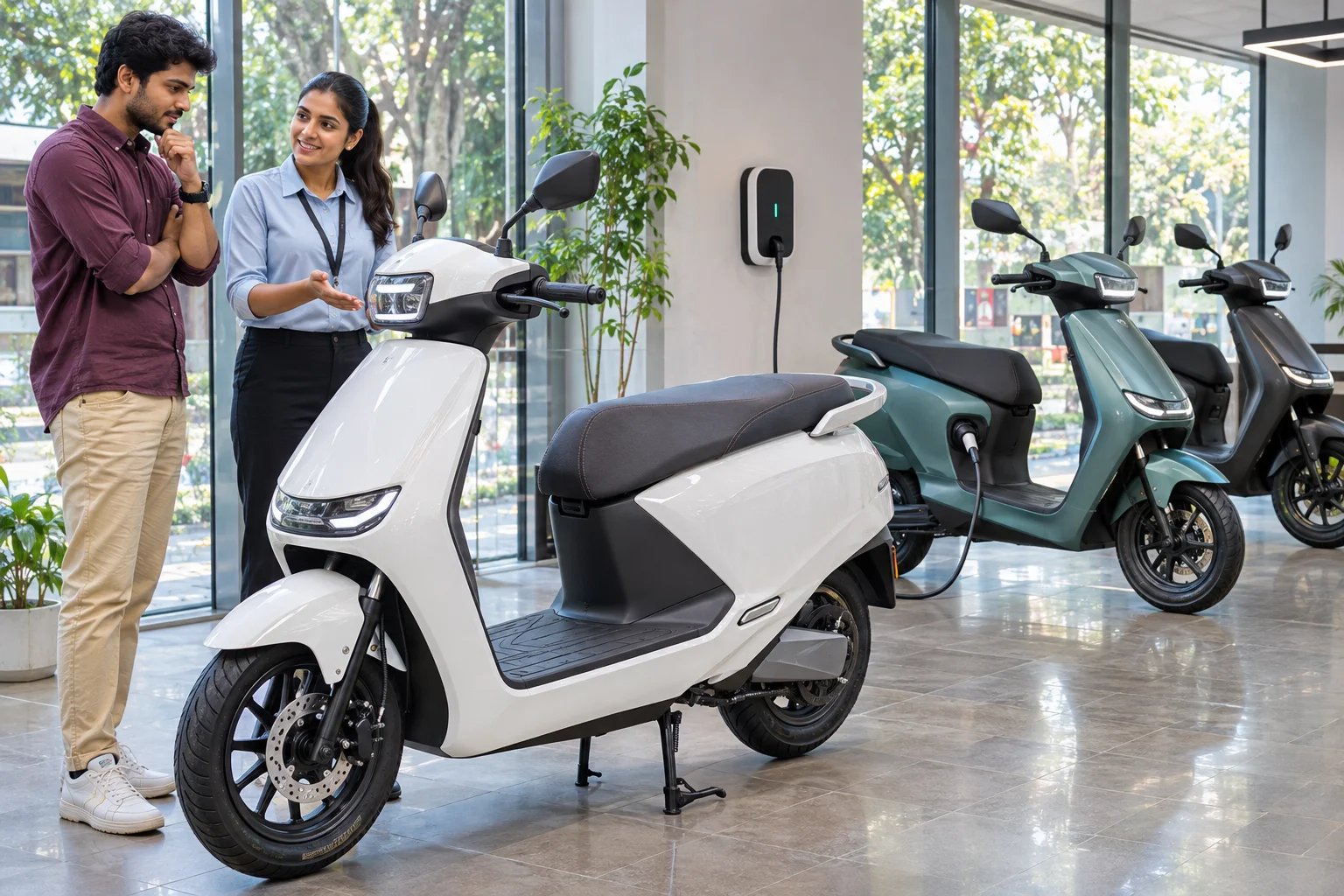
What CRM means
A CRM is the record where every enquiry, call and quote is kept against a customer, replacing separate notebooks, spreadsheets and memory. GullySales sets up or cleans an existing CRM and reports from it by enquiry outcome rather than by activity logged.
Also for electric scooter dealers
- Lead generation for electric scooter dealers
- Follow-up systems for electric scooter dealers
- SEO for electric scooter dealers
- Local SEO for electric scooter dealers
- Social media marketing for electric scooter dealers
- Content marketing for electric scooter dealers
- Buyer personas for electric scooter dealers
- WhatsApp marketing for electric scooter dealers
Sales and marketing for electric scooter dealers, the overview.
Last updated 14 Nov 2026.
For electric scooter dealers
Where it usually goes wrong, and what we would do.
“Brand app, phone and walk-in records live in three places”
The app shows a token, the phone shows a missed call and the desk has a notebook. Nobody can say which buyers are open. One shared record removes the guesswork.
“The reason for losing a buyer is never written down”
Without a note on why a buyer did not book, the same lost reason repeats. A required field for it turns each lost enquiry into information for the owner.
“Service and sales history belong together”
A buyer who bought last year and comes in for service is a referral source and a possible second purchase. If service records sit apart from sales, that connection is lost.
“Staff changes take the buyer list with them”
When a salesperson leaves with the notebook, the buyers go too. A shared record owned by the showroom keeps the relationship with the showroom.
What we do
What we deliver for electric scooter dealers.
The work available for this need. We agree the deliverables and responsibilities for your engagement in writing.
A pipeline that matches your sale
Stages such as enquiry, called, ride booked, ride done, finance in progress, booked and delivered, named in your own words.
Result: Anyone can see where each buyer stands.
Required fields for source and worry
Source of the enquiry, model, main worry and next step recorded for every buyer.
Result: The owner can sort buyers by what stopped them.
Brand-app bookings entered on arrival
A step so every app booking is entered, assigned and called by a named person.
Result: No booking sits unowned.
Owner and service records linked
Each delivered scooter linked to the owner, the service dates and any referral given.
Result: Owners can be contacted for service days and referrals with consent.
Short team training
A hands-on session with your staff on entering a buyer during a call, plus a one-page guide.
Result: Staff can add a record without leaving the conversation.
How the result is measured
- Enquiries logged in the CRM
- Data completeness
- Reports generated from CRM data
Recorded as a baseline before work starts, so every later report has an honest comparison.
Fields worth keeping
Keep the fields that show what the buyer worries about.
- Source: brand app, call, walk-in or referral
- Entered at the first touch by whoever receives it. Lets the dealer see where the real demand begins.
- Top worry
- Range, battery, service, charging or price. Chosen from a list, and used to pick the next message.
- Ride date and rider
- Filled the day of the ride. Lets the follow-up speak to what the buyer tried.
- Owner scooter and service dates
- Entered at delivery and each service. Joins sales and workshop so a returning owner is known.
- Reason lost
- Picked from a short list. After a few months it shows whether the dealer loses buyers on price, stock or service.
Who it is for
This is written for these electric scooter dealers.
- Authorised single-brand electric scooter showrooms
- Electric-only dealers carrying two or three brands
- Petrol two-wheeler dealers adding an electric range
- Dealers selling low-speed electric scooters
- Dealers who supply scooters to delivery fleets and small businesses
- Small-town dealers appointed by newer electric scooter brands
- Dealers who also run battery swapping or charging points
Before you decide
When this may not be the right fit.
- Your team cannot be asked to type more than a name and number, and a fuller record would be left blank.
- The brand's own system already holds every enquiry and you have no right to store the same data separately.
- You have no one to own the record, so it would be fuller on the first week than on any later one.
Before you decide
Agree the work. Know how to judge it.
CRM for electric scooter dealers: use these checks to prepare, choose the scope, and review what changes.
Bring the right evidence
List the records your team uses and show how an enquiry becomes an order today. Bring examples of duplicate entries, missing owners, and reports that require manual correction.
Make the scope clear
Agree the stages, required fields, access roles, and integrations before configuring the system. Separate software subscriptions from setup, data work, and training.
Check the work in use
Ask the people who will use the CRM to complete a real handover and find the next action without help. Check that the management report can be traced back to individual records.
Know when to change course
If the process is unclear, buying a more complex CRM adds more places for confusion. Start with the minimum fields and rules the team can use consistently.
These are discussion points, not a fixed package. GullySales confirms the deliverables, responsibilities, fee, and term in writing after reading your brief and speaking with you.
Before we start
What to have ready before the work starts.
The records, access and decisions this work needs from electric scooter dealers. Anything missing is noted in the written scope, with who will supply it.
- Your current enquiry sheets and notebooks
- We load past enquiries into the new record so the team starts with buyers, not an empty screen. Photographs of notebook pages or an exported spreadsheet are acceptable. If none exist, the CRM starts empty and the first comparison with the past is not possible.
- A list of staff and their roles
- Each person who will use the CRM needs a login and a clear role: owner, sales, workshop, accounts. Give us names and the phone each uses. Without roles, everyone sees everything, which is a problem for finance details and for staff who leave.
- The brand app and dealer portal logins
- We need to see what an app booking carries and how it arrives. A login for the manager or a screen share is enough. Without it, the connection stays manual and depends on a person copying each booking.
- A copy of the finance and registration checklist
- The pipeline includes finance papers and registration steps, so we need the checklist your desk follows, in whatever form. We build stages from it. Without it we guess the order, and the stages will not match what staff do.
- A named owner for the CRM
- Someone in the showroom must check that entries are made and chase gaps. Name the person, and give them authority to ask staff. Without one, entry slips within the first busy fortnight, and the record becomes unreliable again.
How it works
How the CRM work runs
The work itself, in order. How an engagement starts, from your brief to a written scope, is set out on our method page.
- 1
Draw your sale from message to key
We sit with the owner and the salesperson and draw the stages a scooter buyer passes through: enquiry, brand-app token, ride, quote, finance papers, registration, delivery and first service. You correct the picture until it matches what happens on your floor. This drawing, not a software menu, decides the pipeline we build, and it names where buyers currently get lost.
- 2
Decide the fields the desk will actually fill
We list the few facts that must be written for every buyer: source, model, the worry they voiced, whether they rode, and the finance route. Anything beyond that is optional. You and the salesperson cut the list until typing it takes a moment. A long form is not filled in, so we keep it short.
- 3
Load a sample and move real buyers through
We import a small set of your recent enquiries and bookings into a test copy, and your salesperson moves a handful through the stages as if live. They tell us where the screen slows them or confuses them. We correct names of stages and the order of fields before the full list is loaded.
- 4
Connect the brand app, calls and walk-ins
We agree who enters a brand-app booking on the day it arrives, how phone enquiries are logged and how walk-ins are added at the desk. Where a form or WhatsApp number can feed the CRM directly, we connect it. You check that every entry shows its source. Missing sources are chased until the routes hold, starting with whoever takes the call when a buyer rings the showroom landline, since that is where entries are easily forgotten.
- 5
Link service history to the buyer's record
We add the workshop's job cards or service entries to the same buyer record, so a salesperson can see a battery complaint before calling about a new model. You decide who in the workshop enters them, what the workshop writes about a complaint, and what is kept private from the sales floor. The sales and service views are tested together, using a buyer who bought a scooter and later brought it in for a charger fault, to see that both stories appear on one screen.
- 6
Read the pipeline against the old notebook
Before the switch we recorded how many enquiries the desk logged, how many rides and how many bookings, from the notebook and the app. We now read the CRM against those figures with you, stage by stage. You see where buyers wait and where they leave. Together we decide which stage needs a rule, and what the owner reviews and when.
Where this fits
Three pieces of sales work, in this order.
This work sits inside sales management. A target, a review routine and someone who owns the number.
Step 1
Sales audit
Find where deals are being lost and what to fix first.
Start here if you cannot say where orders are lost.
Step 2
Sales process design
One written way to sell, from first enquiry to repeat order.
Start here if every salesperson sells differently.
Step 3 · you are here
Sales management
A target, a review routine and someone who owns the number.
Start here if the team has targets and no routine.
FAQ
Questions owners ask before they call.
Not here? More answers, or ask on WhatsApp.
Which CRM tool should we use?
Is customer data safe in a CRM?
Will staff resist filling it in?
Should delivered scooters go into the same CRM?
Can the CRM hold buyer ID and finance documents?
Who keeps the buyer record when a salesperson leaves?
How much does it cost?
How long is the contract?
How soon will we see results?
Who will actually do the work?
More for electric scooter dealers
Related work to consider.
Closest to this: leads and follow-up
Also for electric scooter dealers
Or start from the overview: sales and marketing for electric scooter dealers.
Your next practical step
Tell us what you are trying to grow, and we will read it before we call.
Eight short steps, mostly taps. Skip anything you would rather answer on the call.