Electric scooter dealers · Buyer persona
Write down who rides, who pays and who is worried about the battery.
A buyer persona for an electric scooter dealer describes who actually decides for each type of purchase. The rider, the payer and the person who worries about service are different people in some sales. GullySales builds a persona for each buyer type you serve, from your own enquiry log and desk conversations.
Scope, fee, reporting and term are agreed in writing after we have read your brief and spoken to you.
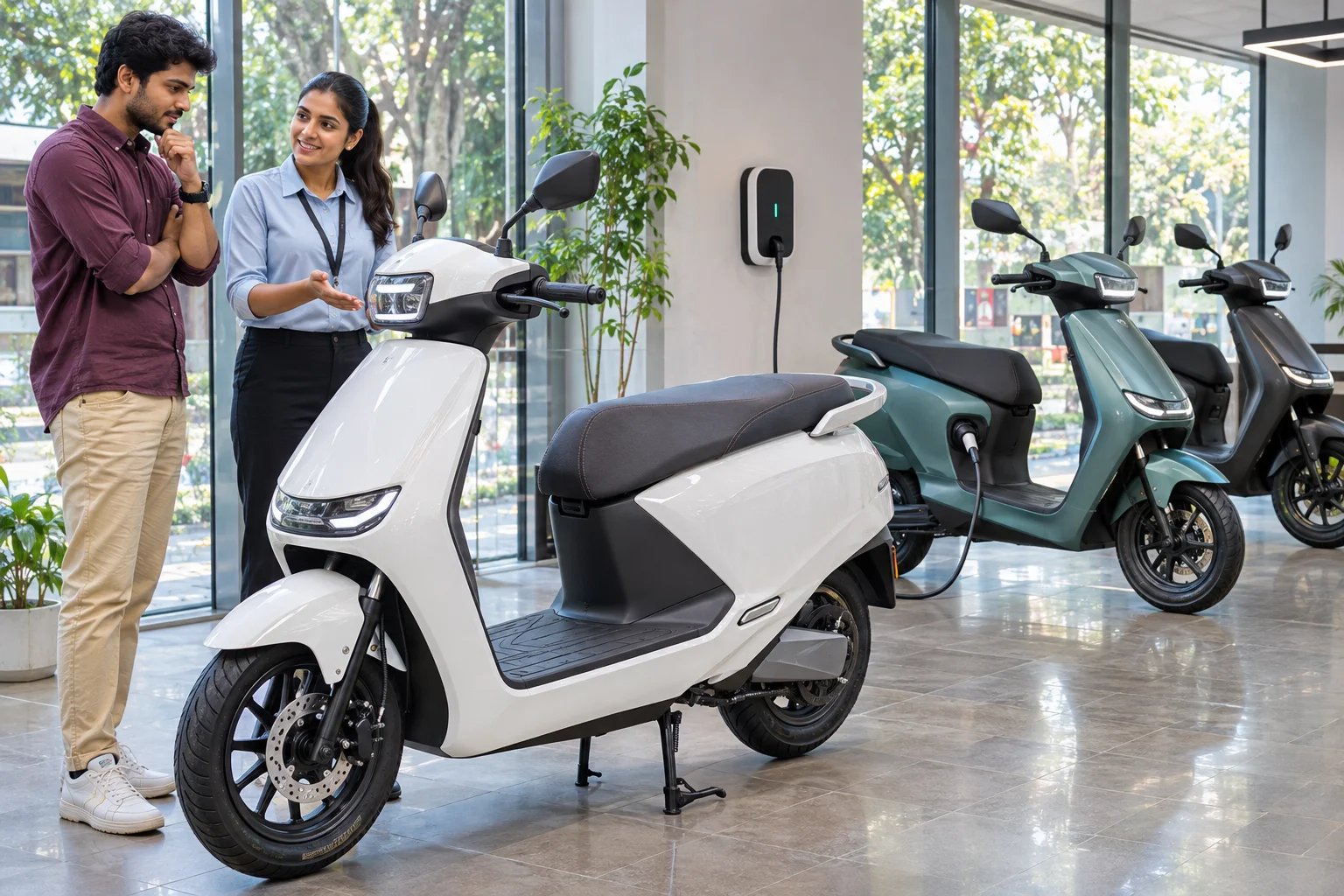
What buyer persona means
A buyer persona is a plain description of the kind of customer who actually buys from you. It includes what they search, what worries them and who else they ask before deciding. GullySales builds this from real enquiries and past sales rather than a generic template, then uses it to write every page and advert.
Also for electric scooter dealers
- Digital marketing for electric scooter dealers
- Lead generation for electric scooter dealers
- SEO for electric scooter dealers
- Local SEO for electric scooter dealers
- Social media marketing for electric scooter dealers
- Content marketing for electric scooter dealers
- CRM for electric scooter dealers
- Follow-up systems for electric scooter dealers
Sales and marketing for electric scooter dealers, the overview.
Last updated 14 Nov 2026.
For electric scooter dealers
Where it usually goes wrong, and what we would do.
“The rider and the payer are not always one person”
A parent pays for a student's scooter, and a grown-up relative books for a retired parent. The message has to answer the person holding the money and the person sitting on the seat.
“The delivery rider counts cost per day”
A rider cares about for how long the scooter is off the road and how soon a spare battery arrives. Talk about comfort and colours and you have not addressed the decision.
“The cautious commuter wants proof of service”
A schoolteacher or office worker switching from petrol is nervous about being stranded. A named technician and a workshop address matter more to them than a feature list.
“The small-business owner buys several”
A bakery or tiffin service may want three scooters and a repair arrangement. They compare dealers on spares and response, and need a contact who knows their name.
What we do
What we deliver for electric scooter dealers.
The work available for this need. We agree the deliverables and responsibilities for your engagement in writing.
A commuter persona
A card for the everyday office or school commuter: route, charging place, past petrol scooter and the worry that stops the booking.
Result: Desk staff know the first question this buyer asks.
A family-purchase persona
A card covering the student, the parent paying and the older rider, with the questions each asks about seat height, price and finance.
Result: Replies address both the payer and the rider.
A delivery-rider and fleet persona
A card for the hub manager and the individual rider covering downtime, spares, finance and quantity pricing.
Result: Fleet enquiries are handled as a separate buyer, with a different offer.
A low-speed model persona
A card for buyers of low-speed models, with their questions about registration, licence and use stated plainly.
Result: The team gives one consistent answer on these questions.
Checking each card against real buyers
A review of past bookings and lost enquiries to see whether each card matches who actually bought.
Result: Cards are corrected against your own records.
How the result is measured
- Enquiry match to persona
- Conversion rate by persona
- Content aligned to persona
Recorded as a baseline before work starts, so every later report has an honest comparison.
Who is asking
Each rider asks about a different worry before the price.
- Commuter with a fixed route
- Wants to know the daily distance the scooter will cover and where it charges at work. Asks about service reach.
- Parent buying for a student
- Wants safety, a clear warranty and a dealer who will be there for service. The payer, not always the rider.
- Delivery rider on daily shifts
- Wants a scooter that is back on the road after a fault. Asks about swapping, charging time and downtime.
- Small shop owner needing several
- Wants a price for the group and a named contact. Asks about service for all scooters at one visit.
- Older family member
- Wants a low-speed model that is easy to ride. Asks what registration or licence applies, and the dealer points to the official rules.
Who it is for
This is written for these electric scooter dealers.
- Authorised single-brand electric scooter showrooms
- Electric-only dealers carrying two or three brands
- Petrol two-wheeler dealers adding an electric range
- Dealers selling low-speed electric scooters
- Dealers who supply scooters to delivery fleets and small businesses
- Small-town dealers appointed by newer electric scooter brands
- Dealers who also run battery swapping or charging points
Before you decide
When this may not be the right fit.
- You have sold very few scooters, and a persona would reflect the brand's marketing and not your buyers.
- The brand dictates every conversation and the team has no room to speak differently, so personas would go unused.
- You are still deciding which models to stock, and the buyer you will meet depends on that choice.
Before you decide
Agree the work. Know how to judge it.
Buyer personas for electric scooter dealers: use these checks to prepare, choose the scope, and review what changes.
Bring the right evidence
Write the decision the research must support, such as entering a market or choosing a buyer group. Separate what you know from sales records from what the team currently assumes.
Make the scope clear
Agree which buyers to speak to, which sources to review, and what access you can provide. Include lost enquiries and people who chose another supplier, where they are willing to take part.
Check the work in use
Look for source dates, sample limitations, and evidence that disagrees with the preferred answer. A recommendation should show how it follows from the findings.
Know when to change course
Do not treat a few positive conversations as proof of demand. Test the proposed offer with an actual buying decision before committing to a wider launch.
These are discussion points, not a fixed package. GullySales confirms the deliverables, responsibilities, fee, and term in writing after reading your brief and speaking with you.
Before we start
What to have ready before the work starts.
The records, access and decisions this work needs from electric scooter dealers. Anything missing is noted in the written scope, with who will supply it.
- The delivery register for recent months
- The register shows who bought which model, in what colour, with or without finance, and from which source. Photographs of the pages are fine. It is the base for every card. If it is missing, we rely on the salesperson's memory and the cards carry less weight.
- Notes on lost enquiries and their reasons
- Buyers who did not buy tell us more than those who did. Share whatever is written, a line in the notebook or a chat, about why they went elsewhere. If nothing is written, we ask the desk to recall, and the cards say plainly that the lost side rests on memory.
- Two or three owners willing to talk
- We need recent buyers, including a delivery rider or small-business owner, who will speak with us. Ask them first; we do not contact anyone you have not cleared. Without owners to speak to, the cards come only from the desk's view.
- A salesperson available for a long interview
- The person who rides with buyers knows who asks about service and who asks about price. They need to be released from the floor for a proper conversation. If only the owner is available, the cards lean toward what the owner believes.
- A decision on fleet and low-speed buyers
- Tell us whether you want to pursue delivery fleets and low-speed model buyers actively, since each needs its own card and different pages. If you are undecided, we write one short card for each and mark it as provisional until the log shows how much they matter.
How it works
How the buyer persona work runs
The work itself, in order. How an engagement starts, from your brief to a written scope, is set out on our method page.
- 1
Decide which buyers deserve their own card
We list the buyer types you meet: the commuter, the family buying for a student or parent, the delivery rider, the small business and the low-speed model buyer. You mark which ones bring the bulk of your bookings and which are growing. We do not write a card for a type your desk meets rarely. The result is a short list that matches your showroom.
- 2
Pull a sample of bookings and lost enquiries
From your delivery register, brand-app bookings and the enquiry notebook we choose a spread of sold and lost buyers across the types. You allow us to read names only as far as your own privacy habits permit. For each we note the model, the question asked and what happened. These real cases are the base of every card.
- 3
Interview the salesperson and the technician
We ask the salesperson who rode with the buyer and the technician who met the owner later to describe three buyers each. We ask what the buyer worried about, who else was in the room and who paid. Quotes are kept in their own words. This shows where the rider and the payer differ.
- 4
Call a few buyers with your permission
With your approval and the buyers' consent, we ask a small number of recent owners and a few who did not buy how they decided. We ask about the route they ride, the person they consulted and what almost stopped them. We record only what they agree to share. Their answers correct the desk's assumptions.
- 5
Draft the cards and test them on the desk
Each card sets out who rides, who pays, what they fear, what they ask first and what proof helps. You and the sales team read each card and mark what is wrong. A card that no one on the desk recognises is rewritten. We keep each to what the evidence supports.
- 6
Check the cards against the next enquiries
Before the cards, your log showed which buyer types reached you and which turned into rides and bookings. We now read the next enquiries against the cards and note which fit and which do not. You see whether the pages and replies built from the cards bring a better match. Together we decide which cards to correct.
Where this fits
Three pieces of sales work, in this order.
This work sits inside sales process design, at stage 0, foundation. The audit comes before it, and sales management keeps it running.
Step 1
Sales audit
Find where deals are being lost and what to fix first.
Start here if you cannot say where orders are lost.
Step 2 · you are here
Sales process design
One written way to sell, from first enquiry to repeat order.
Start here if every salesperson sells differently.
Step 3
Sales management
A target, a review routine and someone who owns the number.
Start here if the team has targets and no routine.
FAQ
Questions owners ask before they call.
Not here? More answers, or ask on WhatsApp.
What number of personas do we need?
Where does the information come from?
Do personas change how we speak to buyers?
Does the delivery rider need a separate page and persona?
Do personas need real names and photographs of buyers?
When should the cards be revised?
How much does it cost?
How long is the contract?
How soon will we see results?
Who will actually do the work?
More for electric scooter dealers
Related work to consider.
Closest to this: strategy and research
Also for electric scooter dealers
Or start from the overview: sales and marketing for electric scooter dealers.
Your next practical step
Tell us what you are trying to grow, and we will read it before we call.
Eight short steps, mostly taps. Skip anything you would rather answer on the call.