Electric scooter dealers · Digital marketing
Join search, maps, social and WhatsApp into one route to a test ride.
Digital marketing for an electric scooter dealer is the combined work of search, map listing, social posts, advertising and messaging that brings a buyer to the showroom. GullySales decides with you which channels earn their place and connects each to a recorded enquiry.
Scope, fee, reporting and term are agreed in writing after we have read your brief and spoken to you.
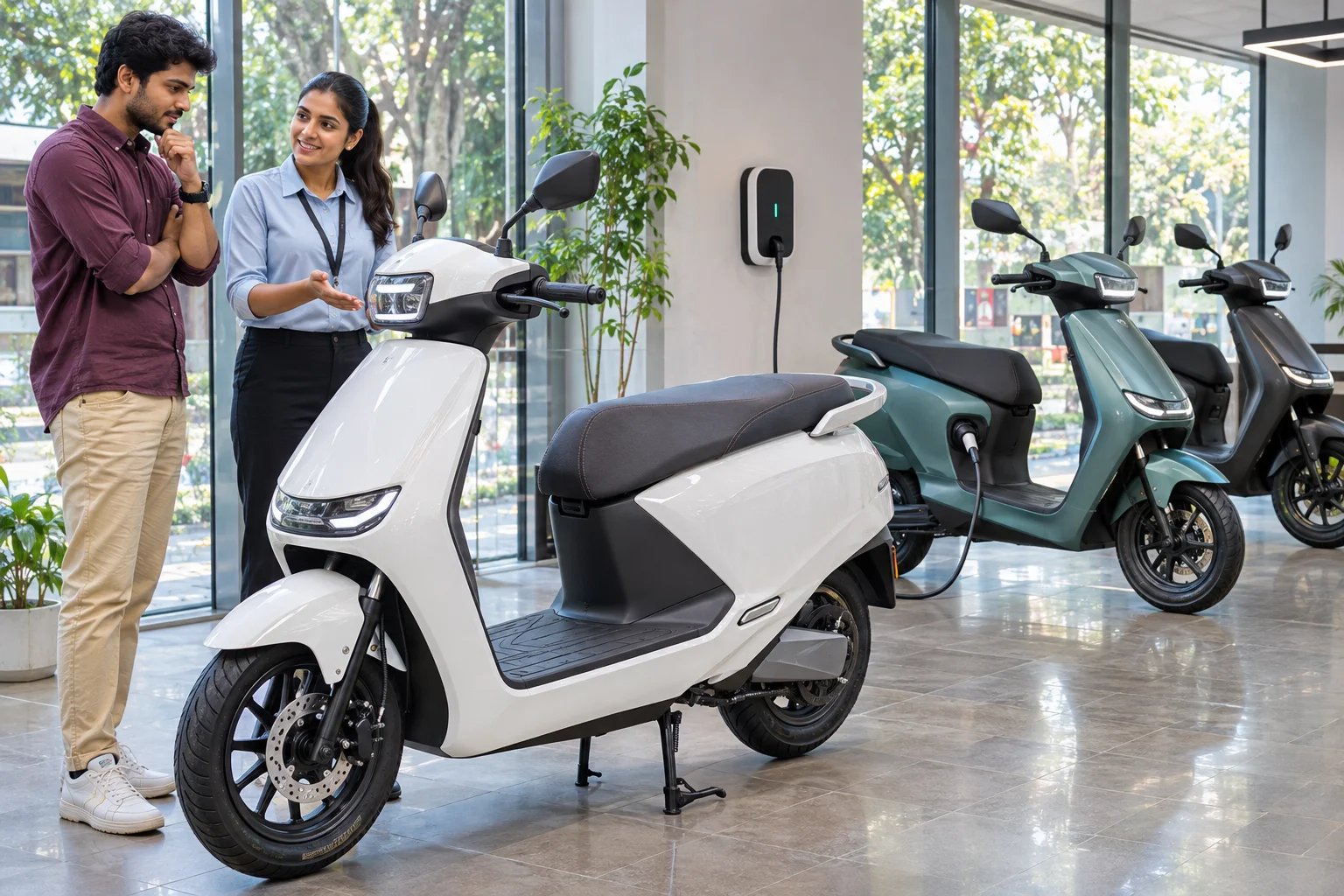
What digital marketing means
Digital marketing is the combined work of search, social media, advertising and website channels running together rather than as separate projects with separate people. GullySales runs these as one connected system so a change in one channel, such as a new offer, is reflected everywhere at once.
Also for electric scooter dealers
- Buyer personas for electric scooter dealers
- Lead generation for electric scooter dealers
- SEO for electric scooter dealers
- Local SEO for electric scooter dealers
- Social media marketing for electric scooter dealers
- Content marketing for electric scooter dealers
- CRM for electric scooter dealers
- Follow-up systems for electric scooter dealers
Sales and marketing for electric scooter dealers, the overview.
Last updated 14 Nov 2026.
For electric scooter dealers
Where it usually goes wrong, and what we would do.
“Each channel works alone and nothing connects”
The map listing, the Instagram page and the website each get a little attention, and none points clearly to a ride booking. Joined together, they give a buyer one obvious next step.
“The brand's advertising draws buyers who then ask you”
National campaigns create interest, but the buyer still needs a local place to ride and a local workshop. Digital work for the dealer picks up that interest at the town level.
“Spending before the answers exist wastes money”
Advertising to a site that does not explain charging or service brings clicks and no bookings. The answers should be in place before any budget is spent on reach.
“Measurement stops at likes”
Likes and views do not tell a dealer the number of rides booked. Counting enquiries, rides and bookings by source shows what is worth repeating.
What we do
What we deliver for electric scooter dealers.
The work available for this need. We agree the deliverables and responsibilities for your engagement in writing.
A channel plan for your town
A short document choosing which channels to use, why, and what each is expected to bring.
Result: The owner knows what each channel is for.
A shared ride-booking route
One booking link or WhatsApp number used on the website, map listing, posts and ads.
Result: Every channel leads to the same place.
Tracking of enquiries by source
A simple count of calls, messages, forms and app bookings by where they came from.
Result: The owner can compare channels on enquiries, not on views.
Paid campaign set-up when it is worth it
Local targeting, creative and a budget decided by the owner, with a check of each platform's current rules.
Result: Any paid work has a stated goal and an enquiry route.
A review of what the numbers say
A scheduled reading of the figures with you, followed by agreed changes.
Result: Decisions are recorded alongside the figures that prompted them.
How the result is measured
- Enquiries across channels
- Cost per enquiry overall
- Channel mix by contribution
Recorded as a baseline before work starts, so every later report has an honest comparison.
Searches your buyers type
Each channel answers a different search on the way to a ride.
- best electric scooter for city use
- A comparison page written fairly, ending in a ride booking form for the buyer who is still choosing.
- electric scooter dealer near me
- The map profile and the town page, with the same address and number everywhere.
- electric scooter price and offers
- A page the dealer updates by hand, or none, since an old offer misleads buyers.
- electric scooter delivery business
- A fleet page and a short message to local shop owners, with a named contact.
- electric scooter service problem
- The workshop page and a reply route, which reassures buyers who will own the scooter for years.
Who it is for
This is written for these electric scooter dealers.
- Authorised single-brand electric scooter showrooms
- Electric-only dealers carrying two or three brands
- Petrol two-wheeler dealers adding an electric range
- Dealers selling low-speed electric scooters
- Dealers who supply scooters to delivery fleets and small businesses
- Small-town dealers appointed by newer electric scooter brands
- Dealers who also run battery swapping or charging points
Before you decide
When this may not be the right fit.
- Nobody can track which enquiry came from which channel, and spending would be impossible to judge.
- The brand's campaign has just begun in your town and the dealer has not decided how to link with it.
- The workshop is not ready to serve more owners, and buyers brought by advertising would meet a stretched service desk.
Before you decide
Agree the work. Know how to judge it.
Digital marketing for electric scooter dealers: use these checks to prepare, choose the scope, and review what changes.
Bring the right evidence
Bring a recent won order and an enquiry that went nowhere. Trace how each buyer found you, what they asked, and who handled the next step. A channel list alone will not explain the difference.
Make the scope clear
Choose one offer and one buyer group first. Agree which part needs attention: being found, getting a useful enquiry, or turning an enquiry into an order. Separate recommendations from the work required to carry them out.
Check the work in use
A useful plan names the first change, its owner, the evidence behind it, and the number that will show whether it worked. Ask what has deliberately been left out and why.
Know when to change course
If your team cannot answer the enquiries it already receives, improve that handover before buying more traffic. If the offer itself is unclear, test it with buyers before adding channels.
These are discussion points, not a fixed package. GullySales confirms the deliverables, responsibilities, fee, and term in writing after reading your brief and speaking with you.
Before we start
What to have ready before the work starts.
The records, access and decisions this work needs from electric scooter dealers. Anything missing is noted in the written scope, with who will supply it.
- A record of last season's enquiries by source
- We need to know where buyers came from before we change anything. A notebook, a spreadsheet or the brand portal's list will do. If nothing is recorded, we start counting from now and say so in the review.
- Logins for listing, site and social pages
- The work touches every channel, so someone must hand over editor access or name who holds each. A table of channels and logins, kept private, is enough. A channel we cannot reach stays outside the plan.
- A decision on the spend ceiling
- You need to tell us whether paid advertising is possible at all and what ceiling you will set, in your own words. We do not choose the amount. Without a decision, the plan stays organic and slower to reach buyers outside your reach.
- The brand's advertising calendar if you have it
- When the brand runs a campaign in your region, enquiries rise and you answer them. If you know the dates, share them. We plan around them so that your messages do not compete with the brand's but catch the buyers it sends.
- A salesperson to own the enquiry route
- Someone on the floor must read the log and answer on every route. Name them and say when they are present. Without one, new routes bring messages that wait.
How it works
How the digital marketing work runs
The work itself, in order. How an engagement starts, from your brief to a written scope, is set out on our method page.
- 1
List every way a buyer reaches you now
We make a single sheet of the routes into your showroom: search, the map listing, social posts, the brand's advertising, WhatsApp and walk-ins. For each we note who watches it. You tell us which routes have a person behind them and which sit idle, such as a profile nobody has opened since the last campaign or a brand-app booking nobody collects. This shows what already works and where nothing is connected.
- 2
Decide which routes earn their place
With the list in front of us, you and the sales head choose the two or three routes worth building first, given your town and your team. We say plainly which others to leave alone for now. Paid advertising waits until the enquiry route can handle the extra messages, and until the owner has seen what the desk can answer on a busy Saturday without leaving a walk-in waiting.
- 3
Build the common ride-booking route
We design one route to a test ride that every channel points to, with the same questions and the same log entry. A buyer coming from a map, a reel or a search ends up at the same form or chat. You test it from each starting point on your own phone, and we record any step where the form asked something your desk would never need.
- 4
Write the first messages for each route
For the chosen routes we write the first lines a buyer sees: the profile text, the post captions, the page headlines and the opening reply. They share one voice and one set of facts, checked against the brand's current terms for range and warranty. You approve each before it appears, and the technician reads anything that touches charging or the battery before it is shown to a buyer.
- 5
Switch routes on one at a time
Routes are launched in the order agreed, and after each we look at the log to confirm that enquiries arrive with their source and that the salesperson on the desk has replied to them the same day the message came. A route that sends nothing is paused and examined. If advertising is included, you set the spend and approve the audience, and the platform's current rules are checked first. A campaign for low-speed models is separated from the rest, since those buyers ask different questions.
- 6
Read the sources against the sales record
We start from the count of enquiries and bookings your desk recorded before the work, by source. We then compare the same figures with you, route by route, and against the actual deliveries. You see which routes produced buyers who rode and bought. Together we decide where to put effort next.
Where this fits
Three pieces of sales work, in this order.
This work sits inside sales process design, at stage 0, foundation. The audit comes before it, and sales management keeps it running.
Step 1
Sales audit
Find where deals are being lost and what to fix first.
Start here if you cannot say where orders are lost.
Step 2 · you are here
Sales process design
One written way to sell, from first enquiry to repeat order.
Start here if every salesperson sells differently.
Step 3
Sales management
A target, a review routine and someone who owns the number.
Start here if the team has targets and no routine.
FAQ
Questions owners ask before they call.
Not here? More answers, or ask on WhatsApp.
Where should we start?
How much should we spend?
Do we need an agency for all of this?
Should we spend on advertising when the brand is already spending?
Do we need separate work for each platform?
How will we know which channel brought a buyer?
How long is the contract?
How soon will we see results?
Who will actually do the work?
What do you need from us?
More for electric scooter dealers
Related work to consider.
Closest to this: strategy and research
Also for electric scooter dealers
Or start from the overview: sales and marketing for electric scooter dealers.
Your next practical step
Tell us what you are trying to grow, and we will read it before we call.
Eight short steps, mostly taps. Skip anything you would rather answer on the call.