Electric scooter dealers · Social media
Post the ride, the charger and the workshop, not just the brand's poster.
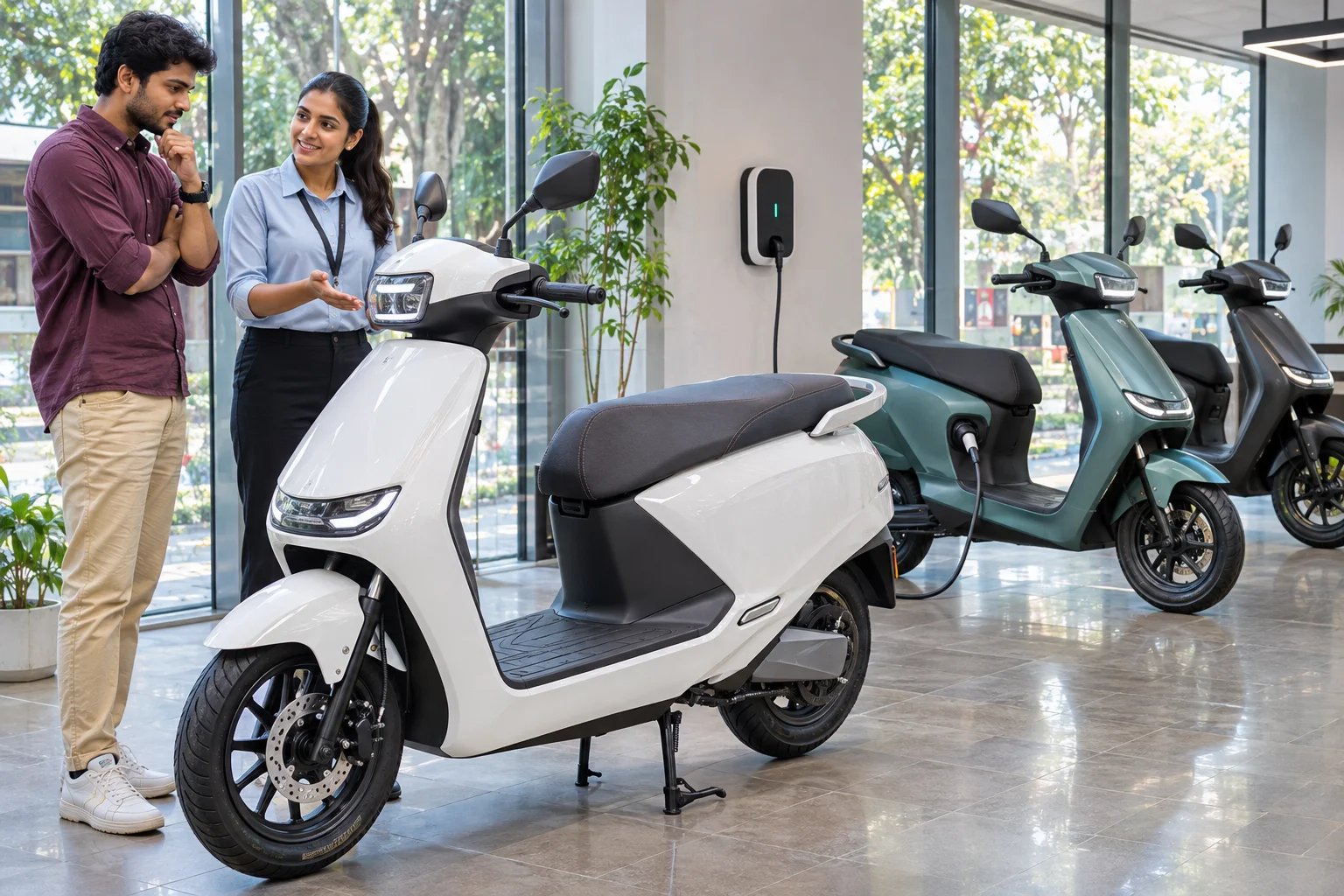
Social media marketing for an electric scooter dealer means showing real scooters, real owners and the real workshop on Instagram, Facebook and YouTube. GullySales plans the posts and reels, writes the captions in your buyers' language and links each one to an enquiry route, so attention reaches the showroom.
Scope, fee, reporting and term are agreed in writing after we have read your brief and spoken to you.
What social media means
Social media is the ongoing posting your business does on platforms such as Instagram, Facebook and LinkedIn to stay visible to customers and prospects between purchases. GullySales plans a posting calendar, writes captions and designs the images so the page looks active and answers what a visitor would ask.
Also for electric scooter dealers
- Content marketing for electric scooter dealers
- Lead generation for electric scooter dealers
- SEO for electric scooter dealers
- Local SEO for electric scooter dealers
- Buyer personas for electric scooter dealers
- CRM for electric scooter dealers
- Follow-up systems for electric scooter dealers
- WhatsApp marketing for electric scooter dealers
Sales and marketing for electric scooter dealers, the overview.
Last updated 14 Nov 2026.
For electric scooter dealers
Where it usually goes wrong, and what we would do.
“Brand posters are everywhere, so they stand for nothing”
Every dealer can post the manufacturer's launch image. A buyer scrolling past recognises it and moves on. A short clip of a technician changing a part, or an owner charging at home, is yours alone.
“Students and first-job buyers watch reels”
A younger buyer decides on look, price and finance. Short videos showing the seat height, boot space and charger socket answer what they are actually wondering, in the time they are willing to give.
“Fleet buyers are on WhatsApp groups, not feeds”
A delivery hub manager is more likely to see a cost sheet shared in a group than a public post. Social media for them means being present where riders talk, with a contact they can message.
“A reel with no next step loses the viewer”
A reel that ends with nothing to do leaves interested viewers with no route to the showroom. Each post should point to a ride booking, a WhatsApp message or the map listing.
What we do
What we deliver for electric scooter dealers.
The work available for this need. We agree the deliverables and responsibilities for your engagement in writing.
A content plan built on real material
A list of post ideas drawn from your showroom: test rides, charger set-ups, workshop work, delivery moments and owner questions.
Result: The owner has a list of posts that can be shot on a phone.
Captions in the buyer's language
Captions and on-screen text written in the language your local buyers read, with the model and the price rule stated plainly.
Result: Posts read as if written by someone in the town.
Delivery-moment posts with permission
A simple consent step so that handing over keys can be posted only when the owner agrees.
Result: Delivery posts are shared only with the owner's agreement.
A route from post to enquiry
Every post carries one clear action: book a ride, message on WhatsApp or visit the map pin.
Result: The owner can see which post brought a message.
Paid promotion set-up if wanted
Targeting by town and interest, with a budget the owner sets, and a check of the platform's current advertising rules.
Result: Any paid post has a stated audience, a budget and an enquiry route.
How the result is measured
- Posts published
- Engagement rate
- Enquiries from social profiles
Recorded as a baseline before work starts, so every later report has an honest comparison.
Posts and pieces to plan
Show the scooter in the town it is sold in.
- A student collects a scooter
- A handover video with permission, showing the rider's first ride and what the dealer explained about charging.
- A delivery rider's week on one charge
- A short account in the rider's words, with no figures claimed by the dealer.
- The workshop at work
- Photographs of a battery check and a tyre change, naming what the technician is doing.
- Charging at home explained
- A reel of the technician showing a plug point and a safe habit, in the local language.
- An older rider's first ride
- A post on a low-speed model for a family member, with consent and a note on checking local rules.
Who it is for
This is written for these electric scooter dealers.
- Authorised single-brand electric scooter showrooms
- Electric-only dealers carrying two or three brands
- Petrol two-wheeler dealers adding an electric range
- Dealers selling low-speed electric scooters
- Dealers who supply scooters to delivery fleets and small businesses
- Small-town dealers appointed by newer electric scooter brands
- Dealers who also run battery swapping or charging points
Before you decide
When this may not be the right fit.
- Nobody can reply to comments about range and price, and a post would draw questions the dealer would leave unanswered.
- Owners have not agreed to appear, and the page would be only brand posters.
- The brand's rules on dealer posts are unclear, and posting before you know them risks a request to remove the page.
Before you decide
Agree the work. Know how to judge it.
Social media marketing for electric scooter dealers: use these checks to prepare, choose the scope, and review what changes.
Bring the right evidence
Review the posts that produced useful conversations, not only the ones with the most views. Gather buyer questions and decide which team member can contribute credible material.
Make the scope clear
Choose the audience and channel before setting a posting volume. Agree who supplies material, approves posts, and handles messages, including complaints or questions the agency cannot answer.
Check the work in use
Follow a post through to the profile, website, and response. A useful report explains the quality of conversations and enquiries, alongside reach and engagement.
Know when to change course
If publishing takes time away from unanswered buyer messages, fix the response routine first. Do not expand to another channel without a clear reason for being there.
These are discussion points, not a fixed package. GullySales confirms the deliverables, responsibilities, fee, and term in writing after reading your brief and speaking with you.
Before we start
What to have ready before the work starts.
The records, access and decisions this work needs from electric scooter dealers. Anything missing is noted in the written scope, with who will supply it.
- Admin rights on the Instagram and Facebook pages
- We need to schedule, tag and read messages on your pages, so the owner must add us or hand over a manager role. If the page belongs to a former employee, recover it first. Without admin rights we write the posts but the team publishes by hand, and links back to your desk are easy to forget.
- Written consent from delivery customers
- A delivery photograph is posted only with the owner's agreement. A simple line on the delivery form, or a message saved in WhatsApp, is enough. We need to know how you collect this today. Without consent the delivery-moment posts are replaced by pictures of scooters and staff who have agreed.
- A person who holds the phone on delivery days
- Real material depends on someone taking pictures during the ordinary day without being asked twice. Name the person and tell us their usual hours. If nobody is named, we are left with the brand's pictures and the feed looks like every other dealer's.
- The brand's rules on using its images and videos
- Some dealer agreements permit the brand's films, others restrict logos or require approval. Share whatever you have in writing. We build the plan around what is allowed. If no rule is found, we use only your own material and links to the brand's page.
- A list of questions buyers ask in comments
- Screenshots of past comments on range, price, charging and service show us what to answer in posts. A handful from the last few campaigns will do. Without them, we write from the desk conversation and may miss the awkward questions that buyers ask in public.
How it works
How the social media work runs
The work itself, in order. How an engagement starts, from your brief to a written scope, is set out on our method page.
- 1
Scroll the brand's pages and your rivals' reels
We spend a sitting looking at what the brand posts and what two or three nearby dealers post, noting which posts show a place and which show only a poster. You tell us what you wish buyers knew that none of these posts say. This gives us the gap your own posts can fill, and the style to avoid copying.
- 2
Shoot a list of real moments with the team
We list the moments you can photograph without staging: a scooter coming off the truck, the charger being fitted at a home, the technician's battery check, a delivery with the keys. You choose which ones the people involved agree to appear in. A short shooting list goes to the person who holds the phone on a normal day.
- 3
Draft captions in the buyer's language
For each planned post we write the caption in the language your buyers read, checked by someone from your town. Range, charging and warranty statements come from the brand or the technician and are written plainly. You approve every caption. We remove any line that claims a distance or a battery life the brand has not confirmed to you.
- 4
Give each post a route to your desk
Every reel and post ends with a way to reach you: a WhatsApp message with the model pre-filled, a ride-booking link or a call to the showroom. We set these up so each contact is logged with the post that brought it. You decide which route suits students, which suits families and which suits fleet owners.
- 5
Publish in the order you approve
Posts go out in the sequence agreed on the plan, and you or your manager sign off each one before it is published. Comments about range or price are answered by the person you named, using the replies we wrote with you. Comments we cannot answer are passed to the technician or the brand.
- 6
Compare posts with the desk's log
We start from the count of enquiries your desk logged from social before the work began. We then read which posts and reels led to a message, a ride booking or a showroom visit. You see which moments buyers responded to and which were only watched. Together we choose what to shoot again and what to drop.
Where this fits
Three pieces of sales work, in this order.
This work sits inside sales process design, at stage 0, foundation. The audit comes before it, and sales management keeps it running.
Step 1
Sales audit
Find where deals are being lost and what to fix first.
Start here if you cannot say where orders are lost.
Step 2 · you are here
Sales process design
One written way to sell, from first enquiry to repeat order.
Start here if every salesperson sells differently.
Step 3
Sales management
A target, a review routine and someone who owns the number.
Start here if the team has targets and no routine.
FAQ
Questions owners ask before they call.
Not here? More answers, or ask on WhatsApp.
What posting schedule suits us?
Can we use the brand's videos?
Should we answer comments about range and price?
How should we answer a comment that range was lower than claimed?
Should the dealership have its own page when the brand already posts?
Is paid promotion needed for students and first-job buyers?
How long is the contract?
How soon will we see results?
Who will actually do the work?
What do you need from us?
More for electric scooter dealers
Related work to consider.
Closest to this: content and social
Also for electric scooter dealers
Or start from the overview: sales and marketing for electric scooter dealers.
Your next practical step
Tell us what you are trying to grow, and we will read it before we call.
Eight short steps, mostly taps. Skip anything you would rather answer on the call.