Two-wheeler service centres · Buyer persona
Know the rider behind the job card before deciding what to say to them.
A buyer persona for a two-wheeler workshop describes the different riders who bring bikes in, what each one worries about and what makes each one return. GullySales works on drawing those riders from your own job cards and counter conversations.
Scope, fee, reporting and term are agreed in writing after we have read your brief and spoken to you.
What buyer persona means
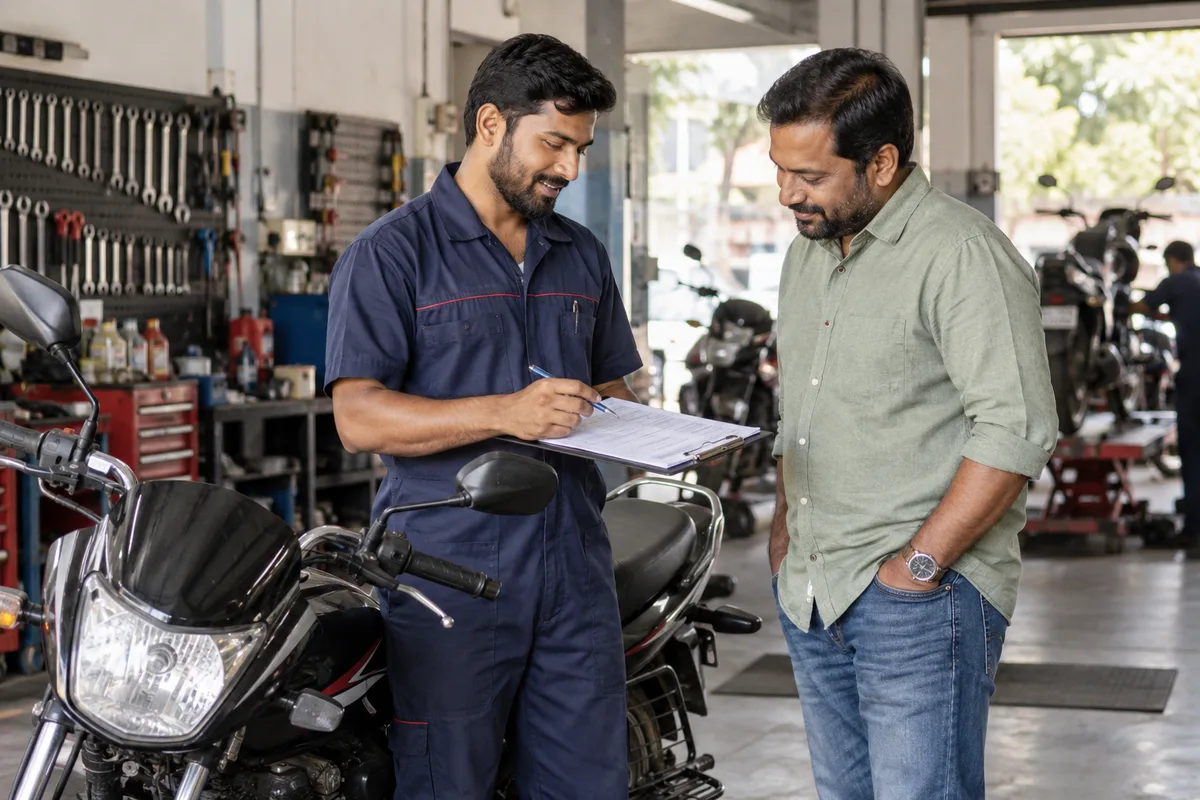
A buyer persona is a plain description of the kind of customer who actually buys from you. It includes what they search, what worries them and who else they ask before deciding. GullySales builds this from real enquiries and past sales rather than a generic template, then uses it to write every page and advert.
Also for two-wheeler service centres
- Digital marketing for bike workshops
- SEO for two-wheeler service centres
- Local SEO for two-wheeler service centres
- Reputation management for two-wheeler service centres
- WhatsApp marketing for two-wheeler service centres
- Review generation for two-wheeler service centres
- Customer retention for two-wheeler service centres
- Follow-up systems for two-wheeler service centres
Sales and marketing for two-wheeler service centres, the overview.
Last updated 14 Nov 2026.
For two-wheeler service centres
Where it usually goes wrong, and what we would do.
“The commuter wants the bike back by evening”
This rider uses the bike to reach work and cannot spare a day. The question is the ready-time, and the promise matters more than a small difference in price. A workshop that keeps its word wins the repeat visit.
“The delivery rider counts every lost hour”
For a delivery or courier rider the bike is the income. They want a clear estimate, an honest answer about which repairs can wait, and the bike on the road. They compare workshops on trust, then on proximity.
“The enthusiast asks about parts and tuning”
A rider with a performance or customised bike asks about genuine parts, fitment and who has worked on the model before. A generic message does not reach this buyer; a mechanic who knows the model does.
“The family decision-maker sends someone else”
The person who pays is not the person who rides. A parent funds the scooter a student rides, and the call comes from the parent. The estimate has to make sense to someone who will not see the bike.
What we do
What we deliver for two-wheeler service centres.
The work available for this need. We agree the deliverables and responsibilities for your engagement in writing.
Rider types drawn from job cards
A short set of rider types built from the last few months of jobs, with the bike models, visit reasons and who paid.
Result: You can name the riders who actually fill your ramp.
What each rider worries about
For each type, a plain list of the worries heard at the counter: surprise charges, delays, doubtful parts.
Result: The counter knows what each rider fears before they ask.
A first message per rider type
Short opening wording for a commuter, a delivery rider, an enthusiast and a parent paying for a student.
Result: The first reply sounds like it understands the rider.
Questions the counter should ask
A few questions for the first minute: how the bike is used, what sounds wrong, when it is needed.
Result: The estimate starts from the rider's real need.
A review of the personas against repeat visits
Each type checked against who returned, so the sketch is corrected by the workshop's own records.
Result: The personas reflect who comes back, not who you expected.
How the result is measured
- Enquiry match to persona
- Conversion rate by persona
- Content aligned to persona
Recorded as a baseline before work starts, so every later report has an honest comparison.
Who is asking
Five kinds of rider come through a bike workshop, and each asks something different.
- Commuter with a bike that must be back by evening
- Wants to know the ready time and the cost before leaving the bike. Give the estimate at the counter and say when you will call.
- Rider whose warranty just ended
- Asks whether genuine parts are used and whether an independent workshop is safe for the bike. Show the part brands you fit and what a service covers.
- Delivery rider who loses income when the bike is down
- Counts each hour on the ramp. Wants a clear ready time, a quick diagnosis and a bill that matches the estimate.
- Enthusiast with a 350cc or a modified bike
- Asks about the mechanic's experience with the model and about tuning and parts. Show past work and let the senior mechanic speak.
- Parent or family member sending the bike with someone else
- The person at the counter is not the person paying. Send the estimate and the ready notice to the owner's number as well.
Who it is for
This is written for these two-wheeler service centres.
- Independent two-wheeler workshops
- Multi-brand service centres
- Authorised service centres
- Workshops specialising in scooters
- Performance and customisation workshops
- Doorstep and pick-up service providers
- Electric two-wheeler service and battery specialists
- Workshops serving delivery riders and fleet owners
Before you decide
When this may not be the right fit.
- Your job cards show no pattern yet because the workshop is new, so a persona would be invented rather than drawn from records
- You want one fixed script for every rider, which a persona exercise is meant to move you away from
Before you decide
Agree the work. Know how to judge it.
Buyer persona for bike workshops: use these checks to prepare, choose the scope, and review what changes.
Bring the right evidence
Write the decision the research must support, such as entering a market or choosing a buyer group. Separate what you know from sales records from what the team currently assumes.
Make the scope clear
Agree which buyers to speak to, which sources to review, and what access you can provide. Include lost enquiries and people who chose another supplier, where they are willing to take part.
Check the work in use
Look for source dates, sample limitations, and evidence that disagrees with the preferred answer. A recommendation should show how it follows from the findings.
Know when to change course
Do not treat a few positive conversations as proof of demand. Test the proposed offer with an actual buying decision before committing to a wider launch.
These are discussion points, not a fixed package. GullySales confirms the deliverables, responsibilities, fee, and term in writing after reading your brief and speaking with you.
Before we start
What to have ready before the work starts.
The records, access and decisions this work needs from two-wheeler service centres. Anything missing is noted in the written scope, with who will supply it.
- A large run of job cards
- Personas drawn from a handful of cards are guesses. We need a broad run across months, covering scooters and motorcycles. If the cards are thin, we begin with your memory and test it as new cards arrive.
- Your service advisor for a sitting
- The person at the counter knows what riders say. They must be available for a conversation, uninterrupted by customers. Without them, the personas rest on cards alone and miss the worries riders speak aloud.
- A list of regular riders by name
- List your best-known regular riders, every name you can recall, with what each does for a living. We use them as test cases. Without a list, the types are abstract, and the counter cannot picture them.
- The jobs each type brings
- Tell us which jobs belong to which kind of rider, such as tyre changes for delivery riders. The mapping shapes the first messages. If it is unclear, we mark the jobs as mixed and refine from new cards. Where one rider fits two types, say which job matters more.
- Agreement on how to record rider type
- Decide where the type is written, whether a tick on the card or a note in the register. Without a place, the work disappears after the first sitting. We help you add a small box to the job card.
How it works
How the buyer persona work runs
The work itself, in order. How an engagement starts, from your brief to a written scope, is set out on our method page.
- 1
Sort job cards by the kind of rider
We read through job cards and sort them into the rider types you recognise: the commuter, the delivery rider, the weekend enthusiast, the family. You correct our guesses. Each pile shows its typical bikes and jobs, and the piles become the draft personas.
- 2
Ask the counter what each rider worries about
We sit with the service advisor and ask what each type says at handover: the commuter about time, the delivery rider about lost earnings, the enthusiast about parts. We write the worries in the riders' own words. You add anything we missed, since the counter hears what a form never records.
- 3
Check who decides and who pays
In some families the rider is not the buyer. We mark which types send the bike with a relative or a driver and who approves the estimate. You decide how the counter reaches the real decision-maker, for example by sending the estimate to a second phone.
- 4
Write the first message for each type
For each type, we draft the opening line of a message or call, in the language that suits them. You read them aloud at the counter. A line that sounds wrong when spoken is rewritten, and the final set goes on a card beside the phone.
- 5
Add the questions the counter should ask
We give staff two or three questions that identify the type early, such as how the bike is used on a working morning. You decide which are comfortable to ask. The answers are noted on the job card, so the next message suits the rider.
- 6
Test the types against repeat visits
After the job cards have been tagged for a while, we check whether each type returns differently. You see which types come back, which drift and which send referrals. The personas are revised where the cards disagree with our first guess.
Where this fits
Three pieces of sales work, in this order.
This work sits inside sales process design, at stage 0, foundation. The audit comes before it, and sales management keeps it running.
Step 1
Sales audit
Find where deals are being lost and what to fix first.
Start here if you cannot say where orders are lost.
Step 2 · you are here
Sales process design
One written way to sell, from first enquiry to repeat order.
Start here if every salesperson sells differently.
Step 3
Sales management
A target, a review routine and someone who owns the number.
Start here if the team has targets and no routine.
FAQ
Questions owners ask before they call.
Not here? More answers, or ask on WhatsApp.
Do we need a survey?
How many rider types do we need?
Should scooter owners and motorcycle owners be separate personas?
What if the rider sends the bike with a relative or a driver?
Should we survey riders to build personas?
How many rider types is too long a list?
How much does it cost?
How long is the contract?
How soon will we see results?
Who will actually do the work?
From the blog
Further reading for two-wheeler service centres.
 6 min read · 6 Oct 2026How buyers choose a showroom, workshop or parts counterCar, bike, repair and parts buyers send one enquiry to several sellers and pick the first clear answer. See what each buyer checks and where you lose them.
 5 min read · 6 Oct 2026How a two-wheeler workshop takes the first callThe first call from a rider decides whether the bike comes in. The questions to ask, what to write down and what to say about price on the phone.
 7 min read · 14 May 2026How bike workshops get riders to returnRiders return when the bill matches the estimate, the bike is ready on time and a message quotes the last reading. How a workshop builds that.
More for two-wheeler service centres
Related work to consider.
Closest to this: strategy and research
Also for two-wheeler service centres
Or start from the overview: sales and marketing for two-wheeler service centres.
Your next practical step
Tell us what you are trying to grow, and we will read it before we call.
Eight short steps, mostly taps. Skip anything you would rather answer on the call.