Two-wheeler service centres · Lead generation
Fill the ramp with riders who are ready to book a service, not just browsing.
Lead generation for a two-wheeler workshop means getting riders with a due service, a breakdown or a warranty that has just ended to contact you before they contact the workshop down the road. GullySales works on where those riders look, how they reach you and how each enquiry is recorded.
Scope, fee, reporting and term are agreed in writing after we have read your brief and spoken to you.

What lead generation means
Lead generation is the combined work of every channel that brings in a new enquiry, whether from search, adverts, referrals or a stall at an exhibition. GullySales runs these channels together and reports the number of enquiries each one produced, not the activity behind it.
Also for two-wheeler service centres
- Follow-up systems for two-wheeler service centres
- CRM for bike workshops
- SEO for two-wheeler service centres
- Local SEO for two-wheeler service centres
- Reputation management for two-wheeler service centres
- WhatsApp marketing for two-wheeler service centres
- Review generation for two-wheeler service centres
- Customer retention for two-wheeler service centres
Sales and marketing for two-wheeler service centres, the overview.
Plan the next part of the work
Last updated 21 Nov 2026.
For two-wheeler service centres
Where it usually goes wrong, and what we would do.
“The enquiry arrives when the bike has already failed”
A rider whose scooter will not start at eight in the morning searches from the roadside and calls the first workshop that picks up. Lead generation here is being visible and answerable at the moment of breakdown, not weeks before.
“Warranty expiry is the quiet moment of switching”
When the free servicing period at the authorised centre ends, the rider starts asking colleagues where to go next. A workshop that is known in the neighbourhood and listed with honest pricing is on that shortlist; one that is invisible is not.
“Calls land while hands are under a bike”
The mechanic cannot answer, the phone rings out, and the rider rings the next number. A lead that was won by your listing is lost by your counter, so the capture route matters as much as the source.
“Fleet and delivery riders are a separate lead”
A courier or food-delivery rider needs the bike back the same day because the bike is the income. This buyer wants a quick ready-time promise and repeat visits, and is reached through other riders and local groups rather than search.
What we do
What we deliver for two-wheeler service centres.
The work available for this need. We agree the deliverables and responsibilities for your engagement in writing.
A list of where your jobs arrive from
A sheet built from the last few months of job cards: walk-ins, calls, referrals, map searches, reminders. Each source is named from the customer, not guessed.
Result: You can say which source actually brings riders to the ramp.
One enquiry sheet for every channel
Calls, WhatsApp messages and walk-in requests logged in a single place with the bike model, the problem and the rider's preferred time.
Result: Nothing said on the phone is lost when the mechanic is busy.
A missed-call reply
A short message sent to the number that rang out, asking the model and the problem, so the rider hears from you before trying another workshop.
Result: Riders who rang and got no answer receive a reply from you.
Offers for riders leaving warranty
A plain service offer aimed at bikes whose free servicing has ended, worded around genuine parts and an estimate that holds, with no invented discount.
Result: A rider leaving the authorised centre meets your name with a clear offer.
A fleet rider approach
A short pitch and a ready-time promise for delivery and courier riders, passed through the places they gather.
Result: You know which fleet riders have asked and which have returned.
A baseline before anything changes
Enquiries, jobs and repeat visits counted before the work begins, so later numbers are compared with your own start.
Result: Every later figure is set against your own first count.
How the result is measured
- Relevant enquiries by source
- Duplicate and unsuitable enquiries
- Time to the first response
- Accepted enquiries reaching an agreed next step
Recorded as a baseline before work starts, so every later report has an honest comparison.
What to capture or send
Each rider who reaches you leaves a few facts, and the enquiry sheet should hold them.
A lead is only useful if the sheet shows how it arrived and what the rider needs. These are the fields and moments for a bike workshop.
- How the rider found you
- Map listing, a friend, a used-bike dealer or a drive-past. Ask once at the counter and write it down, so you can see which source sends bikes that reach the ramp.
- Bike model and registration number
- Taken at the first call. It tells the advisor whether the rider rides a scooter or a motorcycle and lets the job card be opened before the bike arrives.
- The fault or service in the rider's words
- Write 'brake squeal' or 'due at 6,000 km' as spoken. It decides who calls back and whether the rider needs an estimate before coming in.
- Warranty end date
- A rider whose warranty has just ended is deciding where to go next. Note the date so the advisor can offer an inspection before a rival workshop does.
- Missed call and the reply sent
- Log the time of the call and whether it was returned. This shows how many enquiries are lost while hands are under a bike.
- Fleet or delivery rider
- Mark a rider who works for a delivery company or a rental fleet. That rider needs a quick turnaround on a lost hour, and the supervisor may send several bikes.
Who it is for
This is written for these two-wheeler service centres.
- Independent two-wheeler workshops
- Multi-brand service centres
- Authorised service centres
- Workshops specialising in scooters
- Performance and customisation workshops
- Doorstep and pick-up service providers
- Electric two-wheeler service and battery specialists
- Workshops serving delivery riders and fleet owners
Before you decide
When this may not be the right fit.
- The phone goes unanswered during work hours and nobody returns the call, so more enquiries would only be lost
- You have no way to note where a job came from, so you could not tell which source was worth the effort
Before you decide
Agree the work. Know how to judge it.
Lead generation for bike workshops: use these checks to prepare, choose the scope, and review what changes.
Bring the right evidence
Define the organisations or buyers you can serve and the reasons they would consider a conversation. Bring examples of accepted and rejected prospects so the selection rule is visible.
Make the scope clear
Agree the research sources, contact approach, qualification rules, and handover. Clarify which meetings count as accepted and what happens to replies that are not ready to buy.
Check the work in use
Review why a prospect was selected and what was learned from the response. Count held, relevant conversations separately from contacts found, messages sent, or meetings booked.
Know when to change course
If the same objection appears repeatedly, adjust the offer or buyer group before increasing outreach. Respect a request to stop contact and keep the exclusion in the record.
These are discussion points, not a fixed package. GullySales confirms the deliverables, responsibilities, fee, and term in writing after reading your brief and speaking with you.
Before we start
What to have ready before the work starts.
The records, access and decisions this work needs from two-wheeler service centres. Anything missing is noted in the written scope, with who will supply it.
- Recent job cards with the source noted
- A good number of recent cards, with a note of how each rider arrived, is enough. Where the source was never recorded, tell us what you remember. If nothing is known, we start tracking from today and our first picture is thinner.
- A phone that someone answers
- The enquiry number must be answered by a named person during working hours. If hands are under a bike, a missed call will happen, and the reply rule covers it. Without a named person, no amount of promotion helps.
- A list of bikes nearing the end of warranty
- From your cards, pick bikes sold or first serviced a while ago and now close to the end of the manufacturer's warranty. We use it to time offers. If the cards do not carry a purchase date, we ask riders at the next visit.
- Your approval for any paid reach
- If you want paid advertising, set a limit on what you are willing to spend and tell us. We do not spend without your agreement. If you prefer to avoid it, the plan stays with the map listing, referrals and reminders.
How it works
How the lead generation work runs
The work itself, in order. How an engagement starts, from your brief to a written scope, is set out on our method page.
- 1
List where this month's jobs arrived from
We ask you to trace the jobs from the recent job cards to their source: walk-in, a call, a parts shop, a friend, the map. You may only be sure of some. We record the rest as unknown and begin tracking from today, so the starting picture has the real shape of your enquiries.
- 2
Set up one sheet for every enquiry
All enquiries, whether by call, message or visit, go on one sheet kept at the counter, with the rider, the bike, the job and the outcome. You choose who fills it in. The sheet replaces scraps of paper and memory, and it is the record that the rest of the work reads.
- 3
Write the reply for a missed call
We draft a message that goes to a rider whose call went unanswered, saying the workshop will call back and offering a link to book. You read it and set the rule for who calls back. A rider reached while the bike is still on their mind is far more likely to book, so this comes before any promotion.
- 4
Time offers around the end of warranty
We look at the job cards for bikes nearing the end of the manufacturer's warranty and plan a gentle offer for those riders, based on a service they will need anyway. You decide what the offer is. We do not promise a discount that harms the workshop's margin.
- 5
Meet a delivery fleet's manager
Delivery and fleet riders are a different kind of lead, with several bikes and little time. We write a short approach for a fleet manager, and you choose who visits. The note offers a clear arrangement for pick-up and return, with no claim you cannot meet.
Where this fits
Three pieces of sales work, in this order.
This work sits inside sales process design, at stage 1, prospecting and lead generation. The audit comes before it, and sales management keeps it running.
Step 1
Sales audit
Find where deals are being lost and what to fix first.
Start here if you cannot say where orders are lost.
Step 2 · you are here
Sales process design
One written way to sell, from first enquiry to repeat order.
Start here if every salesperson sells differently.
Step 3
Sales management
A target, a review routine and someone who owns the number.
Start here if the team has targets and no routine.
FAQ
Questions owners ask before they call.
Not here? More answers, or ask on WhatsApp.
Should we pay for ads to get riders?
How do we tell a worthwhile enquiry from a wasted one?
Do you promise a number of leads?
Can we buy a list of riders to call?
How soon should a lead get a reply?
How much does it cost?
How long is the contract?
Who will actually do the work?
What do you need from us?
What if we are not happy with the work?
From the blog
Further reading for two-wheeler service centres.
 6 min read · 6 Oct 2026How buyers choose a showroom, workshop or parts counterCar, bike, repair and parts buyers send one enquiry to several sellers and pick the first clear answer. See what each buyer checks and where you lose them.
 5 min read · 6 Oct 2026How a two-wheeler workshop takes the first callThe first call from a rider decides whether the bike comes in. The questions to ask, what to write down and what to say about price on the phone.
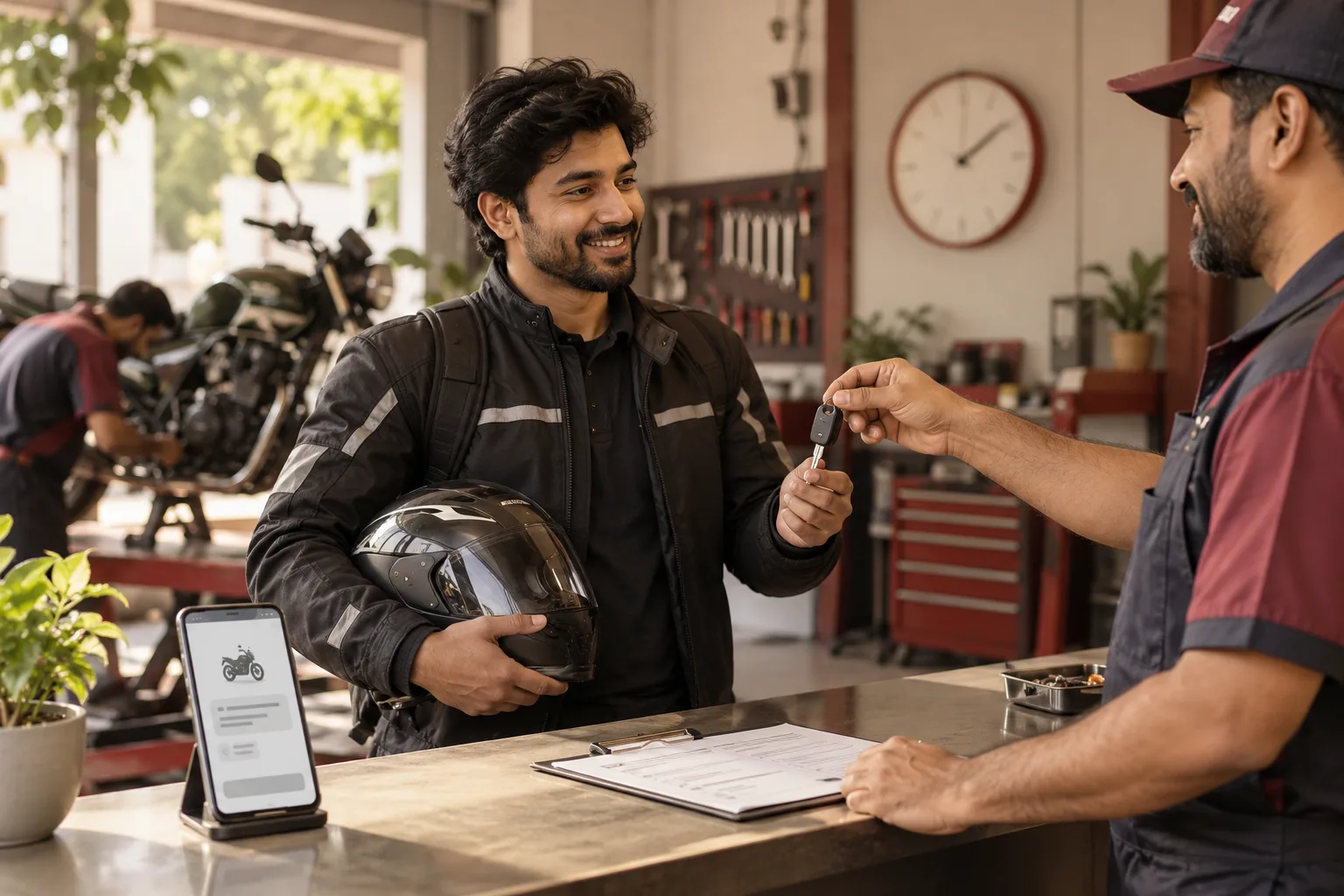 7 min read · 14 May 2026How bike workshops get riders to returnRiders return when the bill matches the estimate, the bike is ready on time and a message quotes the last reading. How a workshop builds that.
More for two-wheeler service centres
Related work to consider.
Closest to this: leads and follow-up
Also for two-wheeler service centres
Or start from the overview: sales and marketing for two-wheeler service centres.
Your next practical step
Tell us what you are trying to grow, and we will read it before we call.
Eight short steps, mostly taps. Skip anything you would rather answer on the call.