Dermatology clinics · Sales training
Train the front desk to reply to a skin photo without sounding like a script.
Sales training for a dermatology clinic teaches staff how to respond to a WhatsApp photo enquiry with the right questions. It also covers explaining a price range without sounding defensive, and following up a patient who has gone quiet mid-treatment. GullySales trains your actual team on your actual treatments.
Scope, fee, reporting and term are agreed in writing after we have read your brief and spoken to you.
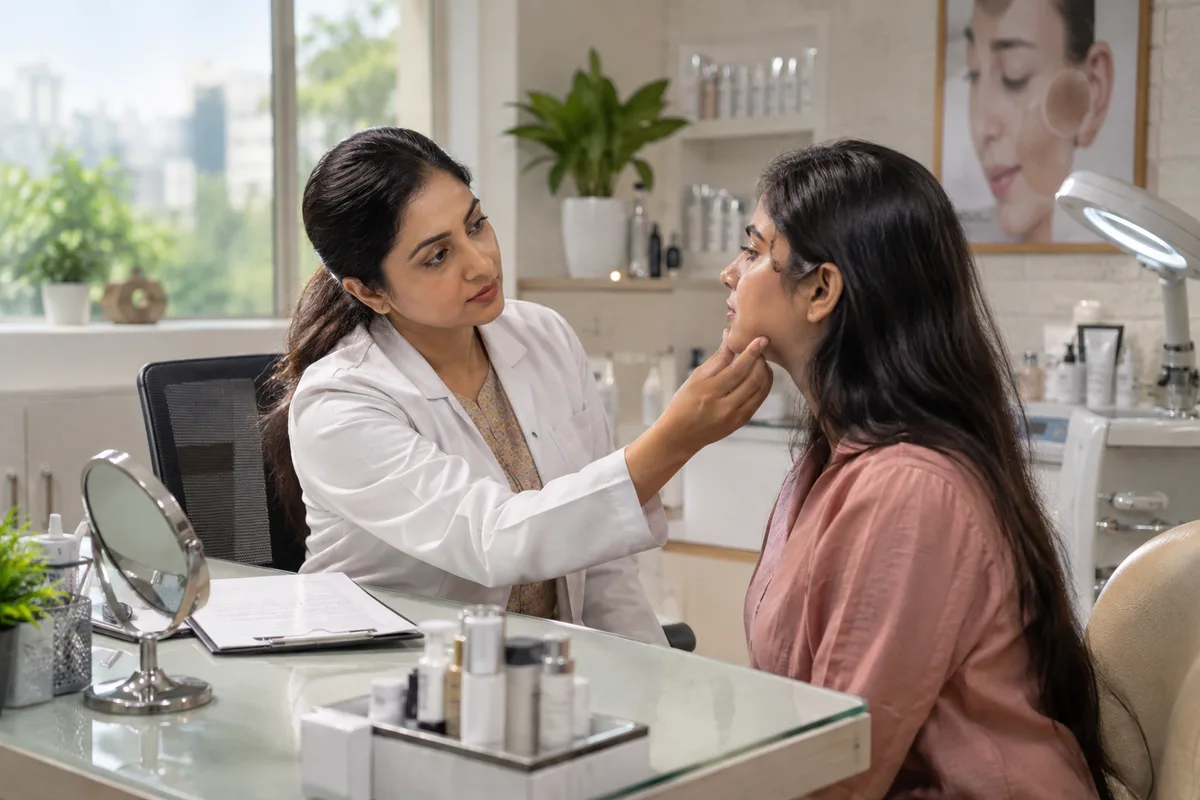
What sales training means
Sales training teaches a sales team a skill it does not yet have, such as handling a specific objection or running a proper site visit, usually through a structured session. GullySales runs these sessions around real objections and calls from your business rather than generic sales theory.
Last updated 8 Nov 2026. Rules for this trade differ by state and professional body, and they change. We describe restrictions in general terms, so check the current position with your own council or adviser before you publish anything.
For dermatology clinics
Where it usually goes wrong, and what we would do.
“Reading a photo enquiry correctly”
Staff need to know which concerns, such as a rapidly spreading rash, should be flagged to the doctor immediately rather than handled with a standard booking reply.
“Explaining a price range without apologising for it”
A team trained to explain what affects the cost of laser hair removal or a hair transplant holds the value of the treatment better. They do this rather than immediately offering a discount.
“Following up a patient who missed the next sitting”
A patient who skips the second session of a chemical peel course needs a caring, specific follow-up message referencing their actual treatment. A generic reminder that could apply to anyone will not do.
What we do
What we deliver for dermatology clinics.
Every deliverable, what it covers for you, and the result it is there to produce. Nothing here is an extra.
Photo-triage training for the front desk
Training on which concerns, such as a rapidly spreading rash, should be flagged to the doctor immediately rather than given a standard reply.
Result: A concern needing urgent attention is not delayed by a routine reply.
Price explanation training for cosmetic enquiries
Practice explaining what affects the cost of a treatment such as laser hair removal, without immediately offering a discount.
Result: The team can hold the value of a treatment in the conversation.
Missed-sitting follow-up script
A specific, caring follow-up message for a patient who skips the next sitting of a chemical peel course, referencing their actual treatment.
Result: A patient who drifted away gets a message written for their situation.
Training built from the clinic's own calls
Sessions reviewing the clinic's actual recorded calls and WhatsApp conversations, not a generic script.
Result: The team practises on real situations they will face again.
Coaching session with the front desk
A recurring review of recent enquiries with the team, agreeing what to handle differently next time.
Result: Training keeps up with what is actually happening at the desk.
How the result is measured
- Skill assessment scores
- Objection handling improvement
- Conversion rate after training
Recorded as a baseline before work starts, so every later report has an honest comparison.
Situations to practise
Six conversations a dermatology clinic's desk should practise, and what good looks like.
- A patient sends a photo on WhatsApp and asks what it is
- Do not diagnose in chat. Ask the area, how long it has been there and what they have used, as the doctor prefers, then invite them for a consultation. Practise the reply in two lines.
- The patient asks how much a laser or peel costs
- Give the consultation fee and a price range, and say what changes it: area, number of sittings, product. Practise saying it plainly, without apologising.
- The patient is comparing three clinics on price
- Ask what treatment and product the other clinic quoted. Explain what your estimate includes. Practise never matching a price blindly.
- A patient stops coming in the middle of a course
- Call to ask how the skin has been and whether the timing suited them. Offer the next sitting. Note the reason in the file. Practise it as a check-in, not a chase.
- A patient is embarrassed to say the concern aloud
- Offer a private corner, a written note or a woman staff member if they prefer. Practise lowering your voice and asking one gentle question at a time.
- Will it clear completely
- Say the doctor will explain what is likely after examining the skin. Never promise a result. Practise the hand-off line so it does not sound like avoiding the question.
Who it is for
This is written for these dermatology clinics.
- Solo dermatologist clinics
- Multi-doctor dermatology and cosmetology centres
- Dermatology hospitals with in-patient procedures
- Cosmetic and aesthetic dermatology clinics
- Hair transplant and trichology centres
- Skin and laser clinics inside malls or commercial complexes
- Paediatric and family dermatology practices
- Multi-branch dermatology chains
Not for
It is not the right fit if.
- The doctors have not agreed what the desk may say about a treatment, and training without that line risks medical claims
- Only one person handles the desk and cannot be spared for practice sessions
- You would train staff to hurry a patient into booking, when the profession expects the doctor to advise first
How it works
How the sales training work runs
The work itself, in order. How an engagement starts, from your brief to a written scope, is set out on our method page.
- 1
Assess current skill levels
We listen to a sample of calls, read CRM records and talk to managers and reps. Each person is placed against the skills map, so we know who needs what.
- 2
Build the curriculum
Content is written around your product, customers and sales cycle. We agree the order of modules with you before any session runs.
- 3
Schedule and deliver
Sessions run on a calendar agreed with you, short enough that reps are not pulled off the phones for a whole day. Each ends with practice.
- 4
Check on the job
Knowledge checks show what was learned. A manager then checks a real call against the skills map, because passing a quiz does not show a rep can sell.
- 5
Review and refresh
The curriculum is revisited when a product, price or competitor changes, and the manager is shown how to keep running short practice sessions after we step back.
Where this fits
Three pieces of sales work, in this order.
This work sits inside sales management. A target, a review routine and someone who owns the number.
Step 1
Sales audit
Find where deals are being lost and what to fix first.
Start here if you cannot say where orders are lost.
Step 2
Sales process design
One written way to sell, from first enquiry to repeat order.
Start here if every salesperson sells differently.
Step 3 · you are here
Sales management
A target, a review routine and someone who owns the number.
Start here if the team has targets and no routine.
FAQ
Questions owners ask before they call.
Not here? More answers, or ask on WhatsApp.
How long does training take?
Does the doctor need to be involved in training?
How much can the front desk say about treatments?
Our patients mix English, Hindi and the local language. Which do we train in?
How long is the contract?
Who will actually do the work?
What do you need from us?
What if we are not happy with the work?
From the blog
Further reading for dermatology clinics.
 8 min read · 21 Sept 2026How to advertise to hospital administratorsThe administrator scopes the purchase, the head of department asks for it and the trust signs it. Three quotations are compulsory, so your job is to be one of the three and to write the specification.
 7 min read · 21 Jan 2026Keyword research for dermatology clinics: the words patients typeThe keywords for dermatologists that bring appointments are the ones patients type: skin doctor near me, acne treatment cost, hair fall treatment. How to group them, and which page each belongs on.
 8 min read · 12 Aug 2025Local SEO checklist for clinicsA five-part checklist for clinics: a complete Google Business Profile, consistent details, treatment pages, a review routine and enquiry tracking.
More for dermatology clinics
Everything else we would do for you.
Closest to this: sales craft
Also for dermatology clinics
Or start from the overview: sales and marketing for dermatology clinics.
Your next practical step
Tell us what you are trying to grow, and we will read it before we call.
Eight short steps, mostly taps. Skip anything you would rather answer on the call.