Tree service companies · Pay per click advertising
Bid on the dead oak, not on the week everybody is already calling you.
Paid search for a tree service puts your number in front of a homeowner in the hour they are ringing three companies. GullySales splits the campaigns by job type, blocks the searches that drain a tree company's budget, and moves spend to the work that gets scheduled later.
Scope, fee, reporting and term are agreed in writing after we have read your brief and spoken to you.
What pay per click advertising means
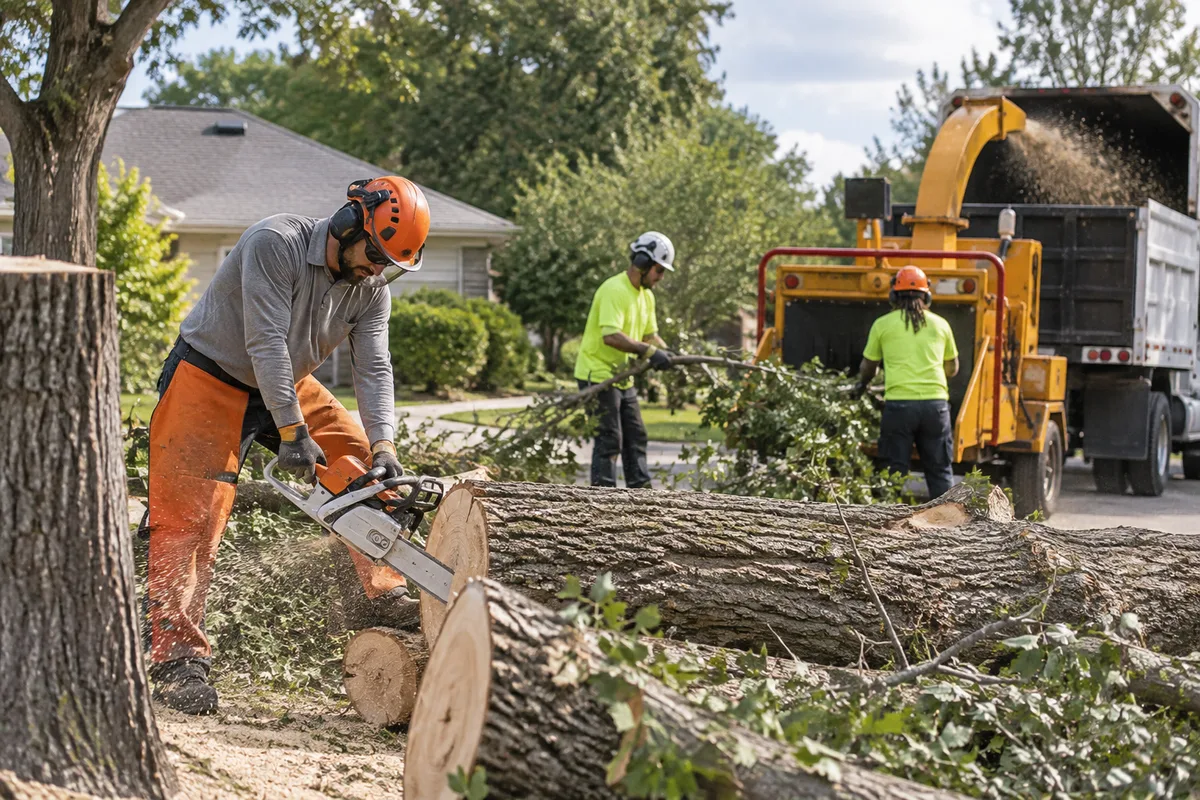
Pay per click advertising (PPC) is paying a fee each time someone clicks your advert on Google or another platform. It puts you at the top of a search page immediately, instead of waiting for ranking to build. GullySales sets the targeting, writes the ad text and checks spend against enquiries received.
Also for tree service companies
- SEO for tree service companies
- Lead generation for tree service companies
- Digital marketing for tree service companies
- Reputation management for tree service companies
- Local SEO for tree service companies
- Branding and identity for tree service companies
- Social media for tree service companies
- Content marketing for tree service companies
Sales and marketing for tree service companies, the overview.
Last updated 5 Oct 2026.
For tree service companies
Where it usually goes wrong, and what we would do.
“Storm weeks are the worst time to raise a bid”
Every company in the county is bidding on the same words while your crews are already booked for ten days. Those emergency calls arrive without being paid for.
“Firewood, jobs and the neighbour's tree drain the budget”
People looking for free wood, a climbing job or who pays when a neighbour's limb falls all click the same advert, and none of them hire anybody.
“The screened ad formats want paperwork you already hold”
Google checks insurance and background documents before a company appears in its screened local format, which favours you over the pickup truck. What it asks for changes, so your office confirms the current list.
What we do
What we deliver for tree service companies.
Every deliverable, what it covers for you, and the result it is there to produce. Nothing here is an extra.
Campaigns split by job, not one tree service budget
Separate money and wording for emergency removal, scheduled removal, trimming, stump grinding and plant health care, each pointing at its own page.
Result: A stump grinding click stops being bought at removal prices.
Negatives for firewood, jobs and legal questions
Blocks on free firewood, climber jobs, arborist courses, mulch delivery and the neighbour disputes that fill a tree company's search terms report.
Result: The budget stops answering questions nobody pays you for.
Spend that rises before storm season and falls during it
A budget calendar built around the weather where you work and your own empty months, with bids pulled back in the weeks the phone rings on its own.
Result: You advertise when the calendar is thin, not when the crews are buried.
A form that asks for a photograph of the tree
Address, which tree, how close it stands to the house and a picture, all asked before an estimator drives out to look at it.
Result: The estimator's day stops going on jobs you would never take.
Call tracking on every campaign
A separate number per campaign, with calls recorded and the unanswered ones counted, so a missed call in a busy week is visible to you.
Result: You find out how many paid calls rang out.
Cost per signed estimate, not cost per click
Spend read against estimates written, estimates signed and job value, measured against the baseline recorded before work starts.
Result: You know which job type is worth advertising for.
How the result is measured
- Cost per click
- Cost per enquiry
- Enquiries from paid search
Recorded as a baseline before work starts, so every later report has an honest comparison.
Searches to bid on and block
The searches worth paying for as a tree service, and the ones to keep out.
- Tree cutting and removal searches, such as tree cutting service near me
- Bid. A homeowner or society with a tree to remove will call several firms. Many cities need permission to fell a tree, so say on the page that you can advise on the paperwork.
- Trimming and pruning searches, such as tree trimming for apartment compound
- Bid for scheduled work, in its own campaign. Societies and offices book these ahead of the monsoon, so the page can talk to a manager about a visit and a plan.
- Fallen tree and storm searches
- Bid as a call advert when a storm or heavy rain is forecast or has just passed, and only for the areas your crew can reach that day. Pull the budget back when the calls stop.
- Firewood, sapling and coconut plucking searches
- Block, unless you do coconut climbing or buy wood. Add plant nursery, garden maintenance and timber price, which are searches from people who want something other than a cut.
- Where the click lands
- Send the click to a page that asks for the tree's location, its height, how close it stands to a building or wire, and a photograph, so an estimator sees the job before driving there.
- Counting a real enquiry
- Count a call from a property owner or manager that ends in a site visit, or a form with a photograph. Log calls for jobs you decline, because they show which searches to block.
Who it is for
This is written for these tree service companies.
- Residential removal and pruning companies running one or two crews
- Climbing and crane removal specialists
- Stump grinding operations
- Plant health care and consulting arborist practices
- Storm response and emergency tree companies
- Land clearing contractors working for builders
- Utility line clearance contractors
- Tree divisions inside a landscape maintenance firm
- Companies bidding municipal and commercial contracts
How it works
From your first message to the first report.
No open-ended retainer. Every step gives you something in writing.
First
Your brief
You tell us what you need in a few short steps: your business, what you want, where enquiries come from and how they are handled.
After the brief
A conversation and a written scope
We read it, then talk with whoever handles your enquiries. If you want our help, the scope, the fee and the reporting come in writing, and nothing starts before you have read them.
Before work starts
Baseline recorded
The numbers this work is meant to move, such as enquiries, quotations, orders, visits or renewals, written down so every later report has an honest comparison.
After the baseline
The first fix goes live
The fix we agreed to start with is put in place and measured against the baseline, whether that is a reply, a follow-up, a page, a listing or the handover between marketing and sales.
As agreed
Report against the baseline
What moved, what did not, and what changes next, in plain words. How often you get it is set in writing before work starts.
At renewal
Renew on the numbers
The term ends and you decide whether to continue from the results. The length is agreed in writing before anything starts.
How the pay per click advertising work runs
- 1
Understand the total budget
We agree the full paid advertising budget available across all platforms, rather than planning each one separately.
- 2
Audit current platform performance
We compare existing campaigns on a shared basis to see where the budget currently performs best and worst.
- 3
Build the cross-platform plan
Campaigns are structured across platforms with a shared measurement standard from the outset.
- 4
Implement and monitor
Campaigns run with budget allocated dynamically based on real-time performance.
- 5
Measure and reallocate
We report performance and shift budget toward what is working, within agreed limits.
Why us
Why owners pick GullySales over an agency.
Marketing and sales, as one job
Most agencies stop at the enquiry. We also fix what happens after it: the reply, the follow-up, the quote and the CRM.
The person on the first call does the work
No account managers in between. You are never handed to someone you have not met.
A baseline before anything starts
Your numbers are written down on day one, so every later report compares against something honest.
The fee in writing, split three ways
Our time, your media spend and production on separate lines. You always see what goes to us.
No guarantees we cannot keep
The term is agreed in writing and never a default twelve months. We never promise a ranking or a lead count, because nobody controls those.
Hours that fit your day, agreed up front
Which hours we overlap with yours is settled before any work starts, so you know when a reply is coming and when it is not.
#257, 3rd floor, Sri Nanjundeshwara Complex, Nagarbhavi 8th Block, Outer Ring Road. How we work.
Your brief
Tell us what you need, and we will read it before we call.
Eight short steps about your business, what you want and who decides. Most questions are a tap, and you can skip any you would rather answer on the call.
FAQ
Questions owners ask before they call.
Not here? More answers, or ask on WhatsApp.
Is it worth advertising once a storm has already hit?
How much should we put behind Google Ads?
Should we advertise to housing societies as well as homeowners?
Is it worth bidding on tree cutting permission searches?
How long is the contract?
How soon will we see results?
Who will actually do the work?
What do you need from us?
What if we are not happy with the work?
More for tree service companies
Everything else we would do for you.
Or start from the overview: sales and marketing for tree service companies.
Your next practical step
Tell us what you are trying to grow, and we will read it before we call.
Eight short steps, mostly taps. Skip anything you would rather answer on the call.