Home cleaning companies · Review generation
Ask at the final walk-through, while the bathroom is still wet.
Getting reviews written is its own job in home cleaning, separate from answering the ones already there. The customer is standing in a flat that looks the way it will never look again, and that is the ninety seconds in which a review gets written. GullySales fixes who asks, when, and what the customer is asked to mention.
Scope, fee, reporting and term are agreed in writing after we have read your brief and spoken to you.
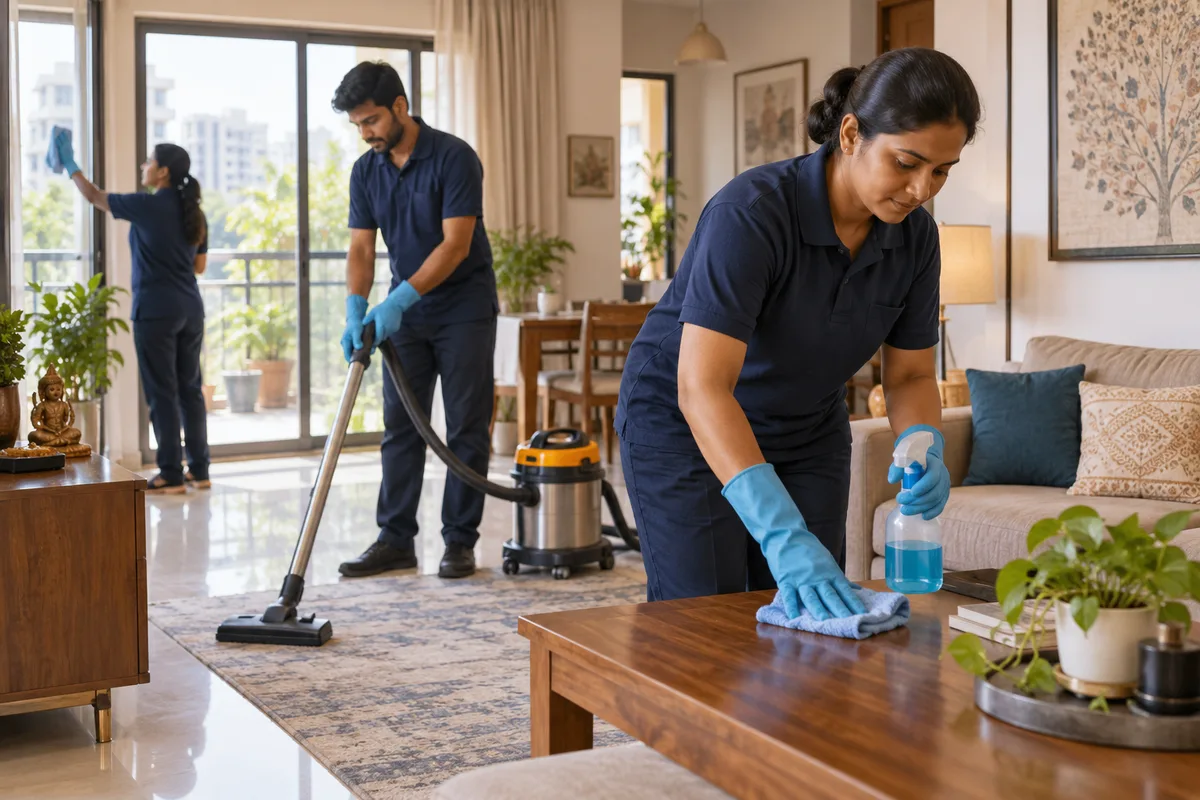
What review generation means
Review generation is the routine of asking satisfied customers to leave a Google or platform review at the moment they are happiest, rather than hoping they remember later. GullySales builds the request into your existing follow-up steps and tracks how many turn into a review.
Also for home cleaning companies
- Public relations for home cleaning companies
- Reputation management for home cleaning companies
- Apartment advertising for home cleaning companies
- Branding for home cleaning companies
- Buyer journey mapping for home cleaning companies
- Buyer personas for home cleaning companies
- Content marketing for home cleaning companies
- Digital marketing for home cleaning companies
Sales and marketing for home cleaning companies, the overview.
Last updated 8 Nov 2026.
For home cleaning companies
Where it usually goes wrong, and what we would do.
“The walk-through is the ask, and it lasts about a minute”
The customer follows the supervisor through the flat, opens the bathroom door and sees the tiles. Ask then, with the link ready. An hour later the customer is unpacking and the moment is gone.
“The supervisor asks, never the cleaner”
A customer will not refuse the woman standing in the kitchen, and will not write anything either, and the cleaner is left wondering whether the request was a favour instead of the tip. Keep the ask with whoever is running the job.
“A recurring customer's review is worth more than a one-off's”
The thing every new customer is frightened of is a different stranger turning up each week. A review that says the same two women have come for a year answers that fear before anybody has to ask about it.
What we do
What we deliver for home cleaning companies.
Every deliverable, what it covers for you, and the result it is there to produce. Nothing here is an extra.
A walk-through routine with the ask built in
The order the supervisor walks the rooms, the point at which the review is requested, and the link or code carried on the job sheet.
Result: The ask happens on site instead of being remembered later.
Prompts that get the job and the area named
Two or three short lines given to the customer, so the review says move-out deep clean in a named locality rather than good service.
Result: New reviews carry the words the next customer searches for.
A separate ask for contract customers
A different request made to households on recurring cleaning, pointing at the same staff returning and the visits being kept, not at one spotless day.
Result: Your reviews answer the trust question, not only the quality one.
Reply wording for a breakage or a missed corner
Ready replies for the two complaints this trade always gets, stating what was done about it, agreed before a bad review turns up rather than typed in a panic.
Result: A complaint reads as a company that fixed it.
Review counts kept by job type
New reviews split by deep clean, sofa and upholstery, move-out and recurring contract, measured against the count recorded before the work started.
Result: You can see which crews and which jobs produce reviews.
How the result is measured
- Reviews received
- Average rating
- Response rate to requests
Recorded as a baseline before work starts, so every later report has an honest comparison.
Asking for reviews the right way
Ask at the final walk-through, with the flat clean and the supervisor standing beside the customer.
- Room by room, then the ask
- Ask once the customer has gone through every room and nodded. Before that they are inspecting, and after the team leaves nobody is standing in the clean flat.
- Link saved on the supervisor's phone
- Keep the review link saved as a contact on each supervisor's phone, with a laminated QR card in the kit, so the supervisor can ask without fumbling for the address.
- Job and corner named
- Suggest the customer write the job and the area, like kitchen chimney degreasing or a post-renovation dust clean. A buyer searching for the same job reads for it.
- Committee secretaries and admin heads
- For a society or office contract, ask the committee secretary or the admin head, and request a reference letter alongside the Google review.
- Photographs only with permission
- Ask before photographing a home, and keep nameplates, family photographs and valuables out of the frame. Use only what the customer agrees to.
- Missed corners are fixed first
- If the customer points out a missed corner or a stain that remains, fix it on the spot or book a revisit before saying a word about reviews.
Who it is for
This is written for these home cleaning companies.
- Deep cleaning and one-time service providers
- Recurring home maintenance cleaning companies
- Sofa, carpet and upholstery cleaning specialists
- Move-in and move-out cleaning services
- Office and commercial cleaning contractors
- Society and apartment complex cleaning contracts
- Franchise-model cleaning companies
Not for
It is not the right fit if.
- You have not yet done a clean that you are proud of for a regular customer, so a request now would invite a poor review.
- A customer is still waiting for a fix to damage, and asking for a review before the repair would make matters worse.
- Your crews do not do a final walk-through, so there is no moment at which to ask.
How it works
How the review generation work runs
The work itself, in order. How an engagement starts, from your brief to a written scope, is set out on our method page.
- 1
Find the moment to ask
We walk through one customer's visit with you and pick the point where the job is done and the customer is still in front of you or holding the phone.
- 2
Read your current reviews
We read every review you have, count how many were answered, and note what customers praise in their own words. We also check that your name, address and phone on Google match your signboard.
- 3
Set up the ask
Link, QR code, message wording and a short briefing for the team. We write down what staff must never do: offer a discount, choose who to ask, or post a review themselves.
- 4
Answer every review
Each incoming review is answered by the routine set down in writing. A complaint is answered by the person who can fix it, with your approval where you want it.
- 5
Count and adjust
We count how many customers were asked and how many reviewed. If few reply, we move the moment or the person asking before touching the wording.
Where this fits
Three pieces of sales work, in this order.
This work sits inside sales process design, at stage 7, after the sale. The audit comes before it, and sales management keeps it running.
Step 1
Sales audit
Find where deals are being lost and what to fix first.
Start here if you cannot say where orders are lost.
Step 2 · you are here
Sales process design
One written way to sell, from first enquiry to repeat order.
Start here if every salesperson sells differently.
Step 3
Sales management
A target, a review routine and someone who owns the number.
Start here if the team has targets and no routine.
FAQ
Questions owners ask before they call.
Not here? More answers, or ask on WhatsApp.
Should we message for a review instead of asking on site?
A customer says something broke during the clean. Do we still ask?
Some customers booked through a home-services app. Do we ask them for a Google review?
A customer said they were too busy to review. Do we follow up?
How much does it cost?
How long is the contract?
How soon will we see results?
Who will actually do the work?
What do you need from us?
What if we are not happy with the work?
From the blog
Further reading for home cleaning companies.
- 5 min read · 3 Apr 2026How to ask for a review at the end of a home service jobWhen to send the review message after a home service job, who should send it, and a word-for-word WhatsApp text that goes to every customer, with the tone adjusted for a pleased, lukewarm or unhappy one.
 7 min read · 21 Sept 2026How to advertise to startup employeesThere is no tech park to buy. A forty person company sits above a bakery, so the audience is the neighbourhood, the delivery app and the coworking floor.
 7 min read · 21 Sept 2026How to advertise to apartment residentsGetting to apartment residents is a permission problem before it is a media problem. Learn who holds the gate, what the association will agree to, and what gets you banned.
More for home cleaning companies
Everything else we would do for you.
Closest to this: reputation
Also for home cleaning companies
Or start from the overview: sales and marketing for home cleaning companies.
Your next practical step
Tell us what you are trying to grow, and we will read it before we call.
Eight short steps, mostly taps. Skip anything you would rather answer on the call.