Home cleaning companies · Service recovery programmes
Decide what happens after a missed slot, before the customer decides for you.
A service recovery programme for a home cleaning company is the written response to a clean that went wrong: who calls the household, what can be offered, and who checks back afterwards. GullySales writes it from your own past cases, with approval limits and message wording your supervisors can use without phoning the owner.
Scope, fee, reporting and term are agreed in writing after we have read your brief and spoken to you.
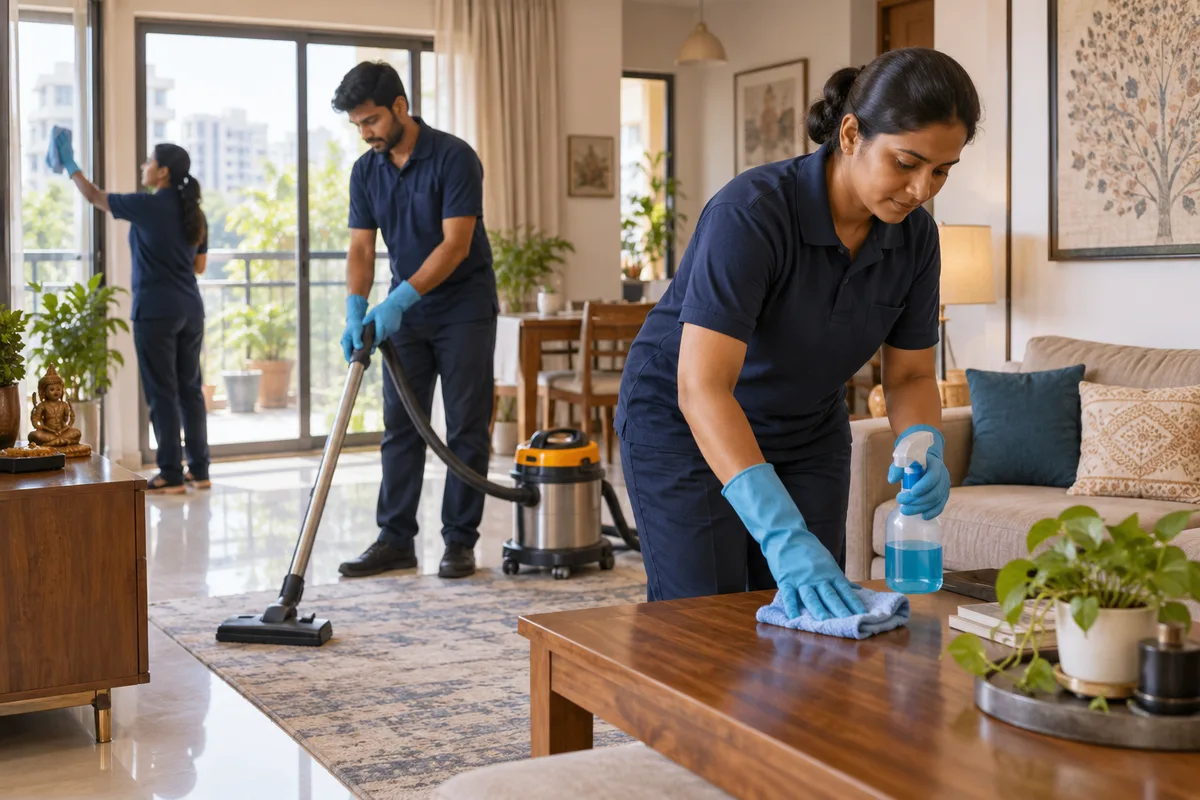
What service recovery programmes means
Service recovery programmes define how your team rebuilds trust after a customer has experienced a failure, beyond correcting the original fault. GullySales writes the recovery protocols, agrees fair compensation limits with you, and sets up a record that shows whether the customer accepted the response and bought or renewed again.
Also for home cleaning companies
- Customer retention for home cleaning companies
- Referral marketing for home cleaning companies
- Customer referral campaign copywriting for home cleaning companies
- Complaint and escalation management for home cleaning companies
- Customer support process design for home cleaning companies
- Helpdesk and contact centre setup for home cleaning companies
- Apartment advertising for home cleaning companies
- Branding for home cleaning companies
Sales and marketing for home cleaning companies, the overview.
Last updated 14 Nov 2026.
For home cleaning companies
Where it usually goes wrong, and what we would do.
“The fix does not repair the relationship”
A crew returns to redo a bathroom, and the job is technically put right. The household has still lost a morning, waited at home and explained the problem twice. If nobody names what went wrong and says what happens next, the customer stops replying to the booking message and the recurring plan quietly ends. The redo repairs the floor; recovery is what repairs the trust in the company.
“Every supervisor answers a different way”
One supervisor offers a free re-clean, another offers a discount, a third says the owner will call back. The household talks to neighbours in the same society and learns that others were treated differently. Written limits give each supervisor a menu they may use on the spot, so the answer does not depend on who picked up the phone or whether the owner was reachable.
“Damage and missing items need a plain route”
A cracked tile, a stained sofa or an item a household cannot find is the hardest call a cleaning firm takes. Staff who improvise either admit too much or deny too soon. The household needs to know who will look into it, what the company will ask for, and when it will hear back. That route should be written, rehearsed and approved by the owner before the first such call.
“A public review turns a private failure into a visible one”
A missed appointment answered late becomes a one-star review that every new enquiry reads. A reply written in anger, or a copied apology that names nothing, makes it worse. Recovery covers the public reply too: what is said, who approves it, and when it is better to move the conversation to a direct call with the household.
What we do
What we deliver for home cleaning companies.
The work available for this need. We agree the deliverables and responsibilities for your engagement in writing.
Failure types and severity guide
A guide built from your own past complaints that separates a late arrival from a missed slot, an unfinished room, a staff conduct complaint and a damage claim. You check each type against real incidents, and each type carries its own first response and its own decision on who handles it.
Result: Any complaint can be placed in a type, with the response already written.
Recovery steps for each failure type
A written order of actions for each type: who calls the household first, what is acknowledged, whether a re-clean is offered, who visits, and what must be confirmed before the case is closed. Each step has a named owner so nothing rests on whoever happens to be free.
Result: Each case shows who did which step, in what order.
Call, WhatsApp and review wording
Messages that name the fault, say what it cost the household, and state exactly what the company will do. There are versions for a phone call, a WhatsApp note and a reply to a review. You read each against what the crew can really deliver, so no message promises more than the schedule allows.
Result: Supervisors send one approved message, not a fresh apology each time.
Offer limits and approval table
An owner-approved menu of what a supervisor may offer without asking: a repeat visit, a partial credit, a free add-on room. Each option has a limit, a route for exceptions and a place to record what was offered, so the owner is called only when a case goes past the table.
Result: Supervisors can resolve a complaint within the table, and exceptions reach the owner.
Recovery log with check-back
A sheet or CRM record linking each failure to the response, the offer made, the crew who returned and the household's reply. A check-back note is added after the re-clean, so you can see whether the household rebooked, stayed on the plan or went quiet.
Result: You can open a single case and follow it from complaint to the household's next booking.
Crew briefing and rehearsal notes
A short briefing for supervisors and crew leads, run through with real past cases, covering what to say at the door, how to record damage with photographs, and when to stop and call. Unclear decisions found during the rehearsal are corrected before the programme goes live.
Result: Supervisors have worked through real cases using the approved steps before the first live one.
How the result is measured
- Recovery contacts made against failures logged
- Time from failure being reported to first recovery contact
- Customer acceptance of the response, separate from contact attempts
Recorded as a baseline before work starts, so every later report has an honest comparison.
Who it is for
This is written for these home cleaning companies.
- Deep cleaning and one-time service providers
- Recurring home maintenance cleaning companies
- Sofa, carpet and upholstery cleaning specialists
- Move-in and move-out cleaning services
- Office and commercial cleaning contractors
- Society and apartment complex cleaning contracts
- Franchise-model cleaning companies
Before you decide
Agree the work. Know how to judge it.
Service recovery programmes for home cleaning companies: use these checks to prepare, choose the scope, and review what changes.
Bring the right evidence
Map what the customer has been promised and what happens after the order. Gather the questions that repeatedly delay the start of delivery or use.
Make the scope clear
Agree the sales-to-delivery handover, customer responsibilities, and the point at which onboarding is complete. Name the owner of each unresolved dependency.
Check the work in use
Follow a recent customer from order confirmation to their first useful outcome. Check that they received the right instructions and know where to ask for help.
Know when to change course
If the sale includes a promise delivery cannot fulfil, correct the promise and handover. An automated welcome message will not resolve that gap.
These are discussion points, not a fixed package. GullySales confirms the deliverables, responsibilities, fee, and term in writing after reading your brief and speaking with you.
Before we start
What to have ready before the work starts.
The records, access and decisions this work needs from home cleaning companies. Anything missing is noted in the written scope, with who will supply it.
- Past complaint cases
- Real cases show what actually goes wrong in your crews: late arrivals, rushed rooms, breakages. Without them, the programme is written from imagination and the supervisors recognise none of it. Even a handful of remembered cases, written down with the outcome, is a useful start.
- The owner's offer limits
- Someone must decide how much a supervisor may give away without asking. If the owner will not set a limit, supervisors keep phoning for approval and households wait. A limit the owner is comfortable with is better than a generous one nobody trusts.
- Booking and crew assignment records
- A recovery call needs to know which crew went, when, and which rooms were booked. If bookings live only in supervisors' chats, the log will be incomplete and a household's account will contradict the company's version. Tell us where the records sit.
- Damage and insurance details
- Whatever the company holds on damage cover, staff verification and what households are told about breakages should be put on the table. If there is no policy, say so. The damage route must match what the company can truly stand behind, and your adviser may need to review it.
- A person to own the log
- Someone has to enter each case and run the check-back. If it falls to a supervisor already on a job, the log decays within a few cases. Name the person, and decide what they stop doing to make room for it.
How it works
How the service recovery programmes work runs
The work itself, in order. How an engagement starts, from your brief to a written scope, is set out on our method page.
- 1
Past complaints and credit notes
You share the complaints, refunds, credits and lost-plan cases you can find, including ones from chat groups and the owner's phone. We read how each was handled and who decided, and we note where the record is thin so the starting figures are not overstated.
- 2
Failure types and authority sign-off
You approve the failure types and the response each deserves. Whoever signs off refunds or credits confirms what supervisors may offer and which cases must reach the owner. We write down the limits in numbers your own accountant has agreed to.
- 3
Protocol and wording drafts
We draft the steps and messages for your review. The operations lead checks that every promised action can be done, such as a same-week re-clean, and the owner checks the damage route. Anything touching insurance or consumer law goes to your own adviser first.
- 4
Supervisor rehearsal on real cases
Supervisors and crew leads walk through past cases using the approved steps, speaking the messages aloud and filling in the log. Where two people read a step differently, we rewrite it until it reads one way, and then hand over the programme.
- 5
Live cases and check-back
The team uses the programme on live complaints. We read the first logged cases with the owner: whether the right type was chosen, whether the household was called, whether the check-back happened, and what the household did next. Gaps are corrected in writing.
- 6
Case review against the starting record
We read logged recoveries against the figures noted at the start, such as rebooked households and plans that lapsed. Changes to limits or wording go back to the owner for approval before use. The review schedule is agreed in writing before the work starts.
Where this fits
Three pieces of sales work, in this order.
This work sits inside sales process design, at stage 1, prospecting and lead generation. The audit comes before it, and sales management keeps it running.
Step 1
Sales audit
Find where deals are being lost and what to fix first.
Start here if you cannot say where orders are lost.
Step 2 · you are here
Sales process design
One written way to sell, from first enquiry to repeat order.
Start here if every salesperson sells differently.
Step 3
Sales management
A target, a review routine and someone who owns the number.
Start here if the team has targets and no routine.
FAQ
Questions owners ask before they call.
Not here? More answers, or ask on WhatsApp.
Is this the same as handling complaints?
Will a recovery programme stop customers leaving?
Should we offer a free re-clean every time?
Can supervisors use these messages without sounding scripted?
What do we say about damage or theft claims?
How do we handle a bad public review?
How much does it cost?
How long is the contract?
How soon will we see results?
Who will actually do the work?
From the blog
Further reading for home cleaning companies.
 7 min read · 21 Sept 2026How to advertise to startup employeesThere is no tech park to buy. A forty person company sits above a bakery, so the audience is the neighbourhood, the delivery app and the coworking floor.
 7 min read · 21 Sept 2026How to advertise to apartment residentsApartment residents is a permission problem before a media one. Learn who holds the gate, what the association allows, what gets you banned.
 5 min read · 24 Apr 2026Before-and-after photos as proof: how to take and use themHow a home service firm can shoot matching before-and-after photos on every job, caption them and get permission, so each one proves the work.
More for home cleaning companies
Related work to consider.
Closest to this: customers after the sale
- Customer retention for home cleaning companies
- Referral marketing for home cleaning companies
- Customer referral campaign copywriting for home cleaning companies
- Complaint and escalation management for home cleaning companies
- Customer support process design for home cleaning companies
- Helpdesk and contact centre setup for home cleaning companies
Also for home cleaning companies
Or start from the overview: sales and marketing for home cleaning companies.
Your next practical step
Tell us what you are trying to grow, and we will read it before we call.
Eight short steps, mostly taps. Skip anything you would rather answer on the call.