Tailoring shops · Social media
Turn delivered blouses and suits into the proof that the next customer scrolls past.
Social media marketing for a tailoring shop means showing finished garments on Instagram and Facebook so a customer can judge the fit before visiting. GullySales plans what to photograph, what to caption and who answers the messages that follow.
Scope, fee, reporting and term are agreed in writing after we have read your brief and spoken to you.
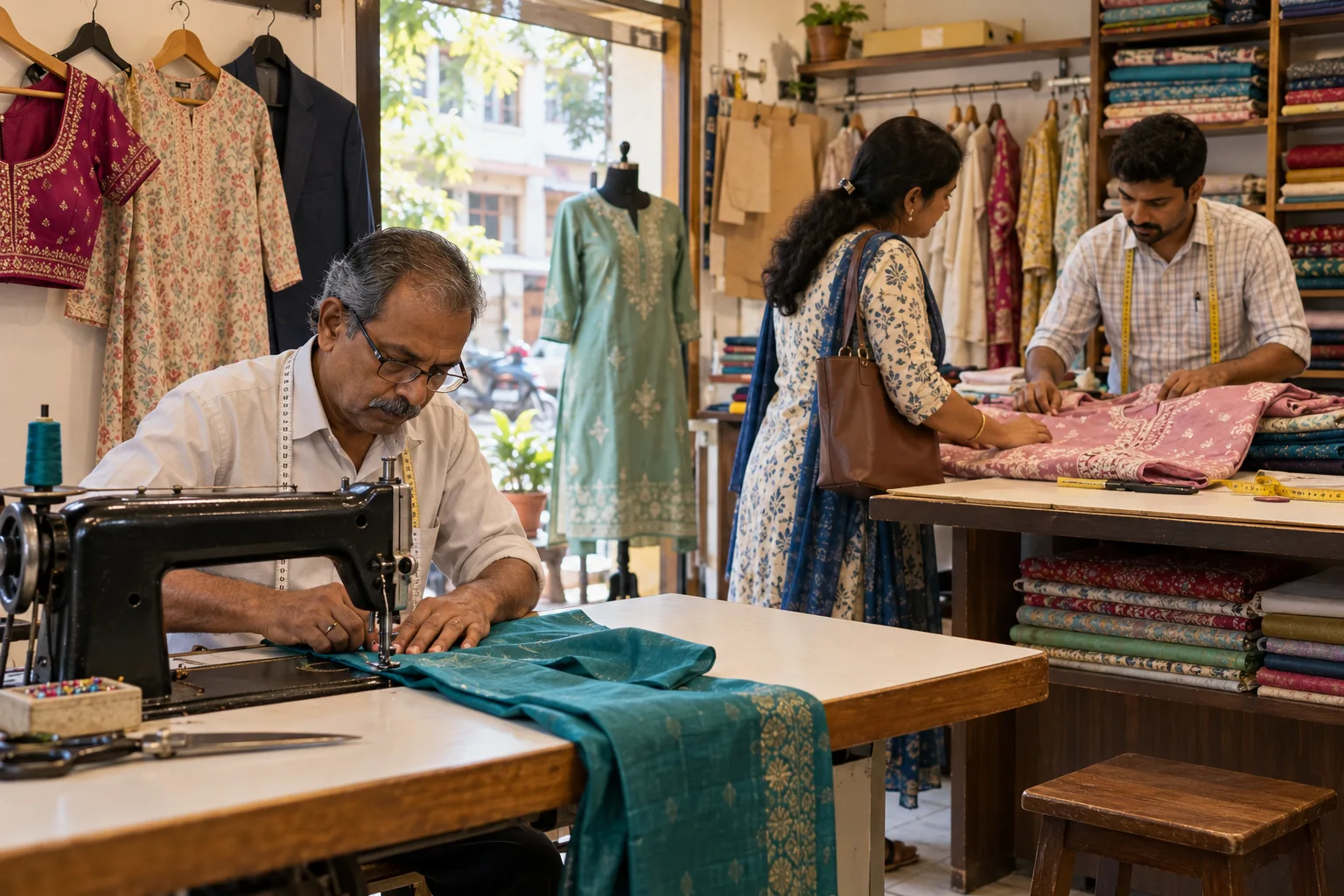
What social media means
Social media is the ongoing posting your business does on platforms such as Instagram, Facebook and LinkedIn to stay visible to customers and prospects between purchases. GullySales plans a posting calendar, writes captions and designs the images so the page looks active and answers what a visitor would ask.
Last updated 14 Nov 2026.
For tailoring shops
Where it usually goes wrong, and what we would do.
“A delivered garment is the best post”
The shop's strongest content is the blouse or suit that has just left the table. The garment is rarely photographed because the customer is waiting. A corner with good light and a steady habit turns each delivery into a post.
“Permission comes before the photograph”
A customer wearing a wedding blouse may not want it online. Asking at the counter and keeping a written yes protects the relationship. Showing the garment on a stand, without a face, is a safe alternative.
“Reels show the fit, pictures show the detail”
A short video of a blouse being worn and turned shows the fall and the back. A close picture of piping or a hem shows the finish. The two serve different customers, and a feed of only one looks thin.
“The message after the post is where the order is won”
A customer who likes a neckline sends a message and expects an answer the same day. A feed with strong pictures and slow replies loses the order that the picture earned.
What we do
What we deliver for tailoring shops.
The work available for this need. We agree the deliverables and responsibilities for your engagement in writing.
Photo corner and routine
A plain spot with daylight and a stand, and a habit of one picture at each delivery.
Result: The shop has fresh work to post without a shoot.
Post plan around the season
A plan that starts before the festival and the wedding season, with the booking cut-off stated in the posts.
Result: Customers see the booking window before the rush.
Caption format
A fixed structure naming the garment, the cloth, the neckline and how to book.
Result: Each post tells the viewer what was stitched and what to do next.
Customer permission slip
A line on the order slip or a WhatsApp message asking whether the garment may be shown.
Result: You hold a record of every yes.
Message reply guide
Standard answers for a price question, a design photo and a delivery query.
Result: Everyone who messages gets a clear reply from the shop.
How the result is measured
- Posts published
- Engagement rate
- Enquiries from social profiles
Recorded as a baseline before work starts, so every later report has an honest comparison.
Posts and pieces to plan
The posts a tailoring shop can plan from its own delivered work.
- A delivered blouse
- A photo or reel of the finished blouse with the neckline named in the caption. Needs the customer's permission and a message link.
- A trial in progress
- A short clip of pinning at the fitting, with the garment named. It shows the care taken and answers the fear of a poor fit.
- A festival cut-off notice
- A post naming the last date the shop takes new orders for the festival, written from the master's own diary.
- A cloth guide
- A short post on which cloths hold a lining or a heavy border. Needs a photo of your own finished piece in that cloth.
- A uniform sample
- A post for school offices with a sample garment, its sizes and a contact route for a purchase desk.
- A before and after alteration
- A pair of photos of a shirt or blouse taken in or let out, with the change named, to bring in alteration walk-ins.
Who it is for
This is written for these tailoring shops.
- Ladies' tailoring shops for blouses, kurtas and salwar suits
- Boutiques with designer blouse and bridal stitching
- Gents' tailors for shirts, trousers and formal wear
- Suit, sherwani and wedding wear tailors
- Uniform tailoring for schools, hospitals and offices
- Children's clothing and school uniform stitching
- Home-based tailors working on WhatsApp orders
- Alteration-heavy shops near markets and railway stations
Before you decide
When this may not be the right fit.
- Nobody photographs finished garments, and without them the account would post only stock pictures.
- Customers have not given permission to show their garments, and a post of a bride's blouse needs it.
- Messages from the posts would land on a phone nobody checks, so a customer's design question would sit.
Before you decide
Agree the work. Know how to judge it.
Social media marketing for tailoring shops: use these checks to prepare, choose the scope, and review what changes.
Bring the right evidence
Review the posts that produced useful conversations, not only the ones with the most views. Gather buyer questions and decide which team member can contribute credible material.
Make the scope clear
Choose the audience and channel before setting a posting volume. Agree who supplies material, approves posts, and handles messages, including complaints or questions the agency cannot answer.
Check the work in use
Follow a post through to the profile, website, and response. A useful report explains the quality of conversations and enquiries, alongside reach and engagement.
Know when to change course
If publishing takes time away from unanswered buyer messages, fix the response routine first. Do not expand to another channel without a clear reason for being there.
These are discussion points, not a fixed package. GullySales confirms the deliverables, responsibilities, fee, and term in writing after reading your brief and speaking with you.
Before we start
What to have ready before the work starts.
The records, access and decisions this work needs from tailoring shops. Anything missing is noted in the written scope, with who will supply it.
- Login for the shop's Instagram and Facebook pages
- Find out who created them. A customer or a nephew may have done it. Recover control before a plan is made, because posts cannot be scheduled from a page you cannot enter.
- A phone with enough storage and a charger
- Photographs and reels need space. Check the phone the counter uses. If it is full or very old, tell us, and we shall plan fewer videos.
- A permission note for the order book
- Prepare the note and decide where the yes or no is written. The decision is simple but must be kept. Without it, a garment posted without consent can lose a regular customer.
- A list of designs customers ask for
- Tell us the neckline, sleeve and kurta styles that come up again and again. These are the posts customers will save. If you copy designs from pictures customers bring, say so, since we need to treat them carefully.
- Time set aside each evening for messages
- Name the hour when the counter reads and answers messages. If messages wait until the next morning, the customer has already asked another shop.
How it works
How the social media work runs
The work itself, in order. How an engagement starts, from your brief to a written scope, is set out on our method page.
- 1
Set up a photo corner by the window
A good garment picture needs light and a plain background. We look at the shop with you and choose a corner near a window, a hanger, a mannequin or a wall. You or the counter staff photograph each delivered piece there before it leaves. What exists afterwards is a fixed corner and a habit. We also mark a second spot for rainy days when the window light is poor.
- 2
Ask the customer before a garment is posted
Every delivered piece is the customer's own. We write a short permission note in your language, and the counter asks while handing over the garment. The answer goes in the order book. You decide whether the customer's name is ever used. Without a yes, the garment is not posted.
- 3
Plan posts around the festival and wedding diary
With your festival diary, we place blouse posts before the wedding months, kurta posts before major festivals and alteration reminders in the slow weeks. You pick the garments you want to show. The plan names who photographs, who writes and who posts.
- 4
Write the caption in the same four lines
A caption format saves thought: garment, cloth, trial and fit note, how to book. We write a template in the shop's voice and in the language customers use. Your counter fills in the details. A reel of a fitting gets the same four lines.
- 5
Show fit without showing faces
Some customers will not allow faces. We plan shots from the neck down, back views, fabric close-ups and a garment on a mannequin. A short reel of a hem or a blouse back is filmed. You decide the rules for faces, and the counter follows them. Fabric close-ups should show the weave and the lining so the buyer can judge the finish.
- 6
Reply to messages and log the orders
The message after a post is where the order is won. We write standard replies for price, date and design copying, which you approve. Counter staff answer within opening hours and log any measurement request. Against the message figures noted at the start, we read which posts brought orders.
Where this fits
Three pieces of sales work, in this order.
This work sits inside sales process design, at stage 0, foundation. The audit comes before it, and sales management keeps it running.
Step 1
Sales audit
Find where deals are being lost and what to fix first.
Start here if you cannot say where orders are lost.
Step 2 · you are here
Sales process design
One written way to sell, from first enquiry to repeat order.
Start here if every salesperson sells differently.
Step 3
Sales management
A target, a review routine and someone who owns the number.
Start here if the team has targets and no routine.
FAQ
Questions owners ask before they call.
Not here? More answers, or ask on WhatsApp.
Which platform first?
Should we pay for promotion?
Can we copy designs we see online?
How do we show our work when customers do not want faces shown?
Is it all right to post a design a customer brought to us?
How many posts does a shop need?
How much does it cost?
How long is the contract?
How soon will we see results?
Who will actually do the work?
More for tailoring shops
Related work to consider.
Closest to this: content and social
Also for tailoring shops
Or start from the overview: sales and marketing for tailoring shops.
Your next practical step
Tell us what you are trying to grow, and we will read it before we call.
Eight short steps, mostly taps. Skip anything you would rather answer on the call.