Tailoring shops · WhatsApp marketing
Take the design photo, the measurement and the delivery date on one chat thread.
WhatsApp marketing for a tailoring shop means using the app customers already use to take design pictures, confirm dates and announce ready garments. GullySales builds the replies, the catalogue and the broadcast list around how your shop works.
Scope, fee, reporting and term are agreed in writing after we have read your brief and spoken to you.
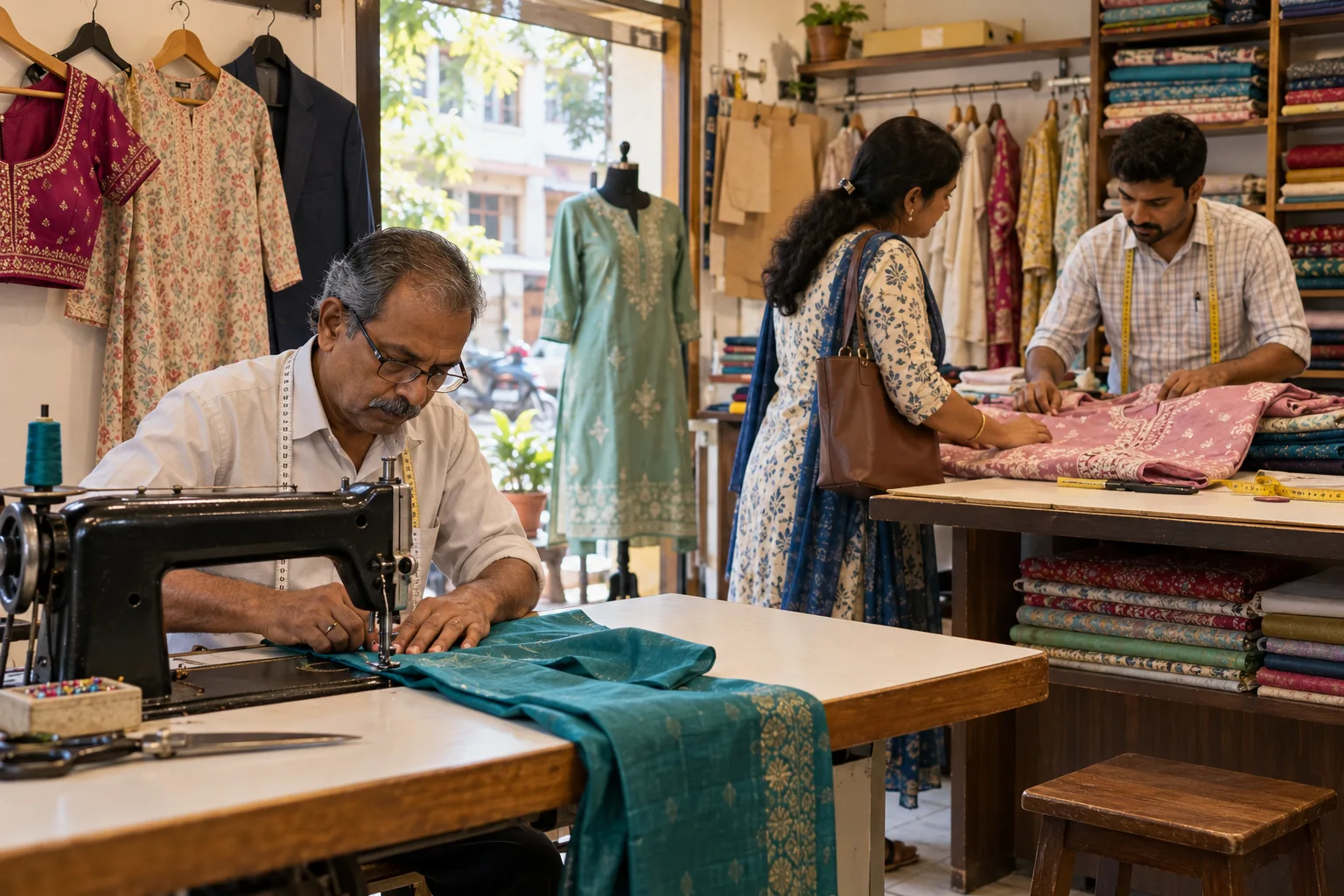
What WhatsApp marketing means
WhatsApp marketing is sending updates, offers and reminders to customers on the app most Indian buyers already check daily. GullySales sets up business WhatsApp, writes the message templates and keeps the list consented and current.
Last updated 14 Nov 2026.
For tailoring shops
Where it usually goes wrong, and what we would do.
“Customers send pictures, not words”
A customer sends a screenshot of a neckline and writes make like this. The shop must reply with questions on cloth, date and measurement, or the chat stalls. A saved set of replies keeps the conversation moving.
“The chat is the order slip”
A date agreed on WhatsApp is the only record for a home-based tailor. If the chat is not copied into the register, a missed date has no evidence and the shop and customer remember it differently.
“Broadcasts to everyone annoy regulars”
A festival offer sent to every number in the phone reaches people who stitched once years ago. A list built from customers who agreed, grouped by what they order, keeps the messages welcome.
“Catalogue shows work without a website”
The business app lets a shop list garments and pictures in one place. For a home-based tailor it replaces a website, and a customer can browse before sending a message.
What we do
What we deliver for tailoring shops.
The work available for this need. We agree the deliverables and responsibilities for your engagement in writing.
Business account set-up
A business profile with the shop name, address, hours and a greeting.
Result: A customer sees a proper shop on first contact.
Quick replies for common questions
Saved answers for price enquiries, measurement, trial and delivery.
Result: Replies are consistent whoever answers.
Catalogue of garments
Blouses, kurtas, suits and alterations listed with pictures and a starting description.
Result: A customer browses before asking.
Opt-in broadcast list
A list of customers who agreed to receive messages, grouped by garment and occasion.
Result: Each broadcast reaches people who want it.
Chat to register routine
A habit of writing the agreed date and garment in the order book on the same day.
Result: The register matches the chat.
How the result is measured
- Messages delivered
- Reply rate
- Enquiries from WhatsApp
Recorded as a baseline before work starts, so every later report has an honest comparison.
What to capture or send
The WhatsApp messages a tailoring shop sends from the design photo to the collection.
- Design photo received
- Reply with questions on cloth, date and measurement, and save the picture on the order. One reply, one set of questions.
- Price reply
- A starting description by garment and what changes it, with a line that the exact figure follows the cloth and design.
- Trial reminder
- The trial time and what to bring, sent from the business number so the customer replies to the shop and not the master.
- Ready message
- That the garment is ready, with hours and the balance. A photo of the finished piece, with consent, removes doubt.
- Festival cut-off
- The last date the shop takes new festival orders, sent to customers who agreed to messages.
- Catalogue of garments
- Photos of delivered work with the garment named, so a customer sees the range without a website.
Who it is for
This is written for these tailoring shops.
- Ladies' tailoring shops for blouses, kurtas and salwar suits
- Boutiques with designer blouse and bridal stitching
- Gents' tailors for shirts, trousers and formal wear
- Suit, sherwani and wedding wear tailors
- Uniform tailoring for schools, hospitals and offices
- Children's clothing and school uniform stitching
- Home-based tailors working on WhatsApp orders
- Alteration-heavy shops near markets and railway stations
Before you decide
When this may not be the right fit.
- The business number sits on one staff phone that leaves with the person, so chats and orders would be lost.
- You have no list of customers who agreed to offers, so a broadcast to every contact would annoy regulars.
- Nobody can reply to a design photo during the working day, so the chat would become a second queue.
Before you decide
Agree the work. Know how to judge it.
WhatsApp marketing for tailoring shops: use these checks to prepare, choose the scope, and review what changes.
Bring the right evidence
Describe how the contact list was collected, what people asked to receive, and which messages are currently sent. Include opt-outs and replies when reviewing campaign performance.
Make the scope clear
Agree the audience, message purpose, sending system, and response owner. Separate promotional communication from order or service updates, and check current platform requirements before launch.
Check the work in use
Test the message with a small appropriate audience before wider use. Check links, reply handling, opt-outs, and whether the response leads to a relevant conversation or order.
Know when to change course
Do not use an unexplained contact list as a shortcut to demand. If recipients do not expect the message, resolve the permission and relevance questions before sending.
These are discussion points, not a fixed package. GullySales confirms the deliverables, responsibilities, fee, and term in writing after reading your brief and speaking with you.
Before we start
What to have ready before the work starts.
The records, access and decisions this work needs from tailoring shops. Anything missing is noted in the written scope, with who will supply it.
- A number that belongs to the shop
- The business account sits on a number. Pick one that stays with the shop even if staff change. If the main number is your personal one, tell us, and we plan how to separate it.
- Photographs of delivered work with consent
- The catalogue is made of delivered garments. Gather pictures, and mark which have the customer's yes. Garments without it are not used. Say if any customer has asked for a picture not to be shown.
- The cutting master's list of what you cannot stitch
- State the designs that are beyond the shop's skill or time. The replies then tell a customer so politely, which saves a wasted trial. Add the cloth types you do not stock, so a replied date is realistic.
- Names of customers who agreed to messages
- The update list holds only people who agreed. Give us those, with the reason they agreed. Bought lists and old phone books are not used.
- Hours when someone reads the chat
- Say when the counter reads and answers messages. Set an automatic note for the hours when nobody does. Customers write at night, and a clear note keeps them waiting patiently.
How it works
How the whatsapp marketing work runs
The work itself, in order. How an engagement starts, from your brief to a written scope, is set out on our method page.
- 1
Scroll through the shop's own chats together
With customer names hidden, we look at the chats on the counter phone: photos of designs, requests for a date, questions on cloth, complaints. We sort them by type and note which receive a slow reply. You tell us which chats became orders. The sort shows the chats that deserve a ready answer. We also check which hours receive the highest number of unanswered messages, so the quick replies are timed to cover them.
- 2
Move to a business account in the shop's name
We create or convert an account on a number the shop owns, with a name, an address, hours and a short description. Staff who reply are listed. You decide whether it runs on one phone or several. Old chats are kept. Read the platform's present terms for business accounts.
- 3
Write the quick replies for design photos
A customer who sends a picture wants to know whether you can stitch it, how long it takes and what it costs. With the cutting master, we write replies that ask for cloth, date and measurements, and that say honestly when a design is beyond the shop. You approve them, and the master marks the designs that need a longer trial so the reply says so before the customer pays an advance.
- 4
Build the catalogue from delivered garments
We photograph delivered garments with permission and enter each in the catalogue, with the garment name, the cloth and a short note. You choose which pieces appear. The catalogue shows work without a website, so a customer sees real stitching before visiting. Each catalogue entry is checked against the order book so a garment is not shown in a cloth the shop no longer stocks.
- 5
Build a list of people who want updates
We add customers who have agreed to hear from the shop, such as those who asked for festival reminders. A note at the counter explains how to join. You decide what the list may receive. No one is added without a yes. The note at the counter also tells customers how to leave the list at any time.
- 6
Copy each order chat into the register
A chat that gives a date or a design instruction is copied into the order register, with its source. Against the reply times noted at the start, we read how many messages were answered the same day. You decide the next reply to write.
Where this fits
Three pieces of sales work, in this order.
This work sits inside sales process design, at stage 0, foundation. The audit comes before it, and sales management keeps it running.
Step 1
Sales audit
Find where deals are being lost and what to fix first.
Start here if you cannot say where orders are lost.
Step 2 · you are here
Sales process design
One written way to sell, from first enquiry to repeat order.
Start here if every salesperson sells differently.
Step 3
Sales management
A target, a review routine and someone who owns the number.
Start here if the team has targets and no routine.
FAQ
Questions owners ask before they call.
Not here? More answers, or ask on WhatsApp.
Is it fine to send offers to every contact we have?
Which app suits the shop, the business one or the ordinary one?
Can a chatbot take the orders?
Should the master or the counter reply to design photos?
Is it fine to message every contact on the shop phone?
Who should reply to the design photos?
How much does it cost?
How long is the contract?
How soon will we see results?
Who will actually do the work?
More for tailoring shops
Related work to consider.
Or start from the overview: sales and marketing for tailoring shops.
Your next practical step
Tell us what you are trying to grow, and we will read it before we call.
Eight short steps, mostly taps. Skip anything you would rather answer on the call.