Manufacturing · Textiles, furniture, construction and consumer goods
Every builder in town buys from the same three dealers and none of them mention our name.
A construction material is chosen by someone who is not paying for it. The site engineer recommends, the contractor orders, the dealer supplies and the owner signs the cheque. A maker who sells only to one of them leaves the rest to the competition.
Scope, fee, reporting and term are agreed in writing after we have read your brief and spoken to you.
In one paragraph
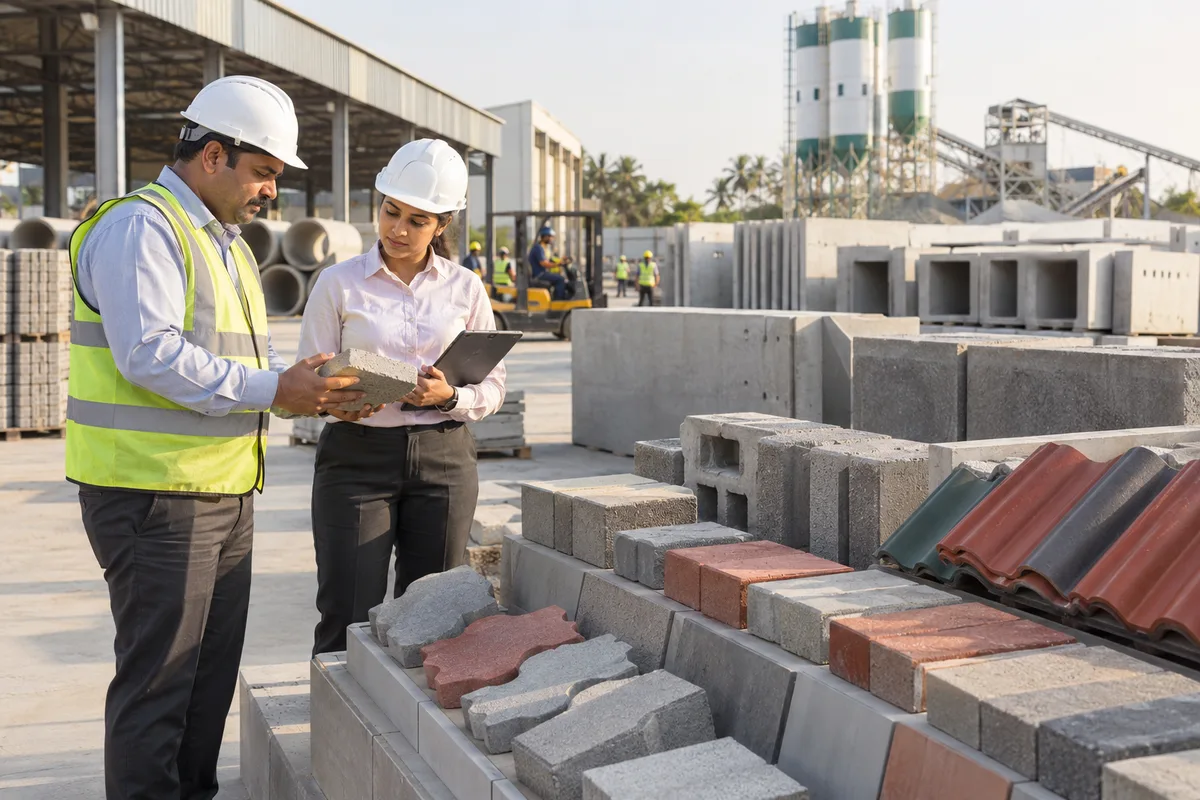
Construction materials manufacturing covers the plants and yards that make blocks, tiles, pavers, precast elements, chemicals and roofing for builders, contractors and dealers. GullySales works on how these makers are found by site engineers, contractors and dealers, how project enquiries are answered, and how a first supply becomes a standing order.
Most makers in this segment are strong locally. A block plant serves a radius that a truck can cover in a morning. A tile or chemical maker sells further, but through dealers who have their own favourites.
This page covers the segment. The pages below it take one product each, because the buyer for paver blocks is a municipal engineer or a layout developer, and the buyer for waterproofing is a contractor with a leaking terrace.
Last updated 16 Oct 2026.
8 types of work
Each kind of construction materials is bought differently, so each has its own page.
Open the one that matches what you make. It covers who buys it, where the order is lost and what we would do.
- Cement ProductsWe make good cement-based products and the dealer tells the customer what the company in the advertisement is selling.
- Concrete BlocksThe mason orders blocks from the plant he can phone, and ours is not in his phone.
- Precast ConcreteThe contractor wanted the drawing priced in a day and our estimator needed a week.
- TilesThe architect picks the tile from a sample board, and ours was not on it.
- PaversThe developer asked for pavers in three colours and a laying crew, and we only sell the blocks.
 Construction ChemicalsThe applicator uses whatever the dealer hands him, and he has never heard of our waterproofing.
- Roofing MaterialsThe shed owner asked three roofing suppliers for a rate and chose the one who sent a drawing.
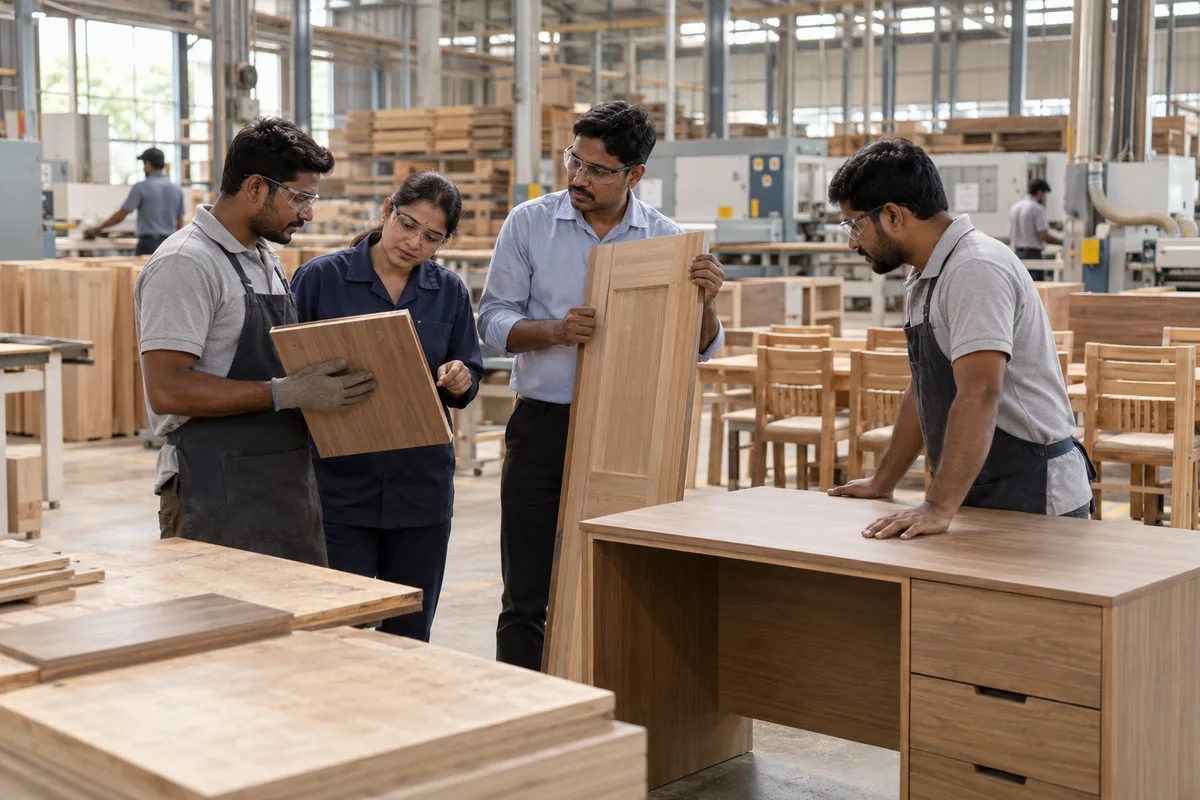 Doors & WindowsThe homeowner got three window quotations and ours was the only one without a drawing.
Who it is for
This is written for you if construction materials is what you make or sell.
- Block, paver and precast plants supplying builders in a defined radius
- Tile and sanitary-adjacent makers selling through dealers and showrooms
- Construction chemical makers selling to contractors and applicators
- Roofing sheet and component manufacturers supplying industrial and rural buyers
- Door and window fabricators supplying projects and retail
- Second-generation owners trying to win builders who do not know the family
Not for
It is not the right fit if.
- A maker who sells everything to one builder and wants it to stay that way. Marketing widens the base, which carries its own demands.
- A plant that cannot say what grade, strength or size it is delivering. Buyers will ask and so will the engineer on site.
- A trader who buys finished material and resells it. We work with makers.
How buyers choose
What decides who wins in construction materials.
The specification and the engineer's approval
Project buyers work from a bill of quantities and a specification. The site engineer or consultant approves the material, and a maker not on that list is not considered.
The test certificate and the sample
Strength, absorption, size tolerance or coverage, the buyer asks for the lab result or tests a sample on site before a large order.
The dealer's counter and the contractor's habit
For retail and small jobs, the dealer or the contractor decides what is bought. They recommend what they have used before and what the dealer stocks.
Delivery to site and credit
A truck must arrive on the pour day, and the buyer asks about payment terms. A maker who cannot deliver reliably is dropped, whatever the rate.
Where orders are lost
What usually goes wrong when you sell construction materials.
In the words owners use on the first call.
“The contractor never asks us for a price”
He calls the two plants he has always used. A third plant that has not been on his phone list is invisible, however near it is.
“Our product is as good and sells for less, and still loses”
A buyer paying for a material they cannot judge buys the name they trust. Proof, test papers and delivered sites, has to be where they look.
“The dealer says nobody asks for our brand”
If the contractor never hears of you, nobody asks for you. A dealer sells what customers ask for.
“Project enquiries come on WhatsApp and get lost”
A site engineer sends a photograph and a quantity. The reply comes late, and the project is quoted by someone else.
The scope
The work we would propose for construction materials.
Measured on qualified enquiries, quotation requests, follow-up on each quotation, orders won and, where you sell through dealers or shelves, repeat orders by channel. Anything here that needs a platform, directory or tool we have not used with you is confirmed with you before it goes in the scope.
- A product page per material with the specificationGrade, size, strength, use and delivery area for each product, written for the engineer who searches before they phone.
- Dealer and applicator programmesPrice lists, sample boards, technical sheets and a contact for support, for dealers and contractors who recommend your material.
- Project enquiry handlingA way to receive a quantity request on WhatsApp or by phone, ask the right questions once, and reply with a rate and a delivery date.
- Quotation follow-upQuotations logged with the project and the next call date, so a builder who went quiet is phoned.
- A site and project reference libraryPhotographs and short notes on projects you supplied, with permission, and the test results you are willing to publish.
- Local search for plants and yardsA Google Business Profile and pages for the towns and layouts you deliver to.
What we do
What you get for construction materials.
Each deliverable and what it is there to change.
A technical data sheet per product
Size, strength or coverage, test references, use and handling. It is what an engineer attaches to an approval.
A project enquiry form that asks the quantity, the site and the date
So the first reply is a rate and a truck, not a list of questions.
A dealer pack
Price list, sample, data sheet and a contact. It gives the dealer a reason to suggest you.
A project reference library
Delivered sites by type, with what was supplied. It answers the question 'who else has used this' before it is asked.
A quotation follow-up routine
Calls and messages tied to the quotation date and the pour or laying schedule.
How the result is measured
- Project enquiries by source
- Quotation requests
- Follow-up on each quotation
- Trial supplies won
- Repeat orders from builders and contractors
- Dealers actively ordering
Recorded as a baseline before work starts, so every later report has an honest comparison.
How it works
From your first message to the first report.
No open-ended retainer. Every step gives you something in writing.
First
Your brief
You tell us what you need in a few short steps: your business, what you want, where enquiries come from and how they are handled.
After the brief
A conversation and a written scope
We read it, then talk with whoever handles your enquiries. If you want our help, the scope, the fee and the reporting come in writing, and nothing starts before you have read them.
Before work starts
Baseline recorded
The numbers this work is meant to move, such as enquiries, quotations, orders, visits or renewals, written down so every later report has an honest comparison.
After the baseline
The first fix goes live
The fix we agreed to start with is put in place and measured against the baseline, whether that is a reply, a follow-up, a page, a listing or the handover between marketing and sales.
As agreed
Report against the baseline
What moved, what did not, and what changes next, in plain words. How often you get it is set in writing before work starts.
At renewal
Renew on the numbers
The term ends and you decide whether to continue from the results. The length is agreed in writing before anything starts.
What the work involves for construction materials
- 1
Read the requirements brief
You tell us what you make, who buys and where orders are lost. We read it and talk to you.
- 2
Audit the enquiry trail
We look at recent enquiries, who answered them and how fast, and which quotations were won or went quiet.
- 3
Plan by product and buyer
Builders, contractors, dealers and engineers each need something different. We decide the order of work.
- 4
Build data sheets, dealer packs and routines
Product pages, reference library, project enquiry form and follow-up routine are made and put to use.
- 5
Measure against the baseline
Results are compared with the enquiry and order figures recorded before work began. How often you are reported to is agreed in writing.
What we need from you
What to have ready before we talk.
None of it has to be tidy. We read what you have.
- Your product list with sizes, grades and any test results you can show
- Last ten project quotations and which were won
- Dealer and contractor lists you already supply
- Photographs of the plant and of delivered sites
- The towns and radius you can deliver to reliably
Export and new regions
Selling construction materials beyond your home market.
Where you sell decides standards, documents, payment terms and freight. We work from Bengaluru and have no overseas office, so for a new region we start from your own enquiries, your existing buyers and the directories you already use.
Which materials travel
Tiles, construction chemicals and some roofing and joinery products are exported. Heavy items like blocks and precast rarely travel far, so the plan starts from the export enquiries you already hold.
Test papers and product standards
Overseas buyers and project consultants ask which standard a product is tested to. Which ones apply depends on the product and the country, and your adviser or the buyer will say.
Packing and landed cost
Weight, breakage and container fill decide the price abroad. Buyers compare the landed cost, not the plant rate.
FAQ
Questions about selling construction materials.
Not here? More answers, or ask on WhatsApp.
How do I get site engineers to specify our material?
Do builders find suppliers online?
Does IndiaMART help a construction material maker?
Do you work with makers outside Bengaluru?
How much does it cost?
How long is the contract?
How soon will we see results?
Who will actually do the work?
What do you need from us?
What if we are not happy with the work?
Makers of construction materials also need
Looking for the wider industry page? See building and construction material manufacturers.
This page is part of the manufacturing section. The hub also lists every manufacturing industry we write for.
Why us
Why owners pick GullySales over an agency.
Marketing and sales, as one job
Most agencies stop at the enquiry. We also fix what happens after it: the reply, the follow-up, the quote and the CRM.
The person on the first call does the work
No account managers in between. You are never handed to someone you have not met.
A baseline before anything starts
Your numbers are written down on day one, so every later report compares against something honest.
The fee in writing, split three ways
Our time, your media spend and production on separate lines. You always see what goes to us.
No guarantees we cannot keep
The term is agreed in writing and never a default twelve months. We never promise a ranking or a lead count, because nobody controls those.
One office, and we say so
Nagarbhavi, Bengaluru. We work across India by call and WhatsApp and travel when a session needs to be in person.
#257, 3rd floor, Sri Nanjundeshwara Complex, Nagarbhavi 8th Block, Outer Ring Road. How we work.
Engagement options
Ways to work with us.
Pick the size of commitment that fits. Every option starts with your brief and a conversation.
Option 1
The conversation on its own
A call after you send your brief. It says honestly whether you need outside help, and many fixes are ones your own team can make.
Option 2
One fix, scoped
Start with the fix that matters most, such as reply time or follow-up. The fee is in writing before anything starts.
Option 3
An ongoing programme
We run the work, report against the baseline, and you renew on the numbers. The term and the reporting are agreed in writing first.
Option 4
Guidance for your own team or agency
We plan, brief and check the work of your in-house team or current agency, instead of replacing them.
Your brief
Tell us what you need, and we will read it before we call.
Eight short steps about your business, what you want and who decides. Most questions are a tap, and you can skip any you would rather answer on the call.
Your next practical step
Tell us what you are trying to grow, and we will read it before we call.
Eight short steps, mostly taps. Skip anything you would rather answer on the call.