Manufacturing · Machining, metal and components
Your parts are on other people's machines, and the buyer cannot find you.
Industrial components are bought by purchase engineers who rarely start with your name. They start with a drawing, a catalogue number or a size, and a search box. If your range is in a PDF nobody can search, or in a price list on one salesman's phone, you are not in the comparison at all.
Scope, fee, reporting and term are agreed in writing after we have read your brief and spoken to you.
In one paragraph
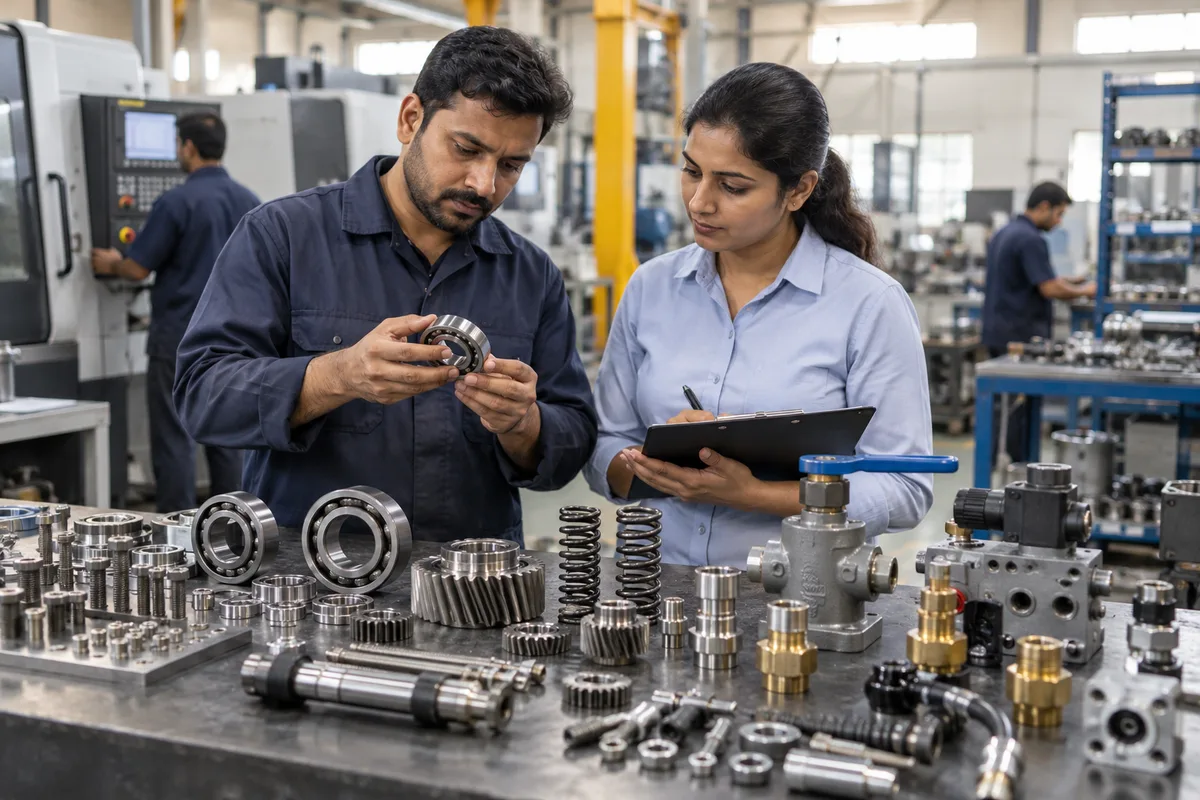
Industrial components are the standard and semi-standard parts that other manufacturers build into machines and plants: fasteners, bearings, gears, shafts, springs, valves, fittings, hydraulics and pneumatics. GullySales sets up the catalogue, the enquiry handling and the quotation follow-up that let a component maker be found by purchase teams and win the repeat order.
Components are also a repeat business. The first order is the hard one, because a buyer has to trust a new source with a part that stops a line when it fails. After that, the order comes back every time stock runs low, unless a distributor or a cheaper quotation gets there first.
The work splits in two. One half is being found by OEMs, maintenance stores, panel builders, distributors and exporters. The other half is answering their request for quotation properly and keeping the account warm afterwards.
Last updated 16 Oct 2026.
9 types of work
Each kind of industrial components is bought differently, so each has its own page.
Open the one that matches what you make. It covers who buys it, where the order is lost and what we would do.
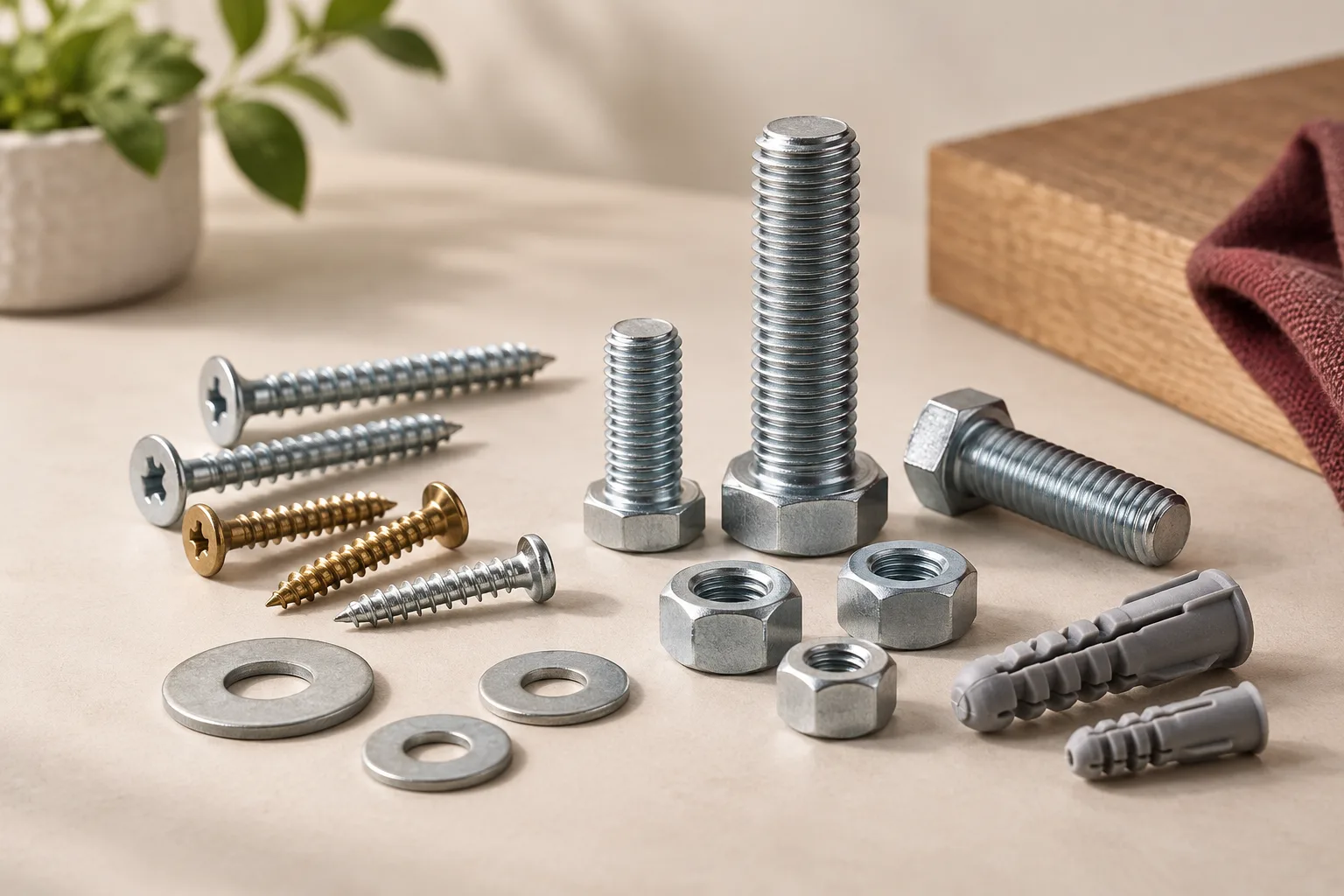 FastenersEveryone makes a bolt, so the buyer picks the one who answers first.
- BearingsThe buyer fears a fake or a failure, so they stay with the brand they know.
- GearsA gear is made to a drawing, so the buyer needs to see your shop can hold it.
- ShaftsA shaft is a turned bar with tight numbers, and the buyer wants proof you hit them.
- SpringsEvery spring is custom, and the enquiry dies if the buyer cannot send the specification.
- ValvesThe valve is on the approved vendor list or it is not, and that decides everything.
 Pipe FittingsElbows and flanges are bought by the lot, and the lot goes to whoever quotes quickest.
- Hydraulic ComponentsThe press is down and the buyer needs a seal kit or a cylinder, today.
- Pneumatic ComponentsAir cylinders are cheap parts, so the sale is about stock, speed and the right catalogue number.
Who it is for
This is written for you if industrial components is what you make or sell.
- Makers of standard parts that sell through distributors and also directly to OEMs
- Job-work shops that make a part family to a customer's drawing and want their own buyers
- Manufacturers with a catalogue of hundreds of sizes and no way to show it online
- Component makers whose orders come by phone from the same few buyers and are worried about that
- Exporters of fittings and parts who answer enquiries from IndiaMART or a trade fair and lose them afterwards
Not for
It is not the right fit if.
- A trader who buys finished parts and resells them. Our industrial distributors page is written for that business.
- A maker with one customer taking all of the output. There is no one to find.
- A plant that cannot supply a sample or a test certificate when asked, because the first serious buyer will ask.
How buyers choose
What decides who wins in industrial components.
Drawing or catalogue number first
The buyer arrives with a size, a thread, a bore or a pressure rating. The listing that matches the specification gets the call. A page that only says 'quality components' does not.
Sample, then trial order
A new source usually supplies a sample, or a small lot, before any regular order. The buyer checks dimensions, finish and packing, and sometimes sends the part to their own lab.
Material and test certificates
Stores and quality teams ask for the material certificate, the heat treatment record or the inspection report with the consignment. A maker who can name these up front looks like a supplier, not a shop.
Three quotations, compared
Purchase departments tend to have three rates on the table. Price decides some of them. Delivery date, minimum order and how fast you answered decide many of the rest.
Where orders are lost
What usually goes wrong when you sell industrial components.
In the words owners use on the first call.
“They asked for a quote and we never heard back”
The quotation went out as a PDF, nobody phoned, and the buyer ordered from whoever did. This is the cheapest loss to fix and the most common.
“Everything is sold through the distributor”
You do not know who uses your part, so you cannot sell to them, and the distributor can swap your brand for another when a better margin turns up.
“Our range is big and our website shows five items”
A buyer looking for one size in one grade finds nothing, concludes you do not make it, and moves on.
“We get enquiries from IndiaMART and half are junk”
Without a way to sort by quantity, material and delivery date, the team spends its day on small asks and misses the large one.
The scope
The work we would propose for industrial components.
Measured on qualified enquiries, quotation requests, follow-up on each quotation, trial orders won and repeat orders. Anything here that needs a platform, directory or tool we have not used with you is confirmed with you before it goes in the scope.
- Catalogue pages by part familyA page for each family, with sizes, materials, grades and drawings a buyer can check, written to be found by the search a purchase engineer types.
- Enquiry and quotation request formA form that asks for the drawing or part number, the quantity and the delivery date, so the first reply can be a real quotation.
- Marketplace lead handlingEvery IndiaMART or TradeIndia enquiry recorded, sorted by quantity and fit, and answered by a named person.
- Quotation follow-up routineEach quotation gets a follow-up owner and a next step, so a quote that went quiet is chased and not forgotten.
- OEM and account outreachA list of the machine builders and plants that use your part family, built from your own customers first, then approached by name.
- Distributor and dealer programmeRecruit and brief the distributors who carry your range, with a price list and a spec sheet they can actually use.
What we do
What you get for industrial components.
Each deliverable and what it is there to change.
A searchable catalogue site
Part families with sizes, materials and drawings, so a buyer can confirm a fit without ringing you.
A quotation request form
Asks for the drawing, the quantity and the delivery date, which removes the three phone calls it takes to learn them.
An enquiry register
Every enquiry from the website, IndiaMART, calls and WhatsApp in one list with its source, owner and status.
A quotation follow-up sheet
Lists every open quotation, the next call and who makes it, so quotes stop dying in the outbox.
A target account list
OEMs and plants that use your part family, with the name of the person who buys it where we can find one.
A baseline report
Enquiries by source, reply time and quotations converted, recorded before work starts so results are measured against it.
How the result is measured
- Qualified enquiries
- Quotation requests with a drawing and a quantity
- Follow-up completed on each quotation
- Trial orders won
- Repeat orders
- Distributor enquiries and active dealers
Recorded as a baseline before work starts, so every later report has an honest comparison.
How it works
From your first message to the first report.
No open-ended retainer. Every step gives you something in writing.
First
Your brief
You tell us what you need in a few short steps: your business, what you want, where enquiries come from and how they are handled.
After the brief
A conversation and a written scope
We read it, then talk with whoever handles your enquiries. If you want our help, the scope, the fee and the reporting come in writing, and nothing starts before you have read them.
Before work starts
Baseline recorded
The numbers this work is meant to move, such as enquiries, quotations, orders, visits or renewals, written down so every later report has an honest comparison.
After the baseline
The first fix goes live
The fix we agreed to start with is put in place and measured against the baseline, whether that is a reply, a follow-up, a page, a listing or the handover between marketing and sales.
As agreed
Report against the baseline
What moved, what did not, and what changes next, in plain words. How often you get it is set in writing before work starts.
At renewal
Renew on the numbers
The term ends and you decide whether to continue from the results. The length is agreed in writing before anything starts.
What the work involves for industrial components
- 1
Read the brief and the quotations
We start with your requirements brief and the last quotations you sent, to see where enquiries come from and where they stop.
- 2
Record the baseline
Enquiries by source, reply time and quotations converted are recorded before anything changes.
- 3
Build the catalogue and the form
Part-family pages and a quotation request form go in first, because every other channel points at them.
- 4
Set up the follow-up
Enquiry register, quotation sheet and an owner for each open quote.
- 5
Open the channels
Search, marketplace handling and OEM outreach, chosen by what the baseline shows.
- 6
Report and adjust
Results reported against the baseline, on a schedule agreed in writing, and the work shifts to what is bringing orders.
What we need from you
What to have ready before we talk.
None of it has to be tidy. We read what you have.
- Your website link, if there is one, and your IndiaMART or TradeIndia listing
- The last twenty quotations you sent, won and lost
- A list of your regular customers and which part each one buys
- Your catalogue, price list and any drawings you can share
- Certificates you hold and the test reports you give with a consignment
- Photographs of the plant, the inspection area and the packed product
Export and new regions
Selling industrial components beyond your home market.
Where you sell decides standards, documents, payment terms and freight. We work from Bengaluru and have no overseas office, so for a new region we start from your own enquiries, your existing buyers and the directories you already use.
Importers and OEM buyers
Outside India the buyers are importers, distributors and OEMs who want a part in a stated grade. Start from the export enquiries and buyers you already have, then decide which region to approach.
Documents buyers ask for
Material test certificates, inspection reports, packing details and a clear incoterm. Have the set ready before the first enquiry, not after it.
Samples and time zones
Sample freight and payment terms decide whether a first enquiry moves. We handle replies from Bengaluru by email and WhatsApp, and agree the working hours with you.
Proof
Where we have worked on something close.
These are published case studies of real clients. Each shows only the results that were recorded, and none of them is a promise about your store.
Burhani Hydroline
- Situation
- The website was dated. Menus were hard to follow, pages were slow, and it did not work properly on a phone, which is where a buyer looks first.
- What we did
- Research before design
- Wireframes and prototypes
- The full product catalogue
- An online checkout
- Result
- No numbers were recorded for this engagement. The work is described in full in the case study.
HOPO Hardware
- Situation
- There was no website or online platform of any kind, so nothing showed the products, their features or their technical specifications. A dealer who wanted a specification had to ask for it every time.
- What we did
- Website and product catalogue
- Logo and colour palette
- Printed stationery
- Social accounts opened
- Result
- No numbers were recorded for this engagement. The work is described in full in the case study.
Also worked with
Chord Road Hospital · Curtain Label · Difesa Security Services · Felicity Inn · Hands On CSR · Implevista · Kambar Group · Kalessi · Kerur Pain Clinic · LL Trust · Lucky Deals · Natural Gases · NavaShakthi Souhardha · NewCom Logistics · Proton Technical Services · SB Engineering · Shakthi Foundation · Shakthi Group · Urbanest · Insyde Studio · Venkateshwara Laser Tech · Vivara Studios
FAQ
Questions about selling industrial components.
Not here? More answers, or ask on WhatsApp.
Should I sell to OEMs directly or keep going through distributors?
Can a component maker really get enquiries from a website?
We make to the customer's drawing. What do we put on a website?
Do we need ISO certification to be found?
How much does it cost?
How long is the contract?
How soon will we see results?
Who will actually do the work?
What do you need from us?
What if we are not happy with the work?
Makers of industrial components also need
Looking for the wider industry page? See industrial suppliers and distributors.
This page is part of the manufacturing section. The hub also lists every manufacturing industry we write for.
Why us
Why owners pick GullySales over an agency.
Marketing and sales, as one job
Most agencies stop at the enquiry. We also fix what happens after it: the reply, the follow-up, the quote and the CRM.
The person on the first call does the work
No account managers in between. You are never handed to someone you have not met.
A baseline before anything starts
Your numbers are written down on day one, so every later report compares against something honest.
The fee in writing, split three ways
Our time, your media spend and production on separate lines. You always see what goes to us.
No guarantees we cannot keep
The term is agreed in writing and never a default twelve months. We never promise a ranking or a lead count, because nobody controls those.
One office, and we say so
Nagarbhavi, Bengaluru. We work across India by call and WhatsApp and travel when a session needs to be in person.
#257, 3rd floor, Sri Nanjundeshwara Complex, Nagarbhavi 8th Block, Outer Ring Road. How we work.
Engagement options
Ways to work with us.
Pick the size of commitment that fits. Every option starts with your brief and a conversation.
Option 1
The conversation on its own
A call after you send your brief. It says honestly whether you need outside help, and many fixes are ones your own team can make.
Option 2
One fix, scoped
Start with the fix that matters most, such as reply time or follow-up. The fee is in writing before anything starts.
Option 3
An ongoing programme
We run the work, report against the baseline, and you renew on the numbers. The term and the reporting are agreed in writing first.
Option 4
Guidance for your own team or agency
We plan, brief and check the work of your in-house team or current agency, instead of replacing them.
Your brief
Tell us what you need, and we will read it before we call.
Eight short steps about your business, what you want and who decides. Most questions are a tap, and you can skip any you would rather answer on the call.
Your next practical step
Tell us what you are trying to grow, and we will read it before we call.
Eight short steps, mostly taps. Skip anything you would rather answer on the call.