Manufacturing · Machinery, automation and equipment
Your machine is good, but the buyer shortlisted three makers before they called you.
Industrial machinery and equipment is not bought on a Tuesday. A plant head hears about a need from the shop floor, asks two colleagues, searches online, calls three makers and asks each for a quotation. Then comes a visit to a running installation, a discussion with the finance head and, quite often, a wait of several months for a budget to clear.
Scope, fee, reporting and term are agreed in writing after we have read your brief and spoken to you.

In one paragraph
Industrial machinery and equipment manufacturing is the making of machines, lines and plant that other factories buy to produce, pack, move or process their own goods. GullySales builds the enquiry, quotation and follow-up system around that sale, so a plant head searching for a machine finds you and a quotation does not go quiet.
Most machinery makers are strong on the engineering and thin on everything before and after the quotation. The website shows a photograph and a phone number. The enquiry from IndiaMART lands with whoever picks up the phone. The quotation goes out as a PDF and nobody calls to ask what the buyer thought of it.
This is a long, considered sale, and it is lost in the gaps: the enquiry nobody qualified, the quotation nobody chased, the buyer who liked you in March and bought from someone else in July because that maker kept in touch.
Last updated 16 Oct 2026.
8 types of work
Each kind of industrial machinery & equipment is bought differently, so each has its own page.
Open the one that matches what you make. It covers who buys it, where the order is lost and what we would do.
- Special Purpose MachinesEvery buyer says their problem is unique, and you are the only one who has to prove you can solve it.
- Packaging MachineryThe buyer wants to see your filler running on their own product before they spend a rupee.
- Food Processing MachineryThe buyer is building a plant for a product they have not yet sold, and they are nervous.
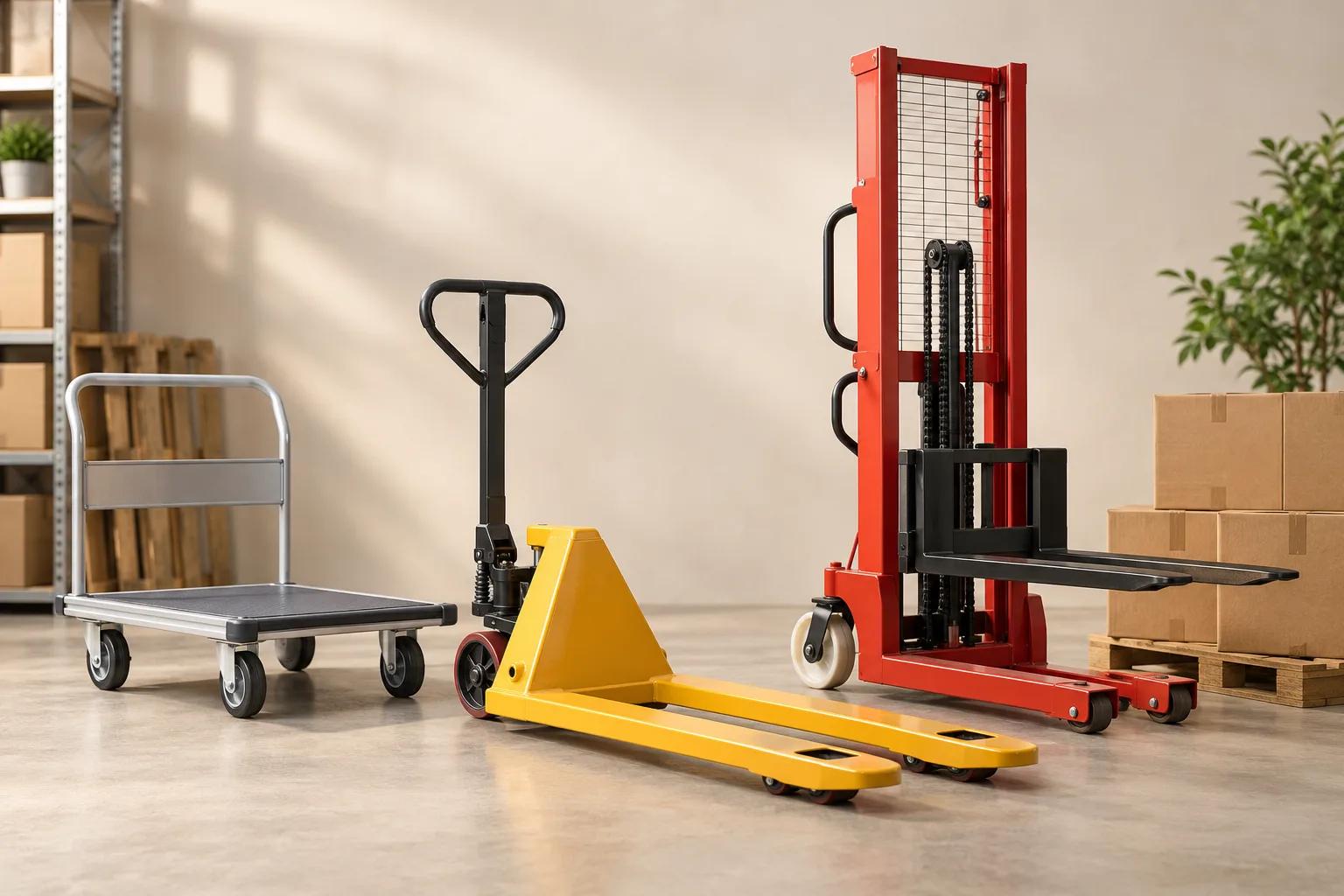 Material Handling EquipmentThe warehouse manager needs a stacker next month and has already called two dealers.
- ConveyorsNobody buys a conveyor from a catalogue, they buy it from the maker who walked their shop floor.
- Industrial PumpsWhen a pump fails at two in the morning, the plant buys from the name it remembers.
- CompressorsThe plant bought a compressor once, and now the service call decides who gets the next one.
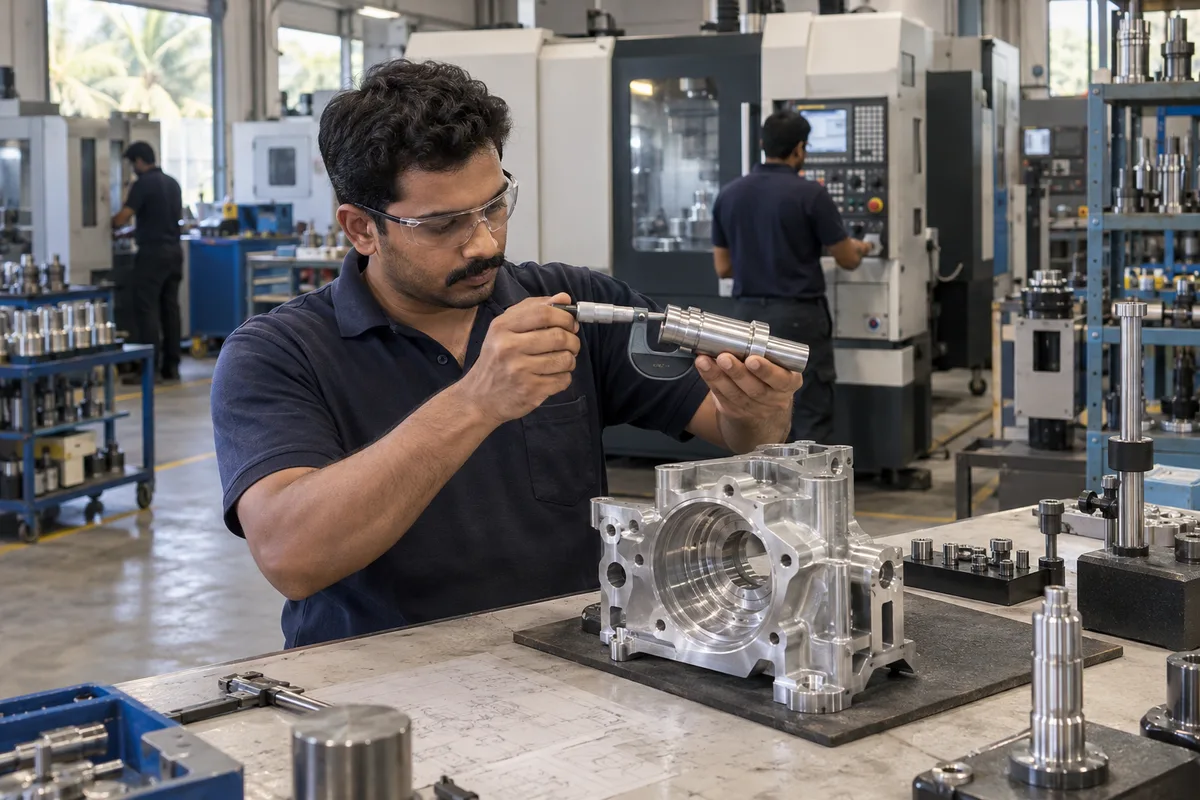 Machine ToolsA job-shop owner buying a lathe compares your accuracy claims with three other makers and a used import.
Who it is for
This is written for you if industrial machinery & equipment is what you make or sell.
- Makers of standard machines sold from a catalogue, with variants by capacity
- Builders of machines made to a customer's process, where every order starts with a site discussion
- Equipment makers who sell through dealers or agents in other states
- Workshops that have grown from repairs and fabrication into building their own machines
- Makers with a good reference list in one industry who want to enter a second one
Not for
It is not the right fit if.
- A trading firm that only resells imported machines and has no service team. The buyer will ask about spares and installation, and the page will promise what you cannot back.
- A maker who has no capacity to quote. If the enquiries we bring in would wait three weeks for a price, fix quoting first.
- A business looking for a quick spike in orders. Machinery sales run on long decisions, and the work here is slow by nature.
How buyers choose
What decides who wins in industrial machinery & equipment.
The specification and the quotation
The buyer sends a specification, sometimes a drawing, and asks three makers for a price. A quotation that answers the specification line by line, with capacity, power, footprint and delivery, gets read. A brochure with a price at the bottom gets set aside.
The reference visit
Before a purchase order the buyer wants to see the machine running at another plant, or at yours. Whether you can offer that visit, and in which industry, often decides the shortlist.
Service and spares
The buyer is also buying the next ten years of breakdowns. Where your service engineer sits, how fast a spare reaches them and who answers the phone at night is part of the comparison.
The internal approval
The person who found you is rarely the person who pays. A capital expenditure note goes to a director or an owner, and your documents have to make sense to someone who has never spoken to you.
Where orders are lost
What usually goes wrong when you sell industrial machinery & equipment.
In the words owners use on the first call.
“We send the quotation and then hear nothing”
The quotation is the point where the sale goes quiet. Nobody owns the follow-up, so the buyer decides on whoever called them back.
“Our enquiries come from everywhere and half are not real”
Students, traders, a competitor checking prices and a genuine plant head all arrive through the same form. Without a few qualifying questions, the sales team spends its week on the wrong calls.
“Our best machines are in plants we cannot name”
The proof exists but sits in a customer's factory. Without a written case, a photograph or a short video, a new buyer has to take your word for it.
“The buyer compared us with a bigger brand and chose them”
A larger maker shows up first and looks safer. A smaller maker wins on a better fit and faster service, but only if the buyer can see that before the decision is made.
The scope
The work we would propose for industrial machinery & equipment.
Measured on qualified enquiries, quotation requests, follow-up on each quotation, trial orders won and repeat orders. Anything here that needs a platform, directory or tool we have not used with you is confirmed with you before it goes in the scope.
- Enquiry capture with a few qualifying questionsA machine enquiry form that asks for the product to be made, the output needed and the location, so your engineer sees a usable enquiry and not a phone number.
- Quotation follow-upA routine for every quotation sent: who calls, when the technical questions are answered and when the buyer is asked for a decision. The routine is agreed with your sales head.
- Marketplace enquiries handled properlyIf you are listed on IndiaMART or TradeIndia, we read how those enquiries are answered and who answers them, and we fix the catalogue entries that attract the wrong buyers.
- A page for each machine and each industry servedA plant head searches for a machine by what it does and the industry that uses it. Pages built around those searches, with specifications in a form a purchase team can copy into a comparison.
- Case pages and short videos from installationsA running machine at a customer's plant, with the owner's permission, filmed in a way a buyer in another city can watch before they ask for a visit.
- Dealer and agent support outside your home stateA product sheet, a price-request routine and a lead-sharing rule for the dealers who carry your name in other regions.
What we do
What you get for industrial machinery & equipment.
Each deliverable and what it is there to change.
A machine enquiry form
Asks for the product, the output, the plant location and the timeline. Changes a vague call into an enquiry your engineer can price.
A product page per machine with a specification table
Capacity, power, footprint, material of construction and options in one place, so a buyer can paste your details beside two competitors'.
A quotation template and follow-up routine
A standard way to answer a specification and a record of what was sent, to whom and what was said next.
Two or three installation case pages
Each states the buyer's problem, the machine fitted and what the plant now does differently. Written only with the customer's consent.
A service and spares page
Names the service locations, the spares held and how a breakdown call is handled. Answers the question buyers ask last and decide on.
How the result is measured
- Qualified enquiries
- Quotation requests
- Follow-up made on each quotation
- Plant visits and reference visits arranged
- Orders won and repeat orders
- Dealer enquiries passed on and answered
Recorded as a baseline before work starts, so every later report has an honest comparison.
How it works
From your first message to the first report.
No open-ended retainer. Every step gives you something in writing.
First
Your brief
You tell us what you need in a few short steps: your business, what you want, where enquiries come from and how they are handled.
After the brief
A conversation and a written scope
We read it, then talk with whoever handles your enquiries. If you want our help, the scope, the fee and the reporting come in writing, and nothing starts before you have read them.
Before work starts
Baseline recorded
The numbers this work is meant to move, such as enquiries, quotations, orders, visits or renewals, written down so every later report has an honest comparison.
After the baseline
The first fix goes live
The fix we agreed to start with is put in place and measured against the baseline, whether that is a reply, a follow-up, a page, a listing or the handover between marketing and sales.
As agreed
Report against the baseline
What moved, what did not, and what changes next, in plain words. How often you get it is set in writing before work starts.
At renewal
Renew on the numbers
The term ends and you decide whether to continue from the results. The length is agreed in writing before anything starts.
What the work involves for industrial machinery & equipment
- 1
Read your last enquiries and quotations
We look at where machine enquiries came from, who answered them, what was sent and where each one went quiet.
- 2
Decide which machines and industries to lead with
Not every machine needs a page on day one. We pick the ones with the clearest buyer and the best reference.
- 3
Build the pages, the form and the quotation routine
Specification tables, the enquiry form, case pages and the follow-up record, in the order that makes the next enquiry easier to answer.
- 4
Run the follow-up on live quotations
Open quotations are chased by the routine we agreed, and every outcome is written down, including the losses and the stated reason.
- 5
Report against the baseline
Results are compared with the enquiry and quotation record taken before work started. How often you are reported to is agreed in writing.
What we need from you
What to have ready before we talk.
None of it has to be tidy. We read what you have.
- Your website link and the catalogue as it stands
- The last ten quotations sent, with the outcome of each if known
- A list of installed customers you are allowed to name or describe
- Photographs and any video of machines running at customer sites
- Your IndiaMART or TradeIndia listing, if you have one
- The names of the dealers or agents you work with
Export and new regions
Selling industrial machinery & equipment beyond your home market.
Where you sell decides standards, documents, payment terms and freight. We work from Bengaluru and have no overseas office, so for a new region we start from your own enquiries, your existing buyers and the directories you already use.
Where machines of this kind are sold abroad
Many Indian makers sell to neighbouring countries and to buyers in Africa and the Middle East first, because of price and service reach. The first step is your own export enquiries and any overseas buyers you already supply.
What an overseas buyer asks for
A full specification, a quotation in a stated currency, a delivery schedule, the electrical standard the machine is built to, and how installation and spares will be handled from India. Which documents and certificates apply is for your export adviser to confirm.
Trade directories and shows you already use
If you exhibit abroad or sit in an international directory, we start there: how enquiries from those sources are answered, and how they are followed up once the stand is packed away.
FAQ
Questions about selling industrial machinery & equipment.
Not here? More answers, or ask on WhatsApp.
Can marketing really help sell a machine that costs lakhs?
We make custom machines. Is there anything to put on a website?
We get enquiries on IndiaMART but few turn into orders. Why?
Should we put prices on the website?
How long is the contract?
How soon will we see results?
Who will actually do the work?
What do you need from us?
What if we are not happy with the work?
Makers of industrial machinery & equipment also need
Looking for the wider industry page? See industrial equipment manufacturers and industrial repair and maintenance companies.
This page is part of the manufacturing section. The hub also lists every manufacturing industry we write for.
Why us
Why owners pick GullySales over an agency.
Marketing and sales, as one job
Most agencies stop at the enquiry. We also fix what happens after it: the reply, the follow-up, the quote and the CRM.
The person on the first call does the work
No account managers in between. You are never handed to someone you have not met.
A baseline before anything starts
Your numbers are written down on day one, so every later report compares against something honest.
The fee in writing, split three ways
Our time, your media spend and production on separate lines. You always see what goes to us.
No guarantees we cannot keep
The term is agreed in writing and never a default twelve months. We never promise a ranking or a lead count, because nobody controls those.
One office, and we say so
Nagarbhavi, Bengaluru. We work across India by call and WhatsApp and travel when a session needs to be in person.
#257, 3rd floor, Sri Nanjundeshwara Complex, Nagarbhavi 8th Block, Outer Ring Road. How we work.
Engagement options
Ways to work with us.
Pick the size of commitment that fits. Every option starts with your brief and a conversation.
Option 1
The conversation on its own
A call after you send your brief. It says honestly whether you need outside help, and many fixes are ones your own team can make.
Option 2
One fix, scoped
Start with the fix that matters most, such as reply time or follow-up. The fee is in writing before anything starts.
Option 3
An ongoing programme
We run the work, report against the baseline, and you renew on the numbers. The term and the reporting are agreed in writing first.
Option 4
Guidance for your own team or agency
We plan, brief and check the work of your in-house team or current agency, instead of replacing them.
Your brief
Tell us what you need, and we will read it before we call.
Eight short steps about your business, what you want and who decides. Most questions are a tap, and you can skip any you would rather answer on the call.
Your next practical step
Tell us what you are trying to grow, and we will read it before we call.
Eight short steps, mostly taps. Skip anything you would rather answer on the call.