Manufacturing · Electronics, electrical and energy
The consultant's approved vendor list is the real market, and you are not on it.
Electrical equipment is rarely bought on a search alone. A project consultant writes a specification, a list of approved makes goes into the tender, and the contractor buys from that list. If your name is not on the list, the order is lost before anyone sees your price.
Scope, fee, reporting and term are agreed in writing after we have read your brief and spoken to you.
In one paragraph
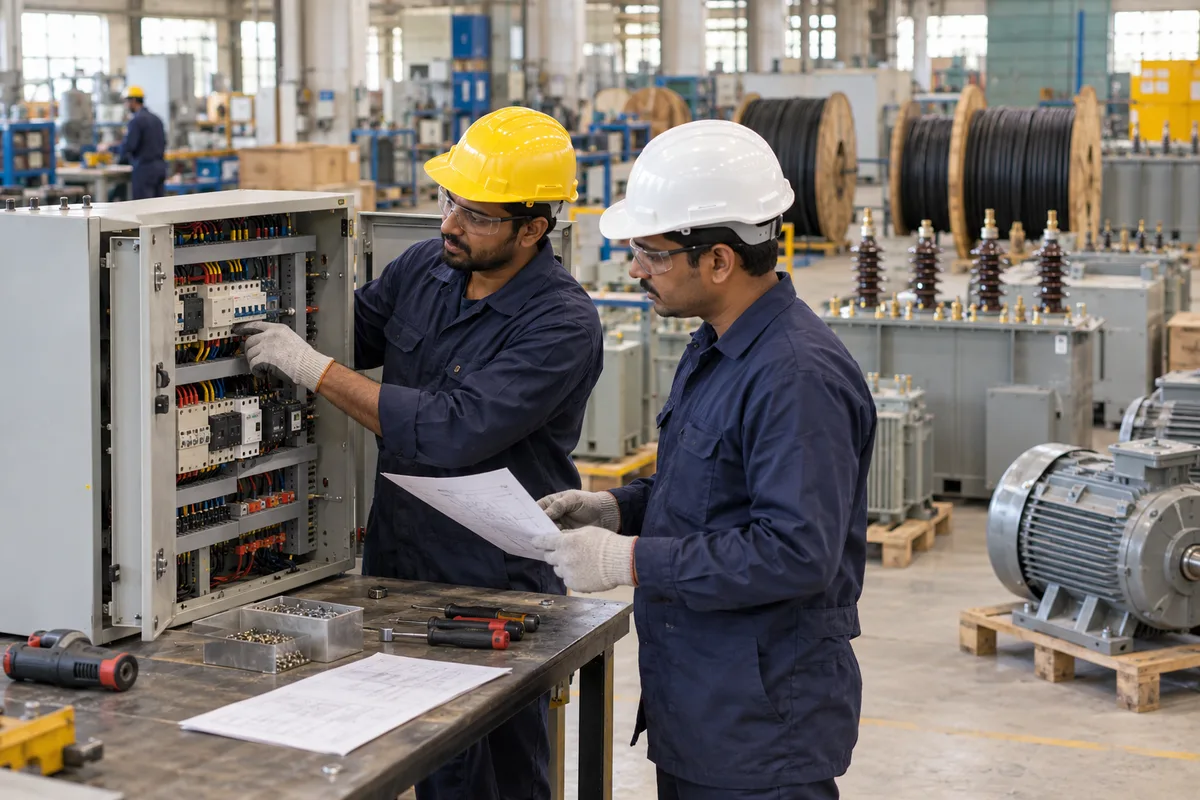
Electrical equipment manufacturing covers firms that make panels, transformers, motors, switchgear, cables, lighting and charging equipment for industry, utilities and builders. GullySales builds the enquiry, quotation and follow-up system that puts those firms in front of the consultants, contractors and purchase heads who specify them.
So the work has two sides. One is being found by the buyers who do search: the plant engineer replacing a motor, the panel builder looking for a supplier, the dealer who needs stock. The other is getting known by the people who write specifications, which takes visits, samples and papers they can check.
The pages in this segment cover eight kinds of electrical equipment. Each has its own buyer, its own approval route and its own way of losing an order to a bigger name.
Last updated 16 Oct 2026. Licence, certification, labelling and advertising rules for electrical equipment manufacturing differ by product and change. We describe them in general terms, so check the current position with your own adviser or the regulator before you publish a claim.
8 types of work
Each kind of electrical equipment manufacturing is bought differently, so each has its own page.
Open the one that matches what you make. It covers who buys it, where the order is lost and what we would do.
- Control PanelsThe contractor wants a panel quote against a drawing, and by the time you answer the order is gone.
- TransformersA utility tender is open, and nobody at the transformer works knows the vendor registration is due.
 Electric MotorsA motor burns out at three in the afternoon and the plant buys from whoever has one in stock.
- SwitchgearThe consultant wrote three approved makes in the tender, and yours is not one of them.
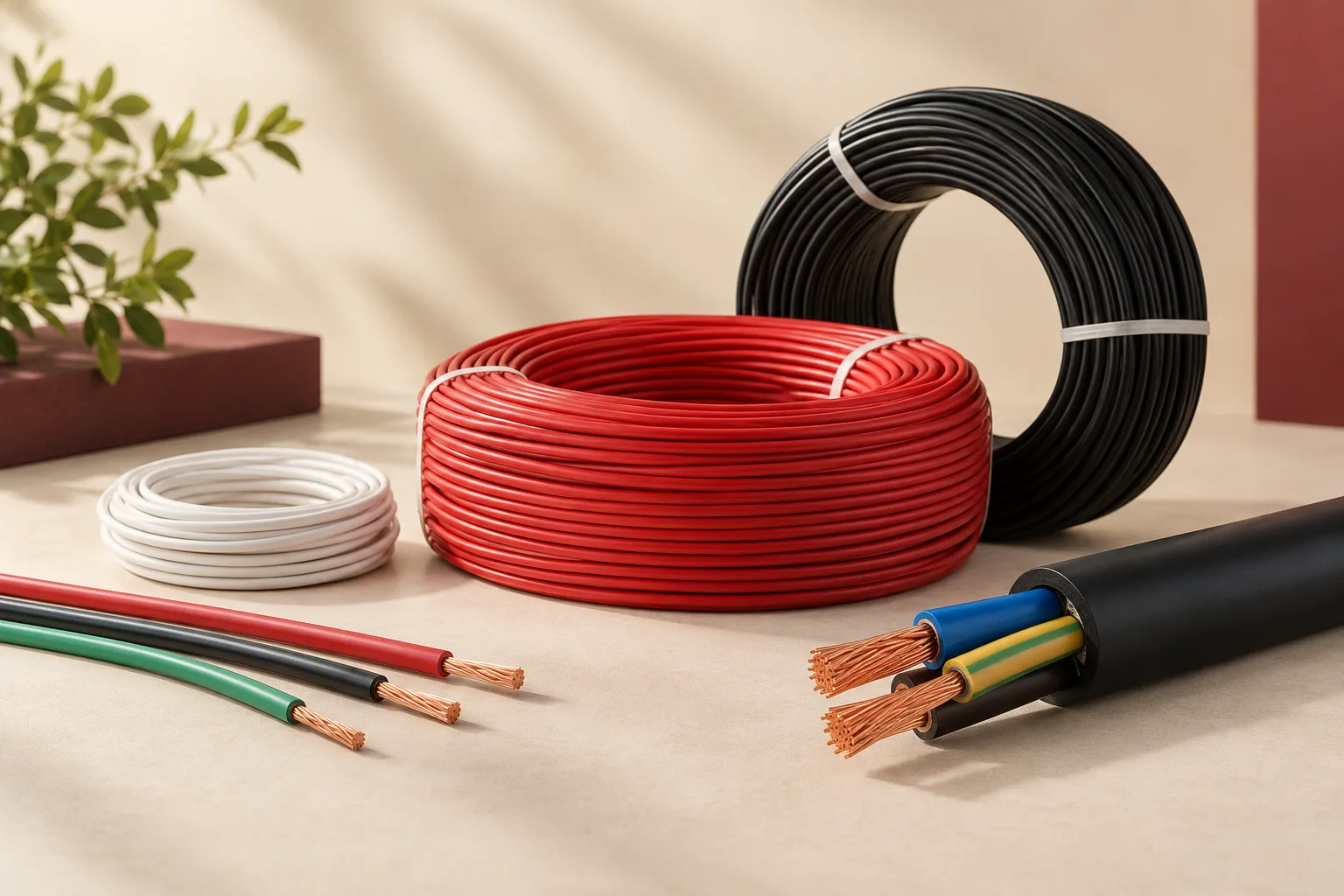 Cables & WiresThe dealer in the next town stocks four brands of wire, and none of them is yours.
- Industrial LightingThe plant wants a lux plan for the shop floor, and the supplier sent a catalogue.
- Power Distribution EquipmentEveryone wants a busbar trunking price, and nobody asks who supplied the last site.
- EV ChargersThe fleet owner asks which chargers work with their vehicles, and your page lists only kilowatts.
Who it is for
This is written for you if electrical equipment manufacturing is what you make or sell.
- Panel, transformer and switchgear makers who sell through tenders and consultants
- Motor, cable and lighting makers who sell through dealers and distributors
- EV charger and power equipment makers entering new buyer groups
- Makers with a good product and weak presence outside their home state
- Firms that depend on a few contractors for most of their orders
Not for
It is not the right fit if.
- A trader reselling another brand's equipment under no technical responsibility
- A maker who will not share test reports or approvals, because buyers will ask for them
- A firm looking only for government tenders, which is a separate process
How buyers choose
What decides who wins in electrical equipment manufacturing.
The consultant's specification and approved makes
A design consultant writes the specification and names acceptable makes. Getting onto that list needs product papers, references and often a meeting.
Tender and quotation against a bill of quantities
Contractors quote against a list of items, and the supplier with the quickest, clearest price gets pulled into the bid.
Type test reports and certificates
Buyers ask for test reports and approvals relevant to the product. Which ones apply is for the buyer, the certifying body and your adviser to confirm.
Dealer and distributor stock
Smaller buyers go to the nearest dealer. The dealer stocks what pays a margin and what comes back quickly under warranty.
Where orders are lost
What usually goes wrong when you sell electrical equipment manufacturing.
In the words owners use on the first call.
“We lose to a bigger brand before the price is opened”
The specification named another make. Without contact with the consultant, you only learn this after the tender closes.
“The contractor asks for a quote and we reply late”
A contractor building a bid needs your price while the bid is open. A quote after the date is no use.
“Dealers will not stock us”
They have a margin sheet from the bigger brand and nothing from you.
“Our papers are scattered”
Type test reports, drawings and datasheets sit in separate folders, so every enquiry takes a search.
The scope
The work we would propose for electrical equipment manufacturing.
Measured on qualified enquiries, quotation requests, follow-up on each quotation, trial orders won and repeat orders. Anything here that needs a platform, directory or tool we have not used with you is confirmed with you before it goes in the scope.
- Product pages with ratings and technical papersEach product family gets a page with ratings, applications and downloadable datasheets, so a consultant or engineer can check you quickly.
- Consultant and contractor outreachA named list of design consultants and electrical contractors in your region, each approached with a specific proposal.
- Quotation follow-up for bidsEvery quotation to a contractor is tracked against the bid date, with a call before the bid closes.
- Dealer and distributor developmentA margin sheet, a warranty answer and a stocking offer for dealers in the towns where you are thin.
- Marketplace enquiry handlingA way of sorting IndiaMART and TradeIndia enquiries so project enquiries are answered first.
A technical document library
One place for datasheets, drawings and test reports you are allowed to share, easy to send.
What we do
What you get for electrical equipment manufacturing.
Each deliverable and what it is there to change.
A product range page per family
Replaces the PDF catalogue with pages an engineer can search and a consultant can forward.
A technical document library
Makes a datasheet or test report available the moment someone asks.
A consultant approach list and note
Names the people who write specifications and what you will offer them.
A bid-date quotation tracker
Shows which quotations are live against which bids.
A dealer pack
Margin, warranty and product details in a form a dealer can show on a phone.
How the result is measured
- Qualified enquiries
- Quotations sent against bids
- Follow-up on each quotation
- Consultant approvals or listings obtained
- Dealer accounts opened
- Repeat orders
Recorded as a baseline before work starts, so every later report has an honest comparison.
How it works
From your first message to the first report.
No open-ended retainer. Every step gives you something in writing.
First
Your brief
You tell us what you need in a few short steps: your business, what you want, where enquiries come from and how they are handled.
After the brief
A conversation and a written scope
We read it, then talk with whoever handles your enquiries. If you want our help, the scope, the fee and the reporting come in writing, and nothing starts before you have read them.
Before work starts
Baseline recorded
The numbers this work is meant to move, such as enquiries, quotations, orders, visits or renewals, written down so every later report has an honest comparison.
After the baseline
The first fix goes live
The fix we agreed to start with is put in place and measured against the baseline, whether that is a reply, a follow-up, a page, a listing or the handover between marketing and sales.
As agreed
Report against the baseline
What moved, what did not, and what changes next, in plain words. How often you get it is set in writing before work starts.
At renewal
Renew on the numbers
The term ends and you decide whether to continue from the results. The length is agreed in writing before anything starts.
What the work involves for electrical equipment manufacturing
- 1
Read the brief and the quotations
You send the requirements brief and the recent quotations, tenders and enquiries. We look at which buyer groups bought and which did not.
- 2
Choose the buyer groups
Consultants, contractors, panel builders, dealers or plants: we pick the ones where your product has the strongest case.
- 3
Build the product pages and the document library
Ratings, datasheets and approvals go live in a form a buyer can check.
- 4
Start the outreach and the follow-up
Named consultants, contractors and dealers are approached, and each quotation gets an owner.
- 5
Measure against the baseline
Enquiries, quotations and orders are reported against the baseline recorded before work starts.
What we need from you
What to have ready before we talk.
None of it has to be tidy. We read what you have.
- Your catalogue and datasheets
- Test reports and approvals you hold, with what each covers
- The last few tenders or bids and what happened
- A list of consultants, contractors and dealers you already know
- Your IndiaMART or TradeIndia listing
Export and new regions
Selling electrical equipment manufacturing beyond your home market.
Where you sell decides standards, documents, payment terms and freight. We work from Bengaluru and have no overseas office, so for a new region we start from your own enquiries, your existing buyers and the directories you already use.
Distributors and EPC contractors abroad
Electrical equipment sells overseas through distributors and engineering contractors with project work. Your existing export buyers show which regions to look at.
Approvals and test papers
Different countries expect different approvals and test reports. The buyer, the certifying body and your adviser decide what applies.
Heavy freight and spares
Large equipment raises questions of packing, freight and spares. State who is responsible for each.
FAQ
Questions about selling electrical equipment manufacturing.
Not here? More answers, or ask on WhatsApp.
How do electrical equipment makers get on a consultant's approved list?
Do dealers matter for electrical products?
Do we need certificates on the website?
Can IndiaMART bring serious project enquiries?
How much does it cost?
How long is the contract?
How soon will we see results?
Who will actually do the work?
What do you need from us?
What if we are not happy with the work?
Makers of electrical equipment manufacturing also need
Looking for the wider industry page? See electrical equipment manufacturers and electrical and lighting dealers.
This page is part of the manufacturing section. The hub also lists every manufacturing industry we write for.
Why us
Why owners pick GullySales over an agency.
Marketing and sales, as one job
Most agencies stop at the enquiry. We also fix what happens after it: the reply, the follow-up, the quote and the CRM.
The person on the first call does the work
No account managers in between. You are never handed to someone you have not met.
A baseline before anything starts
Your numbers are written down on day one, so every later report compares against something honest.
The fee in writing, split three ways
Our time, your media spend and production on separate lines. You always see what goes to us.
No guarantees we cannot keep
The term is agreed in writing and never a default twelve months. We never promise a ranking or a lead count, because nobody controls those.
One office, and we say so
Nagarbhavi, Bengaluru. We work across India by call and WhatsApp and travel when a session needs to be in person.
#257, 3rd floor, Sri Nanjundeshwara Complex, Nagarbhavi 8th Block, Outer Ring Road. How we work.
Engagement options
Ways to work with us.
Pick the size of commitment that fits. Every option starts with your brief and a conversation.
Option 1
The conversation on its own
A call after you send your brief. It says honestly whether you need outside help, and many fixes are ones your own team can make.
Option 2
One fix, scoped
Start with the fix that matters most, such as reply time or follow-up. The fee is in writing before anything starts.
Option 3
An ongoing programme
We run the work, report against the baseline, and you renew on the numbers. The term and the reporting are agreed in writing first.
Option 4
Guidance for your own team or agency
We plan, brief and check the work of your in-house team or current agency, instead of replacing them.
Your brief
Tell us what you need, and we will read it before we call.
Eight short steps about your business, what you want and who decides. Most questions are a tap, and you can skip any you would rather answer on the call.
Your next practical step
Tell us what you are trying to grow, and we will read it before we call.
Eight short steps, mostly taps. Skip anything you would rather answer on the call.