Food product manufacturers · Cricket advertising
Buy cricket exposure only where your pack is already on the shelf.
Cricket advertising for a food manufacturer buys itemised placements around matches, such as broadcast spots, streaming advertisements, ground boards or a club or league sponsorship, from the party authorised to sell each one. GullySales checks the proposal against the towns your distributors supply, coordinates booking and film approvals, and sets up a response route your sales team can read.
Scope, fee, reporting and term are agreed in writing after we have read your brief and spoken to you.

What cricket advertising means
Cricket advertising buys defined placements around matches, such as broadcast spots, streaming advertisements, ground signage or team sponsorship rights, from the party authorised to sell them. GullySales checks availability against your market and budget, compares the inventory, coordinates booking and approvals, and plans a traceable response route alongside the exposure.
Also for food product manufacturers
- PPC ads for food product manufacturers
- Hindi TV advertising for food product manufacturers
- IPL advertising for food product manufacturers
- Regional TV advertising for food product manufacturers
- Sampling and product demonstration for food product manufacturers
- Tamil TV advertising for food product manufacturers
- SEO for food product manufacturers
- Lead generation for food product manufacturers
Sales and marketing for food product manufacturers, the overview.
Last updated 14 Nov 2026. Rules for this trade differ by state and professional body, and they change. We describe restrictions in general terms, so check the current position with your own council or adviser before you publish anything.
For food product manufacturers
Where it usually goes wrong, and what we would do.
“Match snacking meets an empty shelf”
Snacks, namkeen, drinks and ready mixes are bought around viewing, so an advertisement reaches the viewer when the product is on their mind. If the distributor in that town holds no stock, or the kirana owner has never seen the pack, the viewer finds nothing to buy and the spend is lost. Stock position by town has to be checked before any placement is approved. A smaller regional buy that matches your supply area beats a national package that reaches towns with no distributor.
“Which kind of board is in the package”
Physical boards at the ground, rotating digital boards and virtual inserts added to the broadcast picture are three different purchases. A virtual insert never appears in front of spectators, and a physical board may never enter the main camera view. A food maker paying for a board needs to know who will see it, on which screen and during which matches. We ask the seller to classify each item in writing and compare packages line by line, not by the tournament name.
“Food and sport advertising rules”
Rules for advertising food and drinks differ by country, by product and by the audience a broadcast reaches, and sport audiences include children. Claims about health, energy or nutrition need the support your own adviser asks for. Some broadcasters and organisers refuse certain product types or require their own approval of every film. Check the current rules with your own food adviser and with the seller before film production starts, so that a rejected film does not waste a booked slot.
“Team and player imagery on your pack”
A sponsorship of a team or league does not by itself let you print player faces or team marks on a snack packet or a gift carton. The use of names, images and marks is a separate written permission, with its own limits on product, period and territory. A pack also stays on shelves after the match window closes. Our work lists what the agreement actually allows, and any draft pack or post is held until the rights holder approves it in writing.
What we do
What we deliver for food product manufacturers.
The work available for this need. We agree the deliverables and responsibilities for your engagement in writing.
Stock and supply check by town
A table that sets each proposed match placement against the towns it would reach, the distributors you hold there, their stock position and their delivery routes. Your sales lead corrects the table, so the media choice starts from where the pack can be bought rather than from the size of the audience.
Result: Every proposed placement is tied to towns where a distributor can supply the pack.
Itemised inventory schedule
A written list of spots, boards and digital placements with quantities, named matches and the seller behind each line. Items described only as on-ground branding or digital presence are flagged and sent back to the seller for a plain description before you approve any price.
Result: Each line of the schedule names a seller, a match and a quantity.
Signage classification
Each proposed board marked as physical signage, rotating digital board or virtual broadcast insert, with the seller's written confirmation of the type. You can then judge whether the placement reaches spectators at the ground, viewers at home, or both, and compare it with a local alternative.
Result: Every board carries a type label, and the seller has confirmed that label in writing.
Rights and product-type record
The association wording on offer, any exclusivity for product types such as snacks or beverages, and the restrictions on competitors, written down as the seller states them. Verbal promises are marked unresolved until the seller puts them in a document your own adviser can read.
Result: Nothing on the record rests on a spoken assurance, and open points are listed as open.
Film, artwork and claims file
Film and artwork requirements, drafts and approved versions kept together. You approve the offer and the claims, your own adviser reviews any wording about health or nutrition, and the rights holder clears the placement against its own requirements. Responsibility for each approval is recorded beside its date.
Result: Each approved version shows who approved it and which claims it contains.
Response route and delivery evidence
A campaign number, code or pack-based link agreed for the advertising window, then telecast logs, photographs and screenshots compared with the booking. Your sales lead checks where responses arrive and how the source is recorded, and shortfalls are listed for resolution with the seller.
Result: Responses carry a campaign source, and delivery differences are listed against the booking.
How the result is measured
- Contracted inventory delivered and unresolved delivery differences
- Spots shown and digital impressions reported by the seller, as exposure measures
- Campaign-coded enquiries and redemptions
Recorded as a baseline before work starts, so every later report has an honest comparison.
Who it is for
This is written for these food product manufacturers.
- Spice, masala and blended powder makers
- Pickle, chutney and preserve manufacturers
- Namkeen, snack and savoury makers
- Sweets and traditional confectionery producers
- Ready-to-cook and instant mix brands
- Millet, health food and organic brands
- Flour mills and grain processors
- Beverage, juice and syrup makers
- Private label and contract food manufacturers
- Food exporters and merchant exporters
Before you decide
Agree the work. Know how to judge it.
Cricket advertising for food product manufacturers: use these checks to prepare, choose the scope, and review what changes.
Bring the right evidence
Define the audience, language, geography, and offer. Review the proposed stations, channels, programmes, or screens and the basis of any reach estimate.
Make the scope clear
Agree the spot length, schedule, creative approvals, and delivery records. Confirm current inventory and rates before making a booking decision, including production and adaptation costs.
Check the work in use
Reconcile the delivered schedule with the booking. Compare response during the campaign with the baseline while recording other promotions that could have affected demand.
Know when to change course
If the offer needs a detailed technical explanation, plan where interested buyers can find it. A short broadcast message cannot carry the whole sales conversation.
These are discussion points, not a fixed package. GullySales confirms the deliverables, responsibilities, fee, and term in writing after reading your brief and speaking with you.
Before we start
What to have ready before the work starts.
The records, access and decisions this work needs from food product manufacturers. Anything missing is noted in the written scope, with who will supply it.
- Distributor and town list
- The towns you can supply and the distributor for each. Every placement is judged against this list, and when it is missing we cannot tell a useful buy from one that reaches shoppers who cannot find your pack.
- Stock and production position
- What you can produce and deliver across the advertising window, as you see it today. An advertisement that runs while the distributor is out of stock teaches the shopper to buy a competitor, so the stock figure sets the size of the buy.
- Current pack artwork and claims
- Your present pack images and every claim printed on them, such as ingredient or nutrition statements. A film or board must not say more than the pack says, and your adviser will want to read the claims beside the artwork.
- Budget for media and film
- A budget range that covers the placement and the cost of producing or adapting the film. Production is easy to leave out, and a placement bought without a usable film leaves the booking with nothing to broadcast.
- Person who answers enquiries
- One named person who receives campaign calls and messages, quotes distributors and records the source. Without that person, enquiries land on the general phone line and the sales team cannot tell cricket interest from ordinary demand.
How it works
How the cricket advertising work runs
The work itself, in order. How an engagement starts, from your brief to a written scope, is set out on our method page.
- 1
Stock position and goal agreed
You tell us whether the priority is dealer orders before the season or shopper trial on the shelf, and which towns you can supply now. We record the starting enquiry sources and reorder figures from your own books. Scope, fee and term are put in writing before any seller is contacted.
- 2
Sellers asked for availability
We approach the broadcaster, the streaming seller, the organiser or the club that holds each placement and ask what is open. GullySales owns no cricket inventory and has no privileged access. Options confirmed in writing are kept apart from options only mentioned in conversation.
- 3
Inventory chosen line by line
You compare the schedule against the supply table and approve named lines. A regional tournament or a city club board stays in consideration when national coverage runs beyond your distribution. Anything the seller will not describe in writing is dropped from the choice rather than guessed at.
- 4
Booking and film approvals
The booking is coordinated with the seller on the terms you approved. Film or artwork goes through the seller's submission process, with your adviser reviewing any food claims first. You sign the order and hold the account, and our file records every approval and every change request.
- 5
Distributors briefed before the match window
Your distributors, field team and enquiry handlers receive a short brief on the offer, the advertised towns and the response route. A test enquiry confirms that the campaign number reaches the person who quotes. Stock shortfalls in advertised towns are raised with you before the first placement runs.
- 6
Delivery read against the first record
Delivered placements are compared with the booking, and enquiries and reorders from advertised towns are compared with the starting record. We report what the figures show and what they cannot show, because match advertising is never the only change in a market, and we make no promise of sales.
Where this fits
Three pieces of sales work, in this order.
This work sits inside sales process design, at stage 1, prospecting and lead generation. The audit comes before it, and sales management keeps it running.
Step 1
Sales audit
Find where deals are being lost and what to fix first.
Start here if you cannot say where orders are lost.
Step 2 · you are here
Sales process design
One written way to sell, from first enquiry to repeat order.
Start here if every salesperson sells differently.
Step 3
Sales management
A target, a review routine and someone who owns the number.
Start here if the team has targets and no routine.
FAQ
Questions owners ask before they call.
Not here? More answers, or ask on WhatsApp.
Does cricket advertising suit a small regional namkeen maker?
Can we put the tournament or team name on our pack?
Is a stadium board worth buying?
Can we advertise a children's snack during matches?
How will we know whether it brought distributor enquiries?
Does GullySales hold cricket rights or inventory?
How much does it cost?
How long is the contract?
How soon will we see results?
Who will actually do the work?
From the blog
Further reading for food product manufacturers.
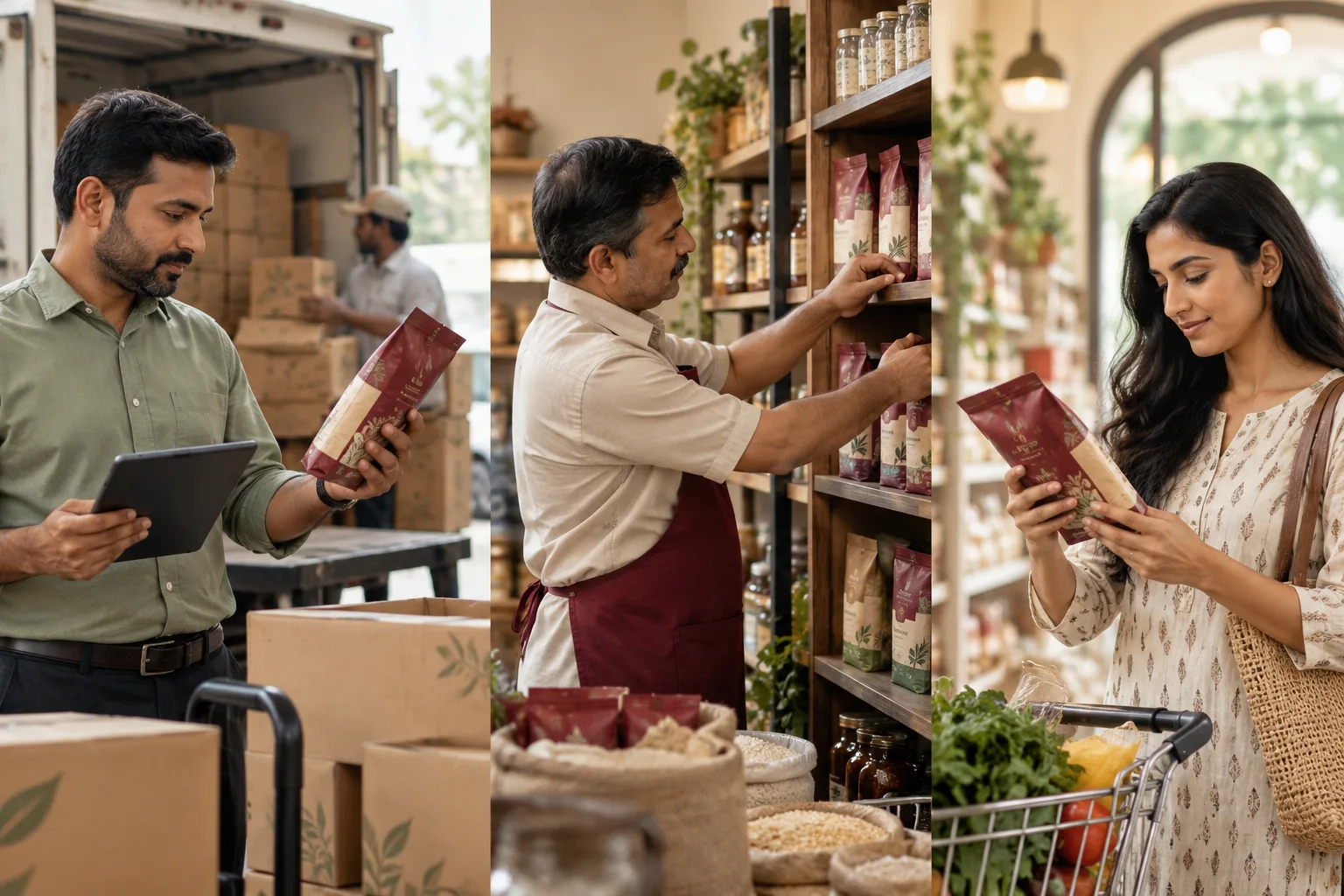 5 min read · 6 Oct 2026How food brands win the trade and the shopperA food or household brand is chosen twice, by the distributor or retailer who stocks it and by the shopper who picks it up. What each buyer checks.
 6 min read · 21 Sept 2026TV advertising vs OTT advertising: what are you actually buying?Television sells slots against ratings and prices in the wastage. OTT sells impressions to chosen people and charges for the choosing.
 8 min read · 21 Sept 2026How to advertise to distributorsDistributors decide on investment, margin and territory. Put those in the advertisement and the enquiries you get come from people who can sign.
More for food product manufacturers
Related work to consider.
Closest to this: paid and media
- PPC ads for food product manufacturers
- Hindi TV advertising for food product manufacturers
- IPL advertising for food product manufacturers
- Regional TV advertising for food product manufacturers
- Sampling and product demonstration for food product manufacturers
- Tamil TV advertising for food product manufacturers
Also for food product manufacturers
Or start from the overview: sales and marketing for food product manufacturers.
Your next practical step
Tell us what you are trying to grow, and we will read it before we call.
Eight short steps, mostly taps. Skip anything you would rather answer on the call.