Food product manufacturers · Sampling and product demonstration
Let the shopper taste the packet at the counter that stocks it.
Sampling for a food manufacturer puts a taste of the product in the shopper's hand at a store, a market or an approved venue, and connects the taste to a packet they can buy on the spot. GullySales plans the location and permission, prepares the promoters and stock sheet, and records what was bought and who follows up.
Scope, fee, reporting and term are agreed in writing after we have read your brief and spoken to you.

What sampling and product demonstration means
Sampling and product demonstration lets a buyer try a product or see it working before deciding to purchase, at a dealer counter, retail outlet, or approved venue. GullySales plans the location and permissions, prepares promoters and stock records, and connects the activity to enquiries, counter sales, and dealer follow-up.
Also for food product manufacturers
- PPC ads for food product manufacturers
- Cricket advertising for food product manufacturers
- Hindi TV advertising for food product manufacturers
- IPL advertising for food product manufacturers
- Regional TV advertising for food product manufacturers
- Tamil TV advertising for food product manufacturers
- SEO for food product manufacturers
- Lead generation for food product manufacturers
Sales and marketing for food product manufacturers, the overview.
Last updated 14 Nov 2026. Rules for this trade differ by state and professional body, and they change. We describe restrictions in general terms, so check the current position with your own council or adviser before you publish anything.
For food product manufacturers
Where it usually goes wrong, and what we would do.
“A taste is wasted if the shelf is empty”
A shopper tastes a pickle, a snack or a ready mix, likes it, and asks where to buy it. If the store holds no stock that day, the sample has been given away. Sampling is therefore planned around a stocked counter, with the shopkeeper's agreement and the distributor's delivery confirmed before the promoter arrives. The owner learns which stores to use by checking the stock record first, and by choosing outlets that already take the pack.
“Food handling decides whether the stall may run at all”
Serving food to the public brings hygiene, storage, allergen and local food safety expectations, and the venue's own conditions on top. A promoter who wears no cap or gloves, or who serves from an unlabelled container, gives the shopper a reason to distrust the brand. The plan sets out serving, cleaning and waste handling, and asks your own adviser or the venue's manager what is needed before any food is served.
“Promoters give the product away or sell it differently each time”
A promoter who has no script offers samples to anyone passing, answers questions about the ingredients from guesswork and quotes a price that differs from the shelf price. The owner cannot tell the shopkeeper what was said in the store. A short script covers the opening question, the taste, the approved answers to price and ingredient questions, and a rule that unsure answers are referred to the packet's label.
“A sampling day is not a sales record”
The promoter hands over a photograph and a number of cups served, and the owner has no idea what happened after. Sampling needs a stock issue and return sheet, a count of packets sold at the counter on the day and the days after, and a note of each store's reorder. Without these, the owner cannot say whether the store would stock the pack again.
What we do
What we deliver for food product manufacturers.
The work available for this need. We agree the deliverables and responsibilities for your engagement in writing.
Store and venue shortlist with permissions
A shortlist of stores, markets and venues chosen for the pack and the buyer it suits, with the person who approves each identified. Written permission records the space, the timing and any fee before stock moves. You approve the list, and a venue without permission is dropped from it.
Result: Each chosen location has a written permission on file before the day.
Stock issue and return sheet
A sheet recording the samples and saleable packets issued to each promoter, the samples served and the balance returned. Responsibility is named for each line, and a rule for repeat servings keeps the count honest. Differences between issued and returned stock show up on the sheet the same day.
Result: Issued, served and returned stock add up on one page for every sampling day.
Promoter script and rehearsal
An opening question, a short taste sequence and approved answers to questions about price, pack size and ingredients, rehearsed in the language of the location. Allergen questions are answered only by reading the label aloud. You review the claims before the promoter learns them.
Result: The script is approved by you, and every claim in it is one you can read off the pack.
Serving and hygiene checklist
A checklist covering how the sample is stored, portioned, served and disposed of, what the promoter wears, and what the venue requires. The venue manager and your own adviser are asked about local requirements before the day. The supervisor ticks the list at setup and again before closing.
Result: The signed checklist is kept with the stock sheet for each sampling day the stall ran.
Purchase route and store briefing
A defined way for the shopper to buy: the stocked shelf, a pack held at the stall by agreement, or a coupon redeemed at the counter. The shopkeeper is told what the activity is and who handles a complaint. The store confirms stock and price before the stall opens.
Result: The store manager has confirmed stock and price in writing before the first sample is served.
Consent-based enquiry register and result sheet
A register of names and requirements for shoppers or trade buyers who agree to be contacted, with the wording reviewed by your adviser. Beside it sit packets sold at the counter on the day and the store's reorder afterwards, where the store shares it. Photographs sit beside the counts.
Result: Each sampling day ends with a count of packets sold and a list of agreed follow-ups.
How the result is measured
- Samples distributed against stock issued and returned
- Consented enquiries, with qualified requirements identified separately
- Sales response time and enquiry-to-order conversion
Recorded as a baseline before work starts, so every later report has an honest comparison.
Who it is for
This is written for these food product manufacturers.
- Spice, masala and blended powder makers
- Pickle, chutney and preserve manufacturers
- Namkeen, snack and savoury makers
- Sweets and traditional confectionery producers
- Ready-to-cook and instant mix brands
- Millet, health food and organic brands
- Flour mills and grain processors
- Beverage, juice and syrup makers
- Private label and contract food manufacturers
- Food exporters and merchant exporters
Before you decide
Agree the work. Know how to judge it.
Sampling and product demonstration for food product manufacturers: use these checks to prepare, choose the scope, and review what changes.
Bring the right evidence
Name the buyers you want to meet and the reason for them to speak with you. Bring a product or service story that can lead to a useful next conversation after the event.
Make the scope clear
Agree the event activity, demonstration material, enquiry capture, and follow-up responsibilities. Separate venue or sponsorship spend from production and sales preparation.
Check the work in use
Review the conversations that had a recorded need and agreed next step. Track them through proposals and orders instead of treating badge scans as qualified opportunities.
Know when to change course
If nobody can follow up after the event, reduce the activity to what the team can handle. A full contact list with no next action is not a sales pipeline.
These are discussion points, not a fixed package. GullySales confirms the deliverables, responsibilities, fee, and term in writing after reading your brief and speaking with you.
Before we start
What to have ready before the work starts.
The records, access and decisions this work needs from food product manufacturers. Anything missing is noted in the written scope, with who will supply it.
- Products and sample portions ready
- The exact products to be sampled, the batch details printed on the pack and the sample portion you want to serve. The promoter serves what the label says it is. Without a decision on portion size and batch, the stock sheet cannot balance and the owner cannot say how many samples a carton produced.
- Store and distributor names
- The stores that already stock the pack or will agree to, and the distributor who supplies each. Sampling is built around stock that is on the shelf, so a store with no distributor cannot take part. If you have a store that stocks a competitor and would stock yours, tell us, since that is the sale the stall is meant to win.
- Food safety licence details
- The licence and registration details of the manufacturing unit, as printed on the pack, and the name of your adviser for food safety. Venues ask who made the product being served. If these details are missing or differ from the label, the venue's manager may refuse the stall on the day.
- Approved answers about the product
- Short written answers to the questions shoppers ask: ingredients, allergens, shelf life, how to use, and price. The promoter reads from these. Any answer about health or what the food does for the body is outside what we write and is for your adviser to decide. Without this sheet the promoter fills the gap with a guess.
- A decision on what counts as a result
- Whether you will judge the stall by packets sold at the counter, trade enquiries gathered or reorders from the store. Agree this before the day, so the numbers collected answer the question you asked. If the result is decided afterwards, any outcome can be argued to be good.
How it works
How the sampling and product demonstration work runs
The work itself, in order. How an engagement starts, from your brief to a written scope, is set out on our method page.
- 1
What the taste must settle
You tell us the question the sample is meant to answer: whether the shopper likes the taste, understands what the product is for, or trusts a new brand enough to try the pack. We agree what counts as an enquiry and note the sales figures you hold for each store, so a later comparison has a starting point. A product bought only on price is a poor fit for sampling, and we say so here.
- 2
Stores chosen and permission secured
GullySales approaches the shortlisted stores and venues and records the conditions each sets. You approve the cost, if any, and the plan before anything is booked. Written permission comes before a promoter is committed or stock leaves the godown. The distributor is asked to confirm that each store will hold stock on the sampling day, and a store that cannot is removed.
- 3
Script, claims and hygiene sign-off
Your team approves the claims and the serving instructions. Your adviser reviews anything touching ingredients, allergens or health, and local requirements are confirmed with the venue. We rehearse the script with the promoters in the language of the store, and test the portioning and the serving setup. A promoter who cannot answer the price question with the shelf price is rehearsed again.
- 4
The stall as it runs
The supervisor checks the opening setup, the hygiene list and the stock count before the first sample is served. Stock movements and shopper responses are written down while the stall runs, with a count before closing so the sheet is not rebuilt from memory afterwards. A shopper who asks about an ingredient is shown the label, and the promoter does not improvise an answer.
- 5
Follow-ups passed to the right person
Shoppers who agreed to be contacted, and trade buyers who asked about stocking the pack, go to the named salesperson with the product discussed and the requirement they stated. The handover names who calls, who quotes and who arranges the next visit. A distributor's lead is passed to the distributor's representative and recorded as passed.
- 6
Counts read against store sales
We reconcile samples issued against returned stock, then read the recorded responses beside the packets sold at the counter and each store's reorder, where you or the distributor can supply it. You decide whether to repeat in the same store, move to another location or stop. A single stall is read as one test and never as a verdict on the product.
Where this fits
Three pieces of sales work, in this order.
This work sits inside sales process design, at stage 1, prospecting and lead generation. The audit comes before it, and sales management keeps it running.
Step 1
Sales audit
Find where deals are being lost and what to fix first.
Start here if you cannot say where orders are lost.
Step 2 · you are here
Sales process design
One written way to sell, from first enquiry to repeat order.
Start here if every salesperson sells differently.
Step 3
Sales management
A target, a review routine and someone who owns the number.
Start here if the team has targets and no routine.
FAQ
Questions owners ask before they call.
Not here? More answers, or ask on WhatsApp.
Is sampling worth it for a small food brand?
Who handles food safety at the stall?
Can the promoter say the product is healthy?
How do we stop samples being wasted on people who will never buy?
Do we collect phone numbers from shoppers?
How will we know the stall was worth repeating?
How much does it cost?
How long is the contract?
How soon will we see results?
What do you need from us?
From the blog
Further reading for food product manufacturers.
 7 min read · 23 Sept 2025How to promote a new productThree jobs in order: awareness among people who buy the product type, a cheap first trial, and stock on the shelf where they look. Launch small.
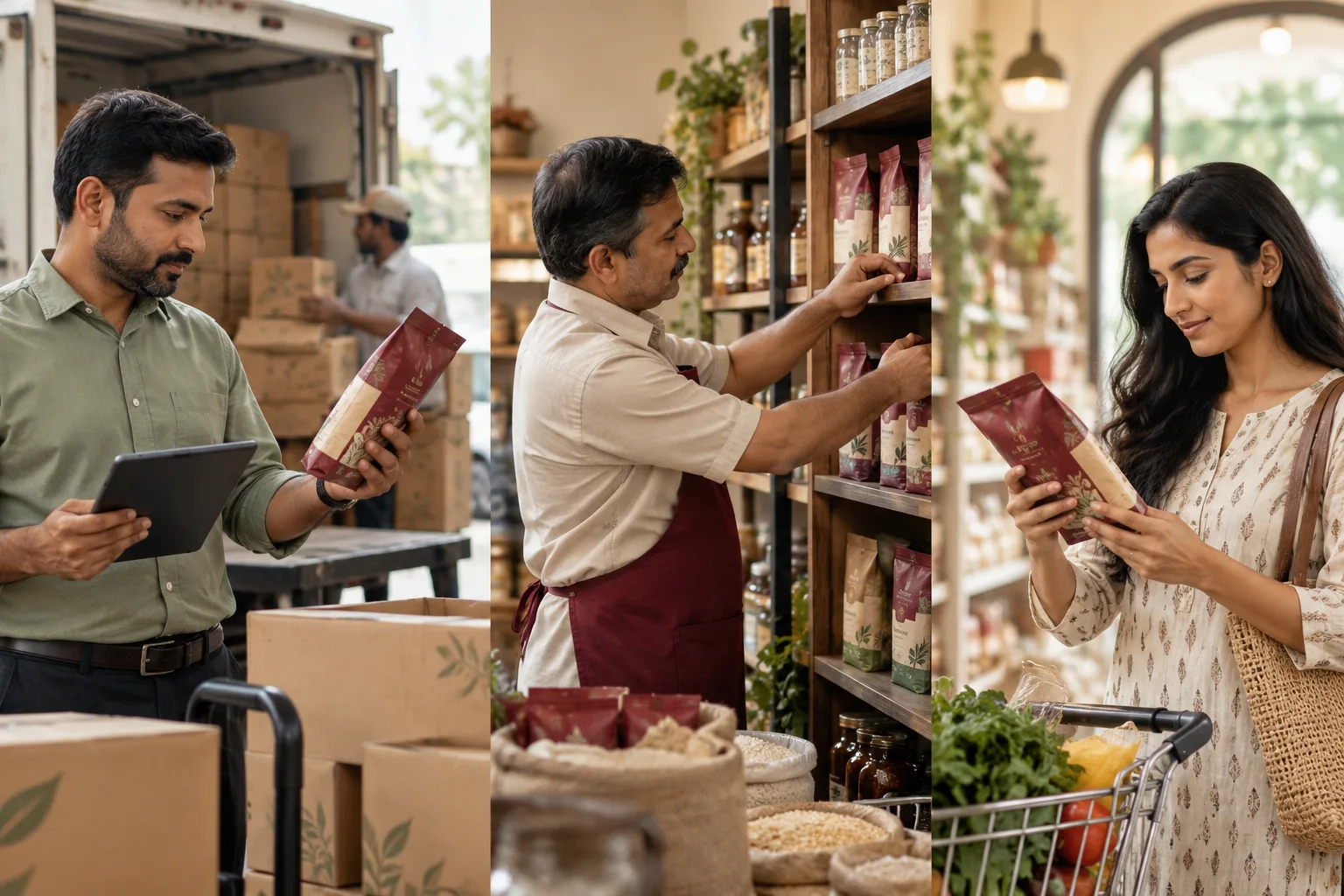 5 min read · 6 Oct 2026How food brands win the trade and the shopperA food or household brand is chosen twice, by the distributor or retailer who stocks it and by the shopper who picks it up. What each buyer checks.
 6 min read · 21 Sept 2026TV advertising vs OTT advertising: what are you actually buying?Television sells slots against ratings and prices in the wastage. OTT sells impressions to chosen people and charges for the choosing.
More for food product manufacturers
Related work to consider.
Closest to this: paid and media
Also for food product manufacturers
Or start from the overview: sales and marketing for food product manufacturers.
Your next practical step
Tell us what you are trying to grow, and we will read it before we call.
Eight short steps, mostly taps. Skip anything you would rather answer on the call.