Food product manufacturers · Hindi TV advertising
Book Hindi TV only for the towns where your pack is on the shelf.
Hindi television advertising buys commercial spots on Hindi channels, priced against a named feed, a time band and a spot length, for the household that decides what goes into the kitchen. GullySales matches the booking to the towns your distributors supply, coordinates the film and broadcaster approvals, and checks the telecast log against your enquiry and reorder records.
Scope, fee, reporting and term are agreed in writing after we have read your brief and spoken to you.

What hindi TV advertising means
Hindi television (TV) advertising buys commercial spots on Hindi channels, priced in ten-second units against a named feed and time band rather than individual viewers. GullySales matches the booking to your distribution, coordinates the commercial and broadcaster approvals, and checks delivered spots alongside enquiries and sales records from the markets advertised.
Also for food product manufacturers
- PPC ads for food product manufacturers
- Cricket advertising for food product manufacturers
- IPL advertising for food product manufacturers
- Regional TV advertising for food product manufacturers
- Sampling and product demonstration for food product manufacturers
- Tamil TV advertising for food product manufacturers
- SEO for food product manufacturers
- Lead generation for food product manufacturers
Sales and marketing for food product manufacturers, the overview.
Last updated 14 Nov 2026. Rules for this trade differ by state and professional body, and they change. We describe restrictions in general terms, so check the current position with your own council or adviser before you publish anything.
For food product manufacturers
Where it usually goes wrong, and what we would do.
“The cook is watching and the distributor is not”
A masala, pickle or breakfast mix is chosen by the person who cooks, and television reaches that person at home. The distributor and the kirana owner do not see the film as buyers. The shopper asks for the pack at the counter, the counter asks the distributor, and the distributor needs stock to answer. If any link in that chain has not been prepared, the film produces a request that nobody can fill, so the sales team is briefed first.
“A film made for another language market”
A film shot for another language market carries kitchens, dishes, gestures and humour that a Hindi-speaking household may read as foreign. Dubbing the voice leaves the visuals untouched. Spices, pickles, sweets and mixes are tied to particular dishes, so the dish on the screen and the name used for it matter as much as the words. We review the script and the setting before you pay to adapt a film, and recommend a fresh shoot when the setting cannot be saved.
“Spot length changes what the money buys”
Hindi channels price spots in ten-second units against a feed and a time band. A recipe demonstration needs more seconds than a pack reminder, and each added unit raises the cost of every telecast. A food maker with a short pack message may buy more exposure with shorter spots, while a new product that needs explaining may justify a longer film. The comparison lays out lengths, bands and rates side by side so the trade-off is visible before you approve.
“Claims on screen need support”
Words such as pure, natural, homemade or preservative-free are claims, and the broadcaster, the regulator and your competitors may all ask what supports them. Rules on food advertising differ by country and by product, and the same claim printed on the pack must match the claim spoken in the film. Your own food adviser reviews the wording and the proof before the script is final, and the broadcaster's own approval comes after, not instead.
What we do
What we deliver for food product manufacturers.
The work available for this need. We agree the deliverables and responsibilities for your engagement in writing.
Market and feed shortlist
A shortlist of channels and feeds set against the towns you can serve and the distributors you hold there. You check it against your dealer list and strike out any market where the pack cannot be bought, so the plan is built from your supply map and not from a package name.
Result: Each proposed feed is tied to named towns where your product is stocked.
Comparable media plan
Channel proposals set out on one basis: quoted rate, spot length, time band and number of spots, with the agreed rate shown beside the quoted one. You see what each proposal buys before approving spend, and a package that hides its bands is sent back to the seller for a written breakdown.
Result: Two proposals can be compared line by line on the same sheet.
Spot length plan
The proposed balance between an explanatory film, such as a recipe or serving idea, and shorter reminders that carry the pack and the name. The cost effect of each length is visible. You approve the lengths before production and booking begin, so the film is made to fit the plan.
Result: The plan names each length with its cost effect and the job the film does.
Hindi commercial and approval record
The adapted or new film in the booked lengths, with the script approval and the broadcaster submission coordinated. You review the final film, including every claim and the response number. Your adviser reviews food claims before submission, and the broadcaster's clearance is recorded when it arrives.
Result: The final film, the script, the claims and the clearance sit in one record.
Distributor and retailer readiness brief
A short brief for distributors, field staff and whoever answers enquiries, covering the offer, the advertised towns, the stock position and the response route. Your sales lead confirms that stock is in place and that incoming enquiries reach a named person, before the first spot runs.
Result: Every advertised town has a distributor who has read the brief and confirmed stock.
Telecast reconciliation
A comparison of the telecast log with the release order, listing delivered spots, shortfalls and requests for replacement spots under the written terms. Enquiries and reorders from advertised towns are read beside it. You can tell booked delivery from logged delivery, and both from what the shelf shows.
Result: Shortfalls against the booking are listed, with the seller's written reply beside each.
How the result is measured
- Spots recorded as telecast against spots booked
- Delivery within approved feeds and time bands
- Agreed rate per ten-second unit
Recorded as a baseline before work starts, so every later report has an honest comparison.
Who it is for
This is written for these food product manufacturers.
- Spice, masala and blended powder makers
- Pickle, chutney and preserve manufacturers
- Namkeen, snack and savoury makers
- Sweets and traditional confectionery producers
- Ready-to-cook and instant mix brands
- Millet, health food and organic brands
- Flour mills and grain processors
- Beverage, juice and syrup makers
- Private label and contract food manufacturers
- Food exporters and merchant exporters
Before you decide
Agree the work. Know how to judge it.
Hindi TV advertising for food product manufacturers: use these checks to prepare, choose the scope, and review what changes.
Bring the right evidence
Define the audience, language, geography, and offer. Review the proposed stations, channels, programmes, or screens and the basis of any reach estimate.
Make the scope clear
Agree the spot length, schedule, creative approvals, and delivery records. Confirm current inventory and rates before making a booking decision, including production and adaptation costs.
Check the work in use
Reconcile the delivered schedule with the booking. Compare response during the campaign with the baseline while recording other promotions that could have affected demand.
Know when to change course
If the offer needs a detailed technical explanation, plan where interested buyers can find it. A short broadcast message cannot carry the whole sales conversation.
These are discussion points, not a fixed package. GullySales confirms the deliverables, responsibilities, fee, and term in writing after reading your brief and speaking with you.
Before we start
What to have ready before the work starts.
The records, access and decisions this work needs from food product manufacturers. Anything missing is noted in the written scope, with who will supply it.
- Towns and distributors you supply
- A current list of the towns where your pack is stocked and the distributor for each. Television reaches households everywhere in a feed, so this list is the only thing that keeps the booking inside the area where a shopper can find the product.
- Existing film or recipe material
- Any film, photograph or recipe card you already hold, with a note of who made it. We judge what can be adapted and what must be shot again, and when nothing exists, we say so before you commit to a production budget.
- Proof for every product claim
- The test reports, ingredient lists or licence details behind any claim you want spoken or shown. Your adviser needs them to approve the wording, and a claim without support is removed from the script rather than carried into a booking.
- Budget for airtime and production
- A single figure that covers the airtime, the film and any dubbing or reshoot, set by you. Spots are priced by feed, band and length, so the figure decides how many telecasts the booking can hold.
- A named enquiry handler
- The person who will answer the response number, quote to distributors and note where each enquiry came from. If nobody is named, enquiries wait on a general line and the television spend leaves no record to read.
How it works
How the hindi TV advertising work runs
The work itself, in order. How an engagement starts, from your brief to a written scope, is set out on our method page.
- 1
Requirements and scope approval
You send a requirements brief covering your range, your towns and your goal. After reading it and speaking with you, GullySales puts the scope, the fee and the term in writing before any broadcaster is approached. Nothing is booked or signed on your behalf.
- 2
Supply map and starting record
Your sales lead confirms which towns you supply and which distributors hold stock. We record the starting enquiry sources, reorder figures and any response numbers already in use. Without this record, nobody can say afterwards what changed, so it is drawn from your own books first.
- 3
Feed selection and budget approval
Available packages are compared on the same basis. You approve the feeds, bands and spot lengths, with quoted and agreed rates visible. A feed that covers towns outside your supply map is queried with the seller, and where a narrower feed exists, we ask for it.
- 4
Script, adaptation and clearance
You approve the script and the final film. Your adviser reviews food claims, and the film then goes through the broadcaster's own approval process before any telecast. Dubbed material is checked for dish names and kitchen scenes, and a reshoot is raised with you whenever the visuals cannot be adapted.
- 5
Booking and the sales handoff
The approved schedule becomes a release order that you check against the plan and sign. Distributors and enquiry handlers receive the readiness brief, and a test enquiry confirms that the response number reaches a person who can quote. Stock gaps in advertised towns come to you before the first spot.
- 6
Log read against the starting record
When the schedule has run, the telecast log is compared with the release order, and enquiries and reorders are compared with the starting record. We state what the figures show and what they cannot show, since television is one of several influences on a shelf, and no result is promised in advance.
Where this fits
Three pieces of sales work, in this order.
This work sits inside sales process design, at stage 1, prospecting and lead generation. The audit comes before it, and sales management keeps it running.
Step 1
Sales audit
Find where deals are being lost and what to fix first.
Start here if you cannot say where orders are lost.
Step 2 · you are here
Sales process design
One written way to sell, from first enquiry to repeat order.
Start here if every salesperson sells differently.
Step 3
Sales management
A target, a review routine and someone who owns the number.
Start here if the team has targets and no routine.
FAQ
Questions owners ask before they call.
Not here? More answers, or ask on WhatsApp.
Is Hindi TV right for a food maker that sells only to businesses?
How long should our spot be?
Can we reuse our regional-language film?
Do we have to buy a national channel?
How will we know whether the spots ran?
Can GullySales get us a better rate than we could?
How much does it cost?
How long is the contract?
Who will actually do the work?
What do you need from us?
From the blog
Further reading for food product manufacturers.
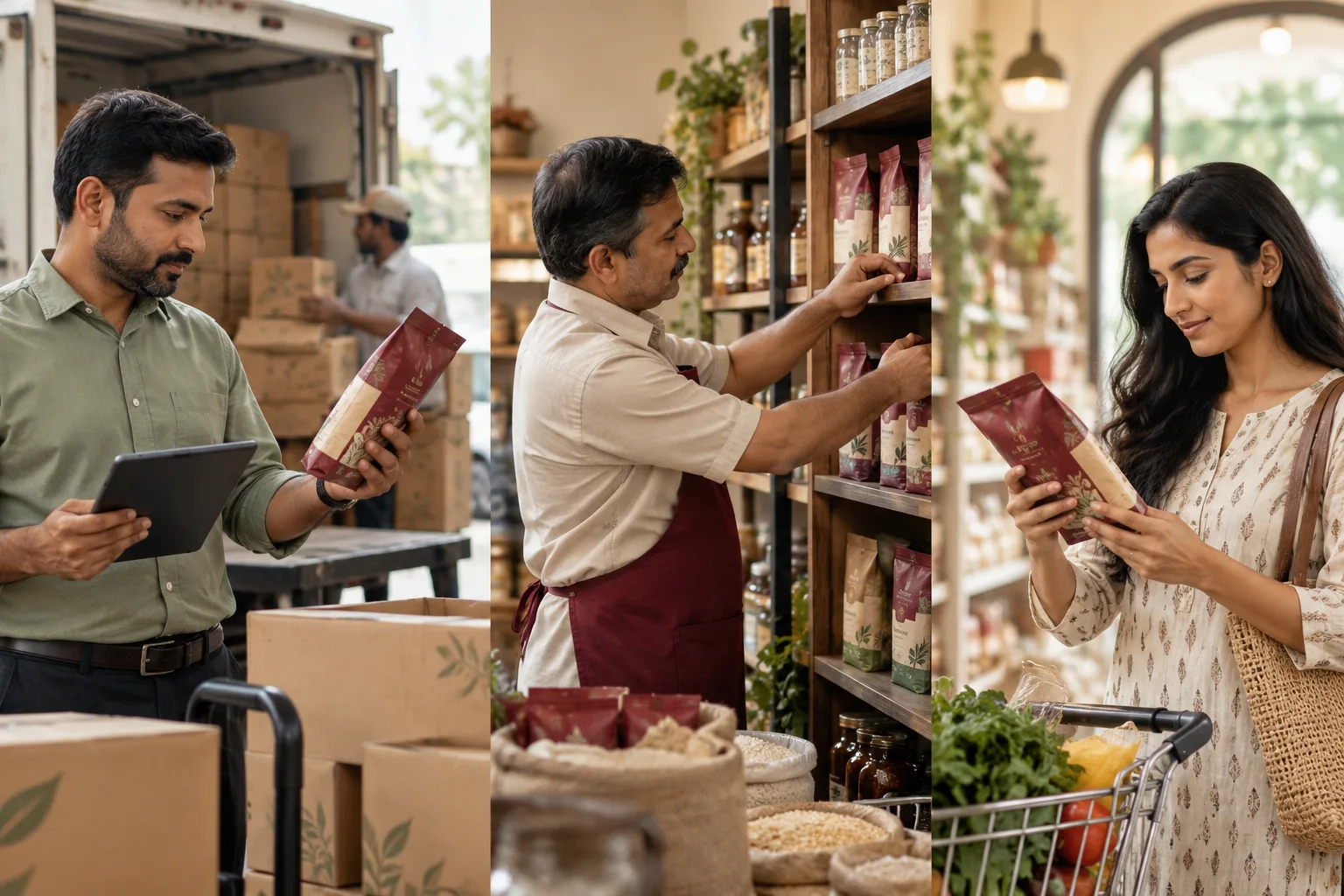 5 min read · 6 Oct 2026How food brands win the trade and the shopperA food or household brand is chosen twice, by the distributor or retailer who stocks it and by the shopper who picks it up. What each buyer checks.
 6 min read · 21 Sept 2026TV advertising vs OTT advertising: what are you actually buying?Television sells slots against ratings and prices in the wastage. OTT sells impressions to chosen people and charges for the choosing.
 8 min read · 21 Sept 2026How to advertise to distributorsDistributors decide on investment, margin and territory. Put those in the advertisement and the enquiries you get come from people who can sign.
More for food product manufacturers
Related work to consider.
Closest to this: paid and media
- PPC ads for food product manufacturers
- Cricket advertising for food product manufacturers
- IPL advertising for food product manufacturers
- Regional TV advertising for food product manufacturers
- Sampling and product demonstration for food product manufacturers
- Tamil TV advertising for food product manufacturers
Also for food product manufacturers
Or start from the overview: sales and marketing for food product manufacturers.
Your next practical step
Tell us what you are trying to grow, and we will read it before we call.
Eight short steps, mostly taps. Skip anything you would rather answer on the call.