Food product manufacturers · Tamil TV advertising
Speak the shopper's own language, and name the pack the way the shop does.
Tamil television advertising for a food manufacturer buys spots on Tamil channels so that households hear the brand in their own language before they reach a kirana counter. GullySales plans the buy around your distributors, coordinates the Tamil film and booking, and records what each district reorders afterwards.
Scope, fee, reporting and term are agreed in writing after we have read your brief and spoken to you.

What tamil TV advertising means
Tamil television advertising buys commercial time on Tamil channels, with rates based on the channel, time band, and spot length in ten-second units. GullySales plans the buy around your sales coverage, coordinates Tamil film production and airtime booking, and checks delivered spots against the order while tracking enquiries through to their recorded sales outcome.
Also for food product manufacturers
- PPC ads for food product manufacturers
- Cricket advertising for food product manufacturers
- Hindi TV advertising for food product manufacturers
- IPL advertising for food product manufacturers
- Regional TV advertising for food product manufacturers
- Sampling and product demonstration for food product manufacturers
- SEO for food product manufacturers
- Lead generation for food product manufacturers
Sales and marketing for food product manufacturers, the overview.
Last updated 14 Nov 2026. Rules for this trade differ by state and professional body, and they change. We describe restrictions in general terms, so check the current position with your own council or adviser before you publish anything.
For food product manufacturers
Where it usually goes wrong, and what we would do.
“The brand name must be said the way a shopkeeper says it”
A pack may carry its name in English letters while the shopper asks for it in Tamil, and a spoken name that differs from the one at the counter sends the shopper to a rival packet. The film is written so the name is spoken and shown as the shopkeeper will hear it asked for. A Tamil-speaking reviewer listens to the voice-over for pronunciation, spelling on screen and any phrase that sounds foreign to the kitchen.
“Festival buying is planned long before the festival”
Sweets, snacks, flour and gift packs are stocked in the weeks before Pongal, Aadi and Deepavali, and the retailer's order is placed before the shopper's. A film that airs after the distributor has already filled the shelf with a rival brand arrives late. The calendar records the booking and material deadlines against your own dispatch dates, so the owner sees when stock must reach the districts and when the film must be ready.
“A recipe on screen is a claim on screen”
Tamil food advertising leans on home cooking, and a film that says a pickle is made the way a grandmother makes it, or that a masala is pure, makes a statement the owner must be able to support. Rules on food advertising differ by product and place and change over time. The script keeps to what the pack shows and what the owner can prove, and every claim goes to your own adviser for clearance before shooting.
“A station's strength is not your distributor's reach”
A popular Tamil channel is watched across a wide spread of districts, while your distributor may supply only a few of them. A shopper who is moved by the film in a district without stock finds no packet and may try another brand. The plan lays the channel's coverage against your delivery districts, so the owner approves the spend knowing which part of it reaches a stocked kirana counter and which part does not.
What we do
What we deliver for food product manufacturers.
The work available for this need. We agree the deliverables and responsibilities for your engagement in writing.
District coverage brief
A record of the districts your distributors serve in Tamil Nadu, the packs available in each and the person who answers enquiries from them. You check the proposed reach against this list before approving the buy, so spend outside your supply is a choice you have made on paper.
Result: Every district in the plan is marked as supplied or not supplied by your distributors.
Channel and band comparison in spot-length terms
A comparison of Tamil channels and time bands, with each rate shown on the same spot length so offers can be read side by side. Audience information is checked for the same market and audience definition where the broadcaster supplies it. You see which lines sit in premium airtime.
Result: Every channel quoted is compared on a common spot length in one table.
Tamil script and film
A Tamil script with production requirements for voice, casting and on-screen text, followed by film production inside the agreed scope. A Tamil-speaking reviewer checks the language, the brand name and the spellings. You approve the claims before production and check the finished film against that approval.
Result: The final film matches the script you approved, with the reviewer's notes attached.
Festival and stock calendar
Booking and material deadlines set beside your dispatch dates to distributors and the weeks when retailers stock for Pongal, Aadi, Deepavali or the wedding season. Availability is confirmed with the broadcaster, not assumed. The calendar names who moves each date if a deadline slips.
Result: Each festival line shows the booking date, the film date and the dispatch date together.
Release order and broadcast handoff
The approved booking coordinated with the channel's sales house or appointed agency, with a record of the film version, the technical specification and the approvals the channel asked for. You sign the order yourself with replacement and cancellation terms visible to you on the page.
Result: The order, the film version and the channel's acceptance are held together in one folder.
District reorder record and delivery check
A comparison of the telecast certificate with the order, exceptions listed with the replacement asked for, next to a record of distributor orders and retailer reorders by district. The record notes which calls came from the film without treating each call as a sale.
Result: One sheet shows what aired, and what each district ordered afterwards, side by side.
How the result is measured
- Ten-second units delivered by channel and band against the booking
- Campaign-number calls, with duplicate and irrelevant enquiries identified
- Qualified enquiries by district and assigned dealer or branch
Recorded as a baseline before work starts, so every later report has an honest comparison.
Who it is for
This is written for these food product manufacturers.
- Spice, masala and blended powder makers
- Pickle, chutney and preserve manufacturers
- Namkeen, snack and savoury makers
- Sweets and traditional confectionery producers
- Ready-to-cook and instant mix brands
- Millet, health food and organic brands
- Flour mills and grain processors
- Beverage, juice and syrup makers
- Private label and contract food manufacturers
- Food exporters and merchant exporters
Before you decide
Agree the work. Know how to judge it.
Tamil TV advertising for food product manufacturers: use these checks to prepare, choose the scope, and review what changes.
Bring the right evidence
Define the audience, language, geography, and offer. Review the proposed stations, channels, programmes, or screens and the basis of any reach estimate.
Make the scope clear
Agree the spot length, schedule, creative approvals, and delivery records. Confirm current inventory and rates before making a booking decision, including production and adaptation costs.
Check the work in use
Reconcile the delivered schedule with the booking. Compare response during the campaign with the baseline while recording other promotions that could have affected demand.
Know when to change course
If the offer needs a detailed technical explanation, plan where interested buyers can find it. A short broadcast message cannot carry the whole sales conversation.
These are discussion points, not a fixed package. GullySales confirms the deliverables, responsibilities, fee, and term in writing after reading your brief and speaking with you.
Before we start
What to have ready before the work starts.
The records, access and decisions this work needs from food product manufacturers. Anything missing is noted in the written scope, with who will supply it.
- Distributor list and Tamil Nadu districts
- Each distributor, the districts they supply and the packs they hold. This list decides which channels are worth comparing and where the film is meant to land. Without it the plan is built on channel popularity, and a share of the spend reaches households that cannot buy the pack from a nearby counter.
- Pack names in Tamil and English
- The brand name as it appears on the pack, and as shopkeepers and shoppers actually say it in Tamil. If the two differ, tell us, because the film should both say and show the version a shopper will ask for at the counter. A name decided on the shoot day causes a re-shoot or a mismatch the shelf will show.
- Festival stocking dates
- The dates by which retailers in each district must hold stock for the festival you are advertising for, and the dates your own dispatch can meet. The film is timed against these. If the dispatch dates are not yet fixed, we plan the booking provisionally and confirm availability with the broadcaster only once you fix them.
- Retailer and reorder records
- Secondary sales statements, field reports or any list of outlets and their reorders by district. The campaign is read against this baseline. When none exists, we help you set up a simple count before the first spot airs, so the result is judged on figures you recorded and not on how the season felt.
- A Tamil-speaking approver on your side
- A person in your team who reads and speaks Tamil and can sign off the script, the voice and the on-screen text. Our reviewer checks language, and you check that it sounds like your brand. If nobody on your side can approve the Tamil, the approval is delayed to the one step where an error is hardest to correct.
How it works
How the tamil TV advertising work runs
The work itself, in order. How an engagement starts, from your brief to a written scope, is set out on our method page.
- 1
Requirements and written scope
Send the requirements brief at /requirements. After reading it and speaking with you, GullySales puts the scope, the fee and the term in writing before work starts. For a food brand, the brief should name the packs, the districts you supply and the festival you are planning for. Nothing is booked until the scope is agreed and you have approved it.
- 2
District baseline from your records
Your sales lead confirms the districts your distributors serve and who answers enquiries. Whatever you hold on retailer reorders, outlets served and enquiry sources becomes the baseline against which the campaign is read. Where a district has no record, the baseline says so, and you begin collecting a simple count before the film airs, so the later comparison rests on something you wrote down.
- 3
Channel plan against your budget
You review the channel options and the proposed time bands against the money you have set aside. The schedule you approve becomes the basis of the booking, subject to the availability the broadcaster confirms in writing. If the budget buys isolated spots but leaves no room for repeat exposure, we say so now, because one spot rarely makes a food brand recognised.
- 4
Tamil script, review and claim sign-off
The script is written in Tamil and read by a Tamil-speaking reviewer who checks pronunciation of the brand name, spelling on screen and tone. You or your authorised reviewer approve the claims and the offer terms. Your own adviser clears anything touching ingredients, freshness or health. A line about taste that the pack cannot support is removed before the shoot.
- 5
Booking, master and distributor notice
The release order and the finished film go to the channel's sales house or agency, and the channel's traffic team accepts the master. Distributors and the field team receive the festival dates, the pack shown and the offer, so shelves hold stock before the film airs. Your enquiry desk receives the offer wording and the district routing before the first spot.
- 6
Telecast records and reorders read apart
The telecast certificate is reconciled with the order, and exceptions go to the broadcaster in writing. The reorder record is then read beside the baseline you gave us. You judge the missed spots separately from the question of whether to run the next festival campaign, so a delivery problem is not mistaken for a verdict on the film.
Where this fits
Three pieces of sales work, in this order.
This work sits inside sales process design, at stage 1, prospecting and lead generation. The audit comes before it, and sales management keeps it running.
Step 1
Sales audit
Find where deals are being lost and what to fix first.
Start here if you cannot say where orders are lost.
Step 2 · you are here
Sales process design
One written way to sell, from first enquiry to repeat order.
Start here if every salesperson sells differently.
Step 3
Sales management
A target, a review routine and someone who owns the number.
Start here if the team has targets and no routine.
FAQ
Questions owners ask before they call.
Not here? More answers, or ask on WhatsApp.
Does a food brand need a Tamil film, or will a dubbed film do?
Is Tamil television too large a buy for a regional food maker?
Can the film say our product is homemade or pure?
Which festival should we plan around?
How will we know the film reached the right households?
What if the channel airs a spot in the wrong band?
How much does it cost?
How long is the contract?
How soon will we see results?
Who will actually do the work?
From the blog
Further reading for food product manufacturers.
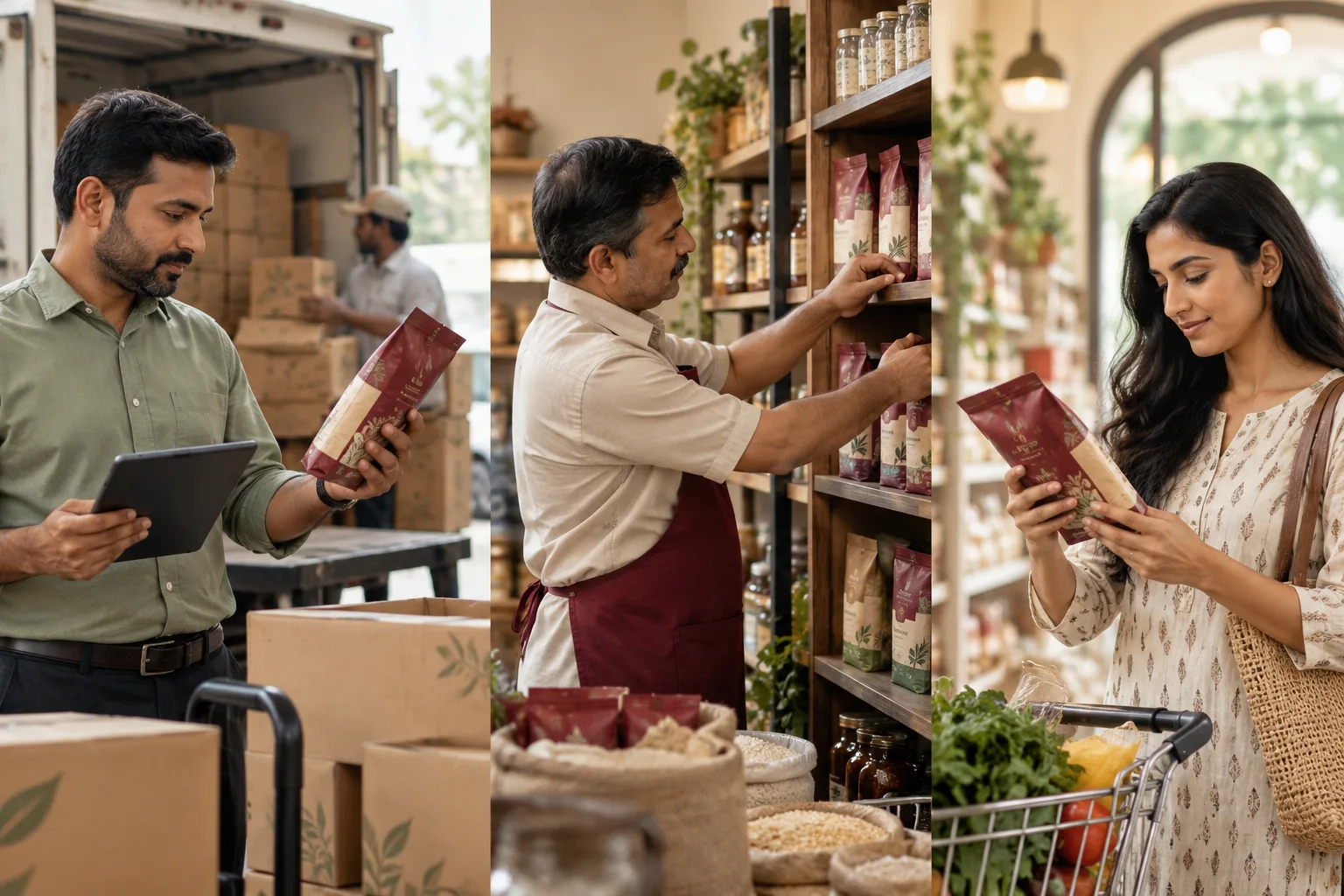 5 min read · 6 Oct 2026How food brands win the trade and the shopperA food or household brand is chosen twice, by the distributor or retailer who stocks it and by the shopper who picks it up. What each buyer checks.
 6 min read · 21 Sept 2026TV advertising vs OTT advertising: what are you actually buying?Television sells slots against ratings and prices in the wastage. OTT sells impressions to chosen people and charges for the choosing.
 8 min read · 21 Sept 2026How to advertise to distributorsDistributors decide on investment, margin and territory. Put those in the advertisement and the enquiries you get come from people who can sign.
More for food product manufacturers
Related work to consider.
Closest to this: paid and media
- PPC ads for food product manufacturers
- Cricket advertising for food product manufacturers
- Hindi TV advertising for food product manufacturers
- IPL advertising for food product manufacturers
- Regional TV advertising for food product manufacturers
- Sampling and product demonstration for food product manufacturers
Also for food product manufacturers
Or start from the overview: sales and marketing for food product manufacturers.
Your next practical step
Tell us what you are trying to grow, and we will read it before we call.
Eight short steps, mostly taps. Skip anything you would rather answer on the call.