Metal fabrication and laser cutting units · Email marketing
Every plant you have ever supplied is buying parts from somebody.
Email and WhatsApp for a job shop do two things: chase the quotations that went silent, and stay in front of purchase engineers between jobs. GullySales rebuilds the contact list from your quotation and delivery records, and runs both with a message worth a purchase engineer's minute.
Scope, fee, reporting and term are agreed in writing after we have read your brief and spoken to you.
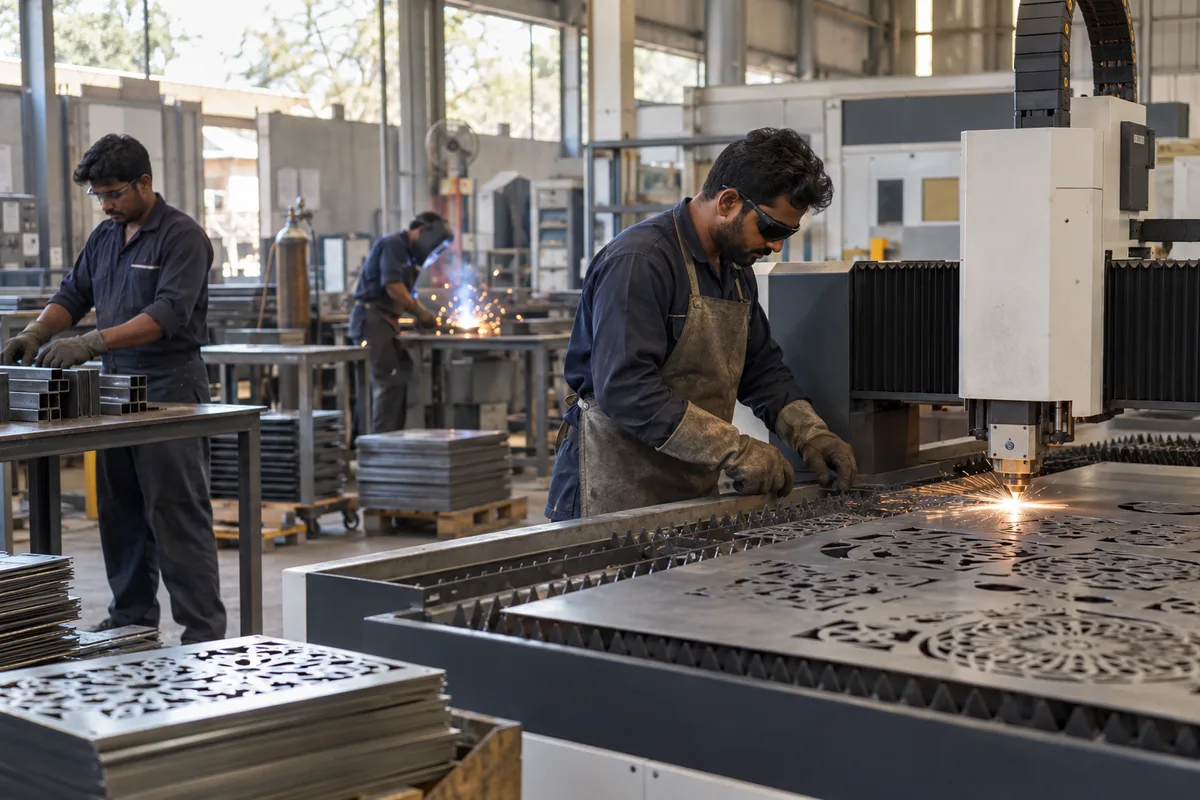
What email marketing means
Email marketing is sending planned messages to a list of past and prospective customers who have agreed to hear from you. It suits offers, updates and staying in touch with someone who is not ready to buy yet. GullySales writes and schedules these emails and tracks who opens, clicks and enquires.
Also for metal fabrication and laser cutting units
- WhatsApp marketing for metal fabrication and laser cutting units
- SEO for metal fabrication and laser cutting units
- PPC ads for metal fabrication and laser cutting units
- Lead generation for metal fabrication and laser cutting units
- Digital marketing for metal fabrication and laser cutting units
- Reputation management for metal fabrication and laser cutting units
- Local SEO for metal fabrication and laser cutting units
- Branding for metal fabrication and laser cutting units
Sales and marketing for metal fabrication and laser cutting units, the overview.
Last updated 13 Nov 2026.
For metal fabrication and laser cutting units
Where it usually goes wrong, and what we would do.
“A quotation is not a conversation until somebody follows it”
Most shops send a rate and wait. A call and a short note a week later is the cheapest order a fabrication unit can win.
“Purchase engineers change jobs and take you with them”
The engineer who trusted you at one plant is at another two years later. Nobody in the shop knows, because nobody has written to them since.
“March is when plants spend what is left”
Budgets close at the end of the financial year, and a note in January about pending fabrication work catches money that has to be used.
What we do
What we deliver for metal fabrication and laser cutting units.
The work available for this need. We agree the deliverables and responsibilities for your engagement in writing.
A contact list rebuilt from quotations and deliveries
Every company quoted or supplied, with the contact, the parts, the date and the outcome, pulled out of files and phones into one list.
Result: You can reach every buyer you have ever worked for.
A follow-up sequence for open quotations
Dated messages and a scheduled call against every quotation sent, with the reason recorded when a job is lost.
Result: Quotations stop dying in silence.
A dormant account programme
A monthly batch of messages to plants that have not sent a drawing in six months, asking what parts are moving now.
Result: Old customers send their next job to you.
Capability updates sent to purchase contacts
A short note when a machine, a material or a finishing process is added, sent to the engineers who already know your work.
Result: Buyers find out you can now take the part they were sending elsewhere.
A year-end note timed to budget closing
A message in the weeks before the financial year ends, asking about pending fabrication and structures still unspent.
Result: You catch work that has to be placed before March.
Reporting on revived work
Replies, reopened quotations and orders traced to follow-up, measured against the baseline recorded before work starts.
Result: The chasing is judged on the drawings it brought back.
How the result is measured
- Open rate
- Click rate
- Enquiries from email
Recorded as a baseline before work starts, so every later report has an honest comparison.
What must be in place first
What a fabrication unit needs in place before mailing purchase engineers.
- Contacts from quotations and delivery challans
- Pull names from every quotation and delivery record, with the company, the part and the date. These people have already seen your quality, so start with them.
- Consent noted from the quotation
- Under India's data protection law, contact rests on agreement, so keep a record of it. Add a line to quotation mails asking permission to send capability updates, and record the date.
- A sender with a machine list attached
- Mail from a named person at your own domain and link to a page listing sheet thickness, bed size and materials you cut. A purchase engineer wants to see the capability in one look.
- Segments by industry and by job type
- Keep OEM part buyers, panel and enclosure buyers and architectural clients on separate lists. A jali panel offer does not belong with a machine guard buyer.
- Quotation follow-up apart from marketing
- A chase on an open quotation is a business mail and a capability update is promotion. Keep them on separate lists with separate unsubscribe lines.
- A reply path that takes a DXF
- Replies must reach whoever can read a drawing and quote. A buyer who sends a file and waits for a reply goes to the next shop.
Who it is for
This is written for these metal fabrication and laser cutting units.
- CNC laser cutting job shops
- Sheet metal fabrication units
- Structural steel fabricators
- Precision sheet metal and enclosure makers
- Decorative and architectural metal work studios
- Gate, grill, railing and shed fabricators
- Stainless steel kitchen and equipment fabricators
- Powder coating and finishing units
Not for
It is not the right fit if.
- You have no list of the buyers you quoted or supplied, so there is nobody to write to yet.
- No one will follow an email with a call, and a message sent alone is easily ignored.
Before you decide
Agree the work. Know how to judge it.
Email marketing for metal fabrication and laser cutting units: use these checks to prepare, choose the scope, and review what changes.
Bring the right evidence
Describe how the contact list was collected, what people asked to receive, and which messages are currently sent. Include opt-outs and replies when reviewing campaign performance.
Make the scope clear
Agree the audience, message purpose, sending system, and response owner. Separate promotional communication from order or service updates, and check current platform requirements before launch.
Check the work in use
Test the message with a small appropriate audience before wider use. Check links, reply handling, opt-outs, and whether the response leads to a relevant conversation or order.
Know when to change course
Do not use an unexplained contact list as a shortcut to demand. If recipients do not expect the message, resolve the permission and relevance questions before sending.
These are discussion points, not a fixed package. GullySales confirms the deliverables, responsibilities, fee, and term in writing after reading your brief and speaking with you.
Before we start
What to have ready before the work starts.
The records, access and decisions this work needs from metal fabrication and laser cutting units. Anything missing is noted in the written scope, with who will supply it.
- Two years of the quotation book
- Any format, so long as we can read company, part and date. It is the raw material for the list, and it shows which quotations went quiet.
- Purchase contacts already in your phone
- Names and addresses of people who asked for a quotation or bought from you. Permission to write exists where they made the request. People who never dealt with you are not added. The owner can also forward a few visiting cards collected at exhibitions, if the people on them asked for a quotation.
- A sending address on the shop's domain
- Mail from a free address lands in spam folders at purchase desks. If the domain's mail is not set up, we do that first, and the first send waits for it.
- A rule for large drawing files
- Large files break mail. Agree whether buyers send a link, use WhatsApp or the upload page, so the estimator opens files in one place. Some purchase desks block links to unknown file hosts, so the estimator should know which route the main accounts accept.
- A list of lapsed accounts to revive
- Plants that stopped buying, with the reason if you know it. We write to them separately from open quotations, since the message is different and the history needs care. The owner can add a short note on why each account went quiet.
How it works
How the email marketing work runs
The work itself, in order. How an engagement starts, from your brief to a written scope, is set out on our method page.
- 1
Rebuild the contact list from paperwork
We take the quotation book, delivery challans and invoices and extract company, contact and the last part supplied. You mark people who have left or should not be contacted. The result is one list with a note beside each plant on what it bought from you. Contacts at plants where the purchase engineer has since moved are marked, and the owner decides whether to write to the successor.
- 2
Mark which quotations went silent
From the quotation book we list those sent and not answered, with the part and the date. You tell us which are worth a reminder and which belong to buyers you would rather not chase. This list feeds the first sequence and becomes the baseline.
- 3
Write the reminder in the estimator's voice
A short note that refers to the part and the quotation, with the drawing number in the first line. The estimator reads and edits it until it sounds like a person at the shop writing to a purchase colleague, and not a mailer sent to a list.
- 4
Decide email or WhatsApp for each contact
Some purchase engineers answer on WhatsApp, others only on mail. You tell us which, from experience. We mark the list by preferred channel so a plant that ignores one is reached on the other.
- 5
Time the year-end note to budget closing
A note to plants before the financial year closes, offering capability and a quotation for the next year. You approve the offer. It goes only to contacts who have placed an order or asked for a quote, never to strangers.
- 6
Read responses against revived work
We count replies and quotations revived from the list, compared with the figures noted at the start. You see which plants answered and which did not. Bounced addresses are removed, and the list is cleaned for the next round.
Where this fits
Three pieces of sales work, in this order.
This work sits inside sales process design, at stage 0, foundation. The audit comes before it, and sales management keeps it running.
Step 1
Sales audit
Find where deals are being lost and what to fix first.
Start here if you cannot say where orders are lost.
Step 2 · you are here
Sales process design
One written way to sell, from first enquiry to repeat order.
Start here if every salesperson sells differently.
Step 3
Sales management
A target, a review routine and someone who owns the number.
Start here if the team has targets and no routine.
FAQ
Questions owners ask before they call.
Not here? More answers, or ask on WhatsApp.
Will a purchase engineer read an email from a fabricator?
Which carries follow-up better, email or WhatsApp?
Will a purchase engineer open a mail from a fabricator?
What if the drawing file is too big for email?
Will a purchase engineer read mail from a fabricator?
Who writes the emails, the estimator or GullySales?
How much does it cost?
How long is the contract?
How soon will we see results?
Who will actually do the work?
From the blog
Further reading for metal fabrication and laser cutting units.
 7 min read · 21 Sept 2026How to advertise to purchase managersPurchase managers only listen once an indent lands. Get into the vendor file, the specification and the search results before that day.
 7 min read · 21 Sept 2026How to advertise to engineers, who buy from the specificationAn engineer writes the specification and purchase buys from it. Get your make on the approved list before the tender, or the budget goes elsewhere.
 7 min read · 8 Jul 2026How to get plastic moulding job work and CNC machining ordersJob work orders go to shops buyers can find and check. How moulders and machine shops get on RFQ lists and win repeat orders.
More for metal fabrication and laser cutting units
Related work to consider.
Closest to this: messaging and automation
Also for metal fabrication and laser cutting units
- SEO for metal fabrication and laser cutting units
- PPC ads for metal fabrication and laser cutting units
- Lead generation for metal fabrication and laser cutting units
- Digital marketing for metal fabrication and laser cutting units
- Reputation management for metal fabrication and laser cutting units
- Local SEO for metal fabrication and laser cutting units
Or start from the overview: sales and marketing for metal fabrication and laser cutting units.
Your next practical step
Tell us what you are trying to grow, and we will read it before we call.
Eight short steps, mostly taps. Skip anything you would rather answer on the call.