Textile manufacturers · Customer retention
The buyer who returns every season is worth more than the one who haggles hardest.
Retention for a fabric mill is the garment buyer or export house that comes back season after season. It is lost through a shade mismatch or a missed shipment far more often than through price. GullySales tracks each account's season, gets the new shade card in before sampling opens, and finds the buyer who quietly stopped.
Scope, fee, reporting and term are agreed in writing after we have read your brief and spoken to you.
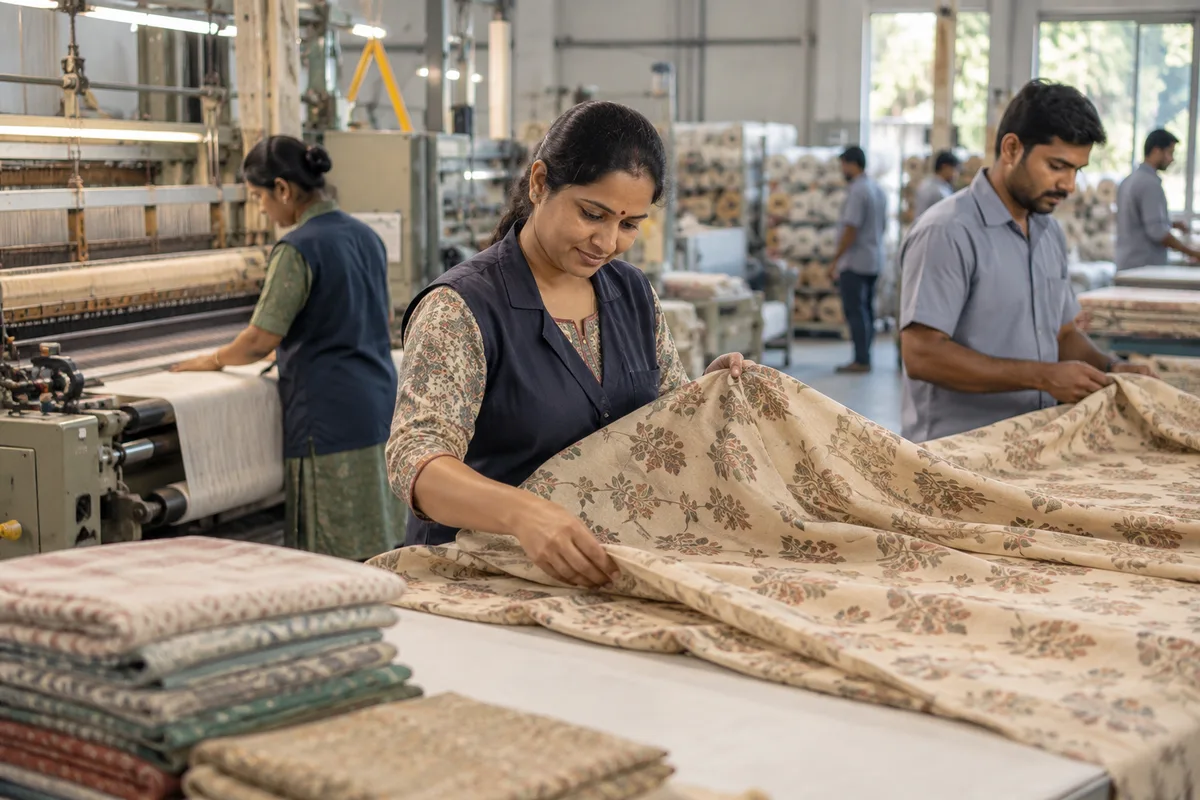
What customer retention means
Customer retention is keeping an existing customer buying again rather than losing them to a competitor after the first purchase, usually cheaper than winning a new customer. GullySales sets a routine of check-ins and renewal reminders aimed at customers before they show signs of leaving.
Also for textile manufacturers
- Referral marketing for textile manufacturers
- SEO for textile manufacturers
- PPC ads for textile manufacturers
- Lead generation for textile manufacturers
- Digital marketing for textile manufacturers
- Reputation management for textile manufacturers
- Local SEO for textile manufacturers
- Branding and identity for textile manufacturers
Sales and marketing for textile manufacturers, the overview.
Last updated 5 Oct 2026.
For textile manufacturers
Where it usually goes wrong, and what we would do.
“Reach the buyer before his sampling opens, not after”
Once a merchandiser has selected his qualities for the season, your new shade card is a month too late. Work back from his development calendar and the card arrives while the board is still empty.
“Accounts are lost on a shade or a shipment, rarely on a rate”
A buyer who has approved your lab dip and had a bulk lot come up different does not argue. He simply samples elsewhere next season. Fixing the process holds more accounts than any discount.
“A discount scheme means nothing to a merchandiser”
He is measured on shade, delivery and price against a costing sheet, not on loyalty benefits. The real loyalty offer in this trade is holding greige for him or giving him first sight of a new quality.
What we do
What we deliver for textile manufacturers.
Every deliverable, what it covers for you, and the result it is there to produce. Nothing here is an extra.
A season calendar per buyer
The development and sampling months recorded for every account, with the contact planned ahead of each rather than after.
Result: Your shade card reaches him while he is still choosing.
A quiet account list reviewed by season
Buyers who ordered last season and have not enquired this one, pulled into a working list with an owner against each.
Result: You find out why before the season closes.
A shade complaint routine built on the approval record
A fixed response pulling the approved lab dip and the bulk lot record, answering with data before anything is offered commercially.
Result: A complaint ends in a technical answer, not a credit note.
First sight of new qualities for repeat accounts
A short list of buyers who see a new development before it is shown generally, chosen on their ordering history.
Result: A regular buyer has a reason to stay regular.
Repeat orders reported by account and season
Reorders and lapsed accounts reported against the baseline recorded before work started, separately from new enquiries.
Result: The owner sees whether the buyer base is holding.
How the result is measured
- Retention rate
- Repeat purchase rate
- Customers won back
Recorded as a baseline before work starts, so every later report has an honest comparison.
Work it out from your records
The buyer-by-season figures a fabric mill can read from its order book and sample register.
- Buyers who ordered in each season
- For every buyer, tick the seasons in which they placed a bulk order. A buyer who ordered every spring and summer and missed the latest has gone quiet, so ring the merchandiser before the next sampling.
- Sample requests that became bulk orders
- List swatch and sample dispatches and mark the ones that led to an order. Note the quality, the shade and how long the buyer took to respond. The gaps point to a quality or price mismatch.
- Complaints by shade, shipment or quality
- Tag each complaint in the register as shade variation, short shipment, late dispatch or fabric fault, with the buyer's name. If one reason keeps returning, repeat orders are at risk until it is fixed.
- Buyers' average order gap
- Note the dates of each buyer's bulk orders and the usual gap. A merchandiser who has not placed an order beyond that gap may have moved to another mill, so call before the next season's costing begins.
- Buying houses against direct brands
- Split your accounts into agents and buying houses, and direct garment brands. Check where repeat orders actually come from, since a buying house can move a brand's whole programme to another mill.
Who it is for
This is written for these textile manufacturers.
- Yarn spinning mills
- Fabric weaving and processing units
- Garment fabric manufacturers
- Home textile manufacturers
- Technical and industrial textile makers
- Export-oriented manufacturing units
- Private label and job-work manufacturers
- Knitwear and hosiery manufacturers
Not for
It is not the right fit if.
- You want a guaranteed Google ranking or a guaranteed number of leads. Nobody honest can promise either.
- You need enquiries by next week and have nobody to answer them.
- You want posts and reach reported, not enquiries and orders.
How it works
From your first message to the first report.
No open-ended retainer. Every step gives you something in writing.
First
Your brief
You tell us what you need in a few short steps: your business, what you want, where enquiries come from and how they are handled.
After the brief
A conversation and a written scope
We read it, then talk with whoever handles your enquiries. If you want our help, the scope, the fee and the reporting come in writing, and nothing starts before you have read them.
Before work starts
Baseline recorded
Enquiries by source, reply time, conversion and cost per order, written down so every later report has an honest comparison.
After the baseline
The first fix goes live
The fix we agreed to start with is put in place and measured against the baseline, whether that is reply time, a follow-up sequence, the page buyers land on or the handover between marketing and sales.
As agreed
Report against the baseline
What moved, what did not, and what changes next, in plain words. How often you get it is set in writing before work starts.
At renewal
Renew on the numbers
The term ends and you decide whether to continue from the results. The length is agreed in writing before anything starts.
How the customer retention work runs
- 1
Assess current retention
A first read of current retention rate, existing tactics and where they are or are not coordinated.
- 2
Build the strategy
A written plan developed covering priority segments, touchpoints and a measurable target.
- 3
Align existing tactics
Current retention activities mapped against the strategy and adjusted to work together rather than independently.
- 4
Track toward the target
Retention tracked against the goal, with the strategy adjusted as results come in.
Why us
Why owners pick GullySales over an agency.
Marketing and sales, as one job
Most agencies stop at the enquiry. We also fix what happens after it: the reply, the follow-up, the quote and the CRM.
The person on the first call does the work
No account managers in between. You are never handed to someone you have not met.
A baseline before anything starts
Your numbers are written down on day one, so every later report compares against something honest.
The fee in writing, split three ways
Our time, your media spend and production on separate lines. You always see what goes to us.
No guarantees we cannot keep
The term is agreed in writing and never a default twelve months. We never promise a ranking or a lead count, because nobody controls those.
One office, and we say so
Nagarbhavi, Bengaluru. We work across India by call and WhatsApp and travel when a session needs to be in person.
#257, 3rd floor, Sri Nanjundeshwara Complex, Nagarbhavi 8th Block, Outer Ring Road. How we work.
Your brief
Tell us what you need, and we will read it before we call.
Eight short steps about your business, what you want and who decides. Most questions are a tap, and you can skip any you would rather answer on the call.
FAQ
Questions owners ask before they call.
Not here? More answers, or ask on WhatsApp.
A buyer who ordered every season has gone quiet. What do we do?
Should we offer a discount to hold a repeat buyer?
A merchandiser we dealt with has left the buyer. How do we keep the account?
How do we handle a buyer who asks for a rate cut for a repeat order?
Can this work for a job-work or private label manufacturer with no brand of our own?
Do you help with export buyer outreach?
How much does it cost?
How long is the contract?
How soon will we see results?
Who will actually do the work?
From the blog
Further reading for textile manufacturers.
 8 min read · 21 Sept 2026Tamil advertising creative: what actually changesTamil writes one way and speaks another, and the script cannot tell a b from a p. Both facts decide your line, your voice artist and the spelling of your own name.
 6 min read · 22 May 2026How to get export orders: a practical route for Indian manufacturersExport orders come from being ready before you are found: registrations, compliance, a buyer-ready catalogue, a short list of the right buyers, and follow-up that lasts months.
More for textile manufacturers
Everything else we would do for you.
Closest to this: customers after the sale
Also for textile manufacturers
- SEO for textile manufacturers
- PPC ads for textile manufacturers
- Lead generation for textile manufacturers
- Digital marketing for textile manufacturers
- Reputation management for textile manufacturers
- Local SEO for textile manufacturers
- Branding and identity for textile manufacturers
- Social media marketing for textile manufacturers
- Content marketing for textile manufacturers
- Email marketing for textile manufacturers
- Buyer journey for textile manufacturers
- Follow-up systems for textile manufacturers
- CRM for textile manufacturers
- Review generation for textile manufacturers
- WhatsApp marketing for textile manufacturers
Or start from the overview: sales and marketing for textile manufacturers.
Your next practical step
Tell us what you are trying to grow, and we will read it before we call.
Eight short steps, mostly taps. Skip anything you would rather answer on the call.