Photography and videography studios · Business proposal design
Send a proposal that looks as considered as the pictures you shoot.
For a studio, proposal design is the layout of the document a couple, a planner or a brand reads between the first message and the held date. GullySales designs the cover, the coverage pages, the deliverables table and the acceptance page, and hands over a template your studio fills for each booking.
Scope, fee, reporting and term are agreed in writing after we have read your brief and spoken to you.
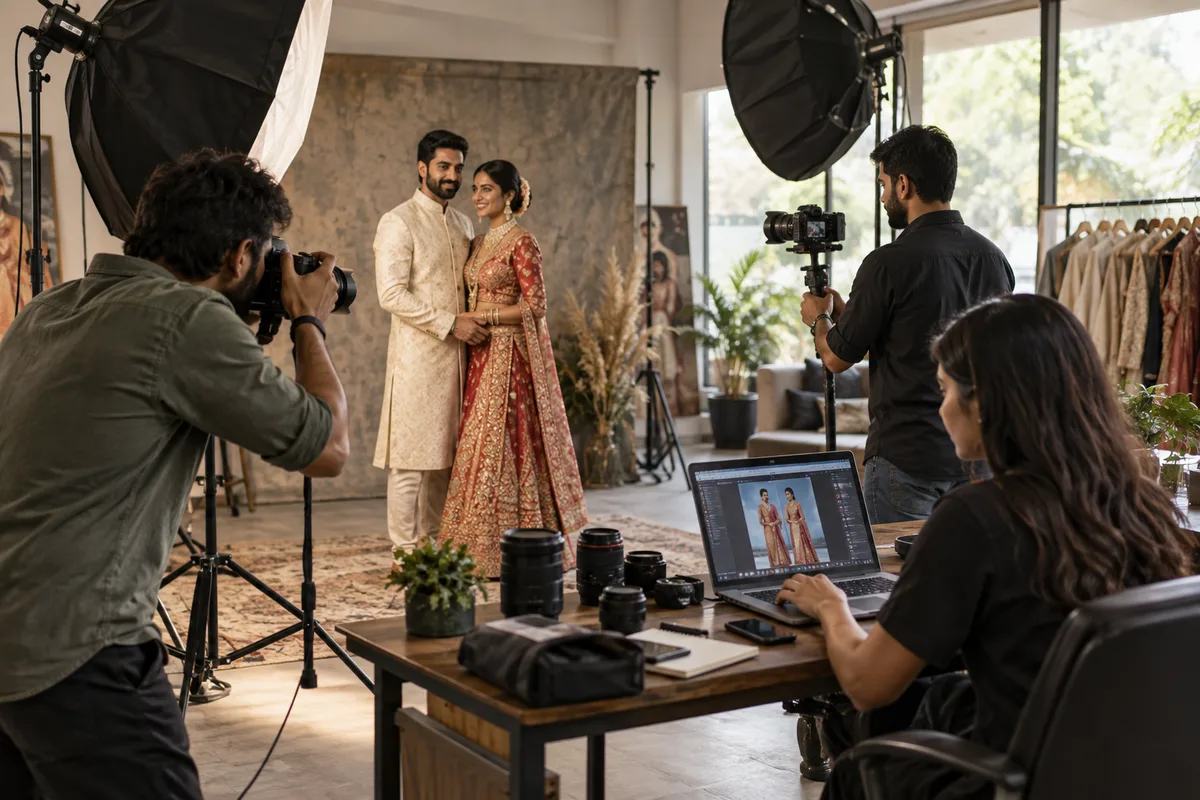
What business proposal design means
Business proposal design is the layout, artwork and files for the document a buyer reads before agreeing to a piece of work. GullySales designs the cover, page grid, tables and signature page from your approved text, and hands over editable files your sales team can fill for each new buyer.
Also for photography and videography studios
- Social media marketing for photography and videography studios
- Content marketing for photography and videography studios
- Animated logo design for photography and videography studios
- SEO for photography and videography studios
- PPC ads for photography and videography studios
- Lead generation for photography and videography studios
- Digital marketing for photography and videography studios
- Reputation management for photography and videography studios
Sales and marketing for photography and videography studios, the overview.
Last updated 14 Nov 2026.
For photography and videography studios
Where it usually goes wrong, and what we would do.
“The proposal is the first thing you make for them”
A couple or a brand has seen your portfolio, but the proposal is the first document you produce for them in particular. If it arrives as a plain attachment with a pasted logo, it contradicts the eye you are selling. A studio's craft is judged by composition, so the page has to show spacing, hierarchy and restraint. The proposal does not need to be showy. It needs to look like the same hands made it as made the album.
“Two readers open the same file”
A wedding proposal is read by the couple, and then forwarded to a parent or a planner who pays or decides. A corporate proposal goes to a marketing lead and then to a finance colleague. The first reader wants to see style and what happens on the day. The second looks for the advance, the cancellation terms and what is delivered. A layout that serves only one of them stalls at the forward.
“Packages blur when the table is crowded”
Studios sell coverage hours, second shooters, drone shots, albums, highlight films and raw files. When these sit in one dense table, a buyer cannot see what separates one package from another and asks for a call to explain. A call is time lost and a chance for another studio to answer first. Clear columns and visible differences let the buyer choose alone.
“The date hold and the rights are hard to find”
The two things that weigh heaviest with a studio, the advance that holds the date and the terms on how the pictures may be used, sit on the last page in small type. Buyers skip them, then dispute them later. Giving them their own page, set where a reader looks, protects the studio and spares the buyer a surprise.
What we do
What we deliver for photography and videography studios.
The work available for this need. We agree the deliverables and responsibilities for your engagement in writing.
A cover that carries your style
A cover page built around one frame from your own work, with the buyer's name, the event or brief and your studio mark. It sets the tone before a word is read, and it is designed so a different frame can be dropped in for each buyer without breaking the layout.
Result: You can open the cover for a new couple or brand and change the frame and the name in one place.
Coverage and shot-plan pages
Pages that lay out what is photographed or filmed and in what order, such as the ceremony, the portraits, the product groups or the speeches. Each has space for a short note and a small sample frame, so the buyer sees what the studio will do and not just the hours.
Result: A buyer can read the order of coverage without asking a question on the phone.
A package comparison table
A table that sets two or three packages side by side with the differences marked, covering shooters, hours, edited films, albums and extras. It holds its shape when a row is added, repeats its headings on a second page and keeps the totals where a reader looks for them.
Result: The differences between packages are visible at a glance, and the table survives edits.
A deliverables and files page
One page naming what the buyer receives: edited pictures, films, albums, prints, raw material where offered, and the form each arrives in. The studio decides the content, and the layout makes it plain enough that the buyer knows what the studio will hand over.
Result: The buyer can point to the page that says what they will receive.
A date hold, rights and acceptance page
A page that sets out the advance, the date being held, the usage terms and the cancellation arrangement, followed by marked areas for names, signature and date. Your own adviser decides the wording on it. The layout gives it the prominence it needs and keeps it from hiding in small print.
Result: The terms and the signature area sit on one page that cannot be missed.
An editable template and a sending version
A working template in the software your studio uses, with locked areas for the fixed parts, and a fixed-format file for sending that keeps images sharp and stays light enough for a messaging app. A short note tells the person filling it what to change and what to leave alone.
Result: Anyone at the studio can build a new proposal from the template and send a file that opens the same everywhere.
How the result is measured
- Proposals sent on the approved template
- Questions from buyers about finding a section
- Proposals that arrive with a broken layout
Recorded as a baseline before work starts, so every later report has an honest comparison.
Who it is for
This is written for these photography and videography studios.
- Wedding photography and cinematography studios
- Event and corporate videographers
- Product and e-commerce photography studios
- Maternity and family portrait photographers
- Real estate and architecture photographers
- Drone and aerial videography services
- Multi-photographer studio chains
Before you decide
Agree the work. Know how to judge it.
Business proposal design for photography and videography studios: use these checks to prepare, choose the scope, and review what changes.
Bring the right evidence
Bring a recent proposal and the buyer's original requirement. Mark the questions that remained unanswered and the assumptions your team made about scope or approval.
Make the scope clear
Agree the proposal structure, required evidence, pricing authority, and follow-up ownership. Keep commercial terms under the control of the person authorised to approve them.
Check the work in use
Ask someone outside the sales conversation to identify what is being offered, what is excluded, and how the buyer can decide. Check that the proposal matches the recorded requirement.
Know when to change course
If the buyer has not confirmed a real need or decision process, clarify those before producing a long proposal. More pages rarely resolve missing qualification.
These are discussion points, not a fixed package. GullySales confirms the deliverables, responsibilities, fee, and term in writing after reading your brief and speaking with you.
Before we start
What to have ready before the work starts.
The records, access and decisions this work needs from photography and videography studios. Anything missing is noted in the written scope, with who will supply it.
- Two recent proposals, booked and unbooked
- We need real examples to see what buyers have actually received. A booked one shows what works, and one that went quiet shows where a reader may have stopped. Without them we design from assumptions about your buyers, which is how a lovely layout still fails to close.
- Frames you may show, with permission
- Choose pictures from your own work that the people photographed have agreed may be shown. A proposal travels widely once sent, so the right to use a frame matters. If permission is missing for a favourite image, tell us and we will pick another rather than guess.
- Your package list and add-ons
- Bring the packages as you sell them now, including extras such as second shooters, drone work, albums and prints. We lay out what you give us. If the list changes mid-way, the table has to be rebuilt, so settle it before we start the design pages.
- Your rights and cancellation wording
- Bring the usage terms, date-hold arrangement and cancellation wording you use now, or the version your adviser prefers. We design the page around it and do not write or alter legal terms. A page designed without the wording ends up being redesigned when the wording arrives.
- The person who sends the proposals
- Tell us who fills in and sends each proposal, and with what software and which messaging app. A template that suits a designer but not the person at the desk gets abandoned. Knowing the sender lets us build something that will actually be used on a busy booking day.
How it works
How the business proposal design work runs
The work itself, in order. How an engagement starts, from your brief to a written scope, is set out on our method page.
- 1
Read the last proposals you sent
We start with a few real proposals, one booked and one that went quiet, along with the way each reached the buyer. We note the tool used to write them, who fills them in, and which part the buyer asked about first. This tells us whether the problem is the look, the length or the order of the pages.
- 2
Sort the shoot types and packages
We list the kinds of proposal the studio sends: weddings, pre-wedding shoots, events, product work, corporate films. We group the ones that can share a structure and mark the ones that need their own. A product proposal and a wedding proposal ask different things of the page, so they are not forced into one form.
- 3
Settle the text with the studio
The proposal is designed around words your studio has approved. If the packages, terms and rights wording are not settled, we pause so the design is not built on text that will change. Pricing logic stays with the owner, and any legal wording stays with the owner's adviser.
- 4
Design the cover and two real pages
We lay out the cover, one coverage page and the comparison table on your actual content. You judge them with real packages and real frames, not placeholder lines. The choice of pictures stays with you, and only work the studio has the right to show is used.
- 5
Build the template and test the files
After approval the system is carried to every section and built into the editable template and the sending version. We open both on a phone, a laptop and a messaging app, checking that fonts hold, tables break cleanly and pictures stay sharp without making the file heavy.
- 6
Hand over and read the first proposals
You receive the template, the sending file and the use note. When the studio has sent its first proposals in the new layout, we read them against the ones recorded before the work began and note what to adjust, such as a table that wraps badly or a page buyers skip.
Where this fits
Three pieces of sales work, in this order.
This work sits inside sales process design, at stage 4, presentation and proposal. The audit comes before it, and sales management keeps it running.
Step 1
Sales audit
Find where deals are being lost and what to fix first.
Start here if you cannot say where orders are lost.
Step 2 · you are here
Sales process design
One written way to sell, from first enquiry to repeat order.
Start here if every salesperson sells differently.
Step 3
Sales management
A target, a review routine and someone who owns the number.
Start here if the team has targets and no routine.
FAQ
Questions owners ask before they call.
Not here? More answers, or ask on WhatsApp.
Do I need a designed proposal if couples already see my portfolio?
Can one template cover weddings and corporate shoots?
Will you write the packages and the terms?
How do I send a proposal full of pictures without it being huge?
Can my team change the template without breaking it?
What if I want pictures of a recent client in the proposal?
How much does it cost?
How long is the contract?
How soon will we see results?
Who will actually do the work?
From the blog
Further reading for photography and videography studios.

More for photography and videography studios
Related work to consider.
Closest to this: content and social
Also for photography and videography studios
- SEO for photography and videography studios
- PPC ads for photography and videography studios
- Lead generation for photography and videography studios
- Digital marketing for photography and videography studios
- Reputation management for photography and videography studios
- Local SEO for photography and videography studios
Or start from the overview: sales and marketing for photography and videography studios.
Your next practical step
Tell us what you are trying to grow, and we will read it before we call.
Eight short steps, mostly taps. Skip anything you would rather answer on the call.