Electronics and appliance stores · Point-of-sale marketing
The price card beside the television decides the sale before the salesperson speaks.
Point-of-sale marketing for an electronics store is the printed and physical material on the floor, at the demo wall and at the billing desk that a family reads while comparing models. GullySales designs cards, tags and shelf pieces that fit your actual floor, and checks that the brand schemes on display match what the billing desk will honour.
Scope, fee, reporting and term are agreed in writing after we have read your brief and spoken to you.
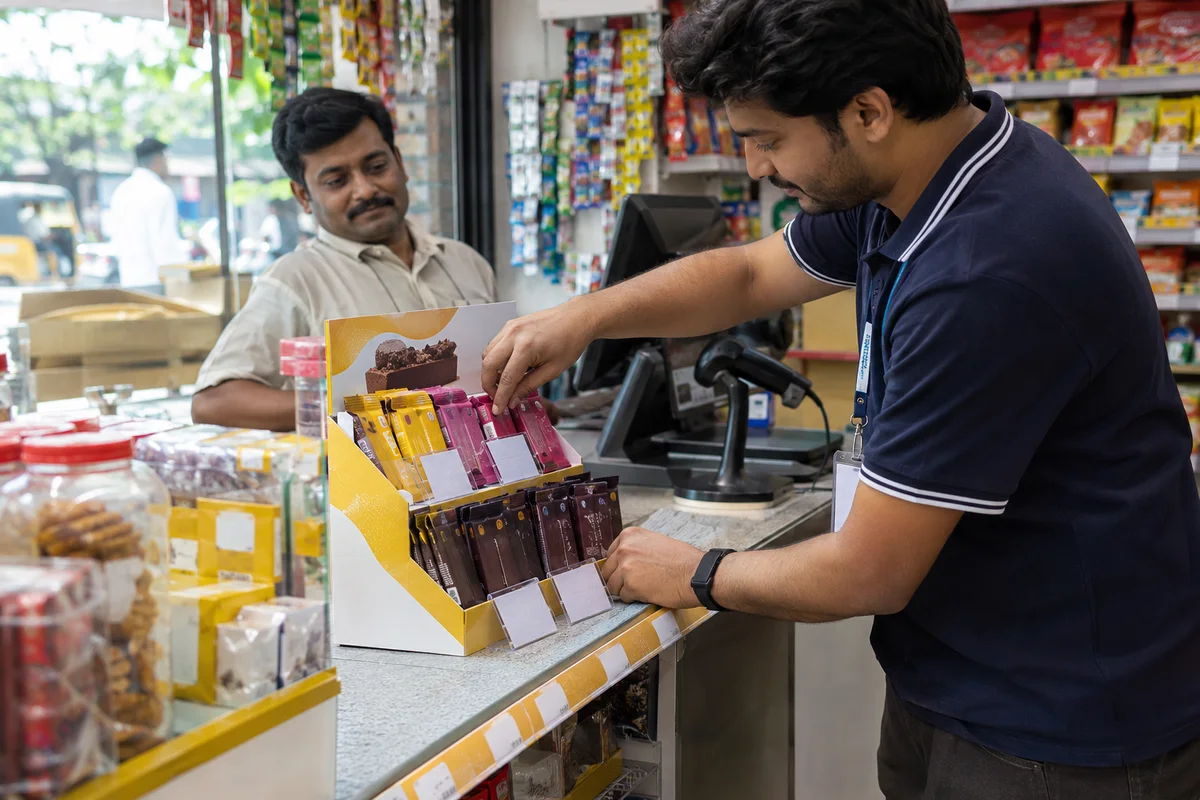
What point-of-sale marketing means
Point-of-sale marketing is the printed and physical material at the counter and shelf that decides the last choice between brands. GullySales designs it to fit real shop space, adds a QR code to your WhatsApp catalogue or warranty page, checks that it is put up, and gets outdated scheme material removed.
Also for electronics and appliance stores
- Newspaper advertising for electronics and appliance stores
- Outdoor advertising for electronics and appliance stores
- SEO for electronics and appliance stores
- PPC ads for electronics and appliance stores
- Lead generation for electronics and appliance stores
- Digital marketing for electronics and appliance stores
- Reputation management for electronics and appliance stores
- Local SEO for electronics and appliance stores
Sales and marketing for electronics and appliance stores, the overview.
Last updated 14 Nov 2026.
For electronics and appliance stores
Where it usually goes wrong, and what we would do.
“A family reads the tag before it asks anyone”
Someone standing in front of five refrigerators reads the price tag first and the salesperson second. A tag with the model, the capacity, the star rating, the exchange value and the EMI amount settles the first comparison without a word spoken.
“Every brand sends a standee and the floor has no room”
Three brands deliver large stands in the same fortnight and they end up in the stockroom or blocking the aisle. A size sheet drawn from your own floor, agreed with each brand's field representative, decides what is accepted and where it goes.
“A festival offer card outlives the festival”
The exchange scheme ended after the festival, but the card still hangs over the washing machines. A buyer holds it up at the billing desk and the store either loses margin or loses the sale. Every card needs a written end date and a named person who removes it.
“The demo unit tells the story or kills it”
A television playing a loop of a brand reel shows nothing useful, and an air conditioner switched off cannot show its quiet. A demo unit needs the content a buyer cares about, such as a cricket match, a bedroom-sized room mock-up and a visible noise reading from a handheld meter.
What we do
What we deliver for electronics and appliance stores.
The work available for this need. We agree the deliverables and responsibilities for your engagement in writing.
Material list by area of the store
A list of what belongs on the television wall, the air conditioner row, the kitchen appliance island and the billing desk, with what each piece must say.
Result: You can walk the floor with the list and tick what is missing.
Price and offer tag template
One tag layout for every model: price, exchange value, EMI instalment as confirmed by your finance partner, installation included or not, and the date the offer ends.
Result: A buyer reads the same facts on every tag.
Brand display agreement sheet
A one-page note for each brand's field representative setting out which pieces you accept, where they stand, who funds them and when they come down.
Result: Brand material arrives in sizes your floor can hold.
QR code to your WhatsApp catalogue
A code on the tag or the counter that opens a chat with your store, with the model name already filled in, so a family can ask for the final price from the phone it is already holding.
Result: You can count the chats that began at a tag.
Demo content plan
What each demo television, soundbar and air conditioner shows, the room size it is placed in, and who resets it each morning.
Result: A buyer sees the feature that decides the purchase, not a brand loop.
Offer withdrawal list
A dated list of every card, tag and banner with the day it ends and the name of the person who takes it down.
Result: No expired scheme is still on display.
How the result is measured
- Outlets with each piece put up, separate from pieces dispatched
- Material in the right place and readable at the counter
- Outdated scheme material still showing after its end date
Recorded as a baseline before work starts, so every later report has an honest comparison.
Who it is for
This is written for these electronics and appliance stores.
- Multi-brand consumer electronics showrooms
- Home appliance stores
- Mobile phone and accessories retailers
- Home theatre and audio specialists
- Telecom counters selling SIM, broadband and DTH connections
- Brand-exclusive stores run by franchisees
- Kitchen appliance and small appliance retailers
- Electronics stores with service and repair centres
Before you decide
Agree the work. Know how to judge it.
Point-of-sale marketing for electronics and appliance stores: use these checks to prepare, choose the scope, and review what changes.
Bring the right evidence
Map existing partners, their territories, and the customers they serve. Review active selling and repeat orders separately from the number of partners signed up.
Make the scope clear
Agree partner fit, territory rules, onboarding, and support responsibilities. Clarify how direct enquiries and partner enquiries are assigned before starting recruitment.
Check the work in use
Follow a partner enquiry through to an order and the next purchase. Check whether the partner has the product knowledge and material needed to sell without repeated intervention.
Know when to change course
If current partners cannot sell because supply or support is weak, resolve that before recruiting more. A bigger network can spread the same problem further.
These are discussion points, not a fixed package. GullySales confirms the deliverables, responsibilities, fee, and term in writing after reading your brief and speaking with you.
Before we start
What to have ready before the work starts.
The records, access and decisions this work needs from electronics and appliance stores. Anything missing is noted in the written scope, with who will supply it.
- A floor plan, even a sketch
- Placement needs the layout of the store, the wall and the desk. A sketch is enough. Without one we measure on the day, which takes the staff away from customers. Mark the places where electric points, shelf edges and pillars limit what can be placed, since a design that ignores them is cut on site.
- All the brand material now on the floor
- Leave out or bring everything the brands have sent, including what is in the godown. We sort it into what stays, what is replaced and what goes back. Without the full pile we plan around the visible pieces only. Say which items the brand insists on, so that we separate its requirements from its suggestions.
- Offer dates for the coming season
- Tags carry end dates, so we need the scheme calendar from the finance desk and the brands. Without dates the tags carry none, and a stale offer outlives the festival it was made for. Include the closing dates of finance schemes, because a tag that names an expired scheme invites an argument at the desk.
- The brands' display terms
- Brands set rules on the space they fund and how their pieces are shown. Bring the letters. Without them we plan display you may later be asked to change. Mention any past disagreements about space, so the sheet addresses them directly instead of repeating them.
- A person and a day for changing tags
- Name the person who changes tags and the day it happens. Without one, tags go stale in the middle of a festival and a family reads a price the counter will not give. Give them the template and the authority to take down an expired piece without asking.
How it works
How the point-of-sale marketing work runs
The work itself, in order. How an engagement starts, from your brief to a written scope, is set out on our method page.
- 1
Walk the floor and list every surface
We walk your floor from the door to the billing desk and list every surface a family reads: the glass, the shelf edge, the demonstration wall, the tag and the desk. You tell us what each brand has put there. What exists afterwards is a list by area of the store showing what is up, what is stale and what is missing. Photographs of each area are taken from the height of a seated customer, who reads material differently from a standing salesperson.
- 2
Watch what families actually read
We spend an evening watching which tags and cards families pick up, which they ignore and where they stand to compare. You tell us which products you want them to compare. This tells us where material must be placed and which of the brand pieces should come down. We note too where families stand with a phone in hand, because those spots are where the online price is checked against your tag.
- 3
Design the price and offer tag
We design one tag format for all products: model, key facts, price, exchange, EMI line and the end date of any offer. The finance desk checks the wording. Staff learn who changes tags and on which day, so a family never reads two prices for the same piece. Tags for fixed-price items are separated from tags for items sold on a negotiated price, so staff and families know which is which.
- 4
Agree brand displays in writing
For each brand we list what you will display, where it goes and what you refuse. You meet the rep with our sheet in hand. Brand material that does not fit the floor stays in the godown. The agreement sheet is signed by both sides, so the next visit of a rep does not undo it. Material that carries a competing brand's offer beside your own offer is flagged, and you decide whether it is moved.
- 5
Add the QR code and plan the demonstration content
We add a QR code that opens your WhatsApp catalogue, and plan what runs on each demonstration unit: the cycle, the filter, the picture. You approve the content. The code supports the salesperson at the unit and does not stand in for them. Units that cannot run content are listed, so that no demonstration unit sits dark during a busy evening.
- 6
Keep a list of offers to withdraw
We prepare a list of every offer with an end date and the person who removes its material when it ends. After each date we check the floor. Walk-in and bill counts are then read against the starting figures so you can see which pieces earned their space. Pieces taken down are stored with their dates, so next season's team can see what was used and what it brought.
Where this fits
Three pieces of sales work, in this order.
This work sits inside sales process design, at stage 0, foundation. The audit comes before it, and sales management keeps it running.
Step 1
Sales audit
Find where deals are being lost and what to fix first.
Start here if you cannot say where orders are lost.
Step 2 · you are here
Sales process design
One written way to sell, from first enquiry to repeat order.
Start here if every salesperson sells differently.
Step 3
Sales management
A target, a review routine and someone who owns the number.
Start here if the team has targets and no routine.
FAQ
Questions owners ask before they call.
Not here? More answers, or ask on WhatsApp.
The brand sends us material we do not want. Do we have to put it up?
Can a QR code replace the salesperson?
Who decides which brand display stays on the floor?
How much material should be on the floor at once?
How long is the contract?
How soon will we see results?
Who will actually do the work?
What do you need from us?
What if we are not happy with the work?
From the blog
Further reading for electronics and appliance stores.
 8 min read · 21 Sept 2026How to advertise to retail business ownersA shop owner cannot leave the counter from ten to nine. Reach them in the afternoon lull, through the distributor's salesman and on WhatsApp.
 6 min read · 11 Jun 2026How to advertise during the festive seasonThe festive season is bought in the monsoon. Book early, know why the rates rise, and match what you sell to the day people actually buy it.
 6 min read · 22 May 2026How to increase footfall in a retail storeBe found on Maps for what you stock, give past customers a reason to come back on WhatsApp, and run promotions tied to dates people already shop for.
More for electronics and appliance stores
Related work to consider.
- Newspaper advertising for electronics and appliance stores
- Outdoor advertising for electronics and appliance stores
- SEO for electronics and appliance stores
- PPC ads for electronics and appliance stores
- Lead generation for electronics and appliance stores
- Digital marketing for electronics and appliance stores
Or start from the overview: sales and marketing for electronics and appliance stores.
Your next practical step
Tell us what you are trying to grow, and we will read it before we call.
Eight short steps, mostly taps. Skip anything you would rather answer on the call.