Jewellery retailers · Lead management
Keep every bridal enquiry on one record until the showroom visit and the order.
Lead capture and lifecycle management for a jewellery retailer records each enquiry from the call, WhatsApp photo, Instagram message, website form and walk-in in one place, with an owner and a next step until it ends in an order or a decision. GullySales connects the sources you use, agrees the stages with your counter, and sets flags for records that need attention.
Scope, fee, reporting and term are agreed in writing after we have read your brief and spoken to you.
What lead management means
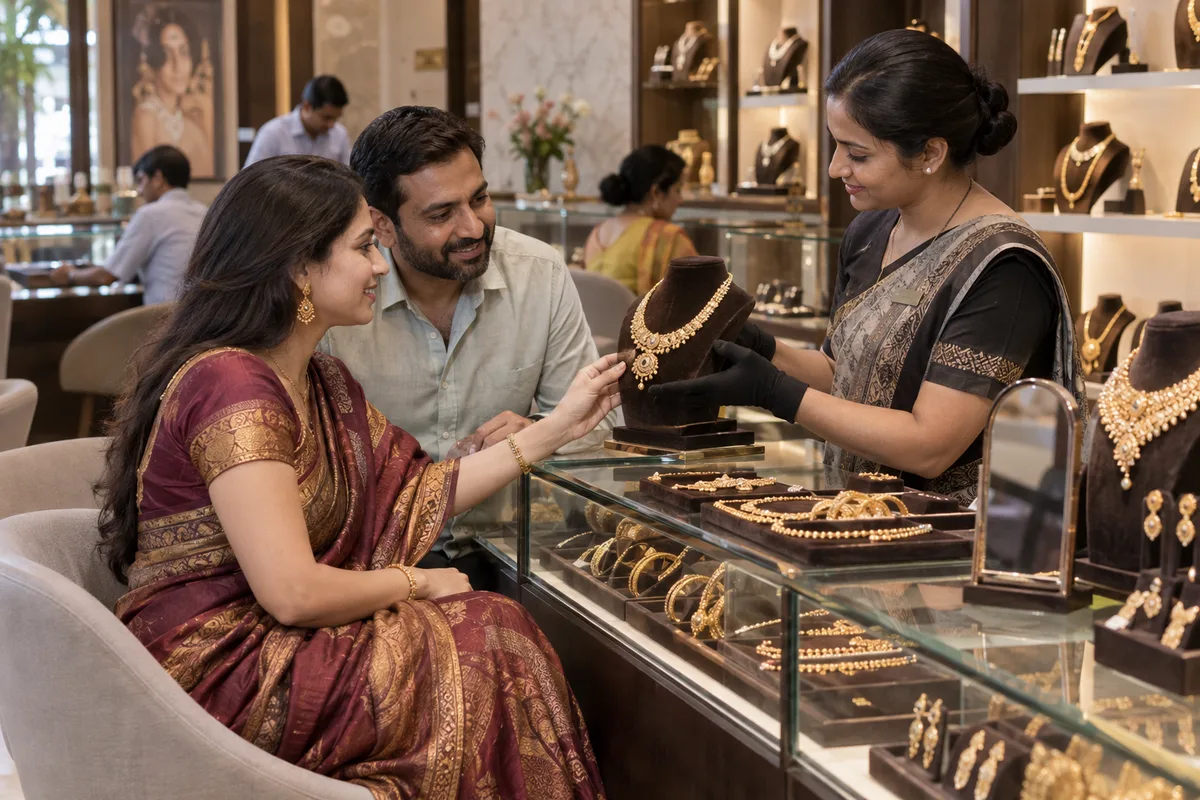
Lead management is keeping every enquiry recorded, assigned and followed up in one place instead of scattered across notebooks, phones and individual memory. GullySales sets up this record so no enquiry is forgotten between the first message and the final decision.
Also for jewellery retailers
- Follow-up systems for jewellery retailers
- CRM for jewellery retailers
- Lead generation for jewellery stores
- Demand generation and marketing campaigns for jewellery retailers
- Lead qualification for jewellery retailers
- Lead scoring for jewellery retailers
- Cinema advertising for jewellery retailers
- Google Ads for jewellery retailers
Sales and marketing for jewellery retailers, the overview.
Last updated 14 Nov 2026.
For jewellery retailers
Where it usually goes wrong, and what we would do.
“The enquiry arrives on five screens”
A saved necklace photo reaches the owner's WhatsApp, a bridal appointment request comes through the website, an Instagram message sits in the page inbox, and a call is taken at the counter. Each lands somewhere different. At the end of the festival nobody can say how many families asked, and the families who were never answered cannot be counted.
“A long purchase needs more than a name”
A bridal set is researched over a long stretch and bought close to the wedding date. The record has to hold more than a phone number: the date of the wedding, who is deciding, the pieces they liked, the budget conversation and when they said they would return. Without those fields, the follow-up call asks the buyer to start again.
“The stages mean different things to different staff”
One salesperson marks an enquiry as visited after a phone call; another waits for the family to stand at the counter. Quoted can mean a message with a weight, or a written estimate with making charges. The festival review then argues about counts instead of customers. Stage totals mean nothing until each stage is defined in a sentence every person at the counter can repeat.
“Finished purchases drop out of sight”
A family buys the bridal set and the record stops. The same family will return for a baby's gift, an anniversary or a gold exchange, but nothing in the system says so. The lifecycle has to continue after the sale, with a handoff that records what was bought, the occasion and when contact was agreed. That record is what lets the showroom remember the family at the next festival without asking them to explain themselves again.
What we do
What we deliver for jewellery retailers.
The work available for this need. We agree the deliverables and responsibilities for your engagement in writing.
Enquiry source map
A list of every place an enquiry can enter, who receives it and where it is kept now, including the counter, personal phones, the page inbox and the website form. You check it against what your team actually does, since offline sources are the easiest to miss, and the counter and the owner's own phone are where they hide.
Result: Every source your team names appears on the map with a named recipient.
Capture routes
Connections for the sources that can be connected, such as the website form and messaging inbox, and a simple manual entry route for the rest. A test enquiry from each source must arrive in the chosen CRM or shared sheet before the route is accepted.
Result: A test enquiry from each agreed source can be found in the record.
Jewellery lead record fields
The fields a jeweller needs: contact, source, occasion, wedding date where given, pieces shown interest in, budget range as spoken, family decision-makers, owner and next step. Fields that no one will fill are removed so the record stays short.
Result: A new record can be completed in the time it takes to end a call.
Stage definitions
Plain-language stages, from new through contacted, visit booked, visited, estimate given, order placed, delivered and closed, each with a one-sentence rule for when a record may move. A lost reason is required to close a record without an order.
Result: Two staff reading the same record place it at the same stage.
Attention flags
Rules that mark records needing action, such as an enquiry with no owner, a booked visit that has passed with no outcome, or a promised callback that was never made. They appear in a view the owner can open and read in a few minutes.
Result: The flagged view lists exactly the records breaking the stated rules.
After-sale handoff
A short step that records what was bought, the occasion and the contact the customer agreed to, then passes the record to whoever looks after returning customers. It is the point where the lifecycle continues instead of ending at the bill.
Result: Each closed order carries a recorded occasion and a consent note for later contact, so the returning customer is treated as a person the showroom knows.
How the result is measured
- Enquiries recorded
- Enquiries with no follow-up
- Time from enquiry to first response
Recorded as a baseline before work starts, so every later report has an honest comparison.
Who it is for
This is written for these jewellery retailers.
- Bridal and wedding jewellery showrooms
- Gold and diamond jewellery retail chains
- Silver and artificial jewellery stores
- Certified diamond and solitaire retailers
- Traditional and antique jewellery stores
- Single-showroom family jewellers
Before you decide
Agree the work. Know how to judge it.
Lead capture and lifecycle management for jewellery retailers: use these checks to prepare, choose the scope, and review what changes.
Bring the right evidence
Trace recent enquiries from arrival to the last recorded action. Include a won enquiry, an unsuitable one, and one that went quiet, with personal details removed for the initial discussion.
Make the scope clear
Agree who accepts each enquiry, what makes it qualified, and how ownership changes. Include a rule for missed replies and a clear reason for closing an enquiry.
Check the work in use
Pick an enquiry at random and ask the team to find its owner, latest conversation, and next action. Check that the record agrees with what actually happened.
Know when to change course
If no one has capacity to respond, assign that responsibility before buying more leads. Automation can support the owner, but it cannot replace an unresolved handover.
These are discussion points, not a fixed package. GullySales confirms the deliverables, responsibilities, fee, and term in writing after reading your brief and speaking with you.
Before we start
What to have ready before the work starts.
The records, access and decisions this work needs from jewellery retailers. Anything missing is noted in the written scope, with who will supply it.
- List of enquiry sources
- Every route a buyer uses to reach you, including the ones that live on a staff member's own phone. A missing source stays outside the record and the count remains wrong.
- Last festival's bill book
- The orders and bills from the previous festival or wedding season. They are the one record that shows what finally sold, and the lifecycle is checked against them.
- Access to the website and inbox
- Admin access to the website form, the Instagram page inbox and the messaging account, held by you and shared through the platforms' own permission settings. Without access the routes cannot be connected or tested.
- A named owner for each enquiry
- Who takes a new enquiry when the owner is at the counter or away. If ownership is unclear, records sit unclaimed and the flagged view fills with unattended names.
- Consent wording for customers
- A sentence telling customers their details are recorded and how you may contact them. Rules on messaging and data differ by place, so your own adviser should approve it before it is used.
How it works
How the lead management work runs
The work itself, in order. How an engagement starts, from your brief to a written scope, is set out on our method page.
- 1
Walk the counter and the phones
We sit with the people who actually take enquiries: the counter, the owner's mobile, whoever manages Instagram and the website form. We list how each arrives and where it ends up, because the real list is always longer than the one the owner first describes.
- 2
Count last festival's enquiries
Before any change, we write down what your own records show for last festival: calls logged, forms received, orders from the bill book. The counts will not match, and the gap between them is the starting figure the new record is read against later.
- 3
Choose a record that your staff will use
We recommend a CRM or a shared sheet that the counter team will actually open. A simpler record that is filled in beats a better system that is not. You choose, and we set it up with the fields and stages agreed.
- 4
Connect the sources and test them
Each connectable source is wired to the record, and a manual entry route is written for the rest. We send a test enquiry through every route and follow it to the record. A route that fails the test is fixed or removed before staff are asked to rely on it.
- 5
Brief the counter and agree consent
We run through the stages and fields with the people who will use them, and agree how customers are told their details are recorded. Rules on contacting customers differ by place, so your own adviser confirms the consent wording.
- 6
Read the record against the figures
After the record has been used through a busy spell, we compare its counts with the figures recorded at the start. You see where enquiries are still missing, which stages are stuck and which flags fired, and we adjust the rules.
Where this fits
Three pieces of sales work, in this order.
This work sits inside sales management. A target, a review routine and someone who owns the number.
Step 1
Sales audit
Find where deals are being lost and what to fix first.
Start here if you cannot say where orders are lost.
Step 2
Sales process design
One written way to sell, from first enquiry to repeat order.
Start here if every salesperson sells differently.
Step 3 · you are here
Sales management
A target, a review routine and someone who owns the number.
Start here if the team has targets and no routine.
FAQ
Questions owners ask before they call.
Not here? More answers, or ask on WhatsApp.
Do we need a CRM, or will a sheet do?
Can WhatsApp messages be captured automatically?
What about customers who walk in without an enquiry?
How long should a bridal enquiry stay open?
Does this send messages to customers?
Will this tell us which showroom an online enquiry visited?
How much does it cost?
How long is the contract?
Who will actually do the work?
What do you need from us?
From the blog
Further reading for jewellery retailers.
 8 min read · 21 Sept 2026Tamil advertising creative: what actually changesTamil is written one way and spoken another, and its script cannot tell b from p. What that means for your line, voice artist and brand spelling.
 8 min read · 21 Sept 2026Radio advertising in BengaluruWho listens to radio in Bangalore, and where: the evening traffic crawl, the auto driver's station, shop counters with FM on, and reach past the city.
 8 min read · 21 Sept 2026Premium audience advertising strategyNo platform in India sells verified income. Affluence targeting is inference, and the cheapest filter you own is putting the price in the first frame.
More for jewellery retailers
Related work to consider.
Closest to this: leads and follow-up
Also for jewellery retailers
Or start from the overview: sales and marketing for jewellery retailers.
Your next practical step
Tell us what you are trying to grow, and we will read it before we call.
Eight short steps, mostly taps. Skip anything you would rather answer on the call.