Jewellery retailers · Lead qualification
Learn who is buying, who decides and when, before the showroom prepares the pieces.
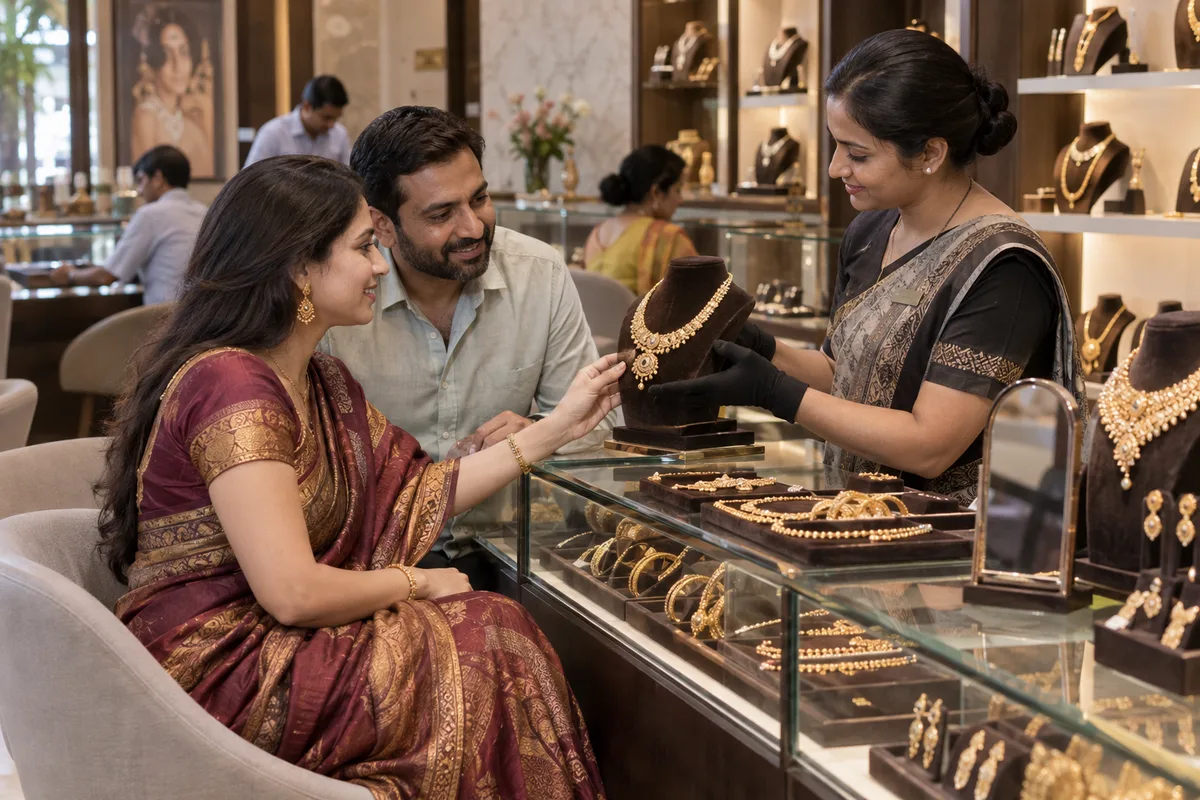
Lead qualification for a jewellery retailer is the first conversation that finds out whether an enquiry is a purchase, a gift, an investment or only a price check, and who will decide. GullySales writes your qualification standard in the counter's own language, trains the staff to ask it kindly, and sets up a record that explains why an enquiry should move on or wait.
Scope, fee, reporting and term are agreed in writing after we have read your brief and spoken to you.
What lead qualification means
Lead qualification is checking whether a new enquiry is from someone who can actually buy, has the budget and is deciding soon. This happens before your sales team spends time on a call. GullySales sets the questions that sort a real buyer from a browsing one at the point of enquiry.
Also for jewellery retailers
- Follow-up systems for jewellery retailers
- CRM for jewellery retailers
- Lead generation for jewellery stores
- Demand generation and marketing campaigns for jewellery retailers
- Lead capture and lifecycle management for jewellery retailers
- Lead scoring for jewellery retailers
- Cinema advertising for jewellery retailers
- Google Ads for jewellery retailers
Sales and marketing for jewellery retailers, the overview.
Last updated 14 Nov 2026.
For jewellery retailers
Where it usually goes wrong, and what we would do.
“A family purchase has several decision-makers”
The person who messages the showroom may be the bride, a parent or an aunt who will not be paying. A bridal set is chosen by one person and approved by another. If the first conversation never finds out who decides, the showroom prepares pieces for someone who cannot say yes, and the real buyer arrives later with different views.
“Price checks look like serious enquiries”
A message asking the price of a necklace may come from a buyer, a shopper collecting rates for a cousin or someone comparing making charges across showrooms. Treating them all alike either wastes the senior salesperson's afternoon or loses the genuine buyer. A few gentle questions about the occasion and the date tell them apart.
“Questions sound like an interrogation”
A rigid checklist that asks the budget first sounds like a bank form, and a bridal family does not answer it. The counter staff stop asking. Qualifying in a jewellery showroom has to sound like a good salesperson's interest in the occasion, with the budget raised only after the family has described what they have in mind.
“Gold investment and gifts are different buyers”
Someone buying coins or bars for investment, a gift for an anniversary and a full bridal set are three conversations with different questions and different timing. One script for all three bores the investor and rushes the bride. The standard needs short branches for each, so staff recognise the buyer early.
What we do
What we deliver for jewellery retailers.
The work available for this need. We agree the deliverables and responsibilities for your engagement in writing.
Qualified-enquiry standard
A written definition, drawn from the sales your showroom has actually won and lost, of what must be known before an enquiry is treated as workable. You check that it separates a bridal buyer with a date from someone just comparing rates.
Result: The standard fits on one page and your counter lead can apply it to a past enquiry. It also lists the facts that may stay unknown until the showroom visit, so staff do not press a family for answers that only the visit can give.
Conversation guide by buyer type
Short question sets for bridal, gift, investment and exchange enquiries, written in the words your buyers use. Each begins with the occasion, not the budget, and notes which answers can wait for the showroom visit.
Result: Staff can open the guide and find the right questions for each type in a few seconds. Each question set also says what to write down when the buyer declines to answer, so a refusal becomes a recorded fact instead of a blank.
Decision-maker prompts
Gentle ways of finding out who will come with the buyer and who approves the purchase, such as asking who else would like to see the pieces. They avoid the blunt question and still record the answer.
Result: Each qualified record names who decides, or states that it is unknown.
Practice scripts for the counter
Role-play material using real past enquiries, so staff rehearse the questions before they meet a family. The scripts include how to move politely to the next question when the answer is vague and how to record unknowns honestly.
Result: Each staff member has practised every buyer type at least once with your counter lead, and the scripts that felt stiff have been reworded.
Qualification fields in the record
A few fields added to your CRM or sheet: occasion, date if given, decision-maker, budget as spoken and the reason an enquiry waits. Unknown stays unknown, so nobody invents an answer to fill a box.
Result: A record shows what has been asked, what is still unknown and why it moved or waited.
Review of qualified against sold
A look at enquiries marked as qualified and what happened to them, read against the bill book. It shows whether the standard predicts real purchases and where it should change, using your own records.
Result: You can see which qualified enquiries became orders and which did not, along with the reason recorded for each one that waited.
How the result is measured
- Qualified lead rate
- Time spent on unqualified leads
- Conversion rate of qualified leads
Recorded as a baseline before work starts, so every later report has an honest comparison.
Who it is for
This is written for these jewellery retailers.
- Bridal and wedding jewellery showrooms
- Gold and diamond jewellery retail chains
- Silver and artificial jewellery stores
- Certified diamond and solitaire retailers
- Traditional and antique jewellery stores
- Single-showroom family jewellers
Before you decide
Agree the work. Know how to judge it.
Lead qualification for jewellery retailers: use these checks to prepare, choose the scope, and review what changes.
Bring the right evidence
Trace recent enquiries from arrival to the last recorded action. Include a won enquiry, an unsuitable one, and one that went quiet, with personal details removed for the initial discussion.
Make the scope clear
Agree who accepts each enquiry, what makes it qualified, and how ownership changes. Include a rule for missed replies and a clear reason for closing an enquiry.
Check the work in use
Pick an enquiry at random and ask the team to find its owner, latest conversation, and next action. Check that the record agrees with what actually happened.
Know when to change course
If no one has capacity to respond, assign that responsibility before buying more leads. Automation can support the owner, but it cannot replace an unresolved handover.
These are discussion points, not a fixed package. GullySales confirms the deliverables, responsibilities, fee, and term in writing after reading your brief and speaking with you.
Before we start
What to have ready before the work starts.
The records, access and decisions this work needs from jewellery retailers. Anything missing is noted in the written scope, with who will supply it.
- A sample of past enquiries
- A set of recent enquiries with their outcomes, both bought and lost. Without them the standard rests on opinion, and staff will not trust it when it differs from their own habits, however carefully it is written.
- Your counter lead's time
- The person who knows how bridal families behave must be present for the drafting and the rehearsals. A standard written without them reads well on paper and fails at the counter, where a real family is waiting and the conversation cannot be paused.
- Bill book for the last season
- The orders that actually closed, so the standard can be checked against sales instead of impressions. If the bill book is incomplete, the review of qualified against sold will show it.
- A place to record answers
- Your CRM or a shared sheet where the qualification fields can sit. If staff have nowhere to write the answers, the conversation happens and the knowledge is lost at the end of the shift.
- Agreement on wording for sensitive questions
- The owner's decision on how budget and family questions are phrased, since buyers differ by community and place. Staff follow the owner's choice, and the wording is changed if buyers react badly, because a question that offends a family costs more than the answer is worth.
How it works
How the lead qualification work runs
The work itself, in order. How an engagement starts, from your brief to a written scope, is set out on our method page.
- 1
Study the sales you won and lost
We go through a sample of past bridal and gift sales and the ones that were lost, with your counter lead. The aim is to find what was known early in the won sales that was missing in the lost ones. That evidence, not a textbook, shapes the standard.
- 2
Record the present counter habits
Before changing anything, we write down how staff now respond to a price message or a walk-in, and how many pieces are shown before a family names the occasion. This starting picture is what the finished standard is read against.
- 3
Write the standard in counter language
The qualified-enquiry standard is drafted in plain sentences your staff already use. We test each question on a few past enquiries, remove those that never helped and keep the ones that would have changed the showroom's preparation.
- 4
Build guides for each buyer type
Bridal, gift, investment and exchange enquiries each get a short guide. We write them with your counter lead and read them aloud, because a question that sounds stiff in speech will not be asked. The budget question comes late and softly.
- 5
Rehearse with real enquiries
Staff practise on anonymised past enquiries, taking turns as the family and the salesperson. The counter lead corrects tone, not content. Reps who find the questions awkward say so, and the wording is changed until it is something they would actually say.
- 6
Read qualified against sold
After the standard has been used through a busy period, we compare qualified enquiries with the bill book and with the figures recorded at the start. The standard is adjusted where it passed enquiries that never bought or ruled out ones that did.
Where this fits
Three pieces of sales work, in this order.
This work sits inside sales process design, at stage 2, qualification. The audit comes before it, and sales management keeps it running.
Step 1
Sales audit
Find where deals are being lost and what to fix first.
Start here if you cannot say where orders are lost.
Step 2 · you are here
Sales process design
One written way to sell, from first enquiry to repeat order.
Start here if every salesperson sells differently.
Step 3
Sales management
A target, a review routine and someone who owns the number.
Start here if the team has targets and no routine.
FAQ
Questions owners ask before they call.
Not here? More answers, or ask on WhatsApp.
Is it rude to ask a bridal family who is deciding?
Should we ask the budget on the first call?
Can a price message be qualified over WhatsApp?
What about customers who only want gold coins or bars?
Will this replace the salesperson's judgement?
Is this the same as lead scoring?
How long is the contract?
How soon will we see results?
What do you need from us?
What if we are not happy with the work?
From the blog
Further reading for jewellery retailers.
 8 min read · 21 Sept 2026Tamil advertising creative: what actually changesTamil is written one way and spoken another, and its script cannot tell b from p. What that means for your line, voice artist and brand spelling.
 8 min read · 21 Sept 2026Radio advertising in BengaluruWho listens to radio in Bangalore, and where: the evening traffic crawl, the auto driver's station, shop counters with FM on, and reach past the city.
 8 min read · 21 Sept 2026Premium audience advertising strategyNo platform in India sells verified income. Affluence targeting is inference, and the cheapest filter you own is putting the price in the first frame.
More for jewellery retailers
Related work to consider.
Closest to this: leads and follow-up
Also for jewellery retailers
Or start from the overview: sales and marketing for jewellery retailers.
Your next practical step
Tell us what you are trying to grow, and we will read it before we call.
Eight short steps, mostly taps. Skip anything you would rather answer on the call.