Spas · Conversion rate optimisation
Turn the nervous first-time visitor on your treatment page into a booking.
Conversion rate optimisation for a spa is the measured improvement of the treatment, package and booking pages so more of the people already visiting book a session or ask about a package. GullySales checks how each booking route is recorded, finds where a hesitant visitor stops, and judges every change against figures written down first.
Scope, fee, reporting and term are agreed in writing after we have read your brief and spoken to you.
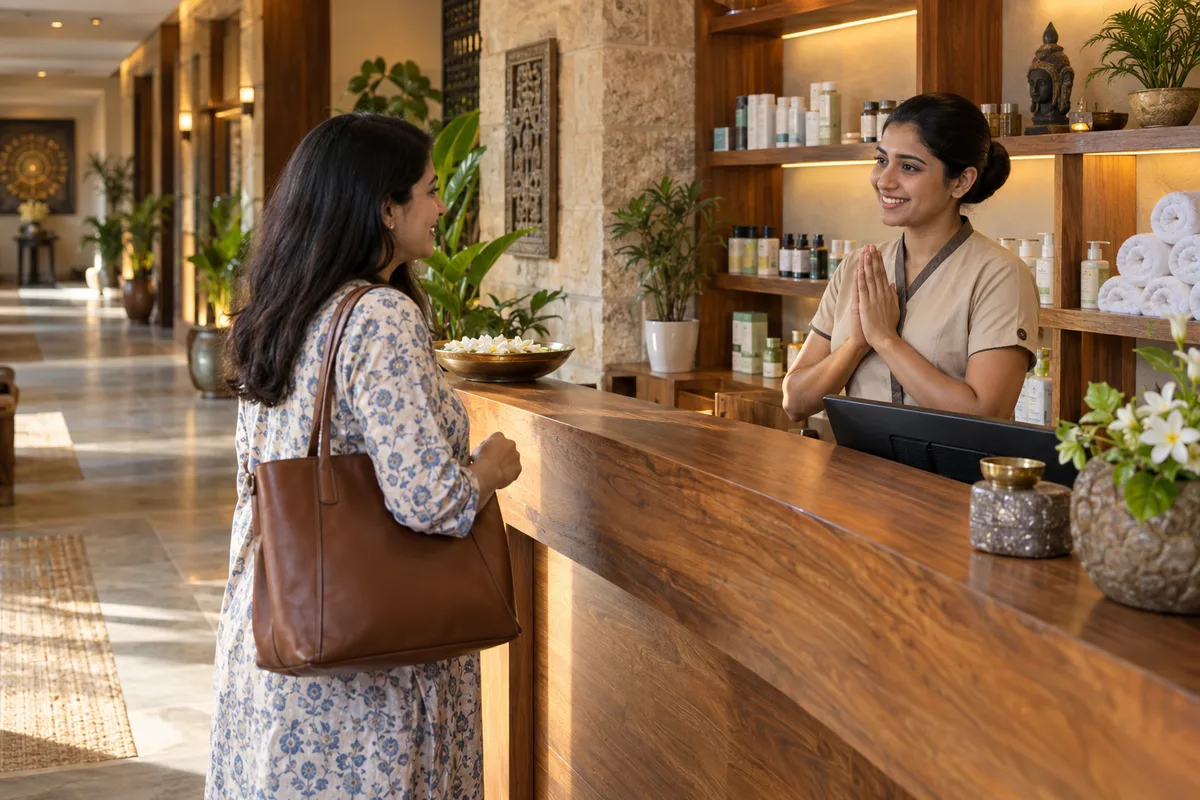
What conversion rate optimisation means
Conversion rate optimisation (CRO) is the measured improvement of website pages so more existing visitors make an enquiry, rather than leave without contacting you. GullySales checks the enquiry tracking, identifies where buyers hesitate, and tests page changes against a recorded baseline, using direct fixes when traffic is too low for a reliable comparison.
Last updated 14 Nov 2026.
For spas
Where it usually goes wrong, and what we would do.
“The treatment menu answers price but not worry”
A first-timer reading a massage page is asking quiet questions: is the room private, who is the therapist, what happens about clothing, how clean is the place. A list of treatments with a price and a Book button answers none of them, so the visitor goes back to the search results and opens the next spa. The work finds which worries the page leaves open and answers them at the spot where the visitor is already reading.
“Four booking routes get counted as one”
A spa receives a call, a WhatsApp tap, a booking form and a voucher purchase, and a lazy report adds them into a single figure. A tap on a green button is not a booking, and a call from the page may be a supplier. The report then says the site is working while the front desk sees empty rooms on a Tuesday. Each route is recorded on its own and set beside the appointment book.
“One outlet rarely has the traffic for a clean test”
A single spa site is seen by a modest number of visitors, and splitting them between two versions of a page leaves results too thin to trust. The honest approach for one outlet is direct fixes to plain problems, each noted against the baseline, with a formal comparison kept for the pages that earn enough visits, such as the home page or the page your Maps profile links to. We say which case applies before work starts.
“Phone visitors decide in the middle of other errands”
The visitor taps through from a Maps listing while standing in a queue or sitting on a sofa. A slot picker with tiny targets, a gallery that loads slowly, or a price list saved as a picture turns a willing customer into a lost one. A laptop review in the office hides all of this, so the whole path from the Maps tap to a confirmed slot is walked on real phones.
What we do
What we deliver for spas.
The work available for this need. We agree the deliverables and responsibilities for your engagement in writing.
Booking route measurement check
Call taps, WhatsApp taps, booking form submissions, voucher purchases and corporate enquiries are set up as separate events in your analytics, with staff visits excluded. We test each one by hand so the numbers mean what their names say.
Result: A test tap on each button shows up as its own event in the analytics view.
Treatment and package page review
A ranked review of the home page, treatment menu, package page and gift voucher page. Each finding covers the headline, how prices are shown, what the page says about therapists and hygiene, and how clear the next step is.
Result: Every finding names a page and a problem you can open and see for yourself.
Phone path walk-through
A written record of the journey from your Maps profile link to a confirmed slot, walked on phones of different sizes. It notes each tap that was awkward, each wait, and each place where a visitor would reasonably give up.
Result: You can follow the same path on your own phone and meet the same problem.
Visitor behaviour evidence
Heatmaps and session recordings from a tool such as Microsoft Clarity, set up with personal details masked and your approval of the recording settings. Chosen examples show where visitors pause on the package page or leave the slot picker.
Result: Each example is a recording or map you can watch, with the page and date noted.
Written change plan
Every proposed change names the page, the single change, the reason, and the figure that will decide whether it stays. Pages with enough visits get a comparison between versions. Quieter pages get a direct fix with the baseline beside it.
Result: The deciding figure for each change is on paper before the change goes live.
Decision log and approved page updates
A log of what was changed, what the figures showed against the baseline, and whether the change was kept, reversed or left under watch. Inconclusive results stay visible. Kept changes are carried to similar pages you approve.
Result: A reader can see which changes were kept and which figures were used to decide.
How the result is measured
- Recorded enquiries as a share of visitors on each tested page, against baseline
- Form submissions, call clicks, and WhatsApp taps, reported separately
- Mobile and desktop enquiry rates
Recorded as a baseline before work starts, so every later report has an honest comparison.
Who it is for
This is written for these spas.
- Day spas
- Ayurveda and wellness centres
- Salon-spa combo outlets
- Medi-spas and skin clinics with spa services
- Massage-only therapy centres
- Resort and hotel spas
- Corporate and mobile wellness services
Before you decide
Agree the work. Know how to judge it.
Conversion rate optimisation for spas: use these checks to prepare, choose the scope, and review what changes.
Bring the right evidence
List the pages that support a buying decision and the actions visitors must complete. Keep examples of failed forms, unclear product information, and questions your team answers repeatedly.
Make the scope clear
Agree the page list, content ownership, integrations, and who controls the domain and hosting. Include redirects and existing search traffic in a redesign brief, before changing addresses.
Check the work in use
Complete a real enquiry journey on a phone and a laptop. Check that the confirmation appears, the enquiry reaches the right person, and tracking records the action once.
Know when to change course
If visitors can enquire but the team does not follow up, start with the sales handover. A larger website will not resolve that delay.
These are discussion points, not a fixed package. GullySales confirms the deliverables, responsibilities, fee, and term in writing after reading your brief and speaking with you.
Before we start
What to have ready before the work starts.
The records, access and decisions this work needs from spas. Anything missing is noted in the written scope, with who will supply it.
- Analytics and website access
- We need view access to your analytics and a route to change the site, either your own login or your developer's name. Without this the booking routes cannot be checked, and every recommendation stays a suggestion that nobody can apply.
- Appointment book or booking software export
- A record of real bookings, with source where you note it, is the only fair check on what the site reports. If the book is paper only, a few sample weeks typed into a sheet are enough to compare against the website figures.
- Current treatment and package list
- The true menu, prices, package terms and expiry rules, as the front desk quotes them today. If the page and the front desk disagree, visitors notice, and the work stops until you decide which version is right.
- Photographs and therapist details
- Photographs of rooms, the entrance and the reception, plus a short note on each therapist's trained treatments, with their agreement to be named. Visitors judge hygiene and trust from these, and stock pictures weaken both.
- One person who answers enquiries
- Someone at the spa must reply to calls and WhatsApp messages and tell us what kind of enquiry arrived. A better page sends in more messages, and when nobody answers them the extra visitors are wasted.
How it works
How the conversion rate optimisation work runs
The work itself, in order. How an engagement starts, from your brief to a written scope, is set out on our method page.
- 1
Choosing the pages that carry bookings
You send the requirements brief, then we talk through which pages bring in bookings today, such as the home page, the treatment menu, the package page and the voucher page. We agree which enquiries count, such as a first massage, a package or a corporate wellness request, and who changes the site once a decision is made.
- 2
Recording the baseline from the appointment book
Before anything changes, we check the booking events work and write down what the site recorded against what the appointment book and the front desk's own tally show. The gap between the two is the first finding. The baseline is signed off by you, with any weak points in the records named.
- 3
Walking the path from Maps to slot
We open your page from the Maps listing on real phones and book a slot as a nervous first-timer would, then as a returning customer buying a package. The notes cover wording, tap targets, load waits and the point where a visitor would stop and go back to compare another spa.
- 4
Sorting changes into tests and direct fixes
Using the traffic your pages receive, each change is placed in one of two groups. Pages with enough visits get a controlled comparison. Pages with little traffic get a plain fix, explained and recorded, with no claim that a before-and-after shift proves what caused it. You approve the list.
- 5
Previewing the page with the owner
Before release you see each changed page on a phone preview. You check every statement about therapists, treatments, hygiene and prices, because a page that overstates what the spa offers does more harm than a plain one. If a claim touches health, your own adviser decides its wording.
- 6
Reading results against the first figures
After release, the booking events are read against the baseline recorded at the start, and the front desk's tally is checked beside them. We write down whether each change is kept, reversed or watched longer, and name the next page worth attention. No result is described as a win unless the figures support it.
Where this fits
Three pieces of sales work, in this order.
This work sits inside sales process design, at stage 1, prospecting and lead generation. The audit comes before it, and sales management keeps it running.
Step 1
Sales audit
Find where deals are being lost and what to fix first.
Start here if you cannot say where orders are lost.
Step 2 · you are here
Sales process design
One written way to sell, from first enquiry to repeat order.
Start here if every salesperson sells differently.
Step 3
Sales management
A target, a review routine and someone who owns the number.
Start here if the team has targets and no routine.
FAQ
Questions owners ask before they call.
Not here? More answers, or ask on WhatsApp.
How much traffic does a spa website need before testing makes sense?
Will you redesign our whole website?
What counts as a conversion for a spa?
Do session recordings capture customer details?
What if a change does not bring more bookings?
Does this cover Google Maps and local search?
How long is the contract?
How soon will we see results?
Who will actually do the work?
What do you need from us?
From the blog
Further reading for spas.
 6 min read · 19 Aug 2026How to sell spa membership packages that customers renewBuild spa membership packages around how often customers already visit, with a saving they can see. Offer them after a session; follow up before renewal.
 7 min read · 3 Jun 2025How to reactivate dormant customersDefine dormant against your own purchase interval, then call your highest-value lapsed customers to ask why they stopped before offering any discount.
More for spas
Related work to consider.
Closest to this: search and visibility
Also for spas
Or start from the overview: sales and marketing for spas.
Your next practical step
Tell us what you are trying to grow, and we will read it before we call.
Eight short steps, mostly taps. Skip anything you would rather answer on the call.