Spas · Customer renewal, re-engagement and upsell message writing
A package reminder that reads like a bill sends the customer elsewhere.
Renewal, re-engagement and upsell message writing for a spa is the writing of the notes sent to people who have already visited: a package renewal, a message to a customer who has gone quiet, and an invitation to add a treatment. GullySales writes each message for its moment, checks every claim against your records, and hands over approved wording your front desk can send.
Scope, fee, reporting and term are agreed in writing after we have read your brief and spoken to you.
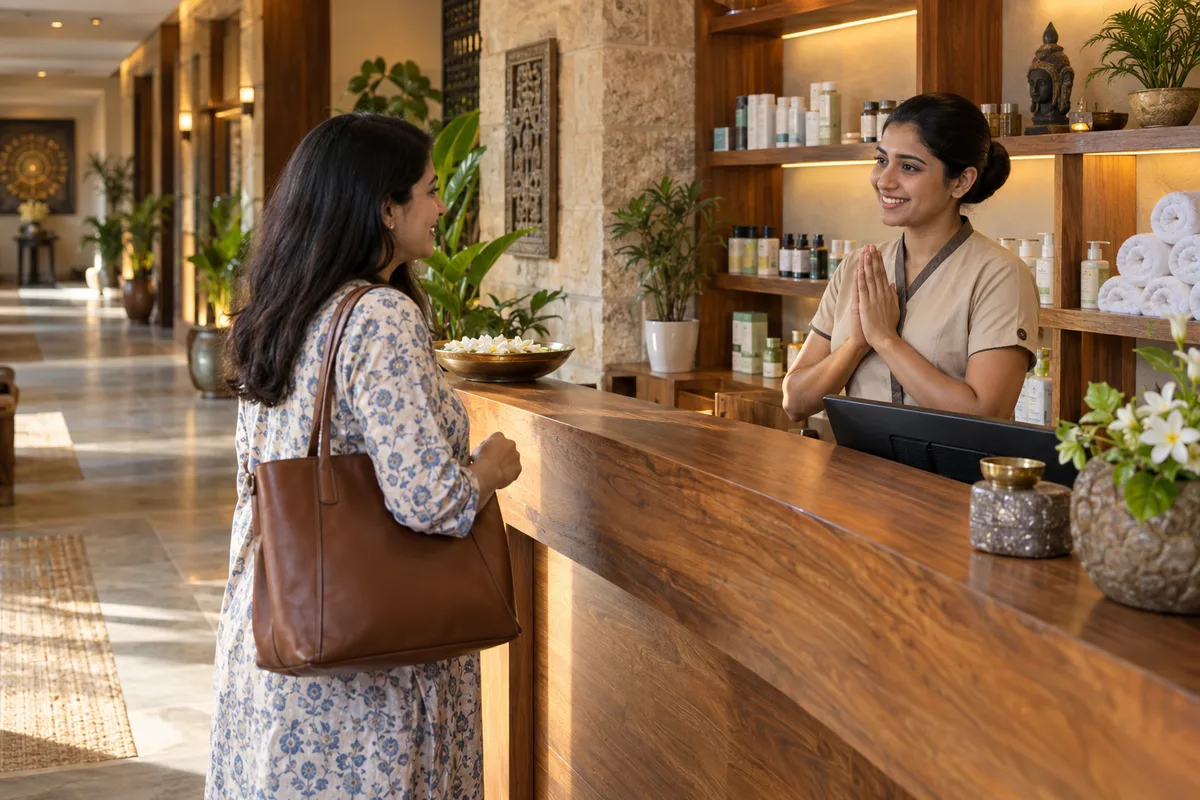
What customer renewal, re-engagement and upsell message writing means
Customer renewal, re-engagement and upsell message writing is the writing of the notes sent to people who already bought: a renewal notice, a message to a customer who has gone quiet, and an offer of something more. GullySales writes each message for its moment, checks every claim against your records, and hands over approved wording your team can send.
Last updated 14 Nov 2026.
For spas
Where it usually goes wrong, and what we would do.
“The second visit decides whether there is a customer”
A first-time customer who came on an introductory offer has not yet chosen your spa; they have tried it. The message after that first visit is the one that decides whether a second booking follows. It should thank them for the specific visit, remind them of the treatment and the therapist, and offer one next step. A generic voucher blast sent to everyone does none of this and reads as marketing.
“A package renewal is a decision, not a payment”
A customer whose package of sessions is nearly used up is deciding whether the spa earned another. A message that opens with the amount due makes the choice about money. A better message reminds them what the package gave them in sessions taken, offers the next step and states the terms plainly, including what happens to unused sessions. The tone is a note from a place they trust, not a notice from an accounts department.
“Some customers must not receive a message at all”
A customer who raised a complaint, who was told a treatment was unsuitable for them, who is pregnant or who has said they do not wish to be contacted should not receive an upsell. A spa holds sensitive facts in its notes. Each message set therefore carries the cases where it must not be sent, and the front desk checks them before sending, because one wrong note costs more than one missed sale.
“The channel carries rules of its own”
Spa customers are reached mostly on WhatsApp, by text and by email, and each has its own consent expectations and platform rules. A customer who booked once has not necessarily agreed to marketing. We write messages that fit the channel, we mark where consent must be recorded, and we say that you should check the platform's current rules and your own adviser on permissions before any sending begins.
What we do
What we deliver for spas.
The work available for this need. We agree the deliverables and responsibilities for your engagement in writing.
Message map for the customer moments
A one-page map naming each moment and the message that belongs to it: after the first visit, when a package is nearly used up, when it has lapsed, when a customer has not returned for a long time, and when an add-on suits the treatment they last had. It shows who sends it and the condition that stops it.
Result: A single map in which every message has a moment, a sender and a stop condition.
First-visit follow-up messages
Short messages for the customer who came on an introductory offer, written to bring them back for a second visit. Each names the treatment taken, avoids pressure and offers one clear next step. Versions are written for WhatsApp, for text and for email, in the same voice.
Result: A set of follow-up messages for each channel you use, each with a single ask and a plain next step.
Package renewal notes
The notes sent as a package nears its end and after it lapses. They state the terms as you approve them: what remains, how long the package stays valid, what happens to unused sessions and how to renew. They read as a note from the spa, not as an invoice.
Result: Renewal notes whose terms match your written package policy word for word.
Re-engagement messages for quiet customers
Messages for the customer who has not booked for a long while. One acknowledges the gap without blame, one offers a reason to return that you have approved, and one is a last note that closes the thread politely. Customers who have asked not to be contacted are excluded in the map.
Result: A three-step re-engagement set with the exclusion list written into the map.
Add-on and upsell invitations
Short invitations to add a treatment to a booking or move from a single visit to a package, written to follow what the customer has taken. Each says why the suggestion fits, and none uses language that implies a health benefit or a result.
Result: A set of invitations, each tied to the treatment that triggers it and cleared of health claims.
Claims file and handover walk-through
A file pairing every statement and offer in the messages with the record that supports it, with a list of cases where a message must not go. We walk your front desk through when each message is used and what to check first. Sending and tracking replies stay with your team unless scoped separately.
Result: A claims file and a walk-through that leave your desk staff able to send each message without our help.
How the result is measured
- Renewal notices that receive a reply before the expiry date
- Customers who answer the question asked in a re-engagement message
- Lapsed customers who place a new order or book again
Recorded as a baseline before work starts, so every later report has an honest comparison.
Who it is for
This is written for these spas.
- Day spas
- Ayurveda and wellness centres
- Salon-spa combo outlets
- Medi-spas and skin clinics with spa services
- Massage-only therapy centres
- Resort and hotel spas
- Corporate and mobile wellness services
Before you decide
Agree the work. Know how to judge it.
Customer renewal, re-engagement and upsell message writing for spas: use these checks to prepare, choose the scope, and review what changes.
Bring the right evidence
Review repeat orders, inactive customers, and reasons for leaving. Separate a normal buying interval from a customer who stopped because of an unresolved problem.
Make the scope clear
Choose the customer group and the reason to contact them. Agree how complaints, renewal decisions, and additional offers are handled, including when a sales message is inappropriate.
Check the work in use
Track the response through to a retained or repeat order, with discounts and service costs visible. Record why the customer returned rather than crediting every repeat purchase to the campaign.
Know when to change course
If customers leave because delivery is unreliable, fix that before offering a loyalty reward. Repeated promotions can hide the cause without improving the experience.
These are discussion points, not a fixed package. GullySales confirms the deliverables, responsibilities, fee, and term in writing after reading your brief and speaking with you.
Before we start
What to have ready before the work starts.
The records, access and decisions this work needs from spas. Anything missing is noted in the written scope, with who will supply it.
- Package terms in writing
- Renewal notes quote the terms, so the terms must exist on paper first: validity, missed sessions, sharing and refunds. If the policy is spoken, the message will promise one thing and the desk will say another. We write only what is written down.
- A booking and package record
- We need to know who came, what they took and when a package began and ended. With that we can write for the real moments. When the record is thin, we write for the moments you can identify and mark the others for later.
- The list of do-not-message cases
- Bring the customers and situations that must be excluded: complaints, advice against a treatment, pregnancy notes and requests for no contact. This list is what makes an upsell safe to send. Without it, we set the map to exclude broadly and ask the desk to check by hand.
- Earlier offers and replies
- Bring the offers, reminders and responses you have sent before. They show what the customer already knows and which wording drew a booking. A repeated offer with a changed condition confuses a customer, and we can only avoid that when we have seen the old one.
- The person who approves wording
- Name one person who reads the claims file and decides, and your own adviser for any line near health. When nobody is named, the messages wait unsent. Advertising and messaging rules differ by profession and by state, so check with your own council or adviser.
How it works
How the customer renewal, re-engagement and upsell message writing work runs
The work itself, in order. How an engagement starts, from your brief to a written scope, is set out on our method page.
- 1
Read the booking records and old messages
We start with what you sell, how packages are bought and used, who your customers are and why you want them back. We read the reminders and offers you have already sent and the replies you hold, so the new messages begin from what the spa has already said.
- 2
Separate the first visit, the package and the lapse
We split customers into the first-time visitor, the package holder nearing the end, the lapsed package customer and the long-quiet regular. Each gets a defined moment, a reason for the message and a condition that stops it. We confirm the groups with you before drafting begins.
- 3
Ask the front desk and therapists
Reception and therapists know why customers drift away and what they ask before renewing: a parking problem, a therapist they preferred, a package they felt was hard to use. We collect those answers in their own words and use them, so the messages sound like your spa.
- 4
Write the message set
We draft each message with one purpose, one ask and one next step, then add short versions for WhatsApp and text. Offers and conditions are written only as you state them, and nothing is implied that your booking records and your package policy do not support.
- 5
Mark the cases where a message must not go
Each statement is matched to a record. We list the customers who must not receive an upsell: an open complaint, a treatment advised against, a pregnancy noted on the form, a request for no contact. Health wording is left to your own adviser, and consent is checked against the platform's current rules.
- 6
Hand over the approved wording
You receive the final messages, the message map and the claims file, and we walk your team through them. Afterwards the results are read against the return and renewal records you kept before the messages were used. Sending, scheduling and tracking replies stay with your team unless a separate scope covers them.
Where this fits
Three pieces of sales work, in this order.
This work sits inside sales process design, at stage 7, after the sale. The audit comes before it, and sales management keeps it running.
Step 1
Sales audit
Find where deals are being lost and what to fix first.
Start here if you cannot say where orders are lost.
Step 2 · you are here
Sales process design
One written way to sell, from first enquiry to repeat order.
Start here if every salesperson sells differently.
Step 3
Sales management
A target, a review routine and someone who owns the number.
Start here if the team has targets and no routine.
FAQ
Questions owners ask before they call.
Not here? More answers, or ask on WhatsApp.
Do you send the messages for us?
Can the messages offer a discount?
How do you write for a customer who left unhappy?
Will the messages say that a treatment is good for health?
Can the same messages be used on WhatsApp and email?
How will we know the messages worked?
How much does it cost?
How long is the contract?
How soon will we see results?
Who will actually do the work?
From the blog
Further reading for spas.
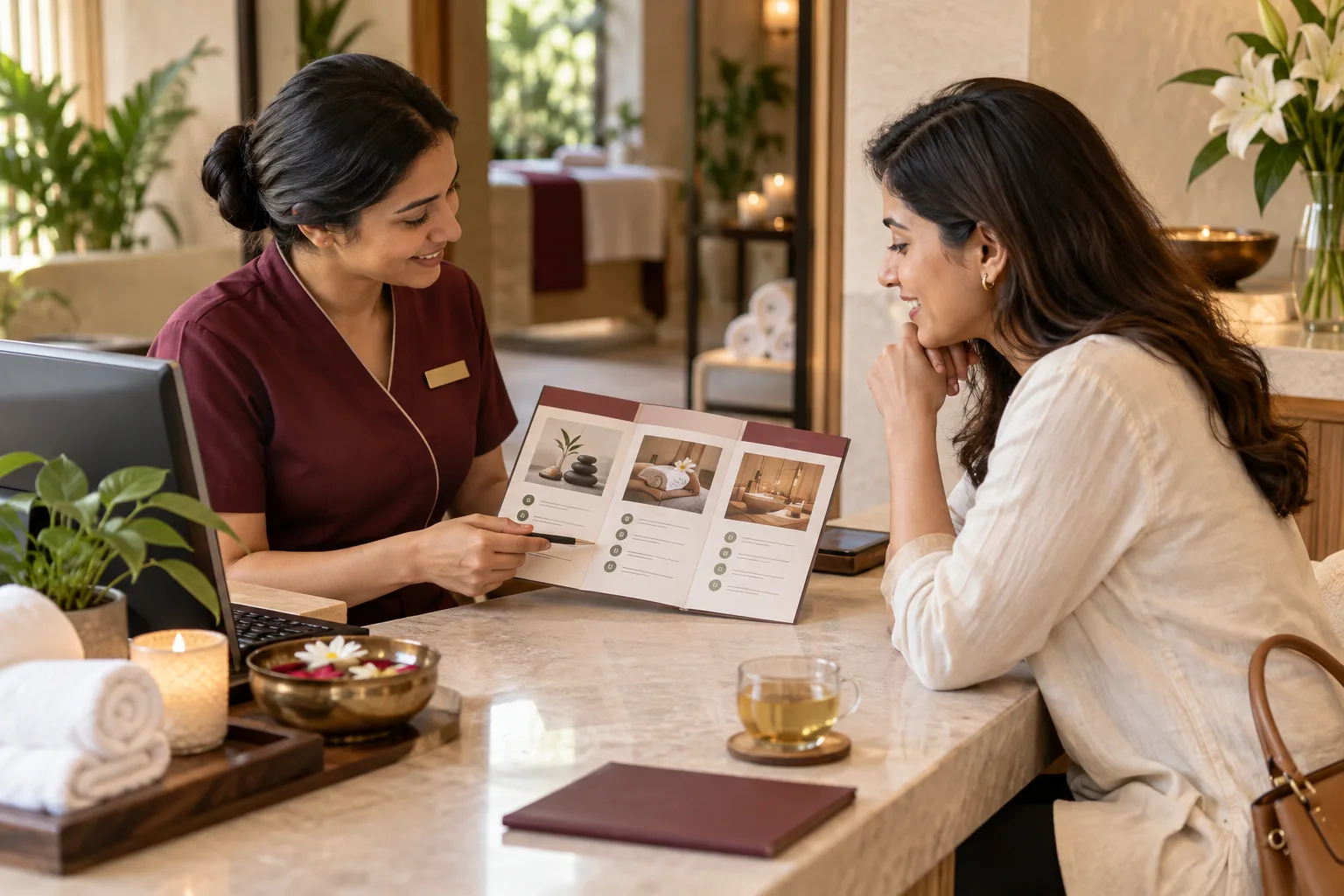 6 min read · 19 Aug 2026How to sell spa membership packages that customers renewBuild spa membership packages around how often customers already visit, with a saving they can see. Offer them after a session; follow up before renewal.
 7 min read · 3 Jun 2025How to reactivate dormant customersDefine dormant against your own purchase interval, then call your highest-value lapsed customers to ask why they stopped before offering any discount.
More for spas
Related work to consider.
Closest to this: customers after the sale
Also for spas
Or start from the overview: sales and marketing for spas.
Your next practical step
Tell us what you are trying to grow, and we will read it before we call.
Eight short steps, mostly taps. Skip anything you would rather answer on the call.