Electric scooter dealers · Website
Build a site that answers charging, range and service before the buyer calls.
A website for an electric scooter dealer is the page a buyer reads before deciding to visit. It should show the models, the workshop, the charging advice and a simple way to book a ride. GullySales plans and builds the pages so they load on ordinary phones and lead to a recorded enquiry.
Scope, fee, reporting and term are agreed in writing after we have read your brief and spoken to you.
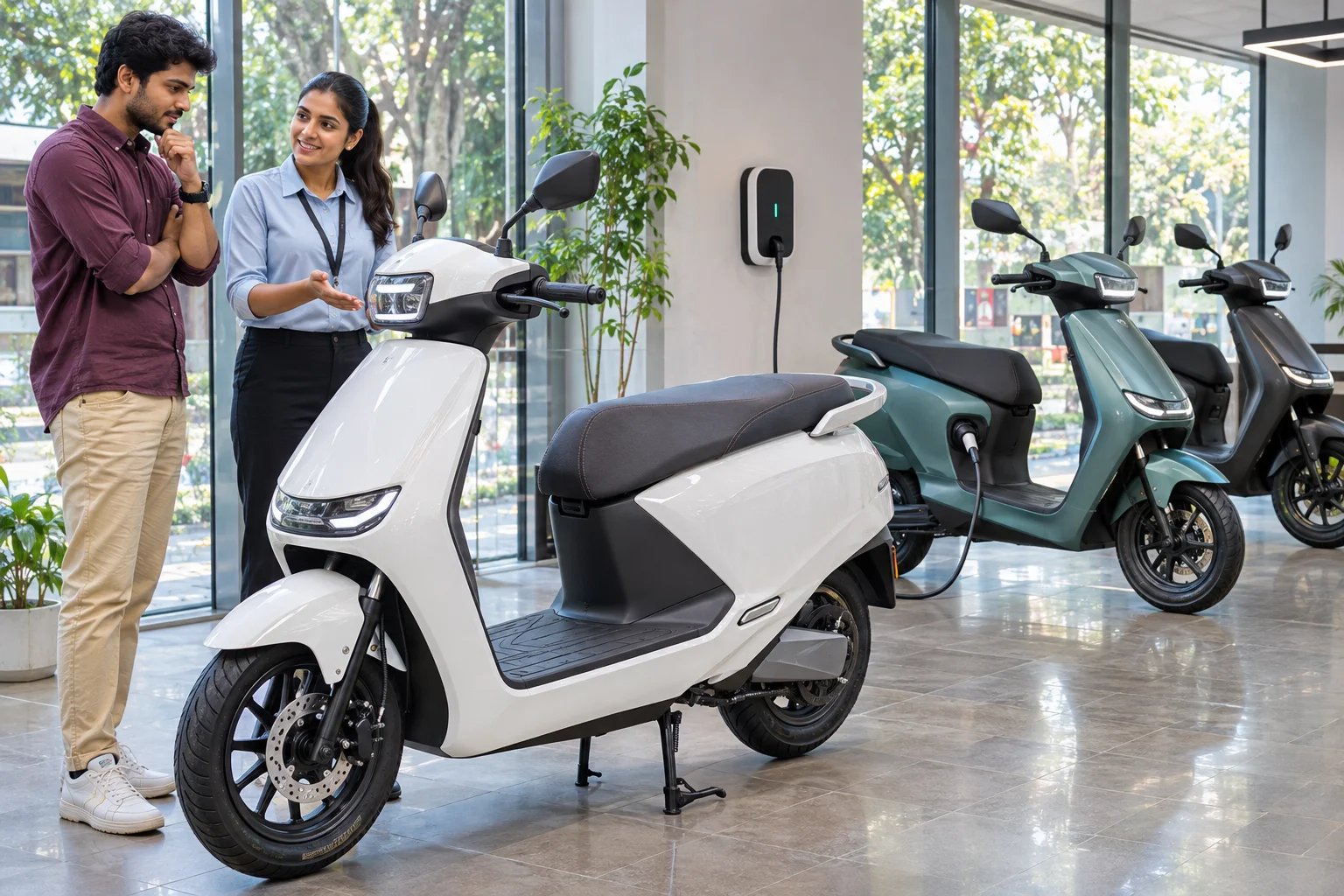
What website means
A website is the page a customer lands on after searching, clicking an advert or scanning a code, and it decides whether they call or leave. GullySales builds and maintains sites that load quickly, explain the offer plainly and make the enquiry form or phone number easy to find.
Also for electric scooter dealers
- SEO for electric scooter dealers
- Local SEO for electric scooter dealers
- Lead generation for electric scooter dealers
- Social media marketing for electric scooter dealers
- Content marketing for electric scooter dealers
- Buyer personas for electric scooter dealers
- CRM for electric scooter dealers
- Follow-up systems for electric scooter dealers
Sales and marketing for electric scooter dealers, the overview.
Last updated 14 Nov 2026.
For electric scooter dealers
Where it usually goes wrong, and what we would do.
“The buyer opens it on a phone, on mobile data”
A heavy site with large images and slow scripts loses the visitor before the models appear. A light page with clear headings and a tap-to-call button gets read.
“The home page is a brand copy”
Some dealer sites reproduce the manufacturer's banner and nothing else. A buyer wants the showroom address, the technician, the opening hours and a way to book a ride.
“Price and offer pages go out of date”
A page listing prices that changed last season damages trust. Show the price rule, state when it was last checked and link to the brand for current figures.
“There is no obvious next step”
A visitor who finishes a model page with no booking button leaves. Every page should end with one clear action: book a ride, message on WhatsApp or call.
What we do
What we deliver for electric scooter dealers.
The work available for this need. We agree the deliverables and responsibilities for your engagement in writing.
A site structure for a dealer
Pages for models, showroom, workshop, charging advice, fleet enquiries and contact, arranged so a visitor finds each in one tap.
Result: A buyer reaches any key page from the home screen.
Model pages with your own content
Specifications as published by the brand, plus your ride route, service arrangement and a booking button.
Result: Each page carries something specific to your showroom.
A workshop and team page
Photographs of the bay, the technician's name, what is repaired on site and opening hours.
Result: A worried buyer sees who will repair the scooter.
A ride-booking form linked to the CRM
A short form that records name, phone, model and preferred slot and alerts a named person.
Result: Every form submission creates a record and an owner.
Performance and basic accessibility checks
Image sizing, readable text, tap-friendly buttons and language options checked on common phones.
Result: The site works on a mid-range handset.
How the result is measured
- Page load time
- Bounce rate
- Enquiries from the website
Recorded as a baseline before work starts, so every later report has an honest comparison.
Searches your buyers type
Answer the question that opened the page, then offer a ride.
- electric scooter range in real use
- A page that gives the brand's figure, says what changes it and invites the buyer to ride on a real route.
- electric scooter charging at home
- A page for buyers who ask about plug points and safe use, with a number for the workshop.
- electric scooter service centre and warranty
- A service page with the workshop address, what is covered by the brand and where questions go.
- book a test ride electric scooter
- A short form with the model and a time, which feeds the register and gets a reply.
- scooters for delivery partners
- A fleet page with a form for the number of scooters and the business name.
Who it is for
This is written for these electric scooter dealers.
- Authorised single-brand electric scooter showrooms
- Electric-only dealers carrying two or three brands
- Petrol two-wheeler dealers adding an electric range
- Dealers selling low-speed electric scooters
- Dealers who supply scooters to delivery fleets and small businesses
- Small-town dealers appointed by newer electric scooter brands
- Dealers who also run battery swapping or charging points
Before you decide
When this may not be the right fit.
- The brand gives you a dealer page and bars changes, so a site of your own would conflict with its rules.
- Phone signal in your area is poor and buyers use chat, in which case a form would be less useful than a message button.
- Nobody can answer the ride form on the day, and the page would collect names nobody follows up.
Before you decide
Agree the work. Know how to judge it.
Websites for electric scooter dealers: use these checks to prepare, choose the scope, and review what changes.
Bring the right evidence
List the pages that support a buying decision and the actions visitors must complete. Keep examples of failed forms, unclear product information, and questions your team answers repeatedly.
Make the scope clear
Agree the page list, content ownership, integrations, and who controls the domain and hosting. Include redirects and existing search traffic in a redesign brief, before changing addresses.
Check the work in use
Complete a real enquiry journey on a phone and a laptop. Check that the confirmation appears, the enquiry reaches the right person, and tracking records the action once.
Know when to change course
If visitors can enquire but the team does not follow up, start with the sales handover. A larger website will not resolve that delay.
These are discussion points, not a fixed package. GullySales confirms the deliverables, responsibilities, fee, and term in writing after reading your brief and speaking with you.
Before we start
What to have ready before the work starts.
The records, access and decisions this work needs from electric scooter dealers. Anything missing is noted in the written scope, with who will supply it.
- The domain and hosting details
- We need to know who owns the website address and where it is hosted. A paper receipt or an email from the registrar is enough. If an old agency holds it, recover it first; otherwise the new site cannot go to your address.
- Specifications the brand has confirmed to you
- Model pages state what the brand has told you in writing. Bring the dealer brochure or the portal's sheet. Where range or battery figures are given as claims, we label them as the brand's. With nothing, pages describe the scooter plainly and leave numbers to the brand.
- Photographs of the showroom, workshop and team
- A dealer's site gains trust from a real place and real faces, with the people's agreement. Phone pictures in daylight are acceptable. Without them, we use few images and the site loads faster but feels bare.
- Your pricing and offer policy
- Tell us whether prices go on the site, and who updates them. An outdated price page does harm. A dealer can show a starting range and ask for a call. Without a decision, we leave prices off and invite an enquiry instead, and the page says plainly that the showroom will quote on the day.
- A named person to maintain the site
- After launch someone must change hours, offers and models. Name the person and what access they will have. If nobody is named, the site ages and the first wrong detail costs a visit.
How it works
How the website work runs
The work itself, in order. How an engagement starts, from your brief to a written scope, is set out on our method page.
- 1
List what a buyer needs before visiting
We write down the questions a buyer wants answered before visiting: which models, where to charge, how service works, where you are and how to book a ride. You add what your desk is asked that we missed. This list, not a template, decides which pages the site needs.
- 2
Sketch the pages on paper with the manager
We sketch the home page, one page per model, the workshop page, a charging and range page, and a ride-booking page, and place them in the order a buyer would look. You mark what to cut. Because visitors arrive on a phone, we draw the narrow screen first.
- 3
Gather photographs, model details and workshop facts
We collect your own pictures, the model specifications as the brand has confirmed them to you, the workshop's services and the names of the people a buyer will meet. Anything unconfirmed is left out. You supply the missing pieces, and we do not fill a gap with the brand's poster. Where a figure is the brand's claim, the page labels it as the brand's claim and links to the brand.
- 4
Read the test site on a cheap phone
We build the pages on a test address and open them on an ordinary phone over mobile data. You and the manager read every page and mark errors in model names, hours and addresses. We fix what you find before anything is public, and the person who answers the showroom phone reads the contact page aloud to check that the number rings where it should.
- 5
Connect the ride-booking form to your log
The form asks for the model, the preferred day and the buyer's main worry, and each submission lands in your enquiry log with a notification to the desk. We submit tests from a phone on mobile data and from a laptop, and watch them arrive, including one with a missing field to see that the form refuses it politely. You confirm that the right person picks each up.
- 6
Go live and check the real numbers
After launch we compare the first weeks' visits, form submissions and calls with the count recorded before. You and we look at which pages buyers opened before booking a ride and which they left. Together we decide what to rewrite, and how price and offer pages will be kept current.
Where this fits
Three pieces of sales work, in this order.
This work sits inside sales process design, at stage 1, prospecting and lead generation. The audit comes before it, and sales management keeps it running.
Step 1
Sales audit
Find where deals are being lost and what to fix first.
Start here if you cannot say where orders are lost.
Step 2 · you are here
Sales process design
One written way to sell, from first enquiry to repeat order.
Start here if every salesperson sells differently.
Step 3
Sales management
A target, a review routine and someone who owns the number.
Start here if the team has targets and no routine.
FAQ
Questions owners ask before they call.
Not here? More answers, or ask on WhatsApp.
Do we need our own site if the brand gives us a page?
Can the site be in our local language?
Who maintains the site afterwards?
Should the site be in the local language as well?
Should the site show the price of each scooter?
Can the site take bookings and payments online?
How long is the contract?
How soon will we see results?
Who will actually do the work?
What do you need from us?
More for electric scooter dealers
Related work to consider.
Closest to this: search and visibility
Also for electric scooter dealers
Or start from the overview: sales and marketing for electric scooter dealers.
Your next practical step
Tell us what you are trying to grow, and we will read it before we call.
Eight short steps, mostly taps. Skip anything you would rather answer on the call.