Amusement parks and family entertainment centres · Digital marketing
Plan the year around the groups and families who fill the gates.
Digital marketing for an amusement park or family entertainment centre combines search, map presence, social, ads and messages to bring families, groups and parties to the gate. GullySales builds a plan around your calendar and measures it by bookings.
Scope, fee, reporting and term are agreed in writing after we have read your brief and spoken to you.
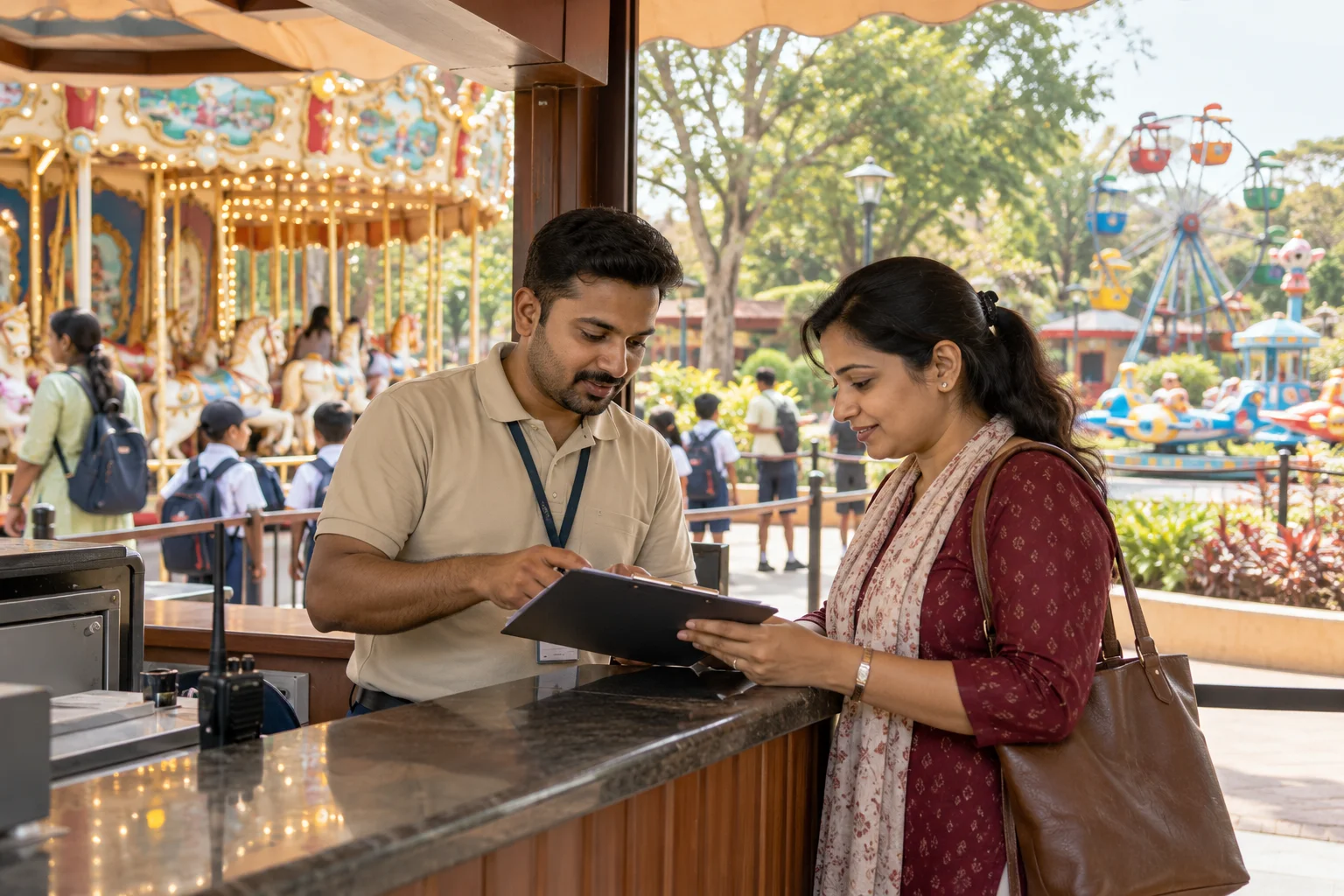
What digital marketing means
Digital marketing is the combined work of search, social media, advertising and website channels running together rather than as separate projects with separate people. GullySales runs these as one connected system so a change in one channel, such as a new offer, is reflected everywhere at once.
Also for amusement parks and family entertainment centres
- Buyer personas for amusement parks and family entertainment centres
- Lead generation for amusement parks and family entertainment centres
- SEO for amusement parks and family entertainment centres
- Local SEO for amusement parks and family entertainment centres
- Social media marketing for amusement parks and family entertainment centres
- Content marketing for amusement parks and family entertainment centres
- CRM for amusement parks and family entertainment centres
- Follow-up systems for amusement parks and family entertainment centres
Sales and marketing for amusement parks and family entertainment centres, the overview.
Last updated 22 Oct 2026.
For amusement parks and family entertainment centres
Where it usually goes wrong, and what we would do.
“Demand has a calendar”
School terms, exam breaks, festivals and weather decide attendance. A marketing plan should follow that calendar, with effort placed ahead of each season, not during it.
“Ads need a clear booking page”
A campaign that sends visitors to a home page with no ticket or group route wastes spend. The page must match the ad and make the next step plain.
“Different offers for different days”
A weekday group offer and a weekend family offer need different messages and different channels. One plan for all days pulls in the wrong people.
“Measurement should follow bookings”
Page views and likes are cheap. Tickets, group bookings and party enquiries are the measure. The plan should record where each came from.
What we do
What we deliver for amusement parks and family entertainment centres.
Every deliverable, what it covers for you, and the result it is there to produce. Nothing here is an extra.
Annual marketing calendar
A calendar of campaigns tied to terms, holidays, festivals and events.
Result: Each campaign has a start before the booking season.
Booking page foundation
Ticket, group and party pages set up and tested as the base for all campaigns.
Result: Every campaign lands on a page that can take a booking.
Paid campaign plans
Search and social ads aimed at families, schools and offices, with budget set by you.
Result: Spend can be compared with bookings.
Source tracking
Every booking and enquiry tagged with the channel that brought it.
Result: The owner sees which channel earns bookings.
Season review
A meeting after each season to see what worked and what to change.
Result: Next season's plan starts from this season's record.
Holiday and festival offer pages
One page for each offer, such as the summer-break pass, the Diwali weekend and the school picnic season, each with its dates, what is included and a booking button, kept live for the period and taken down when it ends.
Result: An expired offer never stays in front of a family.
Map and review upkeep
Fresh photographs of rides and queue areas on the Maps profile, opening hours changed for each holiday, and a routine for replying to reviews that mention a ride closure or a long wait.
Result: The profile shows today's hours and every complaint gets a reply.
How the result is measured
- Enquiries across channels
- Cost per enquiry overall
- Channel mix by contribution
Recorded as a baseline before work starts, so every later report has an honest comparison.
Who it is for
This is written for these amusement parks and family entertainment centres.
- Theme parks and water parks on the outskirts of large cities
- Mall-based family entertainment centres with games and soft play
- Trampoline, adventure and kids activity parks
- Amusement parks attached to resorts and farmhouses
- Fairs, exhibitions and seasonal carnival grounds
- Snow-themed and indoor attraction parks
- School and college picnic organisers
- Corporate outing and employee family-day planners
- Residents' associations and apartment societies planning group trips
- Birthday and kitty party hosts
How it works
How the digital marketing work runs
The work itself, in order. How an engagement starts, from your brief to a written scope, is set out on our method page.
- 1
Understand the objective
We agree the one thing this campaign needs to achieve before choosing any channel.
- 2
Audit available channels
We assess which channels are realistic to run well within the budget and timeline.
- 3
Strategise the central idea
One message and offer is developed that will work across every planned channel.
- 4
Implement across channels
Each channel receives its own adapted version, launched on a shared timeline.
- 5
Measure as one campaign
Results from every channel are combined into a single report against the original objective.
Where this fits
Three pieces of sales work, in this order.
This work sits inside sales process design, at stage 0, foundation. The audit comes before it, and sales management keeps it running.
Step 1
Sales audit
Find where deals are being lost and what to fix first.
Start here if you cannot say where orders are lost.
Step 2 · you are here
Sales process design
One written way to sell, from first enquiry to repeat order.
Start here if every salesperson sells differently.
Step 3
Sales management
A target, a review routine and someone who owns the number.
Start here if the team has targets and no routine.
FAQ
Questions owners ask before they call.
Not here? More answers, or ask on WhatsApp.
Where should a park start?
How much should we spend?
Can digital marketing help with off-peak days?
How long is the contract?
How soon will we see results?
Who will actually do the work?
What do you need from us?
What if we are not happy with the work?
More for amusement parks and family entertainment centres
Everything else we would do for you.
Closest to this: strategy and research
Also for amusement parks and family entertainment centres
- Lead generation for amusement parks and family entertainment centres
- SEO for amusement parks and family entertainment centres
- Local SEO for amusement parks and family entertainment centres
- Social media marketing for amusement parks and family entertainment centres
- Content marketing for amusement parks and family entertainment centres
- CRM for amusement parks and family entertainment centres
Or start from the overview: sales and marketing for amusement parks and family entertainment centres.
Your next practical step
Tell us what you are trying to grow, and we will read it before we call.
Eight short steps, mostly taps. Skip anything you would rather answer on the call.