Domestic tour operators · CRM
Keep every enquirer, quote and traveller in one place your whole team can read.
A CRM for a tour operator is the single record of who enquired, what was quoted, who paid and who travelled. GullySales sets up the fields, the stages and the habits so that WhatsApp chats stop being the only memory of the business.
Scope, fee, reporting and term are agreed in writing after we have read your brief and spoken to you.
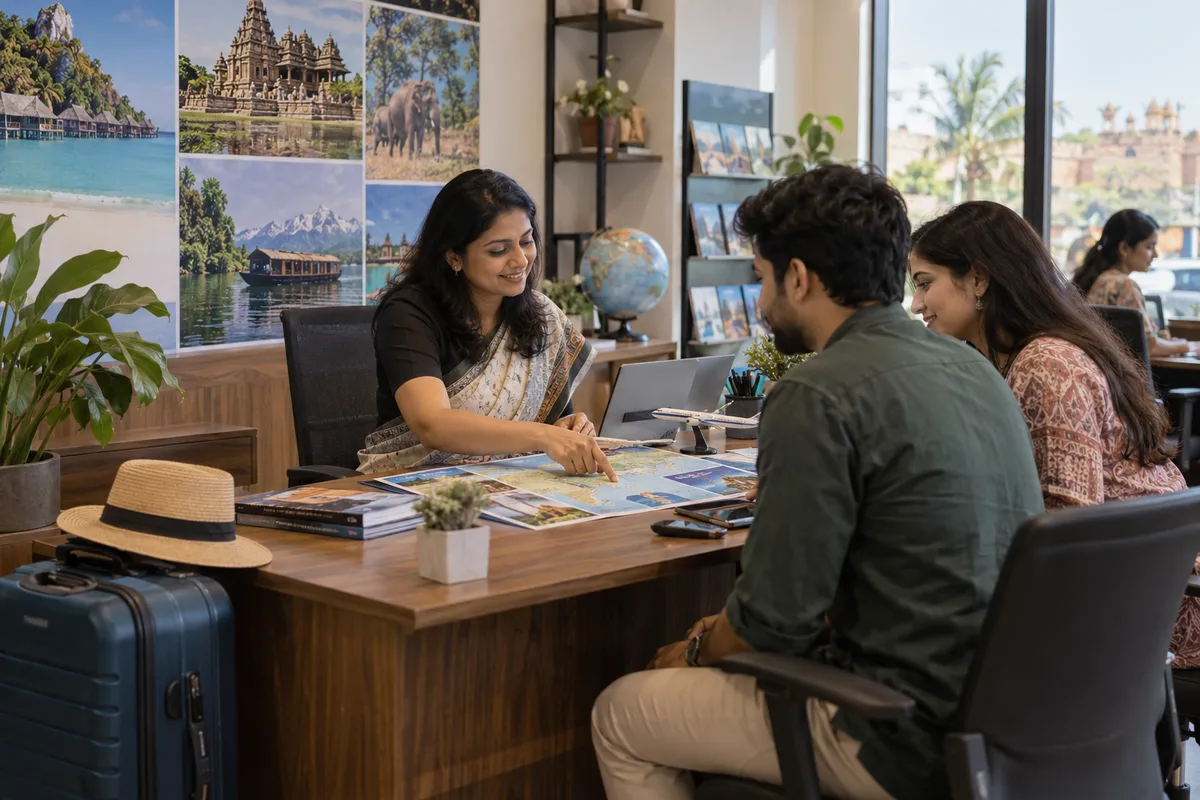
What CRM means
A CRM is the record where every enquiry, call and quote is kept against a customer, replacing separate notebooks, spreadsheets and memory. GullySales sets up or cleans an existing CRM and reports from it by enquiry outcome rather than by activity logged.
Also for domestic tour operators
- Lead generation for domestic tour operators
- Follow-up systems for domestic tour operators
- SEO for domestic tour operators
- Local SEO for domestic tour operators
- Social media marketing for domestic tour operators
- Content marketing for domestic tour operators
- Buyer personas for domestic tour operators
- WhatsApp marketing for domestic tour operators
Sales and marketing for domestic tour operators, the overview.
Last updated 18 Oct 2026.
For domestic tour operators
Where it usually goes wrong, and what we would do.
“The business lives in one phone”
Quotes, deposits and traveller details sit in the owner's WhatsApp. When that person is on a trip, nobody can answer a returning guest. A shared record lets anyone on the team see where each enquiry stands.
“Enquiry stages differ from a shop's”
An enquiry moves from first message to dates known, to quote sent, to deposit paid, to documents collected, to travelled. Each stage needs a next step and an owner. A flat list of names hides which quotes are waiting.
“Seat inventory belongs beside the lead”
For a fixed departure, the record must show seats sold, seats held and seats open, next to the people who asked. Without that link, nobody knows whom to message when a seat opens.
“Past travellers are your best list and the worst kept”
The guest who travelled to Rajasthan two years ago is a prospect for Goa. If the record holds only a name, you cannot write to them sensibly. Store trip, month, group size and what they said at the end.
What we do
What we deliver for domestic tour operators.
Every deliverable, what it covers for you, and the result it is there to produce. Nothing here is an extra.
A simple CRM set up for trip sales
Fields for dates, headcount, car or seat, destination, source and quote status.
Result: Every enquiry has the same details recorded in the same place.
Stages and next steps
A pipeline from first message to travelled, each with a named owner and a next action.
Result: You can list the quotes waiting for a reply.
Departure and seat view
A view linking each departure to the people interested and the seats left.
Result: Open seats sit beside the names to contact.
A traveller history record
Past trips, group size, preferences and review status held for each guest.
Result: A returning guest is greeted with their own history.
Team habits
A short rule for logging a chat the same day, and a handover note for trips in progress.
Result: A colleague can pick up a conversation without asking the owner.
How the result is measured
- Enquiries logged in the CRM
- Data completeness
- Reports generated from CRM data
Recorded as a baseline before work starts, so every later report has an honest comparison.
Who it is for
This is written for these domestic tour operators.
- Operators running fixed group departures to the hills and the Northeast
- Private family and friends trip planners
- South India circuit specialists covering Kerala, Karnataka and Tamil Nadu
- Rajasthan and Gujarat heritage and desert tour operators
- Goa and beach holiday package sellers
- Himalayan and Ladakh circuit operators
- Andaman and island tour operators
- Weekend getaway and short-break organisers from metro cities
- Women-only and solo-traveller group trip organisers
- Wellness and Ayurveda retreat package sellers
How it works
How the CRM work runs
The work itself, in order. How an engagement starts, from your brief to a written scope, is set out on our method page.
- 1
Map the sales process
We record how a deal actually moves from enquiry to close in your business today.
- 2
Configure stages and fields
The CRM's pipeline and fields are built to match that process exactly, not a generic template.
- 3
Set up automations
Reminders, assignment rules and follow-up triggers are configured so routine steps happen without manual effort.
- 4
Test with real deals
We run the configuration against actual current deals to catch gaps before the whole team relies on it.
Where this fits
Three pieces of sales work, in this order.
This work sits inside sales management. A target, a review routine and someone who owns the number.
Step 1
Sales audit
Find where deals are being lost and what to fix first.
Start here if you cannot say where orders are lost.
Step 2
Sales process design
One written way to sell, from first enquiry to repeat order.
Start here if every salesperson sells differently.
Step 3 · you are here
Sales management
A target, a review routine and someone who owns the number.
Start here if the team has targets and no routine.
FAQ
Questions owners ask before they call.
Not here? More answers, or ask on WhatsApp.
Which CRM tool should we use?
Can the CRM link to WhatsApp?
Who should update the CRM?
How much does it cost?
How long is the contract?
How soon will we see results?
Who will actually do the work?
What do you need from us?
What if we are not happy with the work?
More for domestic tour operators
Everything else we would do for you.
Closest to this: leads and follow-up
Also for domestic tour operators
Or start from the overview: sales and marketing for domestic tour operators.
Your next practical step
Tell us what you are trying to grow, and we will read it before we call.
Eight short steps, mostly taps. Skip anything you would rather answer on the call.