Industries · Hospitality, Travel & Food
Fill the tables on the quiet days, not only the ones that fill themselves.
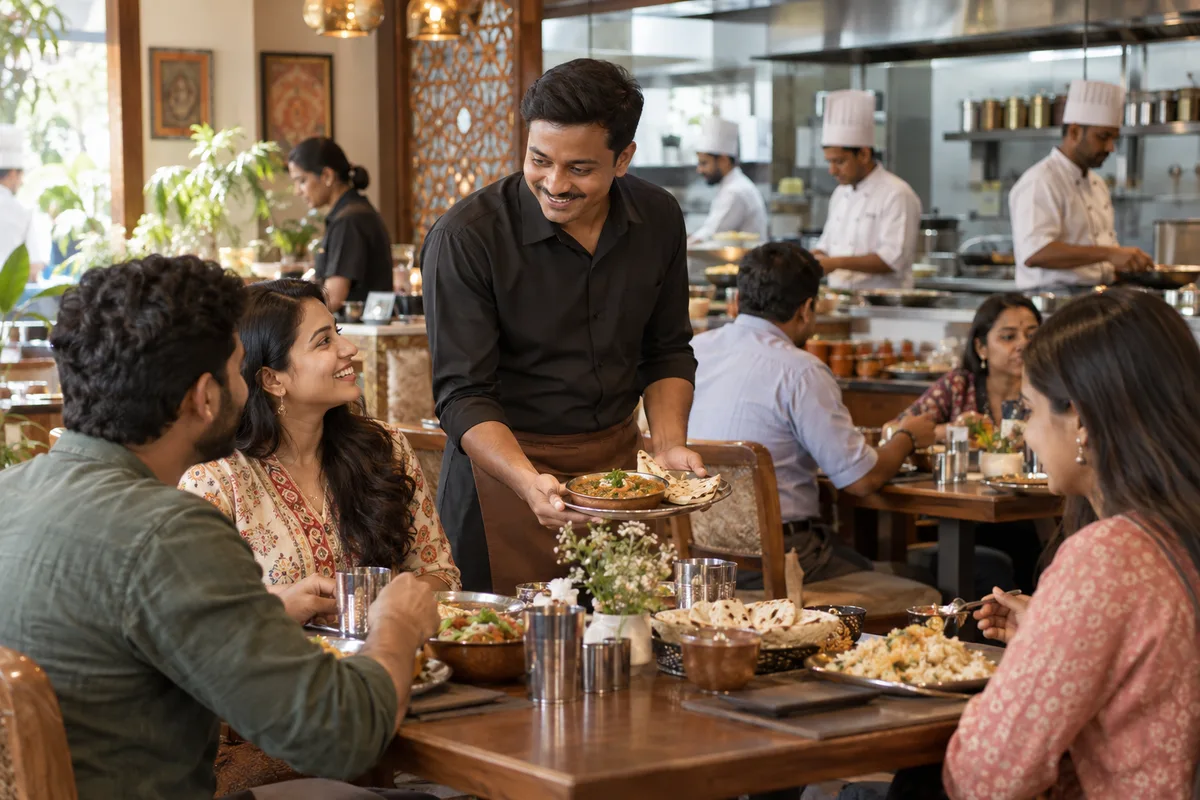
A sit-down restaurant sells a table, a room and a meal in that order. A fine dining room, a Sunday family place, a pure vegetarian kitchen and a regional specialist look different, but each is chosen before anyone walks in, by someone looking at a listing, a photograph and a handful of reviews.
Scope, fee, reporting and term are agreed in writing after we have read your brief and spoken to you.
In one paragraph
Fine dining, casual, family, vegetarian, non-vegetarian, multicuisine and regional restaurants all sell a table with a room around it. This page covers what they share and links to each trade.
The sales side is as plain as the marketing side. A call for eight on Saturday, a message about a birthday, a question about Jain food: each is an enquiry that becomes a booking or goes to the next restaurant. Below are the problems all seven trades carry, followed by each trade and how its own page treats it.
Last updated 18 Oct 2026. Rules on what you may advertise differ by trade and change. This page describes them in general terms only, so check the current position with your own adviser or regulator.
8 kinds of business
Each kind of business in sit-down restaurants sells a little differently.
Open the page closest to yours for how its buyers choose and what we would fix first.
Fine dining restaurants
A reservation for an anniversary or a client dinner is the sale. The listing has to match the room, bookings leak at the phone, private dining needs its own pitch and discount apps cheapen the room.
Read the page for fine dining restaurantsCasual dining restaurants
A group chat picks the place, so the restaurant has to be easy to find and easy to book for six. Monday to Thursday is thin, and app discounts eat into the margin.
Read the page for casual dining restaurantsFamily restaurants
Several generations sit at one table and check parking, space, cleanliness and children's food first. Sunday queues turn people away, and weekday lunches and celebrations need a reason to come here.
Read the page for family restaurantsVegetarian restaurants
The promise is a vegetarian kitchen, and it gets buried in the listing. Jain and fasting options, a plain statement of how food is cooked and the pilgrim and festival seasons belong up front.
Read the page for vegetarian restaurantsNon-vegetarian restaurants
One craving starts the search, so the signature biryani, kebab or seafood plate needs good photographs and a listing that shows late. Shravan and fasting periods dip, while Ramzan and festival surges need a plan.
Read the page for non-vegetarian restaurantsMulticuisine restaurants
A long menu hides what you are good at. The job is to name the three dishes people should come for, so a mixed group chooses you with confidence.
Read the page for multicuisine restaurantsRegional cuisine restaurants
Homesick migrants and curious locals search by dish and region, so authenticity shows in the named dishes, the language of the menu and who cooks.
Read the page for regional cuisine restaurantsBars, pubs and microbreweries
A group books the venue that answers on WhatsApp first with a table plan that fits their occasion, because the evening is judged on seating, music, food and the ride home, not on the drink.
Read the page for bars, pubs and microbreweriesWhat they share
What usually goes wrong across sit-down restaurants.
Whichever of these you run, you will probably recognise most of them.
“Our listing does not say what we are for”
A buyer deciding between five restaurants reads the Maps listing, the first photographs and the dish names. Whether we are the anniversary room, the Sunday family table, the pure vegetarian kitchen or the place for Malabar biryani, the listing has to say it in the first screen. If it does not, we are one more restaurant on the list.
“Bookings reach us by phone and live in memory”
Calls for a table of eight, a birthday or a community lunch are taken by whoever is near the phone, in the middle of service. The date, headcount and advance are written on a scrap or not at all. Missed calls are bookings that went to another restaurant.
“The quiet days have no reason to visit”
Saturday night, Sunday lunch and festival weeks fill without effort. Monday to Thursday, fasting months and the monsoon do not, while rent and staff run at the same rate. Nobody has told a buyer why to come on those days.
“Reviews are read before the menu”
The review score and the last few comments decide the shortlist. One bad Saturday sits at the top for weeks, and a reply that argues makes it worse. Nobody on our team owns reading and answering them.
“If we sit on Swiggy or Zomato, the app shows a different restaurant”
The delivery listing carries its own menu, photographs, discounts and ratings. They can cheapen a fine dining room, pile discounts on a casual one or mix a vegetarian kitchen into a general list. Guests judge us by that page without having seen the room.
“A group decides in a chat, and we are not in it”
One person seldom makes the booking alone. A friend, a cousin or an office admin proposes three names in a group chat and the group picks. The restaurant that is easy to find, easy to book for six and easy to explain in one line is the one that gets picked.
Where to start
What to fix first in sit-down restaurants.
In the order we would look at them. Your own enquiry records may change the order, and we would say so.
- Rewrite the first screen of the Google listing so it names the occasion or the dish you want to be chosen for, with current photographs of the room and the plate.
- Put one WhatsApp number on the listing for table and group bookings, and record each in one place with date, headcount, advance and who confirmed.
- Pick the two quietest stretches of your week or year and give each one a reason to visit that does not depend on a flat discount.
- Name one person who reads and answers reviews, and decide the reply rules in advance.
- Check the delivery app listing against the room: same name, honest photographs, and only the dishes that travel well.
- Record where each booking came from, so you know whether Maps, the apps, word of mouth or a returning guest filled the room.
Related services
The work that usually comes up.
Which of these you need is decided after we have read your brief.
- Local SEOShow up on the map when someone searches near your shop.
- Google Business Profile managementBe the pin on the map that shows correct hours and actually answers reviews.
- Online review generation and managementYour customers are happy, and your Google page still shows only a few reviews.
- Lead response and follow-upMore enquiries turned into orders, for teams that reply late and follow up once.
- Festive and seasonal advertisingBook the Diwali slot in August, because by October there is nothing left.
- WhatsApp sales processThe deal lives in a salesperson's personal WhatsApp and leaves when he does.
- Hyperlocal advertisingHow far a customer will travel to you decides this plan, not the channel.
- Customer reactivationWin back the customers who stopped ordering and were never asked why.
FAQ
Questions about sit-down restaurants.
Not here? More answers, or ask on WhatsApp.
Should a restaurant with a dining room list on Swiggy and Zomato at all?
How should a restaurant take group and party bookings?
What should the Google listing show first?
How do we answer a bad review?
Do vegetarian, Jain and fasting-day customers need separate handling?
What do we send GullySales before we talk about a sit-down restaurant?
How much does it cost?
How long is the contract?
How soon will we see results?
Who will actually do the work?
More in Hospitality, Travel & Food
Looking for a single trade? See every industry.
Your brief
Tell us what you need, and we will read it before we call.
Eight short steps about your business, what you want and who decides. Most questions are a tap, and you can skip any you would rather answer on the call.
Your next practical step
Tell us what you are trying to grow, and we will read it before we call.
Eight short steps, mostly taps. Skip anything you would rather answer on the call.