Cafes and coffee shops · Coupon and voucher design
Draw a coupon the barista can accept without calling the manager.
Coupon and voucher design for a cafe is the artwork for the printed card, cup-sleeve slip, gift voucher or on-screen code that a customer brings back to the counter. GullySales designs the offer, the code and the conditions so the person behind the till can accept or refuse it at a glance, and hands over print and screen files.
Scope, fee, reporting and term are agreed in writing after we have read your brief and spoken to you.
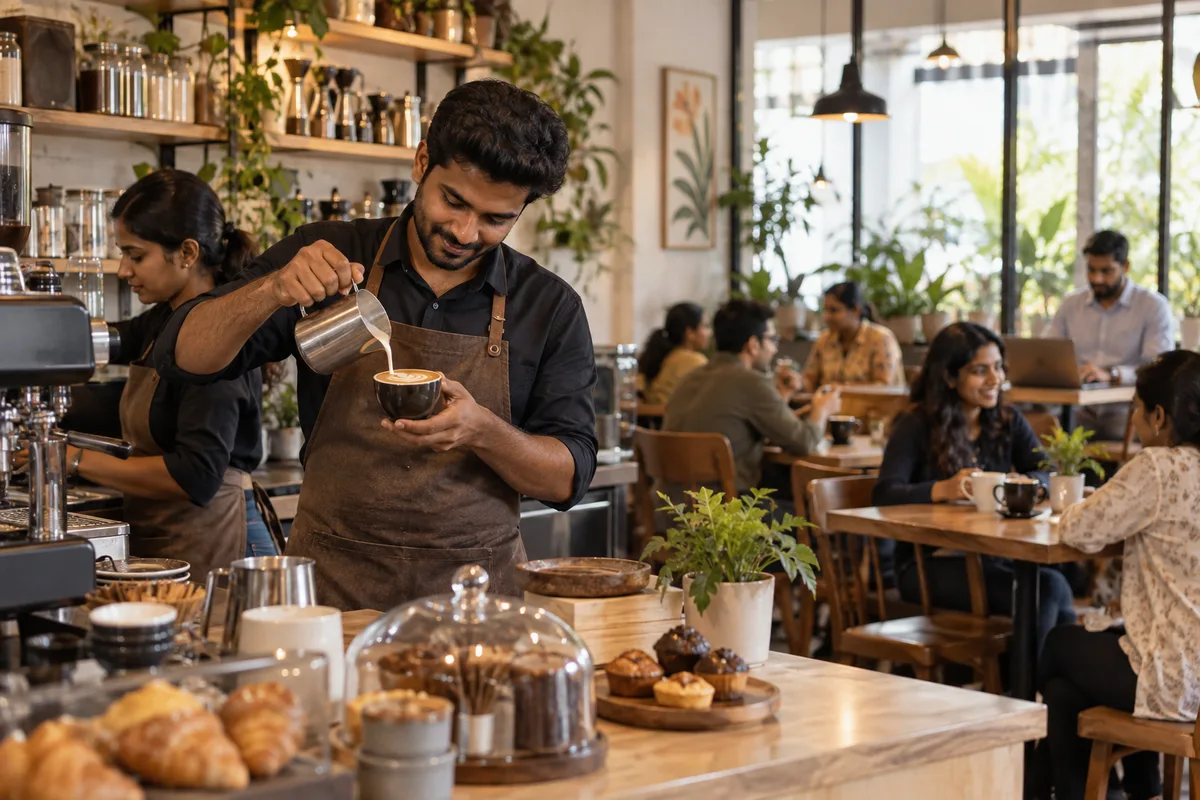
What coupon and voucher design means
Coupon and voucher design is the artwork for the printed or on-screen piece a customer brings back to claim an offer or a stated value. GullySales designs the coupon, the voucher or the digital coupon so the offer, the code and the conditions read clearly, and hands over print and screen files your counter staff can redeem without a question.
Also for cafes and coffee shops
- PPC ads for cafes and coffee shops
- Meta advertising for cafes and coffee shops
- Vehicle branding graphic design for cafes and coffee shops
- Retail store signage design for cafes and coffee shops
- Point-of-purchase display design for cafes and coffee shops
- Branding for cafes and coffee shops
- Buyer journey for cafes and coffee shops
- Buyer personas for cafes and coffee shops
Sales and marketing for cafes and coffee shops, the overview.
Last updated 14 Nov 2026. Rules for this trade differ by state and professional body, and they change. We describe restrictions in general terms, so check the current position with your own council or adviser before you publish anything.
For cafes and coffee shops
Where it usually goes wrong, and what we would do.
“The counter is the test”
A coupon is judged at the till, with a queue behind the customer and a barista holding a cup. If the offer is unclear, the code is hard to find or the expiry is hidden, the barista either guesses or sends for the manager. Both cost goodwill. Designing around that moment means the offer, the validity and the way it is accepted are readable from arm's length, and a staff member needs no briefing to accept one.
“A slow-hour offer must be obvious”
Cafe offers exist to fill a quiet window, such as a weekday afternoon or a work-from-cafe slot. If the hours are in small print, customers arrive at the wrong time, are refused and leave unhappy. The time window belongs in the main reading order next to the offer, in plain words and a clear shape, so a customer knows before they walk in whether today works.
“Paper, cup sleeves and screens differ”
A coupon on a card, one printed on a cup sleeve and one sent as a message each have different space, different print quality and a different way of being checked. A drink on a sleeve has room for a line and a code. A voucher for a gift needs a value area and a place for a name. One design stretched across all three fails on at least one of them.
“Misuse is a design problem too”
Photocopied coupons, screenshots used twice and expired cards pushed across the counter are everyday trouble for a cafe. Design cannot stop misuse alone, but it can reserve a clear place for a serial number, a stamp or a staff initial, and make the expiry hard to miss. What a cafe accepts is its own decision, and we draw the piece to match it.
What we do
What we deliver for cafes and coffee shops.
The work available for this need. We agree the deliverables and responsibilities for your engagement in writing.
Redemption brief
A one-page record of how the piece is accepted at your counter: who takes it, whether it is scanned, typed in or stamped, and what the barista checks first. We draw the coupon around that route so staff act on it without extra instruction.
Result: A new barista can read the brief and accept the coupon correctly on the first shift.
Printed coupon and card layouts
Designed layouts for the formats you have chosen, such as a small card, a flyer tear-off or a slip tucked in a takeaway bag. Each has its own zones for the offer, the validity and the conditions, sized to the stock and the printer you will use.
Result: The offer, the time window and the expiry can all be read from arm's length on the printed piece.
Gift voucher with value area
A voucher for a gift or a stated amount, with a clear place for the value, the recipient's name, a serial number and the conditions. The layout makes the difference between a gift and a discount obvious, so a customer is never unsure which one they hold.
Result: A staff member can tell a gift voucher from a discount coupon at a glance.
Code, serial and scan zones
Reserved areas of correct proportion for a barcode, a QR code, a serial number or a typed code, with clear space around each. The code comes from your till or your printer; the layout is built to carry it and to scan reliably.
Result: The code area scans or reads correctly on a proof printed at the final size.
Screen version for messages
A version of the coupon for a message, an email or a social post, sized for a phone and readable without zooming. The offer and the code sit in the first view, and the conditions follow below.
Result: The coupon can be read on a phone screen at normal size without pinching or scrolling for the code.
Print-ready and editable files
Press-ready files with the bleed and cut marks your printer asks for, and editable files where the dates, the offer and the code can be changed. A short note lists fonts, colour values and who to ask for a reprint.
Result: The printer accepts the files without a query, and your team can change a date without a designer.
How the result is measured
- Coupons or vouchers redeemed against those issued
- Vouchers left unredeemed when they lapse
- Sales rung up against a coupon code
Recorded as a baseline before work starts, so every later report has an honest comparison.
Who it is for
This is written for these cafes and coffee shops.
- Independent single-outlet cafes
- Specialty coffee roasters with a cafe
- Cafes inside co-working spaces
- Bakery cafes
- Cafe chains opening new outlets
- Cloud kitchen and delivery-only cafes
- Cafes attached to bookstores or art spaces
- Late-night and student-area cafes
Before you decide
Agree the work. Know how to judge it.
Coupon and voucher design for cafes and coffee shops: use these checks to prepare, choose the scope, and review what changes.
Bring the right evidence
State the buyer group, catchment, and dates that matter to the offer. Ask for the proposed inventory and available evidence about its audience, with the source and date shown.
Make the scope clear
Agree the exact placements, formats, booking period, and proof of delivery. Separate media charges from design, production, permissions, and installation where these apply.
Check the work in use
Compare delivery evidence with the agreed booking and record enquiries through a distinct response route where practical. Treat audience estimates separately from measured responses.
Know when to change course
Do not buy a placement only because it is discounted. If the location or audience does not fit the buyer, revisit the plan before committing production costs.
These are discussion points, not a fixed package. GullySales confirms the deliverables, responsibilities, fee, and term in writing after reading your brief and speaking with you.
Before we start
What to have ready before the work starts.
The records, access and decisions this work needs from cafes and coffee shops. Anything missing is noted in the written scope, with who will supply it.
- The offer in plain words
- Write the offer, the days and hours it applies, any exclusions and the expiry in the words you would say to a customer. We design around these, and we do not invent terms. If the offer changes after layout, parts of the design must be redrawn.
- How the till handles it
- Tell us whether your point-of-sale system scans codes, accepts a typed one or relies on a stamp. The code area and its size come from this. If it is missing, we may draw a scan area the till cannot read.
- Your logo, colours and cup design
- Send the logo files, the colour values and a photograph of your cups, boards and menu. The coupon should look like the same cafe. Without them we use plain defaults, and the piece will not match anything else the customer holds.
- Your printer's file requirements
- Ask the printer for the sizes, the paper, the bleed and the colour mode they work to. A coupon designed for the wrong stock can print with a muddy code. If you have no printer yet, we will list what to ask for.
- A record of today's footfall
- Note how busy the quiet hours are now and how many offers staff handle at present. This is the starting figure we read the result against. Without it, nobody can say afterwards whether the coupon changed anything.
How it works
How the coupon and voucher design work runs
The work itself, in order. How an engagement starts, from your brief to a written scope, is set out on our method page.
- 1
Read the offer and the slow hours
We read the offer you intend to make and the hours it is meant to fill. We note what is fixed, such as the discount or the time window, and what is open. You settle the terms with your own team before we draw anything, because the layout depends on them.
- 2
Watch how the till accepts it
We establish what happens at the counter: a scan, a typed code, a stamp or a visual check. The point-of-sale system, the number of people on the counter and the queue at the busy hour all shape where the code sits and how big the offer must be.
- 3
Draw the structure first
We lay out each piece as boxes before colour or photographs: the offer, the time window, the code and the conditions. You approve the structure, so any argument about wording or order is settled while it is cheap to change.
- 4
Design for the cafe's own look
We apply your colours, your logo and the style of your cups and menu, so a coupon feels like it belongs to the cafe. The offer takes first place, the validity second, and the conditions a readable place of their own rather than a strip of small print.
- 5
Test it on a real counter
We print a proof at the final size and test it the way a customer and a barista would: held out at arm's length, scanned, read under the cafe's lighting. Anything that fails is redrawn before the full print run is ordered.
- 6
Hand over and compare with the plan
We deliver print and screen files and the note on use. After the first run, we read how many coupons came back and how staff handled them against the figures you recorded before the work, so the next offer starts from what the counter learned.
Where this fits
Three pieces of sales work, in this order.
This work sits inside sales process design, at stage 1, prospecting and lead generation. The audit comes before it, and sales management keeps it running.
Step 1
Sales audit
Find where deals are being lost and what to fix first.
Start here if you cannot say where orders are lost.
Step 2 · you are here
Sales process design
One written way to sell, from first enquiry to repeat order.
Start here if every salesperson sells differently.
Step 3
Sales management
A target, a review routine and someone who owns the number.
Start here if the team has targets and no routine.
FAQ
Questions owners ask before they call.
Not here? More answers, or ask on WhatsApp.
Can one design work for paper and for phones?
Do you write the offer?
How do I stop coupons being copied?
Is a loyalty stamp card the same job?
Will a coupon bring customers in?
Can staff change the dates later?
How much does it cost?
How long is the contract?
How soon will we see results?
Who will actually do the work?
From the blog
Further reading for cafes and coffee shops.
 7 min read · 21 Sept 2026How to design metro and transit advertisingA commuter stands still in front of a platform panel for four minutes and passes the same one twice a day for a month. Design for the sixth viewing.
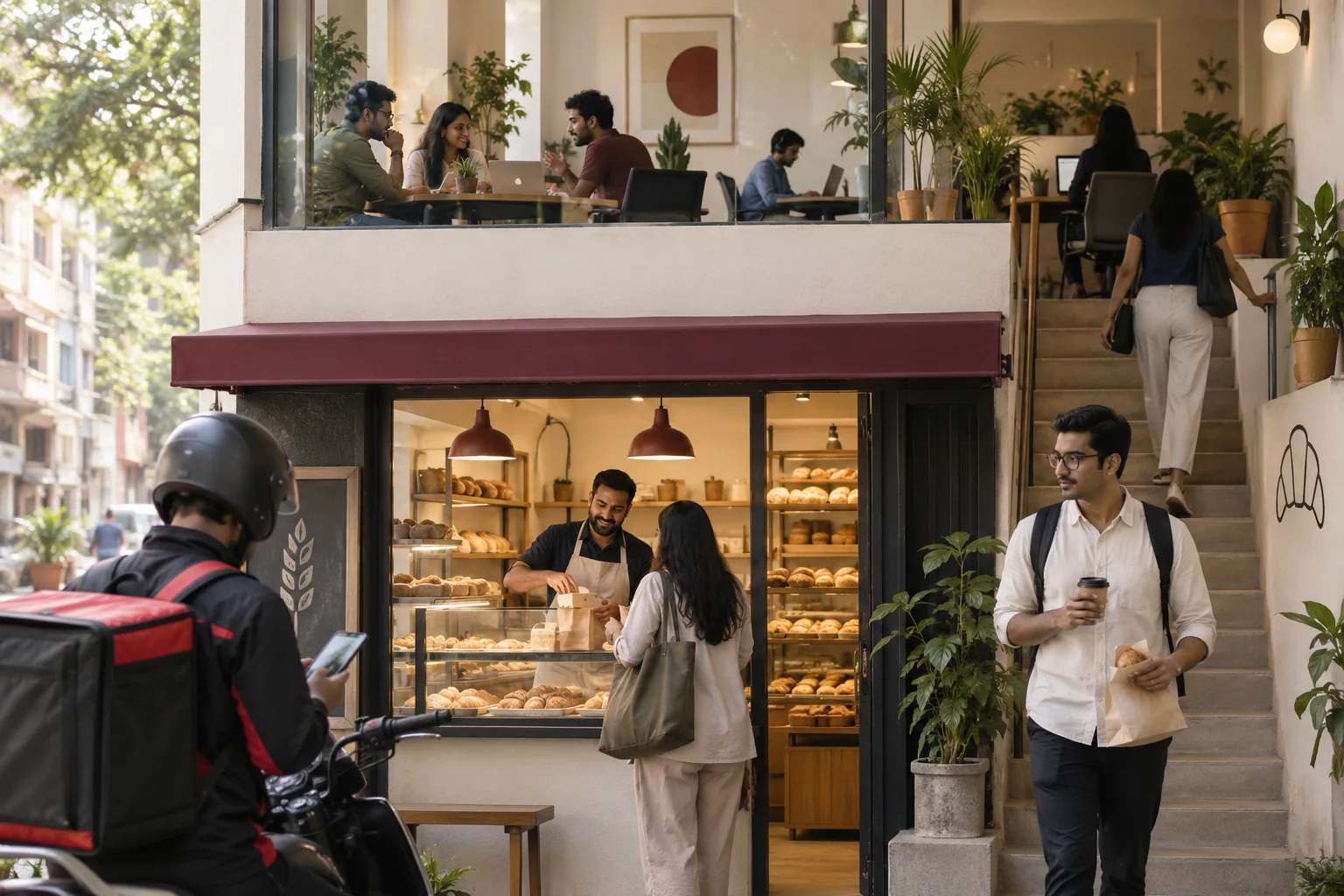 7 min read · 21 Sept 2026How to advertise to startup employeesThere is no tech park to buy. A forty person company sits above a bakery, so the audience is the neighbourhood, the delivery app and the coworking floor.
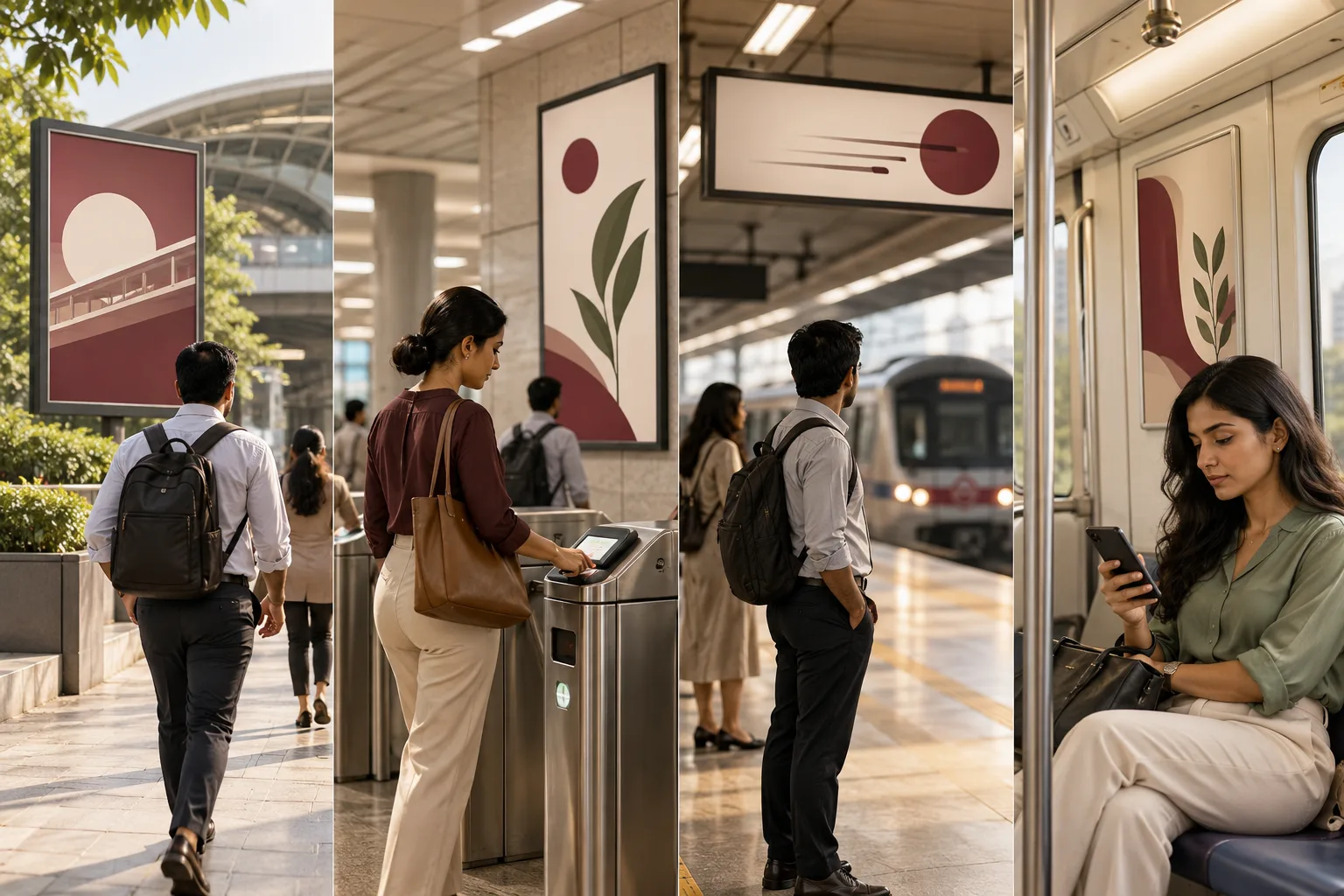 7 min read · 21 Sept 2026How to advertise to metro commutersA commuter is a mode, not a person. The journey has four still moments, each needing different creative, so one design across a station fails.
More for cafes and coffee shops
Related work to consider.
Closest to this: paid and media
Also for cafes and coffee shops
Or start from the overview: sales and marketing for cafes and coffee shops.
Your next practical step
Tell us what you are trying to grow, and we will read it before we call.
Eight short steps, mostly taps. Skip anything you would rather answer on the call.