Cafes and coffee shops · Retail store signage design
Sign the cafe so a first-time visitor knows where to order and where to sit.
Retail store signage design for a cafe is the artwork for every sign that guides, informs and sells, from the fascia and pavement board to the order point, the menu frame, the pick-up shelf and the wifi notice. GullySales designs each sign to your floor plan and brand and hands over measured artwork and files for the sign maker.
Scope, fee, reporting and term are agreed in writing after we have read your brief and spoken to you.

What retail store signage design means
Retail store signage design is the artwork for the signs that guide, inform and sell inside and outside a shop, from the fascia and entrance to aisle markers, section boards and price signs. GullySales designs each sign to the store's layout and brand and hands over measured artwork and files for the sign maker.
Also for cafes and coffee shops
- PPC ads for cafes and coffee shops
- Meta advertising for cafes and coffee shops
- Coupon and voucher design for cafes and coffee shops
- Vehicle branding graphic design for cafes and coffee shops
- Point-of-purchase display design for cafes and coffee shops
- Branding for cafes and coffee shops
- Buyer journey for cafes and coffee shops
- Buyer personas for cafes and coffee shops
Sales and marketing for cafes and coffee shops, the overview.
Last updated 14 Nov 2026. Rules for this trade differ by state and professional body, and they change. We describe restrictions in general terms, so check the current position with your own council or adviser before you publish anything.
For cafes and coffee shops
Where it usually goes wrong, and what we would do.
“A new visitor has three questions”
Someone walking into a cafe for the first time wants to know where to order, where to pay and whether to find a table first. If no sign answers, the visitor hovers, queues in the wrong place or leaves. A signage plan walks the route from the door to the counter and puts one sign at each point of doubt, so the room explains itself without a member of staff.
“The menu board is a sign and a sales tool”
The board behind the counter is read in a queue, from a distance, in changing light. Names, prices and the signature item need a hierarchy that holds when the menu changes. Separating a fixed frame from replaceable panels lets staff change an item without repainting. Allergen notices and any wording required by local rules come from your adviser; we give them a clear place.
“Laptop regulars and brunch groups use the room differently”
A cafe that welcomes people working on laptops needs signs that say so politely: where sockets are, whether there is a time limit on a table, how the wifi is shared. A cafe full of brunch groups needs a clear waiting point and a way to signal how many are in the party. These notices should sound like the cafe, not like a rule sheet.
“The outside sign wins or loses the walk-in”
The decision to enter is made on the pavement. The fascia, the hanging sign and the pavement board must show the name, what the place is and whether it is open, readable from across the road and at dusk. A lease, a landlord or a local authority may restrict size, light and position, so we check before the artwork is final.
What we do
What we deliver for cafes and coffee shops.
The work available for this need. We agree the deliverables and responsibilities for your engagement in writing.
A signage plan on the floor layout
A marked copy of your floor plan showing where each sign sits, which way it faces and from how far it is read. You approve the plan before artwork begins, so the entrance, the order point and the pick-up shelf are each treated as a separate decision.
Result: Every sign on the plan has a position, a height and a reader named beside it.
Sign type list
A list of every sign the cafe needs: fascia, pavement board, entrance notice, order point, menu board, table markers, pick-up shelf, wifi and socket notice, washroom marker and exit. Each has a purpose and the person it is meant for.
Result: Each sign type on the list can be matched to a question a customer would otherwise ask staff.
Artwork for each sign
A finished design for every type, drawn to the real size, shape and material, with logo, type, colour and spacing fixed so all signs belong to one family. Text is tested for contrast at the distance a customer will stand.
Result: The artwork matches the sign maker's size and material list and reads at the planned distance.
Menu board frame with swappable panels
A menu board built from a fixed frame and replaceable panels, so a changed price or a seasonal item means a new panel, not a new board. We design the frame, the panel layout and the style for names, descriptions and prices.
Result: Staff can change one menu item without touching the rest of the board.
Style sheet for signs
A short guide to letter styles, colour use, icon shapes and spacing for signs, so a later notice can be added in the same voice. It follows your brand system and does not replace it. Staff can use it for a handwritten board.
Result: A new sign made by staff later still looks like part of the same cafe.
Files and specification for the sign maker
Print and cut files, a sheet listing every sign, its dimensions, material and mounting, and a note on what the landlord or authority must approve. The sheet is what the sign maker quotes from.
Result: The sign maker can price and make from the sheet and the files without asking for missing sizes.
How the result is measured
- Questions staff are asked about where a product or section is
- Customers reaching a section without asking, noticed by counter staff
- Signs the sign maker returned for a query on the artwork
Recorded as a baseline before work starts, so every later report has an honest comparison.
Who it is for
This is written for these cafes and coffee shops.
- Independent single-outlet cafes
- Specialty coffee roasters with a cafe
- Cafes inside co-working spaces
- Bakery cafes
- Cafe chains opening new outlets
- Cloud kitchen and delivery-only cafes
- Cafes attached to bookstores or art spaces
- Late-night and student-area cafes
Before you decide
Agree the work. Know how to judge it.
Retail store signage design for cafes and coffee shops: use these checks to prepare, choose the scope, and review what changes.
Bring the right evidence
State the buyer group, catchment, and dates that matter to the offer. Ask for the proposed inventory and available evidence about its audience, with the source and date shown.
Make the scope clear
Agree the exact placements, formats, booking period, and proof of delivery. Separate media charges from design, production, permissions, and installation where these apply.
Check the work in use
Compare delivery evidence with the agreed booking and record enquiries through a distinct response route where practical. Treat audience estimates separately from measured responses.
Know when to change course
Do not buy a placement only because it is discounted. If the location or audience does not fit the buyer, revisit the plan before committing production costs.
These are discussion points, not a fixed package. GullySales confirms the deliverables, responsibilities, fee, and term in writing after reading your brief and speaking with you.
Before we start
What to have ready before the work starts.
The records, access and decisions this work needs from cafes and coffee shops. Anything missing is noted in the written scope, with who will supply it.
- A floor plan with measurements
- Bring a plan showing the door, counter, tables, sockets and any pillars, with dimensions. Without it we cannot place signs at the right height or distance, and the artwork may not fit the walls it is meant for.
- The questions staff answer repeatedly
- Write down what customers ask: where to order, whether there is wifi, whether tables are held. These show which signs are missing. If this is skipped, we may design signs for questions nobody asks and miss the ones that matter.
- Brand files and menu details
- Send the logo, colours, fonts and the current menu with item names and the order they appear in. The menu board hierarchy depends on them. A cafe without a settled identity needs logo and visual identity design first.
- Lease and permission details
- Find out what your lease or landlord says about fascia size, lighting and fixings, and whether a local authority must approve an outdoor sign. We design within what you tell us, but the application and the signature stay with you.
- Any notices the cafe is required to show
- Ask your own adviser which notices a food business must display, such as allergen information, and bring the exact wording. We give each a clear, readable place and never write the legal text ourselves.
How it works
How the retail store signage design work runs
The work itself, in order. How an engagement starts, from your brief to a written scope, is set out on our method page.
- 1
Read the cafe and its room
We read your brief, the floor plan, the entrance and the lighting, and ask what customers ask staff again and again. Repeated questions show which signs are missing. We also note the layout of tables, sockets and the order point.
- 2
Walk the visitor's route
From the pavement to the counter and back to a table, we mark where a visitor needs a direction, a name or a price. This decides the sign types before any sign is drawn, and avoids a room full of signs where only two were needed.
- 3
Agree the plan and the positions
You review the plan, the type list and the placement. Heights, positions and what is read from where are fixed at this point, so artwork is not redrawn for a wrong place. We also decide which signs are fixed and which change.
- 4
Design the sign family
We design each sign to its real size and material, in your colours and type, and test the main text for contrast and legibility. The menu board and the pavement board are drawn with extra care because customers read them closest.
- 5
Check with the maker and the landlord
We compare the artwork with the sign maker's specification and note anything the landlord, the mall or the local authority must approve before fitting. Rules differ by place, and the application is yours to make and sign.
- 6
Read the room after fitting
Once the signs are up, we compare photographs with the plan and the notes from the start. We check whether visitors still ask the questions staff used to answer, and whether the menu panel can be changed as intended.
Where this fits
Three pieces of sales work, in this order.
This work sits inside sales process design, at stage 1, prospecting and lead generation. The audit comes before it, and sales management keeps it running.
Step 1
Sales audit
Find where deals are being lost and what to fix first.
Start here if you cannot say where orders are lost.
Step 2 · you are here
Sales process design
One written way to sell, from first enquiry to repeat order.
Start here if every salesperson sells differently.
Step 3
Sales management
A target, a review routine and someone who owns the number.
Start here if the team has targets and no routine.
FAQ
Questions owners ask before they call.
Not here? More answers, or ask on WhatsApp.
Do I need a signage plan for a small cafe?
Can staff change the menu board themselves?
Do you make and fit the signs?
Is this the same as point-of-purchase display design?
What about allergen and hygiene notices?
Will better signs bring more customers in?
How much does it cost?
How long is the contract?
How soon will we see results?
Who will actually do the work?
From the blog
Further reading for cafes and coffee shops.
 7 min read · 21 Sept 2026How to design metro and transit advertisingA commuter stands still in front of a platform panel for four minutes and passes the same one twice a day for a month. Design for the sixth viewing.
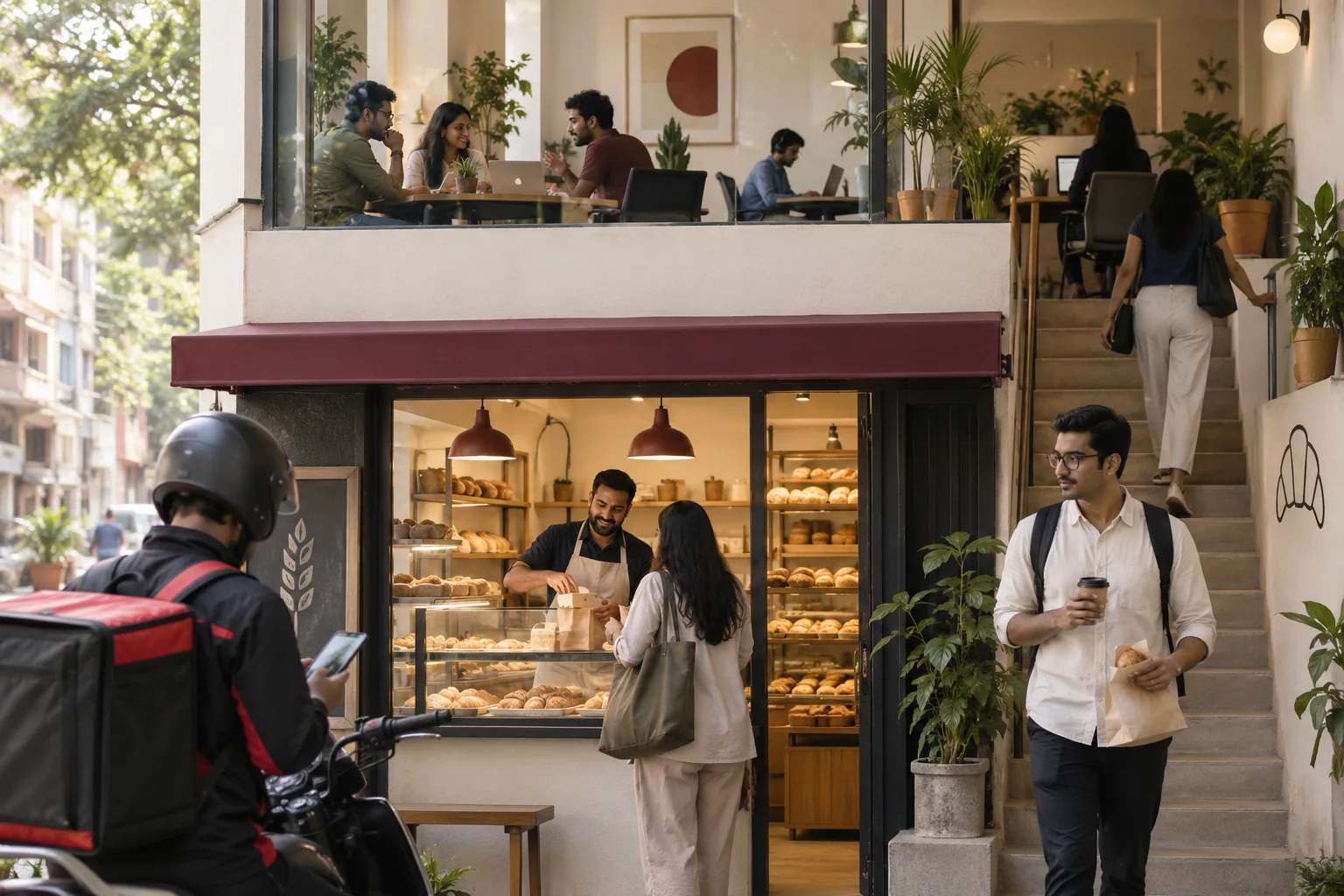 7 min read · 21 Sept 2026How to advertise to startup employeesThere is no tech park to buy. A forty person company sits above a bakery, so the audience is the neighbourhood, the delivery app and the coworking floor.
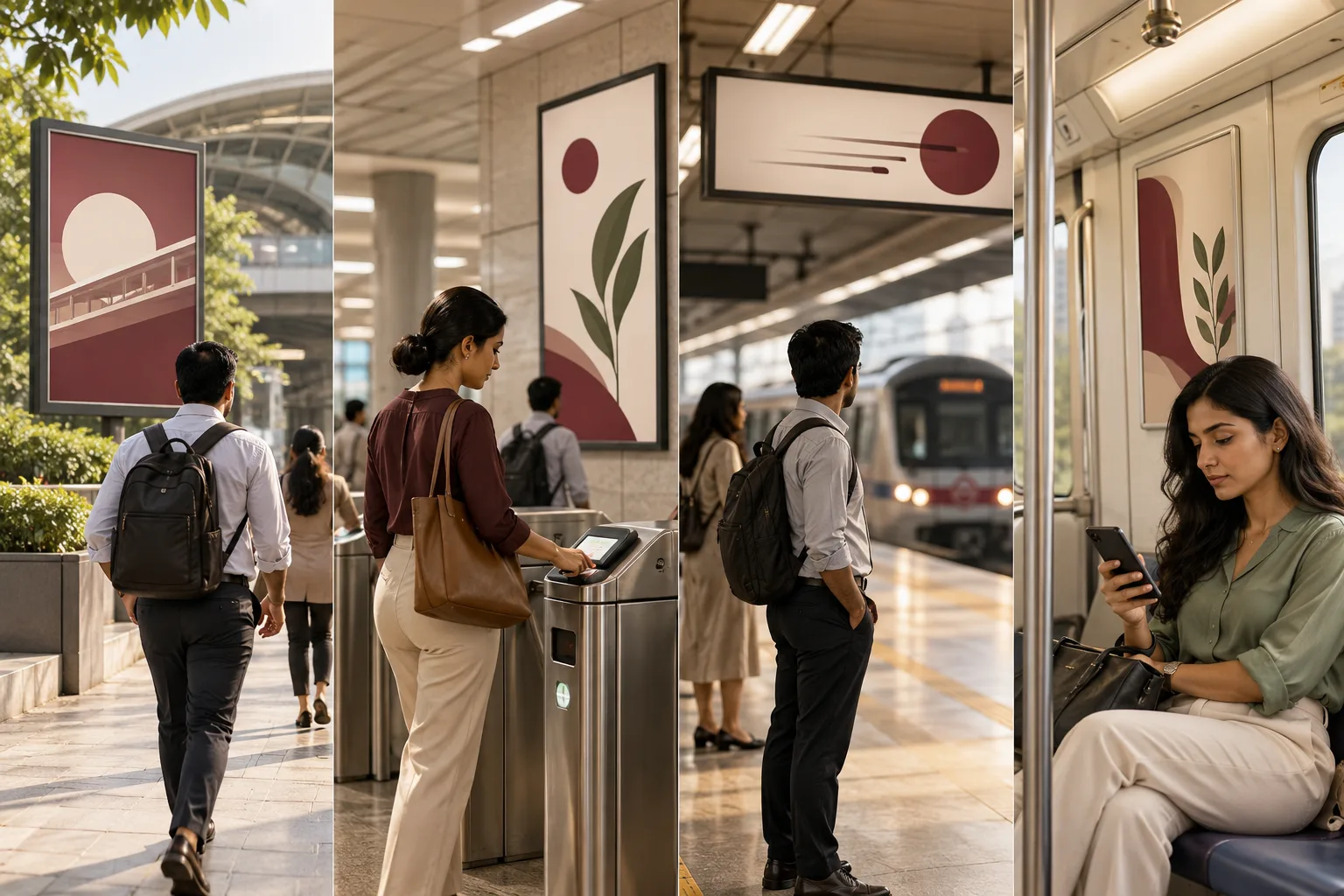 7 min read · 21 Sept 2026How to advertise to metro commutersA commuter is a mode, not a person. The journey has four still moments, each needing different creative, so one design across a station fails.
More for cafes and coffee shops
Related work to consider.
Closest to this: paid and media
Also for cafes and coffee shops
Or start from the overview: sales and marketing for cafes and coffee shops.
Your next practical step
Tell us what you are trying to grow, and we will read it before we call.
Eight short steps, mostly taps. Skip anything you would rather answer on the call.