Cafes and coffee shops · Point-of-purchase display design
A cafe till is a shelf, so design the unit that sells beside it.
Point-of-purchase display design for a cafe is the artwork and build drawing for the small units that stand beside the till and on the retail shelf: a counter box for packaged biscuits, a stand for bags of beans, a rack for tumblers. GullySales draws the graphics and the structure together, then hands your fabricator print-ready files and a specification sheet.
Scope, fee, reporting and term are agreed in writing after we have read your brief and spoken to you.

What point-of-purchase display design means
Point-of-purchase (POP) display design is the artwork and structural drawing for a unit that stands where the buyer chooses: a counter box, a shelf strip, a floor stand, a wobbler or a dump bin. GullySales designs the graphics and the build drawing, then hands over print-ready files and a specification sheet for the fabricator.
Also for cafes and coffee shops
- PPC ads for cafes and coffee shops
- Meta advertising for cafes and coffee shops
- Coupon and voucher design for cafes and coffee shops
- Vehicle branding graphic design for cafes and coffee shops
- Retail store signage design for cafes and coffee shops
- Branding for cafes and coffee shops
- Buyer journey for cafes and coffee shops
- Buyer personas for cafes and coffee shops
Sales and marketing for cafes and coffee shops, the overview.
Last updated 14 Nov 2026. Rules for this trade differ by state and professional body, and they change. We describe restrictions in general terms, so check the current position with your own council or adviser before you publish anything.
For cafes and coffee shops
Where it usually goes wrong, and what we would do.
“The queue reads whatever is at eye level”
A customer waiting to pay has nothing to do but look. Whatever stands between the pastry cabinet and the card machine is read for the whole wait, so a unit here is not competing with a busy shelf. It is competing with the customer's phone. The panel needs one line that can be taken in while the barista is still steaming milk, and a price or size that does not need a question.
“Counter space is borrowed from the card machine”
A cafe counter is crowded. The card reader, the tip jar, the QR sticker, the bell and the cake stand already hold the surface, and a unit drawn without a tape measure gets pushed to the back shelf soon after it is placed. The footprint is the first design decision, because a display that does not fit the counter never gets seen, however good the front panel looks.
“Packaged goods sit beside open food”
A unit for sealed bags of beans or wrapped biscuits stands a hand's reach from cakes and cups. Its surfaces get wiped, splashed and handled with coffee on the fingers, so the finish and the edges matter as much as the picture. Material choice and food-contact questions belong to your fabricator and your local food authority, and the panel carries no health claim.
“One unit has to work in several rooms”
The same retail range may sit on a counter at one outlet, on a wall shelf at another and at a delivery pickup window at a third. Each space has a different depth, light and sightline. A single flat design stretched across all of them looks wrong in at least one, so the drawing plans the base, the header and the label as parts that move together.
What we do
What we deliver for cafes and coffee shops.
The work available for this need. We agree the deliverables and responsibilities for your engagement in writing.
Counter and shelf survey sheet
A one-page record of the spaces the unit may occupy: the free width and depth beside the till, the height of the shelf above it, the position of the card reader and the queue line. It is built from your photographs and measurements and becomes the limit every later drawing is held to.
Result: The sheet lists each space with its measurements, and the final drawing fits every one of them.
Unit concept drawings
Two or three ways to hold the product: a tiered counter box, a bag stand, a tumbler rack or a tray with a header card. Each is drawn flat and in simple perspective with the item sizes marked, so you and your fabricator can talk about the same object before any artwork is made.
Result: You choose one concept, and the choice is recorded with the item sizes beside it.
Front panel and header artwork
The graphics for the face of the unit: the name of the item, the one line that sells it, the size or price position left clear and the brand mark. Colours, type and spacing follow your cafe's identity so the unit reads as part of the room and not as a supplier's sticker.
Result: The panel can be read from the queue line, and your approver has signed the wording.
Structural drawing and cutting plan
The build drawing for the unit: panel shapes, fold lines, tabs, the base that holds the weight of the stock and the lip that keeps packets from sliding. It is drawn to the sizes of your actual packets, so the stock sits in the pockets instead of leaning in them.
Result: A fabricator can price and cut from the drawing without asking for missing dimensions.
Shelf strip and bag label companion
A matching strip for the wall shelf and a label for the bag or tin, drawn from the same grid as the counter unit. A customer who saw the unit at the till recognises the product again on the shelf behind it, and the cafe range looks like one family.
Result: The counter unit, the strip and the label share one set of colours and one place for the product name.
Fabricator specification sheet and print files
Print-ready files, a dieline and a sheet that names the board or material, the finish, the quantity breakdown by version and the assembly notes. It is written so the fabricator's first proof is checked against your drawing and not against memory.
Result: Your fabricator's first proof is compared line by line with the specification, and the differences are listed.
How the result is measured
- Outlets that put the display up where the brief asked
- Displays built correctly from the first print proof
- Shopper enquiries that mention the display
Recorded as a baseline before work starts, so every later report has an honest comparison.
Who it is for
This is written for these cafes and coffee shops.
- Independent single-outlet cafes
- Specialty coffee roasters with a cafe
- Cafes inside co-working spaces
- Bakery cafes
- Cafe chains opening new outlets
- Cloud kitchen and delivery-only cafes
- Cafes attached to bookstores or art spaces
- Late-night and student-area cafes
Before you decide
Agree the work. Know how to judge it.
Point-of-purchase display design for cafes and coffee shops: use these checks to prepare, choose the scope, and review what changes.
Bring the right evidence
State the buyer group, catchment, and dates that matter to the offer. Ask for the proposed inventory and available evidence about its audience, with the source and date shown.
Make the scope clear
Agree the exact placements, formats, booking period, and proof of delivery. Separate media charges from design, production, permissions, and installation where these apply.
Check the work in use
Compare delivery evidence with the agreed booking and record enquiries through a distinct response route where practical. Treat audience estimates separately from measured responses.
Know when to change course
Do not buy a placement only because it is discounted. If the location or audience does not fit the buyer, revisit the plan before committing production costs.
These are discussion points, not a fixed package. GullySales confirms the deliverables, responsibilities, fee, and term in writing after reading your brief and speaking with you.
Before we start
What to have ready before the work starts.
The records, access and decisions this work needs from cafes and coffee shops. Anything missing is noted in the written scope, with who will supply it.
- Photographs of the counter and queue
- Shots from the customer's side, from the queue line and from behind the counter show what the unit will face. Without them we draw for an imagined counter, and the unit arrives too tall, too wide or hidden behind the card machine.
- Measurements of the free space
- A tape-measured width, depth and shelf height for each spot you would use. This keeps the structure from being drawn for a space that does not exist. Missing figures are the usual reason a unit is moved off the counter in the first few days.
- Sizes and weights of the product
- The actual packet, bag or tumbler, or its exact dimensions and filled weight. The pocket, the base and the lip are drawn around them. If the packaging is still being redesigned, say so, because the drawing will have to wait for the final size.
- Brand files and the cafe identity
- Logo files, colours, fonts and any existing menu or cup artwork. The unit should read as part of the room. Without these, the panel falls back on neutral styling and looks like a generic supplier unit rather than your cafe.
- A fabricator or print contact
- The name of the person who will cut and print the unit, or a few details of their range and limits. Board, finish and quantity decisions depend on them, and a drawing made without their limits can be beautiful and still unbuildable.
How it works
How the point-of-purchase display design work runs
The work itself, in order. How an engagement starts, from your brief to a written scope, is set out on our method page.
- 1
Reading the till and the shelf
We start from photographs of the counter, the shelf and the queue, taken from where the customer stands. We note what already sits at each point, what blocks the view and where a hand naturally reaches. This tells us which spot is worth designing for before any drawing begins.
- 2
Measuring the counter footprint
With your measurements we mark the free width and depth, the height under any shelf above and the clearance the barista needs to work. Where two outlets differ, each gets its own line on the survey. The footprint is agreed in writing, and it is the limit for everything that follows.
- 3
Choosing the item the unit sells
A cafe has more items than a unit can carry. We help you pick the one or two that suit an impulse at the till: a sealed bag of beans, a wrapped biscuit, a reusable cup. The choice rests on what you sell now and on the margin you know, not on what looks nicest in a drawing.
- 4
Drawing the panel and the structure together
The front panel and the build drawing are made side by side, so a headline never lands on a fold and a pocket never covers the product name. We draw to your packet sizes and test the weight of a full load on paper. You review the drawing before any artwork is finalised.
- 5
Checking the sample with your fabricator
When the first proof or sample comes back, we compare it with the specification sheet and list every difference: a colour shift, a loose fold, a lip that sits too low. You decide which differences matter. We revise the files, and the fabricator's second proof is held to the same list.
- 6
Reading the result against your own figures
Before the unit goes out, you record how many of the item you sold across the counter in a period you choose. Afterwards, we read the same figure against the unit's time on the counter, with the other changes in the cafe noted beside it. The comparison is yours to judge, and it shapes the next version.
Where this fits
Three pieces of sales work, in this order.
This work sits inside sales process design, at stage 1, prospecting and lead generation. The audit comes before it, and sales management keeps it running.
Step 1
Sales audit
Find where deals are being lost and what to fix first.
Start here if you cannot say where orders are lost.
Step 2 · you are here
Sales process design
One written way to sell, from first enquiry to repeat order.
Start here if every salesperson sells differently.
Step 3
Sales management
A target, a review routine and someone who owns the number.
Start here if the team has targets and no routine.
FAQ
Questions owners ask before they call.
Not here? More answers, or ask on WhatsApp.
Do you make and supply the display unit?
Can the unit hold open food such as cakes or cookies?
Will one design work across more than one outlet?
What material should the unit be made from?
We have no sales figure for the item at the till. Can we still start?
How is this different from the menu board or a poster?
How much does it cost?
How long is the contract?
How soon will we see results?
Who will actually do the work?
From the blog
Further reading for cafes and coffee shops.
 7 min read · 21 Sept 2026How to design metro and transit advertisingA commuter stands still in front of a platform panel for four minutes and passes the same one twice a day for a month. Design for the sixth viewing.
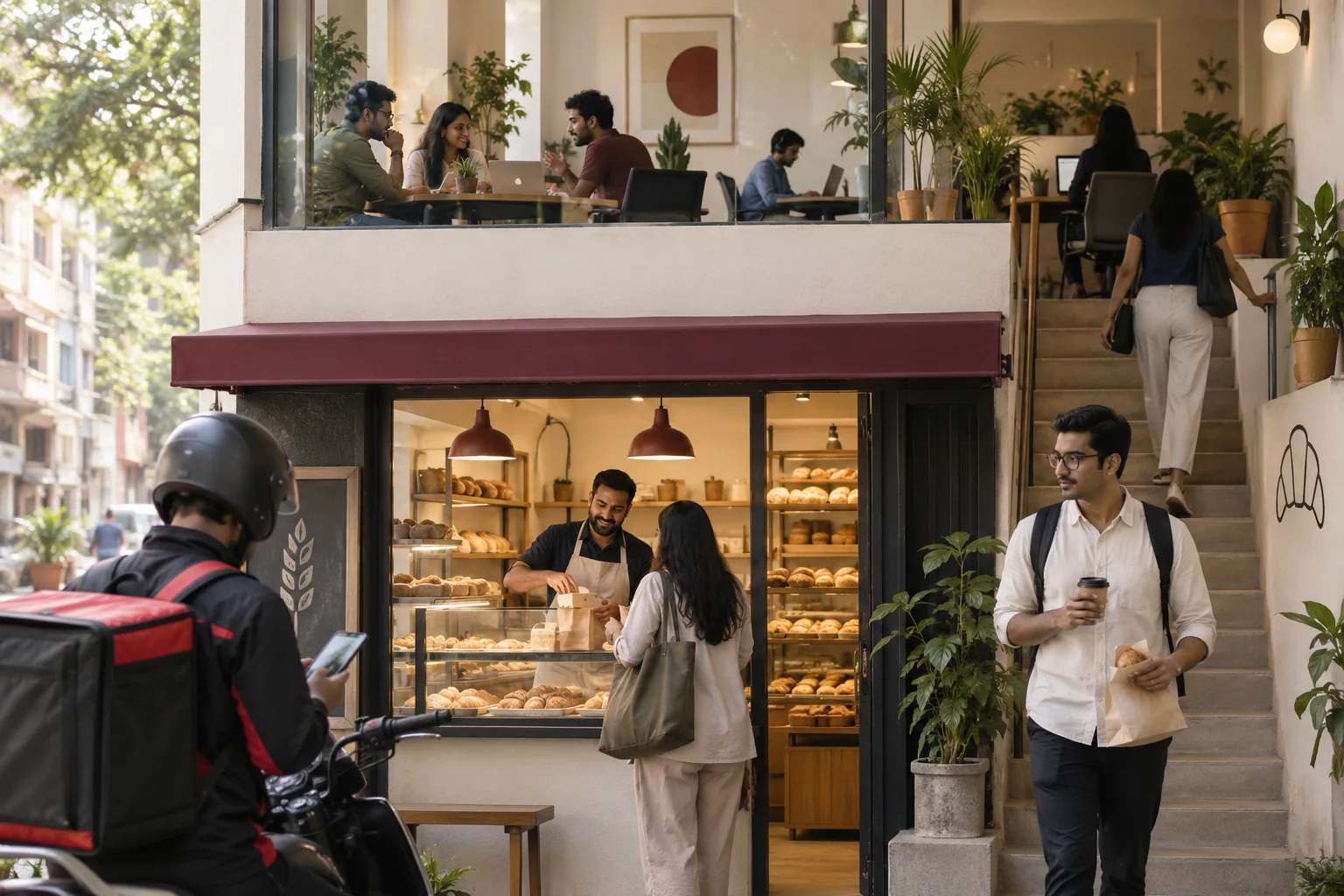 7 min read · 21 Sept 2026How to advertise to startup employeesThere is no tech park to buy. A forty person company sits above a bakery, so the audience is the neighbourhood, the delivery app and the coworking floor.
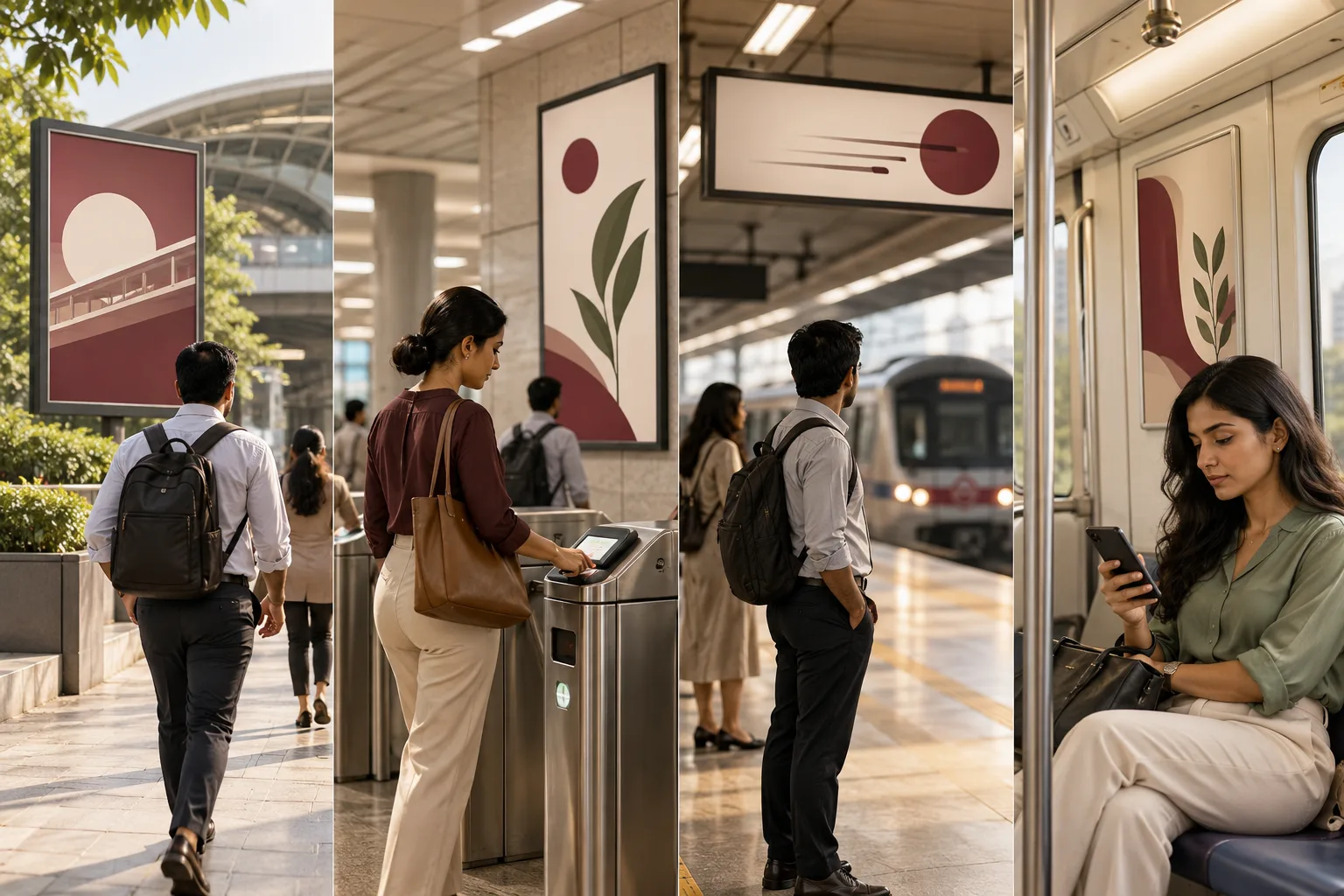 7 min read · 21 Sept 2026How to advertise to metro commutersA commuter is a mode, not a person. The journey has four still moments, each needing different creative, so one design across a station fails.
More for cafes and coffee shops
Related work to consider.
Closest to this: paid and media
Also for cafes and coffee shops
Or start from the overview: sales and marketing for cafes and coffee shops.
Your next practical step
Tell us what you are trying to grow, and we will read it before we call.
Eight short steps, mostly taps. Skip anything you would rather answer on the call.