Cafes and coffee shops · Social media ads
Show the room to people within walking distance, then count who came in.
Meta advertising for a cafe places paid ads on Facebook and Instagram in front of people near the outlet who are not searching for coffee at that moment. GullySales sets the area, the offer and the pictures, connects the ad to a booking or a visit the counter can record, and reads the platform's numbers against the cafe's own.
Scope, fee, reporting and term are agreed in writing after we have read your brief and spoken to you.
What social media ads means
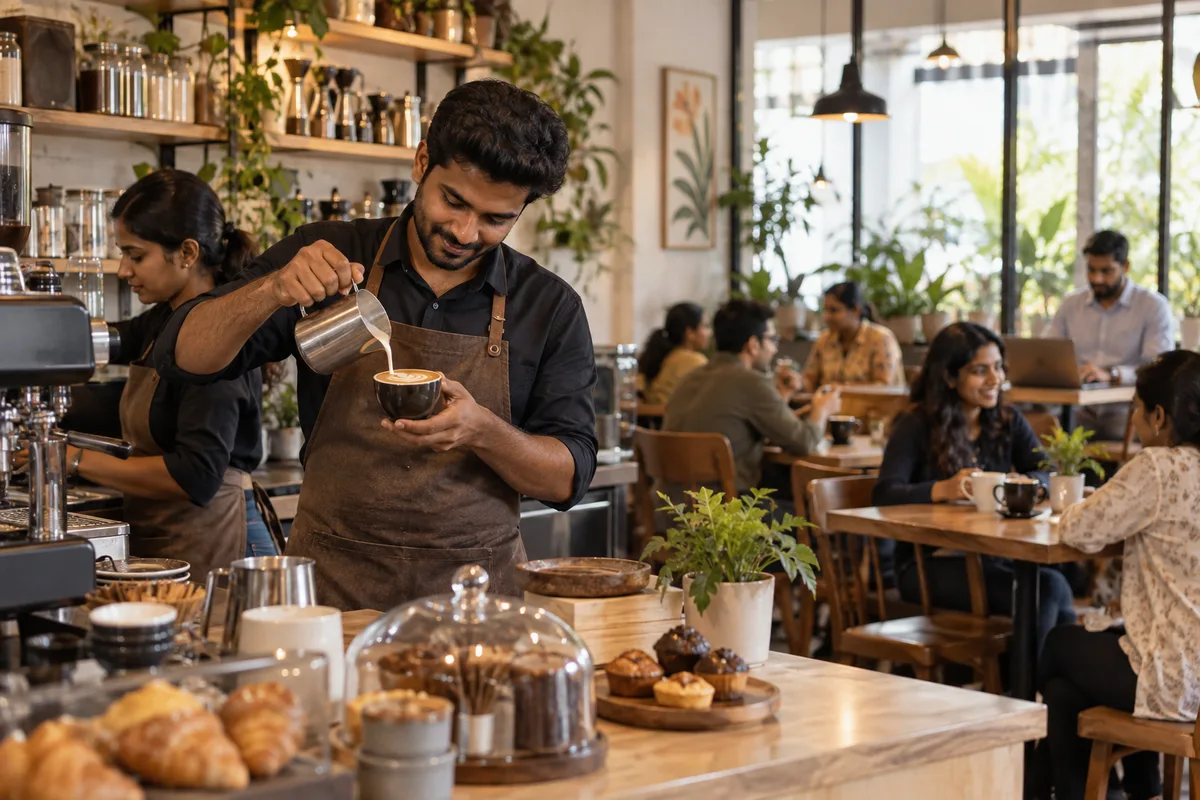
Social media ads are paid posts on platforms such as Instagram and Facebook shown to people chosen by location, age or interest rather than to your existing followers. GullySales sets the targeting, writes the ad copy and checks spend against the enquiries it brings so it produces enquiries instead of likes.
Also for cafes and coffee shops
- PPC ads for cafes and coffee shops
- Coupon and voucher design for cafes and coffee shops
- Vehicle branding graphic design for cafes and coffee shops
- Retail store signage design for cafes and coffee shops
- Point-of-purchase display design for cafes and coffee shops
- Branding for cafes and coffee shops
- Buyer journey for cafes and coffee shops
- Buyer personas for cafes and coffee shops
Sales and marketing for cafes and coffee shops, the overview.
Last updated 14 Nov 2026. Rules for this trade differ by state and professional body, and they change. We describe restrictions in general terms, so check the current position with your own council or adviser before you publish anything.
For cafes and coffee shops
Where it usually goes wrong, and what we would do.
“An ad radius that includes people who will never come”
A cafe serves a small circle of streets, offices and colleges. A campaign set to the whole city spends on people who will not cross town for a cappuccino. The area is drawn around the real catchment, with the pin at the entrance and the edge set by how far a customer will walk or ride, and the owner checks that outline on a map before the campaign starts.
“A picture that works on a feed, not on a menu board”
A flat lay that looks good in a printed menu can vanish in a scrolling feed. The ad has a second to stop a thumb, and it needs light, a human hand, steam or a recognisable corner of the room. The pictures come from the cafe itself, taken at the time of day the ad will run, because a stock photograph of a stranger's coffee tells the viewer nothing about the place.
“Ads that run when the cafe is already full”
Promoting a Saturday brunch table that is already booked wastes the spend and annoys the people who turn up to find none. The offer has to fit the slow hours, such as a weekday afternoon work table or an early-evening pastry deal, and be paused when the room fills. Someone at the counter needs the authority to say stop, and an easy way to do it.
“Messages that nobody answers in time”
A click-to-message ad invites a question about a birthday table or a catering order, and the reply arrives after the guest has booked elsewhere. The route from ad to a person needs an owner, working hours stated in the ad and a short list of answers ready for the usual questions. Without that route, the cafe pays for a conversation it never has.
What we do
What we deliver for cafes and coffee shops.
The work available for this need. We agree the deliverables and responsibilities for your engagement in writing.
Ad account and page ownership record
The Business Manager, ad account, Facebook page and Instagram account are checked or set up under the owner's ownership. The record lists who can administer each one, how billing is set, and which former employees or freelancers still hold access that should be removed.
Result: You can open the ad account yourself and see every person who has access.
Catchment map and audience note
A map shows the area the ads will reach, with the cafe at the centre, the nearest offices, colleges and housing, and the streets deliberately left out. A short note records the assumptions about who lives and works there, marked as assumptions rather than facts.
Result: The outline on the map matches the streets your regulars come from.
Offer and slow-hour plan
One offer for one slow window, written in the cafe's words with its terms, such as a work-table deal for weekday afternoons. The plan says who may start or pause the campaign at the counter and what to do when the room is full.
Result: The offer has a written term and a named person who can switch it off.
Feed, story and reel creative set
Pictures and short clips from the cafe, adapted to the shapes of the feed, story and reel placements, with the offer readable on a phone. The owner reviews each on a phone-sized preview. Claims about health or ingredients are left out unless the owner's adviser has approved them.
Result: Each ad was approved by the owner on a phone-sized preview before it ran.
Booking route and tracking test
The ad leads to a booking form, a call button, a message thread or the website, whichever the cafe can answer. A test enquiry is sent through it before launch, and the pixel or conversion setup is checked where the website supports it. A redemption code or phrase is agreed for the counter.
Result: A test enquiry reached the named person before the ad went live.
Results sheet against the cafe's own record
A sheet places the platform's reach and clicks beside the cafe's own count of bookings, redemptions and counter visits that mention the ad. Platform figures show activity; the diary and the till show people. The two are kept in separate columns and never presented as one total.
Result: Redeemed offers and bookings are listed beside the platform's own numbers.
How the result is measured
- Cost per enquiry
- Click-through rate
- Enquiries from paid social
Recorded as a baseline before work starts, so every later report has an honest comparison.
Who it is for
This is written for these cafes and coffee shops.
- Independent single-outlet cafes
- Specialty coffee roasters with a cafe
- Cafes inside co-working spaces
- Bakery cafes
- Cafe chains opening new outlets
- Cloud kitchen and delivery-only cafes
- Cafes attached to bookstores or art spaces
- Late-night and student-area cafes
Before you decide
Agree the work. Know how to judge it.
Meta advertising for cafes and coffee shops: use these checks to prepare, choose the scope, and review what changes.
Bring the right evidence
Choose the buyer problem, offer, and evidence the advert will show. Review lead quality from earlier campaigns and the questions the sales team needed to ask before a conversation became useful.
Make the scope clear
Agree the creative variations, audience approach, landing page or form, and follow-up owner. Separate media spend from creative production and campaign management.
Check the work in use
Check whether the person responding understood the offer and fits your buying criteria. Review cost per qualified conversation as well as platform-reported leads.
Know when to change course
Cheap form submissions can still be expensive to handle. If the team repeatedly explains basic eligibility, make it clear in the advert and form before scaling the campaign.
These are discussion points, not a fixed package. GullySales confirms the deliverables, responsibilities, fee, and term in writing after reading your brief and speaking with you.
Before we start
What to have ready before the work starts.
The records, access and decisions this work needs from cafes and coffee shops. Anything missing is noted in the written scope, with who will supply it.
- Admin access to your Facebook page
- The ad account is linked to a page, and the page needs an administrator the owner controls. If a former staff member or agency created it, access has to be recovered through the platform's own process. Without a controlled page, the campaign cannot be set up, and the cafe's ad history stays out of reach.
- Photographs and clips of the room
- Pictures of the seating, the counter, the plates and the barista at work, taken in daylight on a phone, are enough to begin. If the cafe has none, the first job is a shoot list. Stock images of someone else's coffee make the ad look like any other, and visitors notice when the room does not match.
- The offer and what the counter can honour
- Decide what is offered, to whom, and for which hours, and make sure the staff know. An ad for a work-table deal that the barista has never heard of produces an awkward conversation at the till. The terms are written down, and the owner decides whether the offer can be paused at short notice.
- Booking, call or message route
- Choose how an interested person reaches the cafe, whether by form, call or message, and who answers during which hours. The ad states the hours. If nobody can answer, the campaign is built around the walk-in alone, with an offer redeemed at the counter, so no enquiry is left waiting.
- A record of footfall in the slow window
- A week of notes on how many tables are occupied in the chosen hours, kept by the shift lead, gives the campaign a starting point. Without it, a busy fortnight afterwards could be the weather, an event or the ad, and the cafe has no way to tell which one.
How it works
How the social media ads work runs
The work itself, in order. How an engagement starts, from your brief to a written scope, is set out on our method page.
- 1
Choosing the slow window to fill
We begin with the owner and the shift lead, looking at the diary and the till to find the hours when the room is thin. One window is chosen, such as the weekday afternoon or a quiet evening. The offer is written for that window and nothing else. The owner approves it, because an offer the counter cannot honour is worse than none.
- 2
Setting up accounts under your name
The owner creates or confirms the Business Manager, ad account and the pages, and adds GullySales as a partner with the access the work needs. Billing is the owner's own. We never take ownership of the account. If a former agency or employee holds access, a list of what must be removed is made before anything is launched.
- 3
Drawing the area and building the audience
We draw the area around the cafe on a map and show it to the owner, who corrects it against real foot traffic. Offices, colleges and housing blocks inside it are listed. Interests chosen on the platform are noted as guesses to test, not as proof of who the viewer is, and the platform's current rules on targeting are checked.
- 4
Making the pictures and the first words
Photographs and short clips are taken at the cafe in the light the ad will be seen in. The copy is short, names the offer and the street, and says when the offer applies. The owner approves each ad on a phone preview. Anything about ingredients, allergens or health benefits is checked by the owner's adviser or left out.
- 5
Testing the route and the counter response
Before the campaign is switched on, someone at the cafe sends a test message, makes a test booking and shows the redemption phrase to the counter staff. We confirm that the reply reaches a named person within the cafe's stated hours. If the route fails, the campaign waits, because paying for responses nobody receives wastes the budget the owner has set.
- 6
Reading results with the diary beside it
Before launch, we record the counter footfall for the slow window, the bookings from each source and the current follower count. After the campaign has run, the platform's results are laid beside those records. The owner decides what to repeat, change or stop, using redeemed offers and bookings, not likes, as the deciding evidence.
Where this fits
Three pieces of sales work, in this order.
This work sits inside sales process design, at stage 1, prospecting and lead generation. The audit comes before it, and sales management keeps it running.
Step 1
Sales audit
Find where deals are being lost and what to fix first.
Start here if you cannot say where orders are lost.
Step 2 · you are here
Sales process design
One written way to sell, from first enquiry to repeat order.
Start here if every salesperson sells differently.
Step 3
Sales management
A target, a review routine and someone who owns the number.
Start here if the team has targets and no routine.
FAQ
Questions owners ask before they call.
Not here? More answers, or ask on WhatsApp.
Should my cafe run ads on Facebook and Instagram at all?
How much should I spend?
Can I promote a post, or do I need proper ads?
Do you handle the Instagram posting as well?
Which food or health claims are safe to put in an ad?
How will I know whether the ads filled any tables?
How long is the contract?
How soon will we see results?
Who will actually do the work?
What do you need from us?
From the blog
Further reading for cafes and coffee shops.
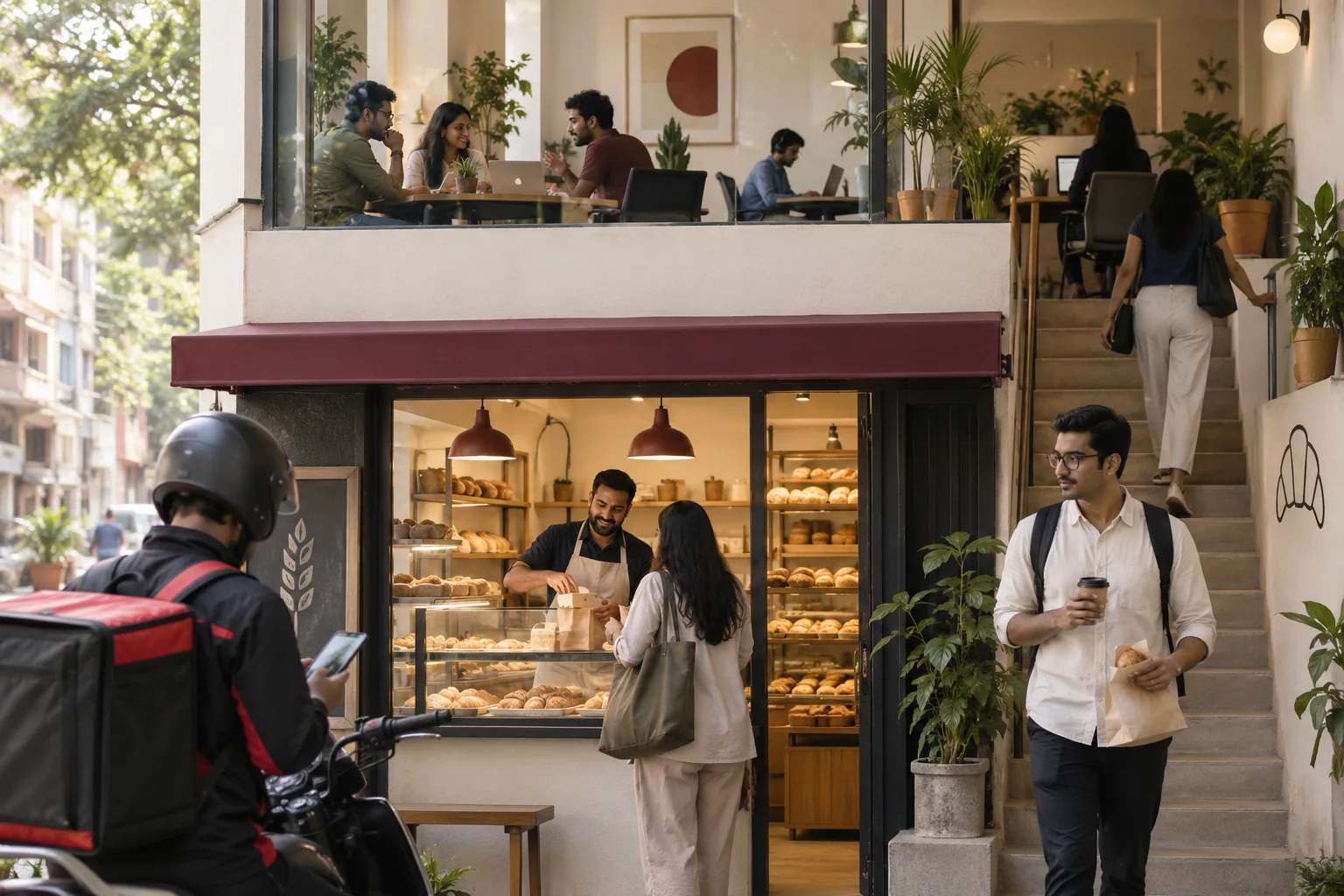 7 min read · 21 Sept 2026How to advertise to startup employeesThere is no tech park to buy. A forty person company sits above a bakery, so the audience is the neighbourhood, the delivery app and the coworking floor.
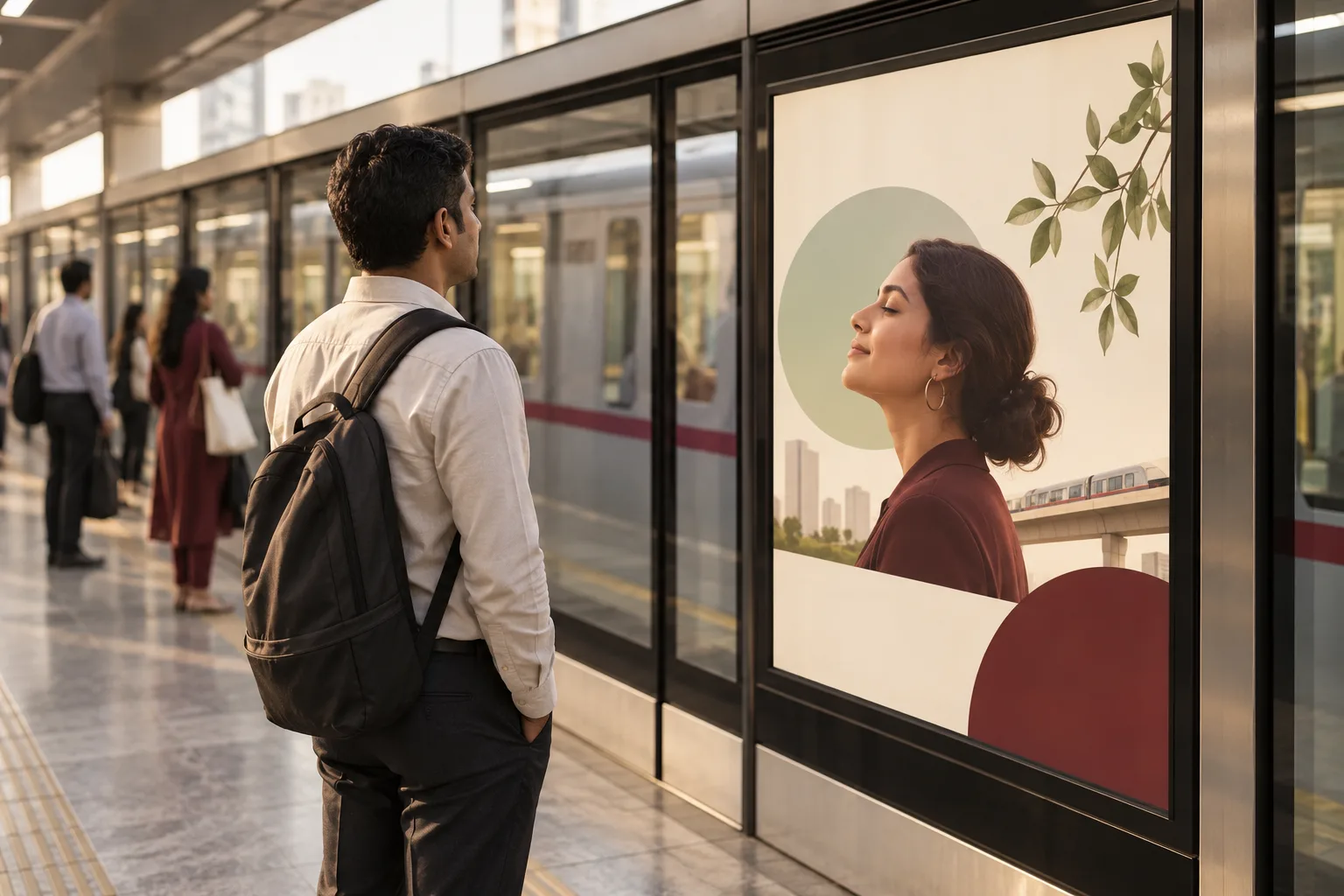 7 min read · 21 Sept 2026How to design metro and transit advertisingA commuter stands still in front of a platform panel for four minutes and passes the same one twice a day for a month. Design for the sixth viewing.
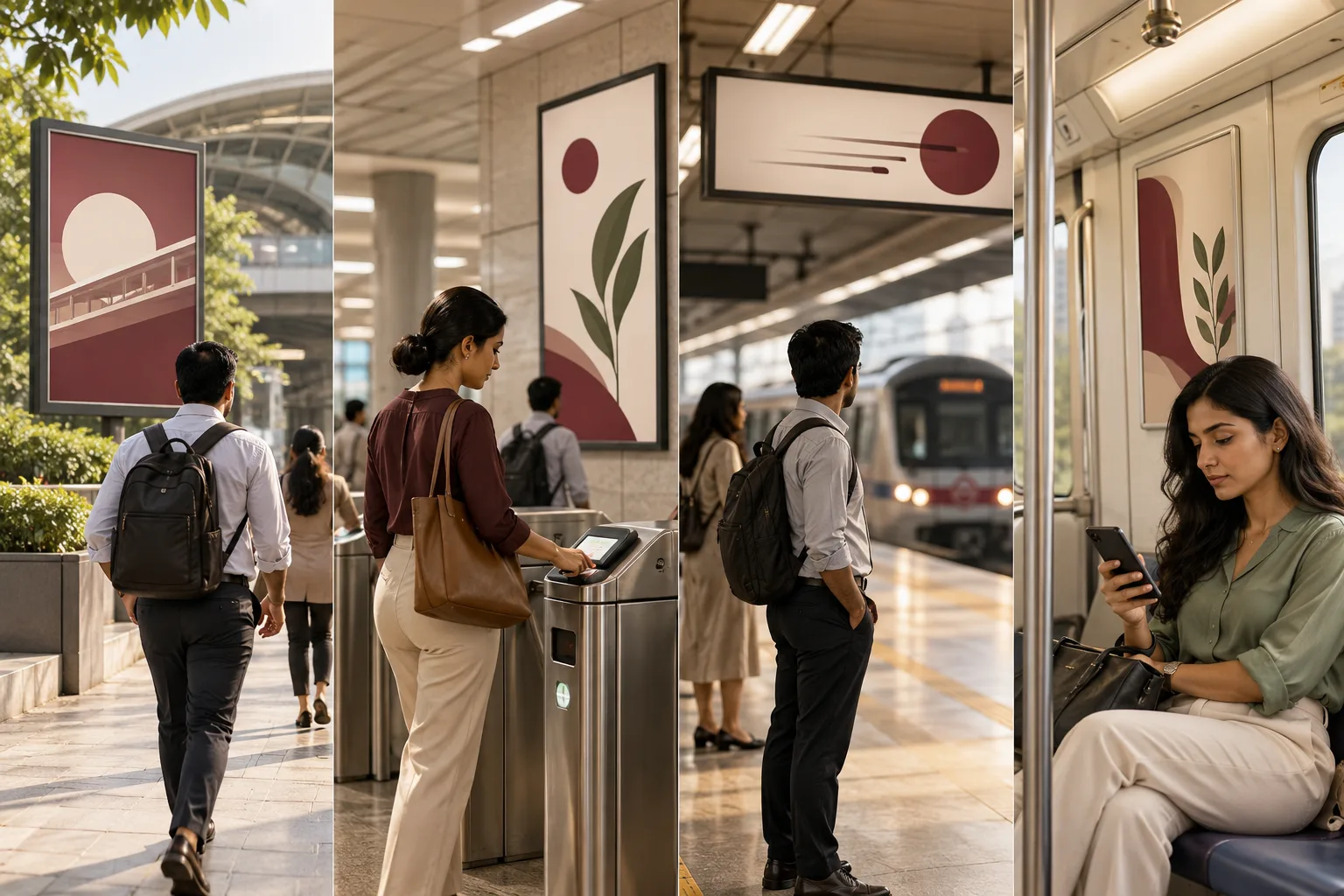 7 min read · 21 Sept 2026How to advertise to metro commutersA commuter is a mode, not a person. The journey has four still moments, each needing different creative, so one design across a station fails.
More for cafes and coffee shops
Related work to consider.
Closest to this: paid and media
Also for cafes and coffee shops
Or start from the overview: sales and marketing for cafes and coffee shops.
Your next practical step
Tell us what you are trying to grow, and we will read it before we call.
Eight short steps, mostly taps. Skip anything you would rather answer on the call.